
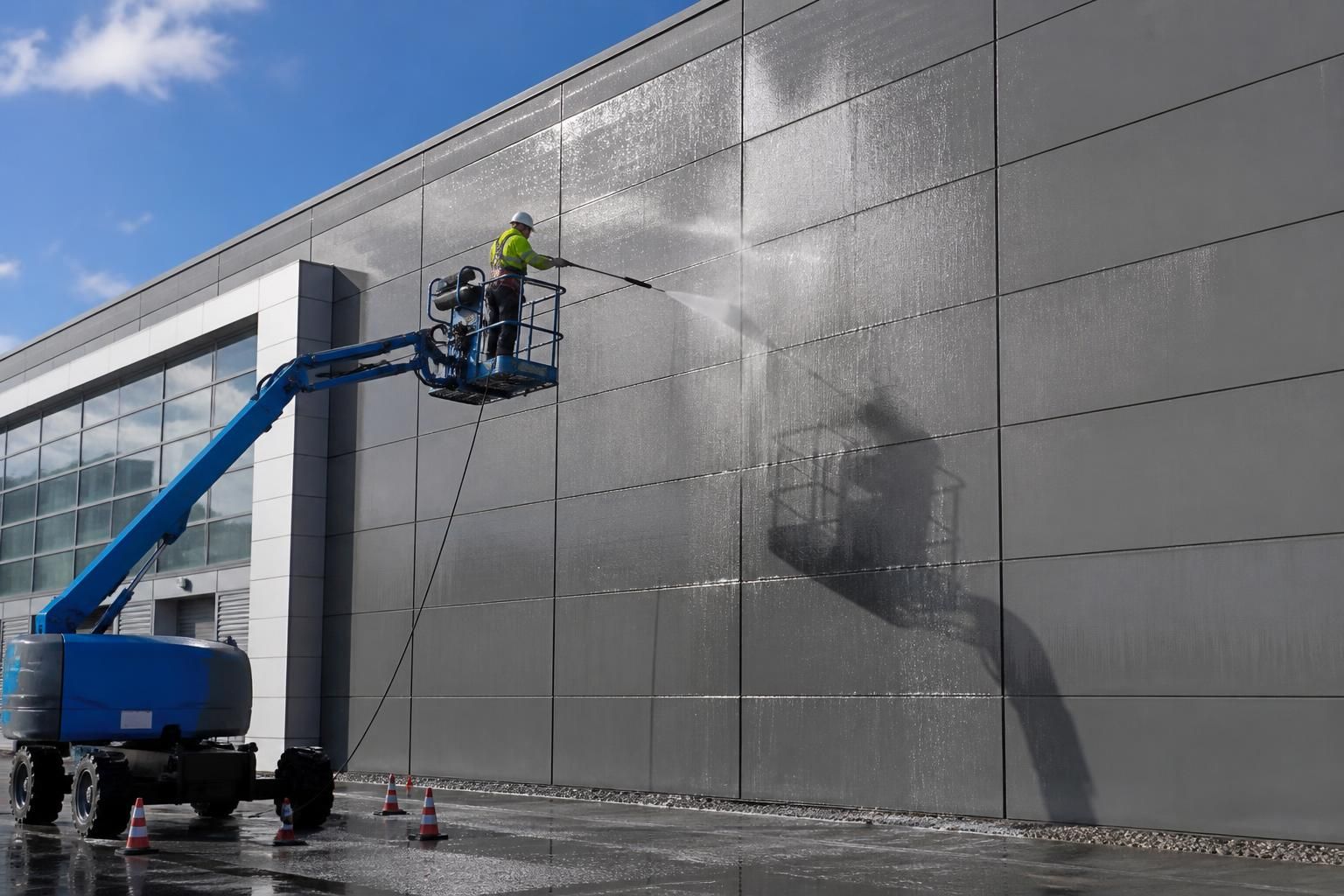
What are the specific cleaning methods you use for different façade materials?
We select the cleaning method according to the façade material, surface condition and type of soiling. Brick and robust masonry may be treated with controlled pressure washing, while stone, glass, render, stucco and cladding typically require lower-pressure washing, soft washing, steam cleaning or specialist chemical treatments to remove dirt without damaging the surface.
The cleaning method is selected according to the façade material, its condition, the type of soiling and the risks to surrounding areas. We normally begin with a visual inspection and, where appropriate, a small test area before choosing between controlled pressure washing, soft washing, steam cleaning, chemical treatment or a combination of techniques. This prevents a sound, water-resistant surface from being treated in the same way as weathered stone, delicate render or sealed glass.
Brickwork and robust masonry
Sound brickwork can often be cleaned with controlled pressure washing using suitable water flow, pressure and nozzle selection. The aim is to remove traffic film, dust, algae, moss, bird fouling and general atmospheric soiling without eroding the brick face or forcing water into open joints. We work carefully around pointing, damaged bricks, vents, windows and other penetrations. Where pressure washing is unsuitable, low-pressure steam or a compatible specialist cleaning solution may provide better control.
Older, handmade or heavily weathered bricks need particular care. High pressure, aggressive rotary cleaning and unsuitable acids can damage the surface, remove the fired outer layer or weaken mortar joints. We therefore reduce the cleaning intensity and may use steam, a low-pressure rinse or a tested chemical treatment instead.
Natural stone
Stone cleaning depends on whether the façade is limestone, sandstone, granite, slate or another material, as well as its porosity and existing finish. Low-pressure washing and steam cleaning are commonly used for general dirt and biological growth. A pH-controlled or otherwise compatible chemical treatment may be required for ingrained atmospheric staining, carbon deposits or rust marks, but it must be selected for the specific stone.
Porous stone is not cleaned by simply increasing pressure. Excessive force can open the surface, dislodge friable material and drive water behind the façade. We avoid untested abrasive methods and strong chemicals where they could etch, discolour or alter the stone. Mortar joints, carved details and repairs are assessed separately because they may respond differently from the surrounding stone.
Concrete and precast concrete
Concrete façades are usually cleaned with controlled pressure washing, soft washing or steam, depending on the finish and the condition of the surface. Biological growth, dust and surface grime can often be removed with water-based cleaning. Grease, oil, rust and other deposits may need a targeted treatment rather than higher pressure.
We take care around exposed aggregate, painted concrete, repaired areas, expansion joints and signs of carbonation or reinforcement corrosion. Cleaning cannot repair structural defects, spalling or failing coatings, so any relevant damage is recorded and brought to the client’s attention before work proceeds.
Render, stucco and painted façades
Render and stucco are generally treated with low-pressure washing, soft washing or steam cleaning. These methods help remove algae, moss, dirt and staining while reducing the risk of marking the finish or penetrating cracks. A diluted, surface-compatible biocidal or detergent treatment may be used where biological growth is established, followed by controlled rinsing.
Painted render, textured coatings and older stucco require additional caution because pressure can lift paint, expose aggregate or create visible clean bands. We check for hollow, cracked, friable or previously repaired areas and avoid directing water into defects. If the coating is failing, cleaning may improve its appearance temporarily but will not replace the need for repair or redecoration.
Glass and glazed surfaces
Glass is normally cleaned with a low-pressure rinse, purified water, specialist glass-cleaning products and suitable non-abrasive tools. Mineral deposits, cement residue, paint and adhesive require careful identification before removal. A treatment appropriate for the glass and any coating is used, with particular attention to low-emissivity coatings, tinted glass, films, seals and adjacent frames.
We do not use harsh abrasives or unsuitable blades on coated or delicate glazing. Cement and mortar splashes are dealt with promptly where possible, as hardened deposits can scratch glass during removal. Window seals, drainage paths and frame joints are also considered so that cleaning does not force water into the building.
Metal cladding and curtain walling
Aluminium, coated steel, stainless steel and composite cladding are commonly cleaned using a low-pressure rinse with a compatible detergent, followed by thorough rinsing. The product and dwell time are chosen according to the coating, finish and type of soiling. Steam cleaning may be useful for localised grime or grease where water use needs to be controlled.
Cladding must be checked for oxidisation, chalking, damaged paint, open joints and failed sealant. Strong alkaline or acidic products can stain or strip finishes, while excessive pressure can force water behind panels. We use non-abrasive equipment and avoid aggressive cleaning of anodised, powder-coated or specialist finishes unless the proposed method has been tested.
UPVC, plastics and composite materials
UPVC frames, plastic panels and composite surfaces are generally cleaned with a mild detergent, soft brushes or cloths and a controlled low-pressure rinse. These materials can scratch, become discoloured or lose their finish if cleaned with abrasive pads, solvents or overly strong chemicals. Weathered plastic may also show a colour difference between protected and exposed areas, so a test patch helps establish the likely result.
Roofs, canopies and associated façade features
Canopies, soffits, glazed entrance features and roof-edge details are cleaned according to their individual materials rather than treated as one surface. Soft washing or steam may be preferable for fragile coatings and biological growth, while controlled pressure washing can be suitable for robust metal or concrete components. Drainage outlets are kept clear and runoff is managed so that loosened debris and cleaning solution do not stain the façade or enter surface-water systems.
How the method is confirmed on site
- We identify the material, surface finish, age, previous repairs and visible defects.
- We establish whether the soiling is organic growth, traffic film, carbon staining, rust, efflorescence, paint, adhesive, cement or another deposit.
- We inspect vulnerable details such as pointing, sealant, joints, vents, glazing seals and drainage routes.
- We carry out a discreet test area where the material, coating or stain presents a risk of damage or an uncertain result.
- We compare the cleaned area with the surrounding surface for colour, texture, coating condition and any signs of water ingress.
- We agree the cleaning sequence, access arrangements, protection and runoff controls before treating the full façade.
In practice, the safest result often comes from combining methods: for example, a compatible pre-treatment to loosen biological growth, low-pressure rinsing for the main surface and steam or detailed hand cleaning around sensitive features. We adjust the approach if the façade behaves differently from the test area, and we do not increase pressure simply to compensate for an unsuitable chemical or an unidentified deposit.
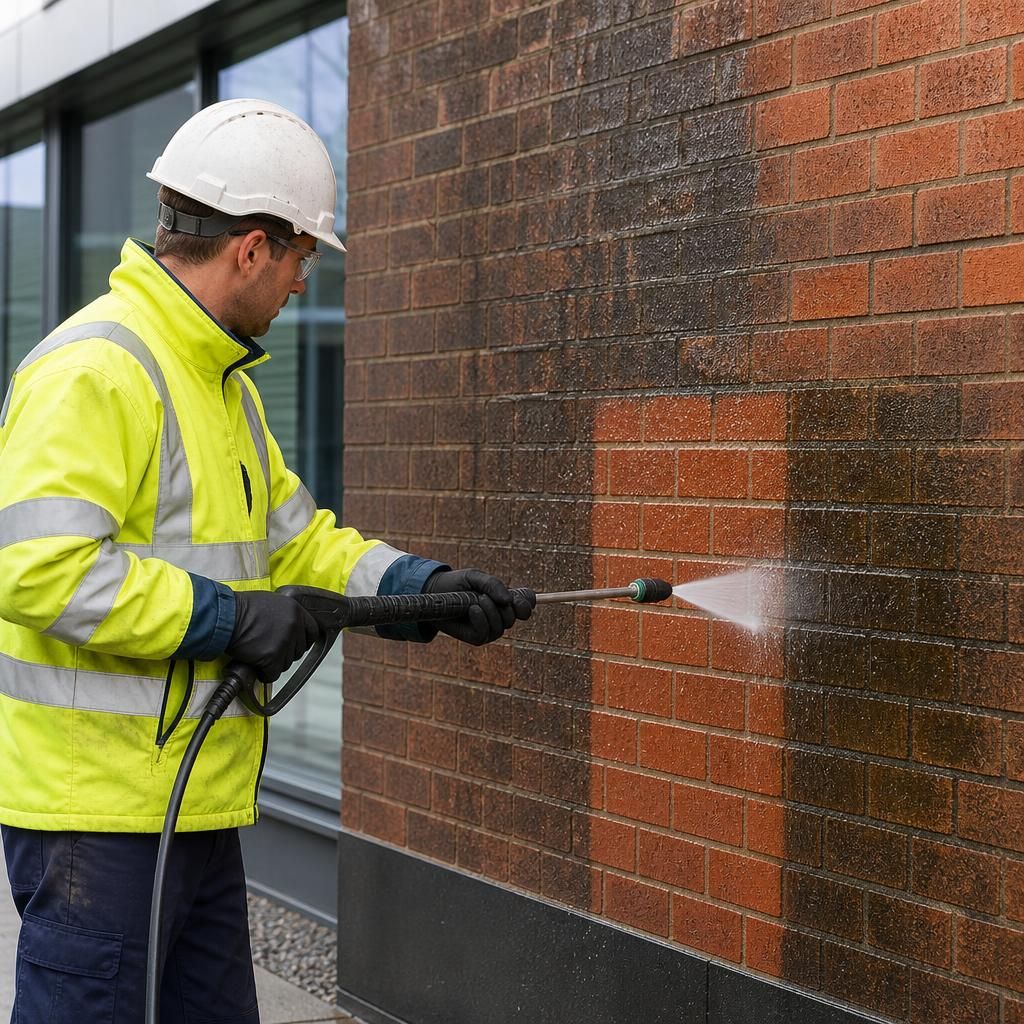
The cleaning method must be matched to both the façade material and the type of soiling. A test area allows us to confirm that the proposed pressure, temperature, cleaning solution and rinsing process remove the deposit without damaging the surface, coating, pointing or sealant.
We assess the test area for changes in colour, texture, gloss and water behaviour before proceeding. If the result is not suitable, we adjust the method rather than increasing pressure. This is particularly important for weathered brick, porous stone, painted render, coated cladding and glass with specialist finishes.