
What are the environmental considerations when choosing façade cleaning techniques?
The main environmental considerations when choosing a façade cleaning technique are water consumption, chemical use, energy requirements and the control of contaminated runoff. A responsible method should clean effectively while limiting pollution, protecting the façade and surrounding areas, and allowing wastewater and waste materials to be collected and disposed of lawfully.
Choosing an environmentally responsible façade cleaning technique means balancing cleaning performance with water use, chemical use, energy consumption, noise, waste and the control of contaminated runoff. The most suitable method is not always the one that uses the least water or no chemicals; it is the method that removes the contamination effectively while causing the least overall harm to the façade, occupants, public areas and drainage environment.
Water consumption and recovery
Water use varies considerably between pressure washing, soft washing, steam cleaning and more controlled specialist processes. The required volume depends on the façade material, the type of soiling, the pressure and temperature used, and whether the surface needs rinsing. A low-pressure process may be preferable for delicate masonry, while steam cleaning can reduce the need for detergents in some applications.
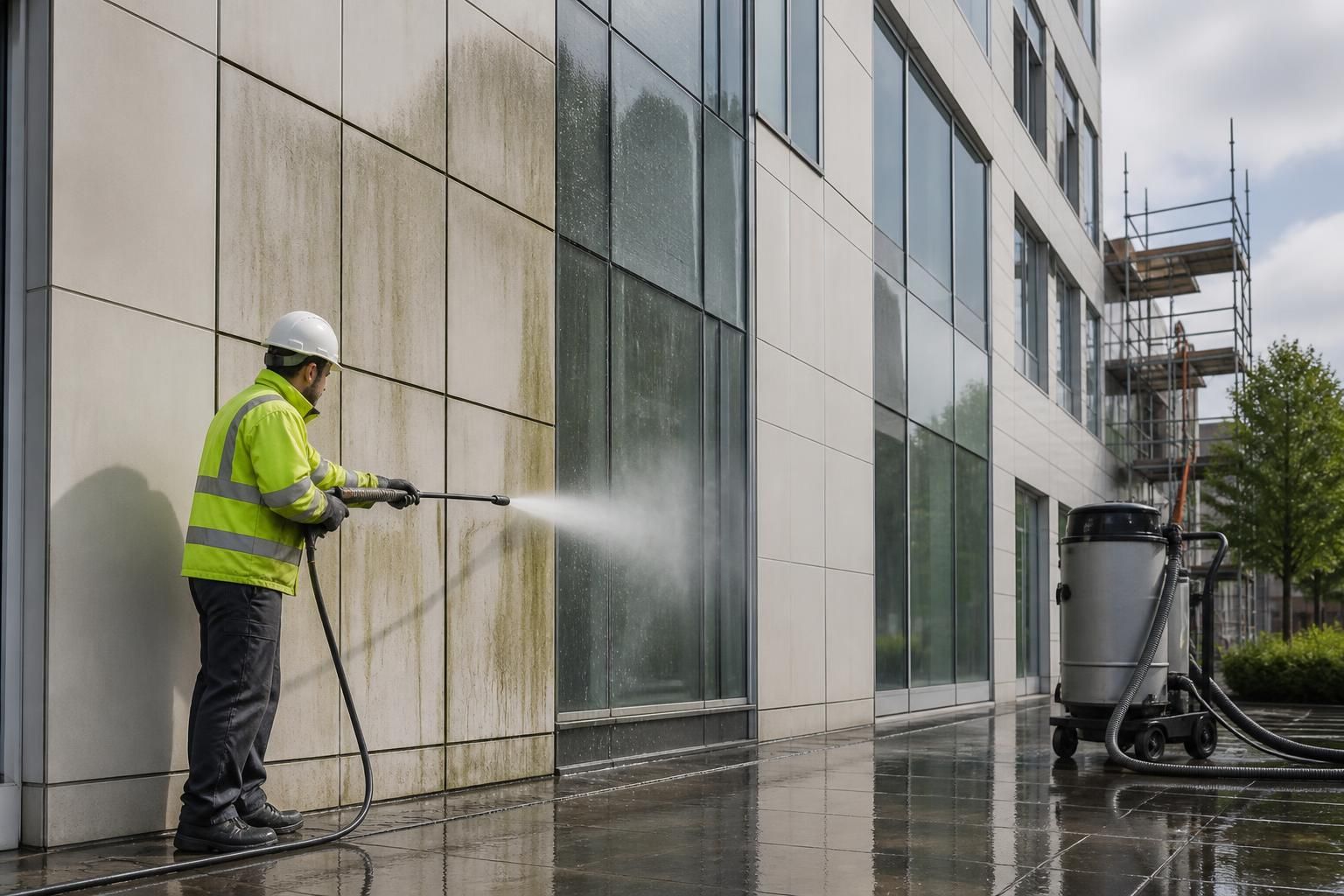
Water efficiency should be considered alongside recovery arrangements. Cleaning wastewater may contain dirt, oils, biological growth, paint residues, heavy metals or detergent, so it should not be allowed to enter surface-water drains or watercourses without assessment. Responsible work planning identifies drainage points, protects vulnerable areas and uses bunding, drain covers, wet vacuums, pumps or collection systems where appropriate. Recovered water must then be handled and disposed of in accordance with its contents and applicable requirements.
Cleaning chemicals and their environmental impact
Chemical selection should be based on the contamination and the façade material rather than using a stronger product by default. Alkaline, acidic, biocidal and solvent-based products have different risks, including effects on vegetation, metals, coatings, masonry and aquatic life. Some treatments can also create hazardous residues or require specific controls during storage, application and disposal.
Where a chemical is necessary, environmental considerations include its concentration, contact time, biodegradability, toxicity, rinse requirements and compatibility with the substrate. Applying only the amount required, preventing overspray and following the product safety data sheet can reduce pollution and protect workers and the public. Chemical-free methods may be appropriate for some dirt, algae or atmospheric deposits, but they are not automatically suitable for every façade or type of staining.
Runoff, drainage and legal disposal
Runoff is one of the most important environmental controls during façade cleaning. Water carrying silt, detergents, paint, oil or biological contamination can pollute drains and nearby land if it is poorly managed. Before work begins, the cleaning team should assess the surface, surrounding ground, drainage layout and likely contaminants. Runoff can then be contained, filtered, collected or directed to an approved disposal route, depending on the site conditions and waste classification.
Wastewater, sludge, spent absorbent materials, removed coatings and contaminated debris should be treated as site waste rather than left to dry on the ground or washed away. Records, consignment information and contractor arrangements may be needed where waste is classified as controlled or hazardous. The exact requirements depend on the material removed and the disposal route, so these matters should be agreed during the method statement and risk assessment process.
Energy use, access equipment and emissions
Pressure pumps, steam generators, hot-water systems, lighting and access equipment all consume energy or fuel. A method using heated water may have a higher energy demand than cold-water cleaning, but it may also reduce chemical use, shorten dwell times or improve removal of oils and biological deposits. Environmental assessment should therefore consider the complete process rather than one item in isolation.
Efficient equipment, sensible operating pressures, well-maintained machinery and careful planning can reduce unnecessary fuel use and emissions. Access arrangements also matter. Selecting equipment that reaches the façade safely without repeated repositioning can reduce vehicle movements, idling and disturbance. Where practical, the contractor should plan deliveries, equipment set-up and working areas to avoid avoidable journeys and noise.
Protecting the façade and extending its service life
Overly aggressive cleaning can damage mortar joints, protective coatings, glazing seals, stone surfaces, brick faces and historic finishes. This creates an environmental cost because damaged materials may need repair or replacement, using additional raw materials, transport and energy. Incorrect chemical use can also accelerate corrosion, salt movement or surface deterioration.
An environmentally sound approach begins with identifying the façade material and testing the proposed technique in an inconspicuous area. The test should assess cleaning results, colour change, surface texture, coating adhesion, water penetration and any residues. Low-pressure or steam cleaning may be suitable in some situations, while abrasive methods may be restricted to carefully controlled circumstances. The least aggressive method that achieves the required result is generally preferable.
Biocides, vegetation and local ecology
Algae, moss, lichen and other biological growth may require a biocidal treatment, particularly where regrowth is persistent. However, these products must be applied carefully around planting, soil, water features, nesting areas and occupied neighbouring properties. Overspray and uncontrolled rinsing can affect vegetation and aquatic environments. Physical removal, steam or hot-water treatment may provide an alternative in some cases, although the correct option depends on the growth and the substrate.
Work should be planned to minimise disturbance to birds, bats and other protected species where they may use façade cavities, roof edges or sheltered areas. The building and surrounding environment should be considered before access equipment, sheeting or chemical treatments are introduced. If there is a reasonable possibility of protected wildlife being present, specialist advice may be necessary before cleaning proceeds.
Noise, dust and disruption
Environmental impact also includes effects on people using the building and the surrounding community. High-pressure equipment, generators, access machinery and abrasive processes can create noise and airborne mist or dust. Containment sheeting, suitable working hours, maintained equipment and a method that avoids unnecessary abrasion can reduce these effects. Where a façade is adjacent to an entrance, road or pedestrian route, controls should be planned to prevent spray, debris and cleaning residues from spreading beyond the work area.
How to compare cleaning methods
A useful comparison should consider:
- the quantity and temperature of water required;
- whether detergents, biocides, solvents or other chemicals are needed;
- the likely composition and volume of contaminated runoff;
- how wastewater, sludge, removed coatings and packaging will be contained and disposed of;
- energy use, fuel consumption, vehicle movements and equipment emissions;
- noise, overspray, dust and effects on neighbouring areas;
- the risk of damage to the façade and the resulting need for repairs; and
- whether the method is suitable for the building, its surroundings and any heritage or ecological constraints.
What to confirm with a façade cleaning contractor
Before work starts, ask for the proposed method, product information, test-cleaning arrangements, runoff controls and waste-disposal procedure. The contractor should be able to explain why the selected process is suitable for the façade and contamination, how drainage will be protected, and what will happen to collected wastewater and debris. Method statements, risk assessments, control-of-substances information and access plans should reflect the actual building rather than relying on a generic procedure.
For commercial premises, environmental controls should also be coordinated with the building’s facilities team, drainage arrangements and any site-specific requirements. A documented inspection after cleaning can confirm that residues have been removed, drains and surrounding areas are clean, and the façade has not been adversely affected. This approach helps ensure that environmental responsibility is built into the cleaning process from survey through to final waste handling.
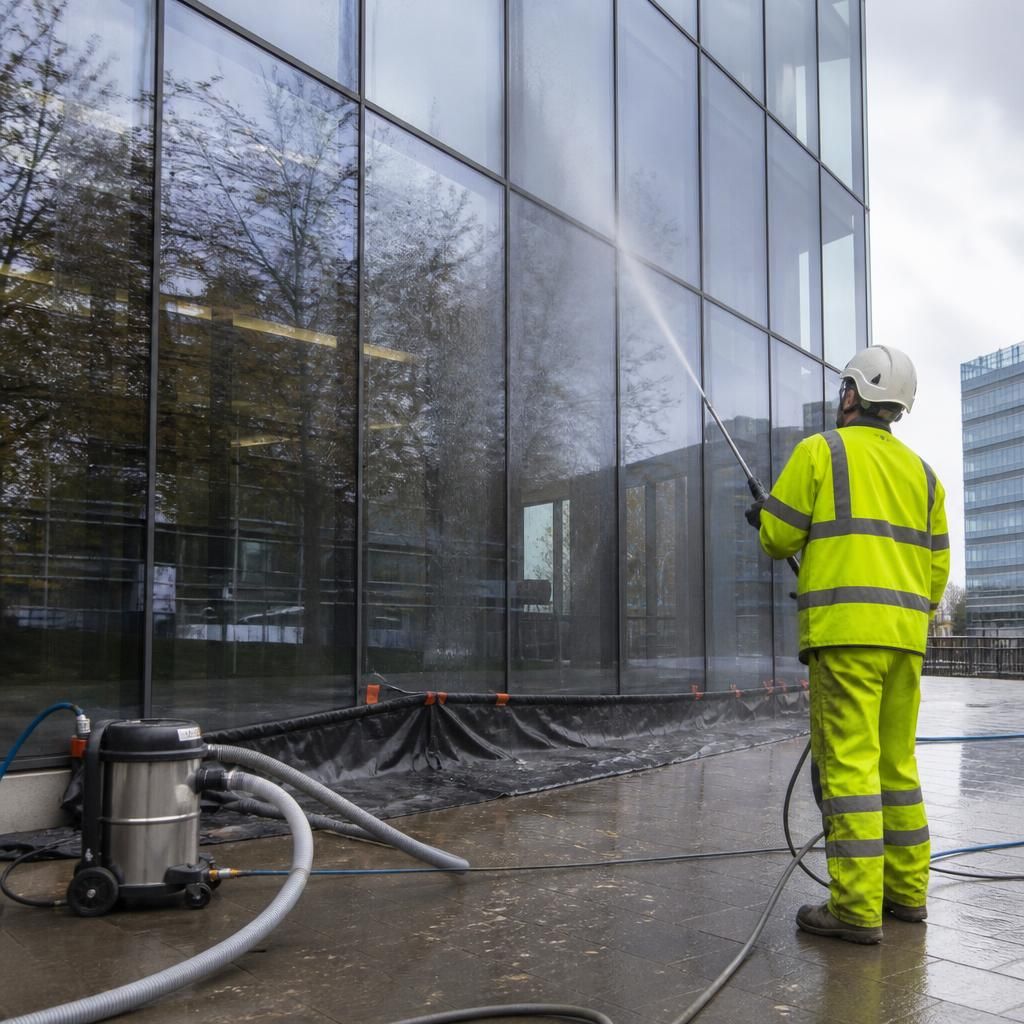
Controlling contaminated runoff is a central environmental consideration in façade cleaning. Wash water can carry detergents, paint residues, oils, biological growth and fine debris into surface-water drains, soil or nearby watercourses, so it must be contained and managed rather than allowed to escape from the work area.
Before cleaning begins, the drainage layout and surrounding surfaces should be assessed. Suitable controls may include drain covers, bunding, temporary barriers, wet vacuums, pumps and collection tanks. The cleaning method should also be selected with the likely waste stream in mind: wastewater, sludge, removed coatings and contaminated absorbent materials may require separate handling and an approved disposal route.
Ask the contractor to explain how runoff will be prevented, collected and disposed of, and to include these arrangements in the method statement. This provides a practical way to compare façade cleaning techniques and confirms that environmental controls are planned before work starts.