
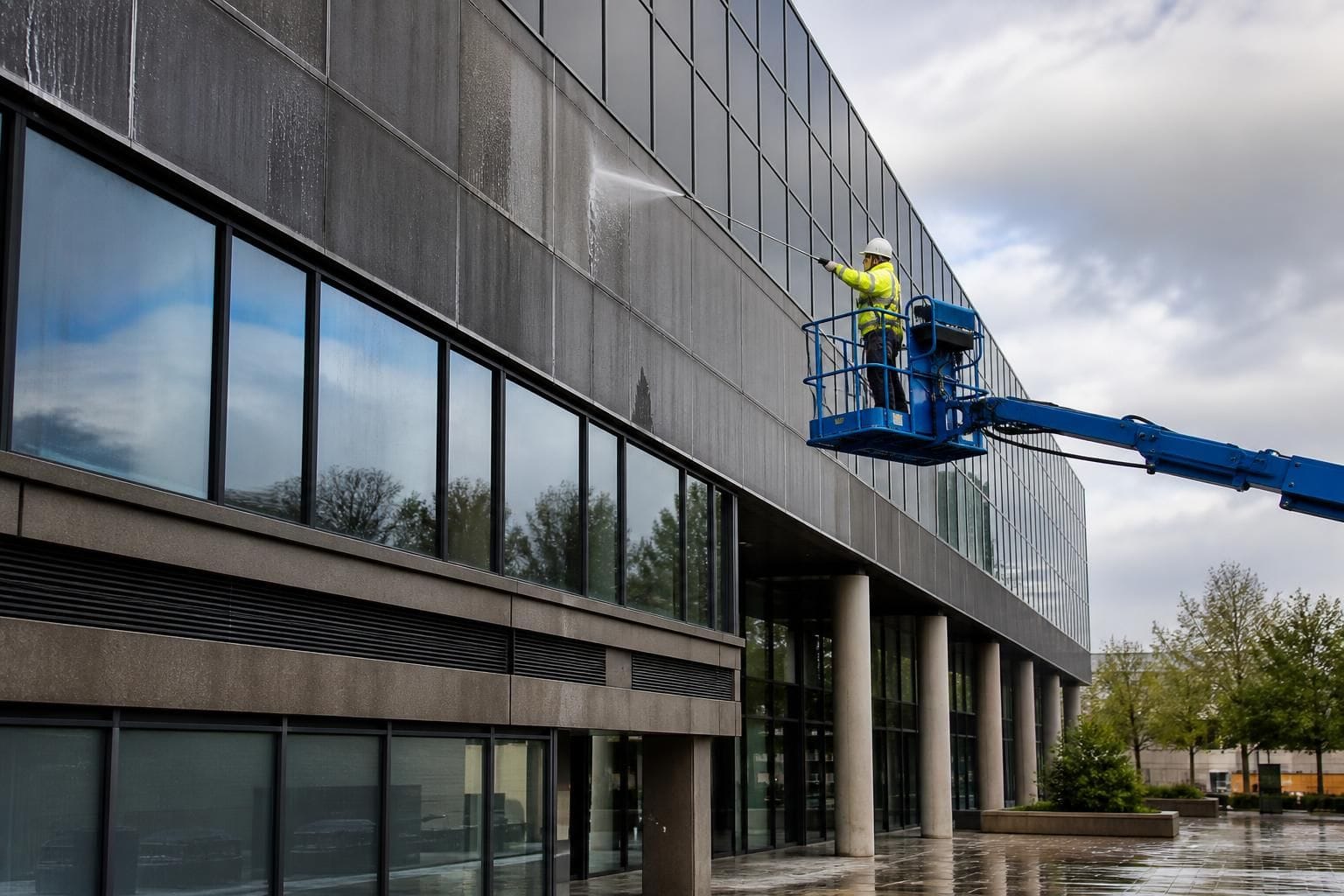
How often should a commercial building façade be cleaned to maintain its appearance and integrity?
Most commercial building façades should be inspected at least annually and cleaned when dirt, algae, staining, pollution or biological growth becomes established, with many properties benefiting from planned cleaning every one to three years. The appropriate interval depends on the façade material, local exposure, building use and condition, so a tailored maintenance plan is more reliable than a fixed schedule.
Most commercial building façades should be inspected at least annually and cleaned when dirt, pollution, staining, algae or other biological growth becomes established. In practice, many properties benefit from planned façade cleaning every one to three years, although the correct interval depends on the façade material, local exposure, building use and existing condition. A tailored maintenance plan is more reliable than applying the same cleaning frequency to every building.
Regular cleaning helps maintain the appearance of a property, but it also supports the long-term condition of the façade. Deposits can retain moisture, obscure early signs of deterioration and contribute to staining or biological growth. On some materials, pollutants and organic matter may gradually affect coatings, joints, sealants or surface finishes. Cleaning should therefore form part of planned external maintenance rather than being considered only when the building looks visibly dirty.
The most suitable cleaning interval is influenced by several factors:
- Location and exposure: Buildings close to busy roads, construction activity, industrial areas or dense urban environments usually collect airborne pollution and traffic film more quickly. Properties exposed to trees, shade or persistent dampness may also develop algae, moss or lichen sooner.
- Façade material: Brick, stone, concrete, render, cladding, glass and coated surfaces all tolerate cleaning differently. Porous or delicate materials may require gentler methods and longer intervals, while smooth, non-porous surfaces can often be cleaned more efficiently when deposits first appear.
- Building orientation and design: North-facing elevations, recessed areas, ledges, parapets and sheltered sections often remain damp for longer and may need closer monitoring. Features that collect water or debris can become soiled well before the main façade.
- Building use: Retail premises, offices, schools, healthcare sites, warehouses and public buildings have different presentation, hygiene and access requirements. High-footfall or customer-facing properties may need more frequent appearance-led cleaning than less visible industrial premises.
- Previous condition and cleaning history: A façade with established staining, failed coatings, damaged joints or recurring biological growth may need an initial restoration clean followed by a shorter review period. Once the surface is brought under control, the interval may be extended.
An annual inspection is useful even when a full clean is not required. The inspection should consider the main elevations as well as canopies, entrances, loading areas, lower-level walls, ledges and difficult-to-reach sections. It should identify changes in colour, surface deposits, cracking, spalling, damaged pointing, failed sealants, corrosion, water run-off marks and areas where vegetation or biological growth is developing.
Visible signs that a façade may need cleaning include traffic film, black or green discolouration, bird fouling, algae, moss, lichen, graffiti, rust marks and streaking beneath drainage outlets. A building may also need attention before a planned sale, letting campaign, inspection, refurbishment, event or change of tenant. Cleaning at these points should still be based on a suitable method for the material, rather than simply using the most powerful available equipment.
Cleaning too frequently or with an unsuitable technique can cause avoidable wear. Excessive pressure, aggressive chemicals, uncontrolled water use or repeated treatment of a vulnerable coating can damage masonry, remove surface finishes, drive water into joints or leave uneven results. The condition of the façade should therefore be assessed before work begins, with the cleaning method selected according to the substrate, type of contamination and access requirements.
A practical maintenance programme normally includes:
- An initial survey of the façade, including material identification, condition, contamination and access constraints.
- Small test areas where the surface response or cleaning method is uncertain.
- A planned clean using an appropriate combination of pressure washing, soft washing, steam cleaning or other controlled treatment.
- Checks for areas requiring remedial work, such as defective pointing, cracked render, failed sealant or drainage problems.
- A post-clean inspection and photographic record to support future maintenance decisions.
- Periodic reviews that take account of how quickly deposits return and whether the building’s use or surroundings have changed.
For buildings in Birmingham, the wider West Midlands and other urban or industrial locations, exposure to traffic, construction dust and weathering can make façade condition vary considerably between elevations. A building may not need a complete clean every year, but high-risk areas such as entrances, lower walls and shaded elevations may need localised treatment or more frequent monitoring.
The best schedule is therefore condition-based: inspect annually, clean established contamination before it becomes difficult to remove, and review the interval after each service. A professional assessment can distinguish cosmetic soiling from defects that require repair, helping to protect the façade while maintaining a clean and presentable commercial property.
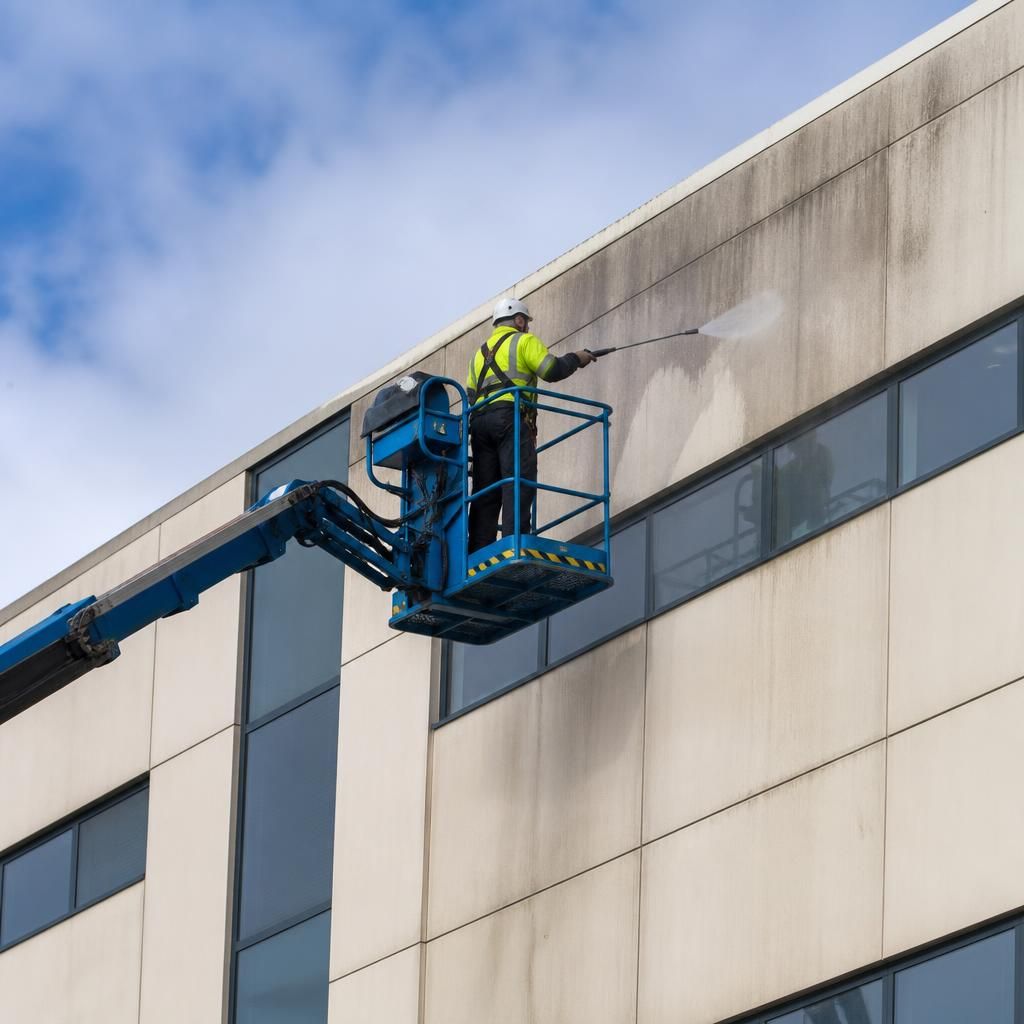
Commercial façade cleaning should be scheduled according to the building’s condition and exposure, rather than a fixed timetable. An annual inspection can identify whether pollution, organic growth, staining or water run-off deposits are developing before they become difficult to remove or conceal damage to the surface.
High-risk areas such as entrances, lower walls, shaded elevations, ledges and sections beneath drainage outlets may need localised cleaning more often than the main façade. Reviewing these areas after each service helps establish a practical maintenance interval while avoiding unnecessary treatment of sound, clean surfaces.