
How do you ensure that environmental and safety standards are met during the façade cleaning process?
We meet environmental and safety standards through documented site risk assessments, method statements, COSHH controls and appropriate access equipment, alongside trained operatives and suitable PPE. We also select the least harmful effective cleaning method, control wastewater and debris, and protect people, property and surrounding drainage throughout the façade cleaning process.
Environmental and safety standards are met through a planned, risk-controlled cleaning process. Before work begins, we assess the façade, surrounding area, access requirements, drainage, weather exposure and potential hazards. We then prepare documented risk assessments and method statements, apply COSHH controls where cleaning products are used, and select equipment and techniques that achieve the required result with the least practicable risk to people, the building and the environment.
Our preparation normally covers:
- Inspecting the façade and identifying fragile materials, loose surfaces, defective joints, glazing, electrical equipment and other features that could be damaged by water, steam, pressure or chemicals.
- Assessing work-at-height risks, vehicle and pedestrian movements, falling objects, contact with services, weather conditions and the effect of cleaning operations on occupants or neighbouring premises.
- Preparing a site-specific risk assessment and method statement, with control measures that reflect the building, access equipment, cleaning method and site conditions.
- Reviewing product information and COSHH requirements for detergents, biocides, graffiti removers or other treatments, including safe storage, handling, application and disposal.
- Agreeing arrangements with the client for access, exclusion zones, emergency procedures, working hours, water supplies, drainage protection and communication with building users.
We choose the least aggressive effective cleaning method. Pressure, temperature, dwell time and chemical concentration are controlled rather than applied at maximum levels. Depending on the façade, this may involve low-pressure washing, steam cleaning, soft washing or a carefully selected chemical treatment. Test patches help confirm how the surface and any existing coatings respond before larger areas are treated. This is particularly important for stone, render, brickwork, architectural coatings, glass and historic materials.
Where chemicals are necessary, we use only products suitable for the surface and intended application. Operatives follow the product instructions and COSHH assessment, use the required PPE, and prevent spray drift or contact with adjacent materials. Chemical use is avoided or reduced where water, steam or mechanical methods can provide an appropriate result without compromising the façade.
Wastewater and debris are controlled at the point of work. We inspect nearby gullies and drainage routes before cleaning, protect vulnerable areas and use temporary containment, covers, collection methods or filtration where appropriate. Dirty water, chemical residues, paint fragments, moss, dust and other debris must not be allowed to enter surface-water drains or contaminate soil. Collected waste is handled in accordance with the agreed site arrangements and applicable waste and discharge requirements. If a proposed method could create an unacceptable discharge risk, it is amended before work proceeds.
Environmental controls also include protecting planting, adjoining properties, vehicles, air intakes, open windows and watercourses. We manage overspray, avoid unnecessary water use, prevent contaminated run-off and keep the work area tidy. The appropriate controls depend on the site, so they are confirmed during the survey rather than assumed in advance.
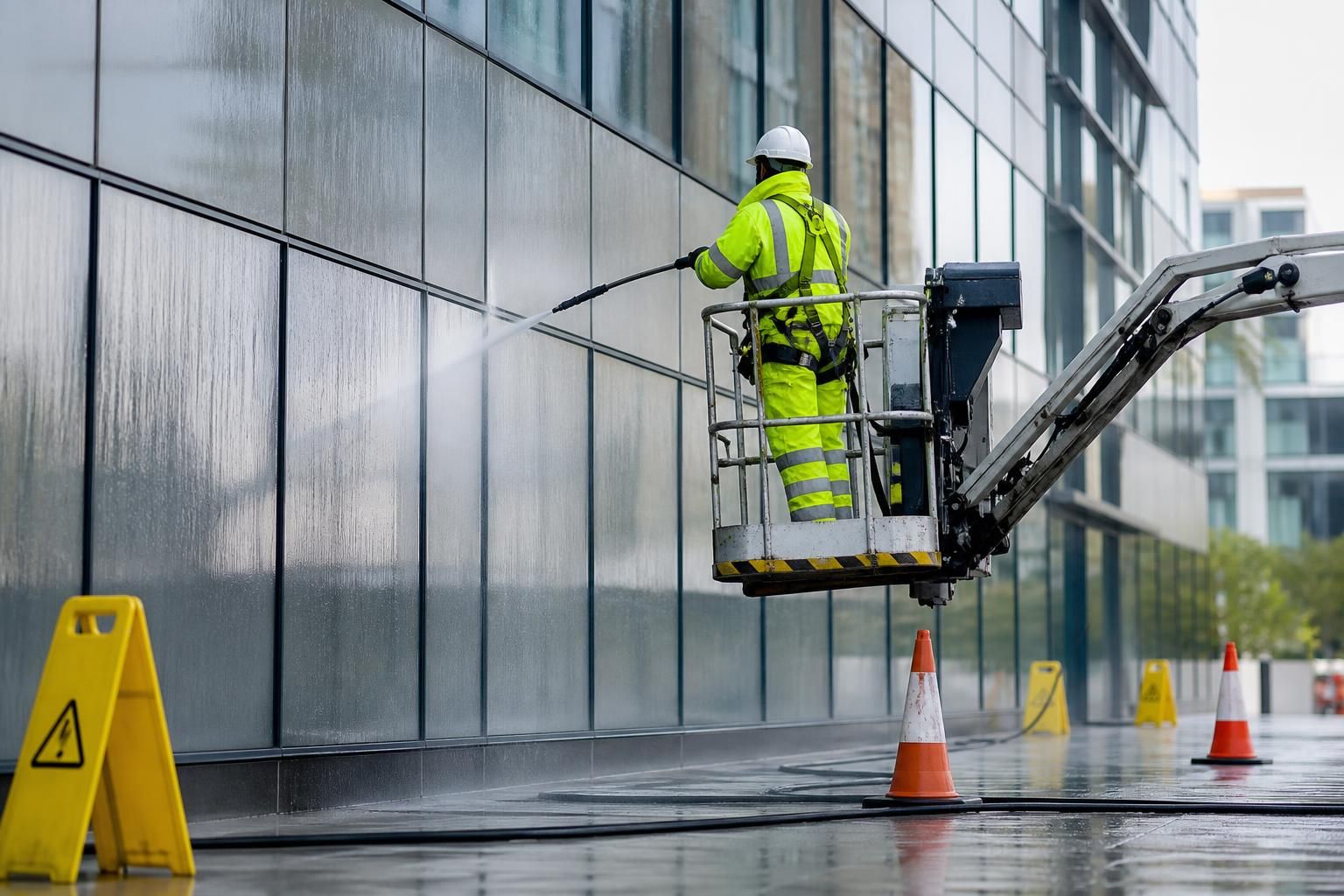
Work at height is planned around collective protection wherever practicable. Depending on the façade and reach required, this can include suitable access towers, scaffolding, powered access equipment or other approved systems. Equipment is selected for the ground conditions, working height, load, reach and proximity to obstructions. It is used by trained and competent operatives, inspected as required and positioned so that cleaning can be carried out without unsafe overreaching. Where fall restraint or fall arrest equipment is required, it is used with suitable anchor arrangements and a rescue plan.
We establish exclusion zones and warning signage where there is a risk from falling equipment, water, debris or moving plant. Operatives wear task-appropriate PPE, which may include eye and face protection, gloves, protective footwear, hearing protection, respiratory protection and fall-protection equipment. PPE is an additional control; it does not replace sound access planning, equipment selection and site segregation.
During the work, the supervisor monitors the façade, access equipment, weather, public interface, wastewater controls and cleaning results. Operations are paused or adapted if wind affects spray control, surfaces become unstable, equipment develops a fault, drainage protection is compromised or conditions change from those covered by the method statement. Any defects or unexpected materials exposed during cleaning are reported so that the client can decide how they should be addressed.
On completion, we remove protection and waste, check the cleaned areas and surrounding surfaces, inspect access points and confirm that drainage routes and working areas have been left in an appropriate condition. Site records can include the risk assessment and method statement, COSHH information, equipment checks, operative competencies, product details, waste documentation and notes of any changes or incidents. This documented approach provides a clear audit trail and helps ensure that façade cleaning is carried out safely, responsibly and in line with the requirements of the individual site.
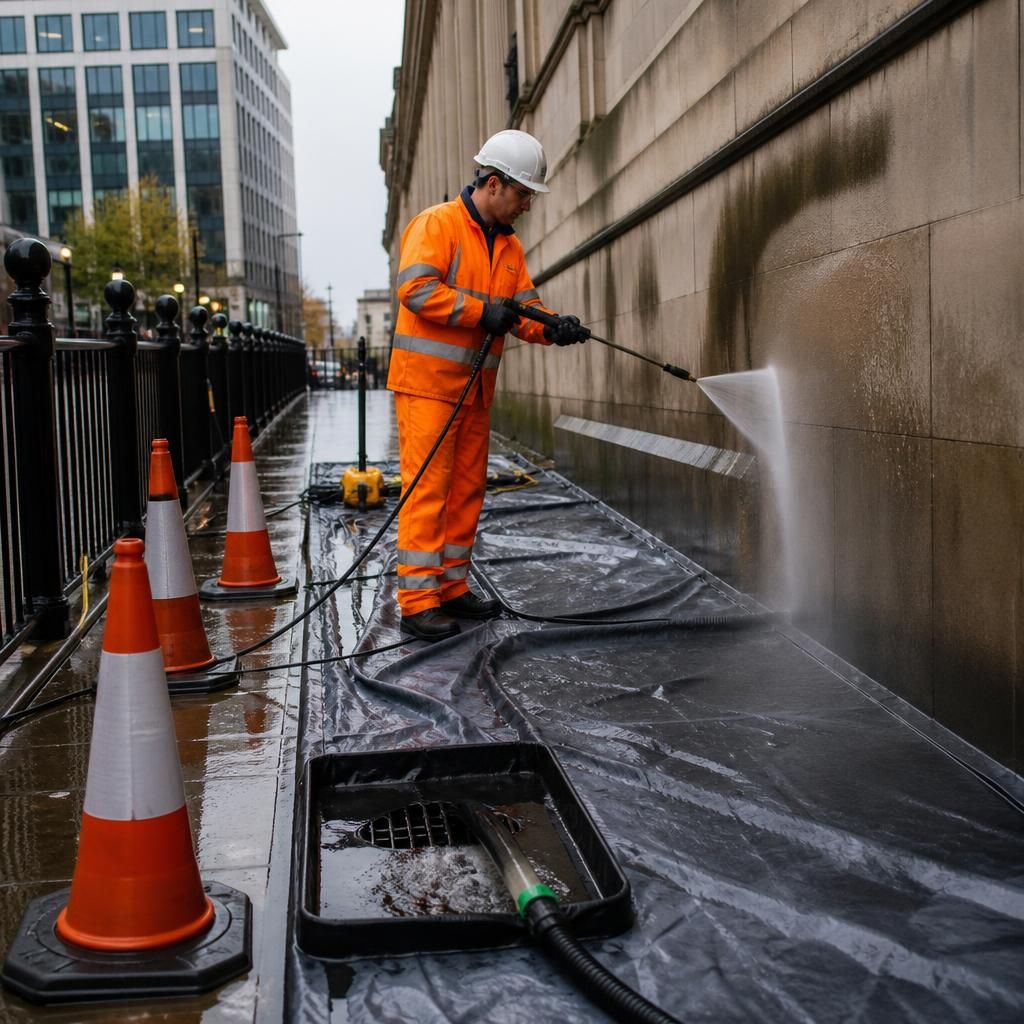
Environmental compliance during façade cleaning depends on controlling wastewater, chemical residues and debris before they can reach surface-water drains, soil or neighbouring property. We inspect drainage routes before work starts and select containment, collection, covers or filtration measures according to the façade, cleaning method and site layout.
Dirty water is not allowed to run uncontrolled from the work area. We also protect planting, vehicles, open windows, air intakes and watercourses from overspray, while reducing chemical use wherever low-pressure washing, steam or another suitable method can achieve the required result. If the planned process presents an unacceptable discharge or contamination risk, we change the method or controls before cleaning proceeds.