
How do you assess and handle difficult-to-reach areas during façade cleaning?
We assess difficult-to-reach façade areas through a site survey covering height, access points, surface condition, nearby hazards and the risk of falling water or debris. We then select the safest suitable method—such as water-fed poles, mobile elevated work platforms, scaffold or rope access—and combine it with controlled pressure washing or steam cleaning where appropriate.
Difficult-to-reach façade areas are assessed through a documented site survey before any cleaning begins. We examine the building’s height, design, access points, surface condition, surrounding hazards, weather exposure and the risk of falling water or debris. This information determines the safest practical access system and cleaning method, whether that involves water-fed poles, a mobile elevated work platform, scaffold, rope access or a combination of techniques.
Initial site assessment
The survey considers the complete façade rather than treating high-level areas in isolation. We identify ledges, recessed sections, canopies, parapets, balconies, roof edges, service ducts and architectural features that may be hidden from ground level. We also check whether the façade can be reached from the ground, from an adjoining roof or from a suitable working platform.
Access routes are reviewed for obstructions such as parked vehicles, loading bays, street furniture, trees, overhead services and restricted entrances. Ground conditions are important when positioning access equipment, particularly where paving, sloping surfaces, underground structures or fragile roofing may affect stability. For occupied commercial premises, we also consider pedestrian movement, deliveries, emergency routes and the location of staff and visitors.
Before selecting equipment, we inspect the substrate and existing defects. Loose masonry, cracked render, failed sealant, open joints, damaged cladding, corroded fixings and defective glazing can make high-pressure cleaning unsuitable. Areas that appear unstable may require repair or specialist advice before cleaning. We record these conditions so that existing damage is not mistaken for damage caused during the works.
Choosing the access method
The access method is selected according to the height, reach, duration, working position and nature of the cleaning task. No single system is appropriate for every building.
- Water-fed poles: These are useful for many windows, cladding panels and straightforward upper-level surfaces where the operator can work safely from ground level. They reduce the need to work at height, although they are less suitable for deep recesses, enclosed balconies and areas obstructed by architectural details.
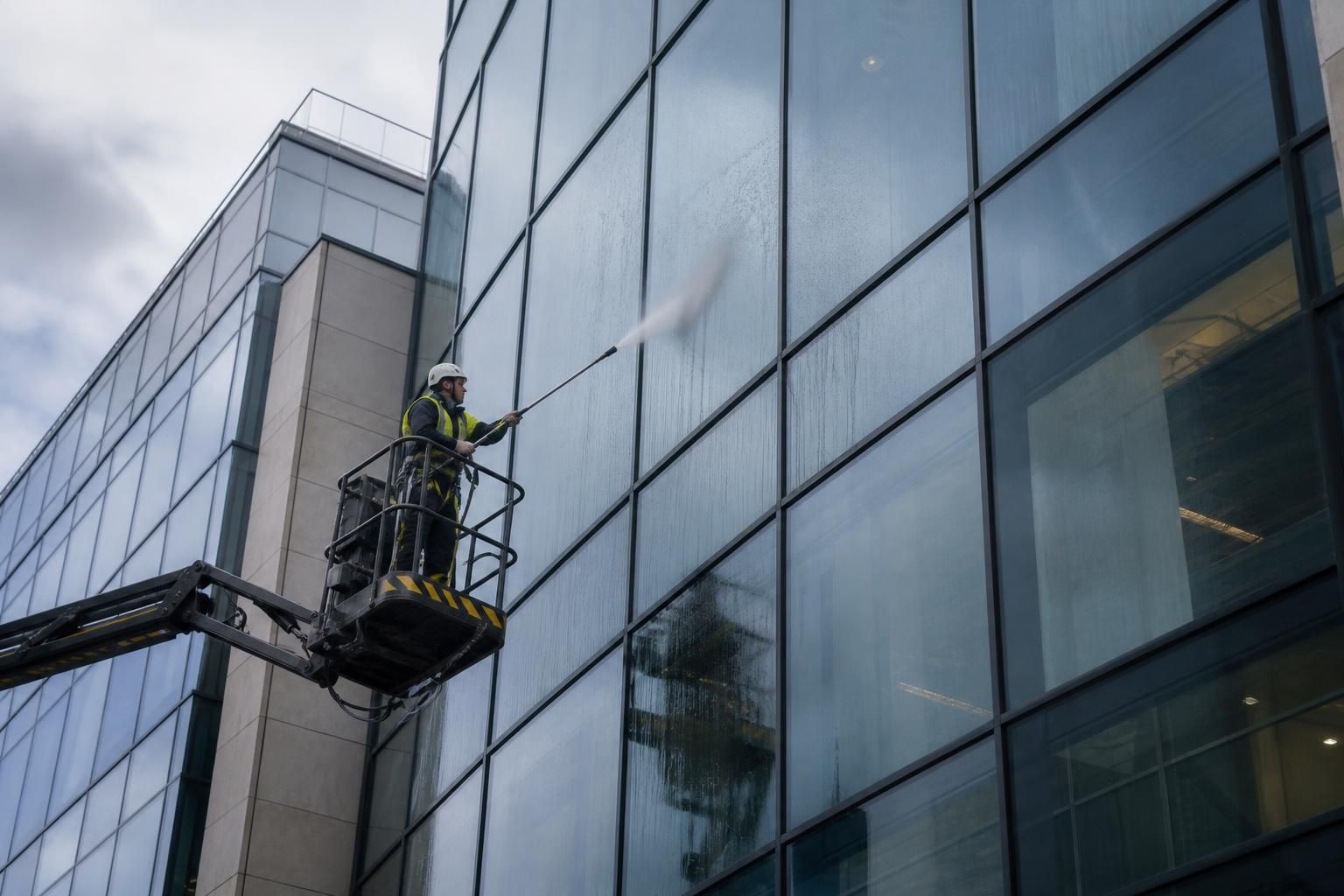
- Mobile elevated work platforms: MEWPs can provide a stable working position for façades with localised staining, graffiti, difficult detailing or areas requiring closer inspection. The equipment must be suitable for the ground conditions, available working space and required outreach. Operators use the platform in accordance with the manufacturer’s instructions and site controls.
- Scaffold or temporary access platforms: These can be appropriate for extensive façade cleaning, restoration work or projects where operatives need repeated access to the same elevations. They provide a controlled working position but require planning around structural loading, public protection, access routes and the effect on the building’s occupants.
- Rope access: Rope systems may be considered where the façade is tall, access from the ground is restricted and a suitable anchor and rescue arrangement can be established. They are planned by competent personnel and are used only where the structure, weather conditions, work duration and cleaning activity make the system appropriate.
- Specialist tools and extensions: Long-reach tools, controlled spray equipment and compact cleaning equipment can help reach narrow or recessed areas while keeping the operator in a safer position. These tools are selected to control pressure, water volume and the likelihood of splashing or surface damage.
The chosen system is not based on reach alone. We consider whether the operative can maintain a safe position while seeing the surface clearly, control the equipment accurately and withdraw safely if conditions change. If one method cannot provide adequate control, a different access arrangement or a staged approach is used.
Controlling the cleaning method at height
High-level cleaning is carried out with the least aggressive method capable of achieving the required result. We may begin with low-pressure rinsing, soft agitation, purified water or steam cleaning before considering more intensive pressure washing. Pressure, temperature, nozzle selection, distance from the surface and water flow are adjusted to suit the façade material and its condition.
Test cleaning is carried out in an inconspicuous area before treating the full elevation. This helps confirm whether the method removes atmospheric soiling, algae, traffic film, mortar deposits or other contamination without affecting coatings, pointing, sealants or decorative finishes. Difficult areas are often cleaned in smaller sections so that the operator can monitor runoff, surface response and the effectiveness of each pass.
Recessed features and ledges require particular care because water and loosened deposits can collect out of sight. We inspect above and below the working position, control the direction of spray and avoid forcing water behind cladding, into vents or through defective joints. Where the façade includes sensitive electrical fittings, signage, vents or glazing seals, these are protected or excluded from the cleaning process as necessary.
Safety and environmental controls
A written risk assessment and method statement covers access equipment, work at height, falling objects, unstable surfaces, electrical hazards, public interface, weather conditions and emergency arrangements. The work area is segregated with suitable barriers and warning signs, and exclusion zones are positioned beneath or around the cleaning area. Equipment, harnesses, anchors and platforms are checked before use, with inspections continuing throughout the project as required.
Wind, rain, ice, poor visibility and electrical storms can make elevated work unsafe or reduce control of water and equipment. Work is paused or rearranged when conditions exceed the safe operating limits for the access system or create an unacceptable risk to people, property or the façade. A rescue plan is established before any rope access or platform work begins; calling emergency services is not treated as the only rescue arrangement.
Runoff and falling debris are managed as part of the access plan. We use collection, diversion or protection measures where necessary to prevent dirty water entering drains, affecting vehicles or reaching public areas. Removed moss, algae, paint residues and other deposits are contained and disposed of in accordance with the site requirements and applicable environmental controls.
Inspection after cleaning
Once difficult-to-reach sections have been cleaned, we inspect them from the closest safe position available and compare the result with the agreed scope. We check for missed deposits, retained staining, blocked drainage points, disturbed joints and any defects revealed by the removal of surface dirt. Where access limitations prevent a close inspection, this is recorded and explained clearly.
Our findings can also identify maintenance issues that were not visible before cleaning, such as failing sealant, damaged render or loose cladding components. Cleaning does not repair these defects, but identifying them early allows the building manager to arrange the appropriate remedial work and avoid repeating an unsuitable cleaning process.
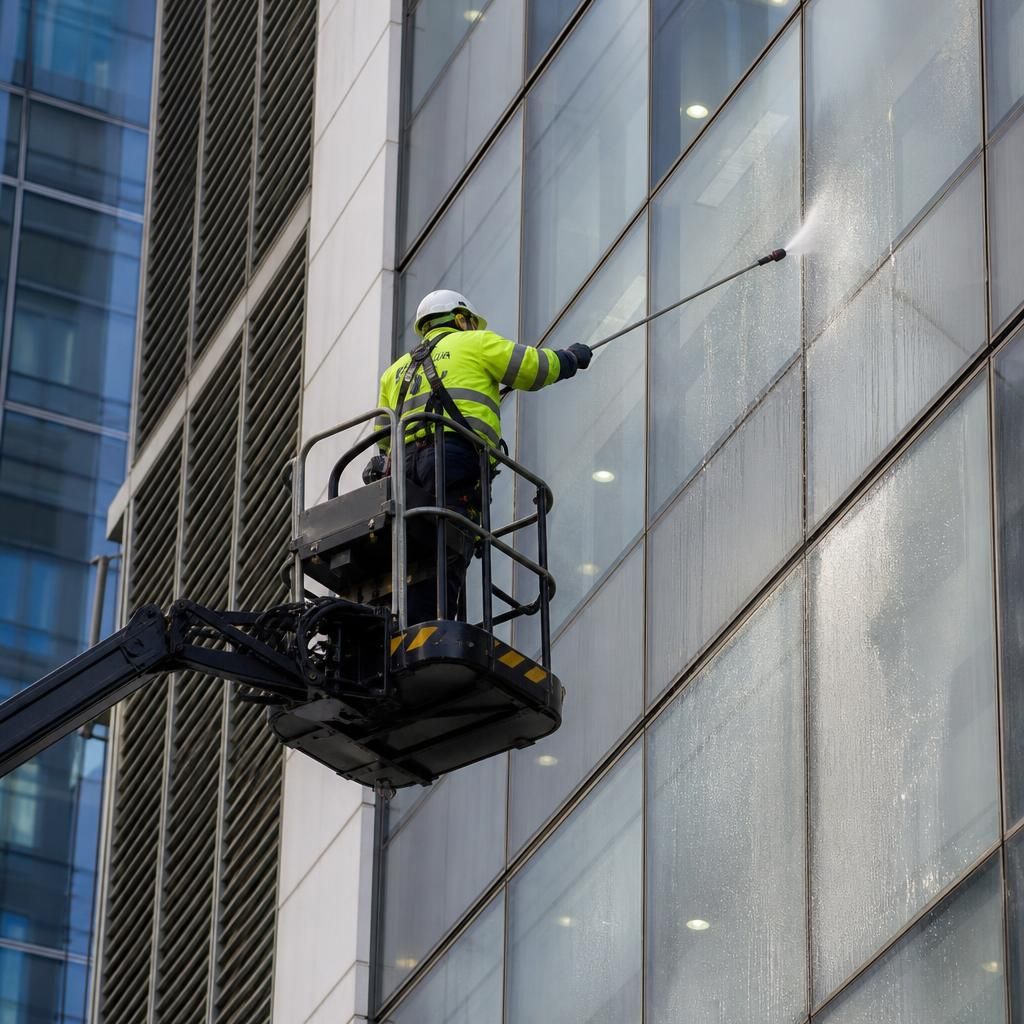
Difficult-to-reach façade areas are assessed by matching the access system to the building, surface and cleaning task—not simply choosing the equipment with the greatest reach. We check whether the operative can maintain a stable position, see the surface clearly, control the cleaning equipment and leave the area safely if conditions change.
For straightforward upper-level surfaces, water-fed poles may allow cleaning from ground level. A mobile elevated work platform can provide closer access to localised staining, recessed details or graffiti, while scaffold or rope access may be more suitable for extensive or highly restricted elevations. Ground conditions, overhead services, public access, weather exposure and the condition of the façade are reviewed before the method is agreed.
Where access is limited, cleaning is carried out in controlled sections. We use the least aggressive suitable method, protect sensitive features and monitor runoff, falling debris and the surface response throughout the work. If the planned access arrangement does not provide adequate control, the work is paused and the method is reassessed rather than forcing the equipment into an unsafe position.
Arrange a Difficult-to-Reach Façade Assessment
Arrange a difficult-to-reach façade assessment so we can review access, surface condition, surrounding hazards and the most suitable cleaning method for your building.
Contact Encanto Exterior Cleaning to discuss the site requirements and plan the work safely.