
What types of cladding surfaces are most suitable for pressure washing?
Pressure washing is generally suitable for sound metal, powder-coated steel, aluminium, uPVC and many fibre-cement cladding panels, provided the pressure, nozzle and cleaning method match the material and its condition. A professional assessment is essential for weathered coatings, loose panels, damaged joints and delicate finishes, which may require low-pressure or soft-washing techniques instead.
The cladding surfaces most suitable for pressure washing are sound, firmly fixed metal panels, powder-coated steel, aluminium, uPVC and many fibre-cement boards. These materials can usually withstand controlled cleaning when the water pressure, nozzle, distance and detergent are matched to the surface. The condition of the cladding is just as important as its material: loose coatings, open joints, corrosion, cracked panels and deteriorated sealants may require low-pressure cleaning or another method instead.
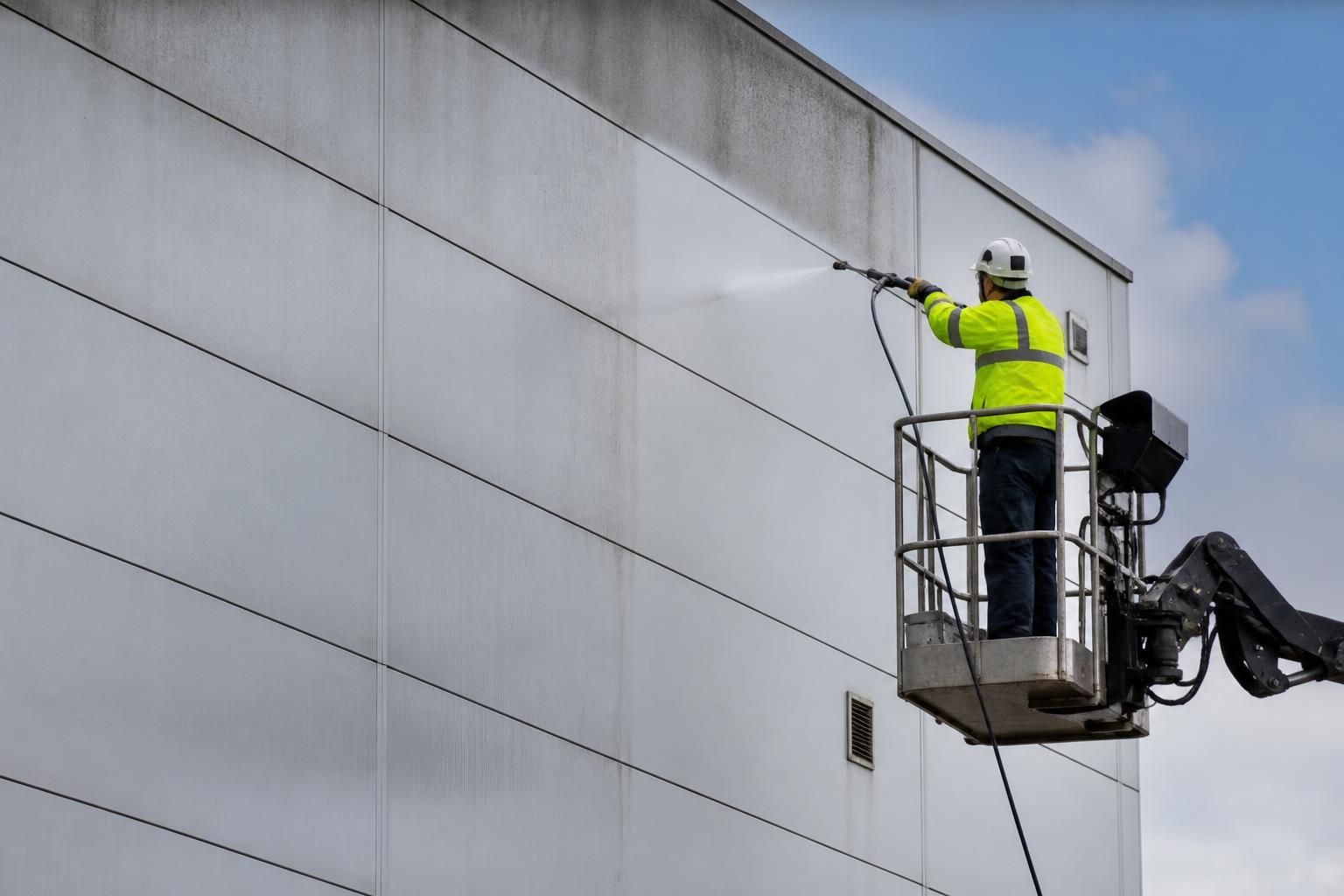
Metal cladding is commonly suitable for professional pressure washing, particularly when the panels are structurally sound and have a well-adhered factory finish. Coated steel, plastisol-coated panels and other pre-finished metal systems can often be cleaned effectively to remove dirt, algae, traffic film and some organic staining. Operators should avoid directing high-pressure water at panel laps, flashings, fixings and seals, as water can be driven behind the façade or into the building envelope.
Powder-coated steel and aluminium cladding are also generally suitable, but the coating must be assessed before cleaning. Aged or chalking finishes can be marked by excessive pressure, aggressive detergents or abrasive attachments. Aluminium is relatively soft compared with steel, so unsuitable pressure or a narrow jet may leave visible lines, dents or surface marks. A broad fan nozzle and controlled technique are normally safer than a concentrated jet.
uPVC cladding can usually be pressure washed where it is intact and securely fixed. It is commonly cleaned to remove general grime, algae, moss and atmospheric deposits. However, older uPVC may have become brittle or warped through weathering. Pressure should be reduced around joints, trims, vents and edges, and the cleaning direction should avoid forcing water behind overlapping panels. Strong solvents and unsuitable chemicals may discolour or soften the surface.
Fibre-cement cladding is often suitable for low- to moderate-pressure washing when the boards, surface coating and joints are in good condition. Cleaning can remove dust, biological growth and surface soiling, but damaged or porous boards need particular care. Excessive pressure can erode the face, expose fibres, worsen cracks or drive water into board joints. Painted fibre-cement may also need a gentler approach if the coating is flaking or powdery.
Composite panels may be pressure washable, but suitability depends on the specific panel construction and finish. Aluminium composite material, insulated panels and proprietary rainscreen systems can have different coatings, edge details and manufacturer requirements. The cleaning method should therefore be checked against available maintenance guidance, especially where panels have a decorative finish, exposed core, sensitive laminate or ageing sealant.
Pressure washing is less suitable for surfaces that are damaged, friable, heavily weathered or poorly attached. Particular caution is required with:
- Timber cladding, where high-pressure water can lift fibres, strip protective coatings and increase moisture penetration.
- Render-coated or insulated render systems, where pressure may cause pitting, cracking, delamination or water ingress.
- Cladding with peeling paint, oxidised metal, exposed corrosion or powdering coatings.
- Panels with failed sealants, open joints, damaged fixings or movement around trims.
- Older or unknown materials where the coating, substrate or previous treatment has not been established.
These surfaces are not automatically impossible to clean, but they may need soft washing, steam cleaning, hand cleaning or a carefully controlled low-pressure process. Timber, delicate coatings and vulnerable render often respond better to a lower-impact method than to conventional pressure washing. Where a façade combines several materials, each section should be treated according to its own tolerance rather than applying one pressure setting across the whole elevation.
A proper suitability assessment considers the material, coating, age, condition and fixing method of the cladding, as well as the type of contamination. Biological growth may need a compatible biocidal treatment before rinsing, while oily deposits, cement residue, carbon staining and old graffiti may require different products or techniques. The surrounding details also matter, including windows, vents, electrical fittings, signage, roof edges, insulation systems and areas where runoff could enter the building.
Before full cleaning, a professional contractor should inspect the façade and carry out a discreet test clean. This confirms whether the selected pressure, nozzle, detergent and working distance remove the contamination without affecting colour, gloss, coating adhesion or surface texture. The test area should be reviewed after drying, because some marks, whitening or coating damage may not be obvious while the surface is wet.
During the work, operatives should use controlled passes rather than holding a jet in one place. They should keep vulnerable joints and openings under particular observation, protect nearby assets, manage dirty water where necessary and rinse cleaning products from the surface in accordance with the material and environmental requirements. Access equipment should also be selected so that operators can maintain a safe, consistent distance from the cladding.
In practical terms, sound metal, aluminium, uPVC and fibre-cement cladding are usually the strongest candidates for pressure washing. The safest method is not determined by material alone: a well-maintained panel may tolerate controlled pressure, while a damaged panel made from the same material may need a gentler treatment or repair before cleaning. A site-specific assessment ensures that cleaning improves the façade without shortening the service life of the cladding or its protective coating.
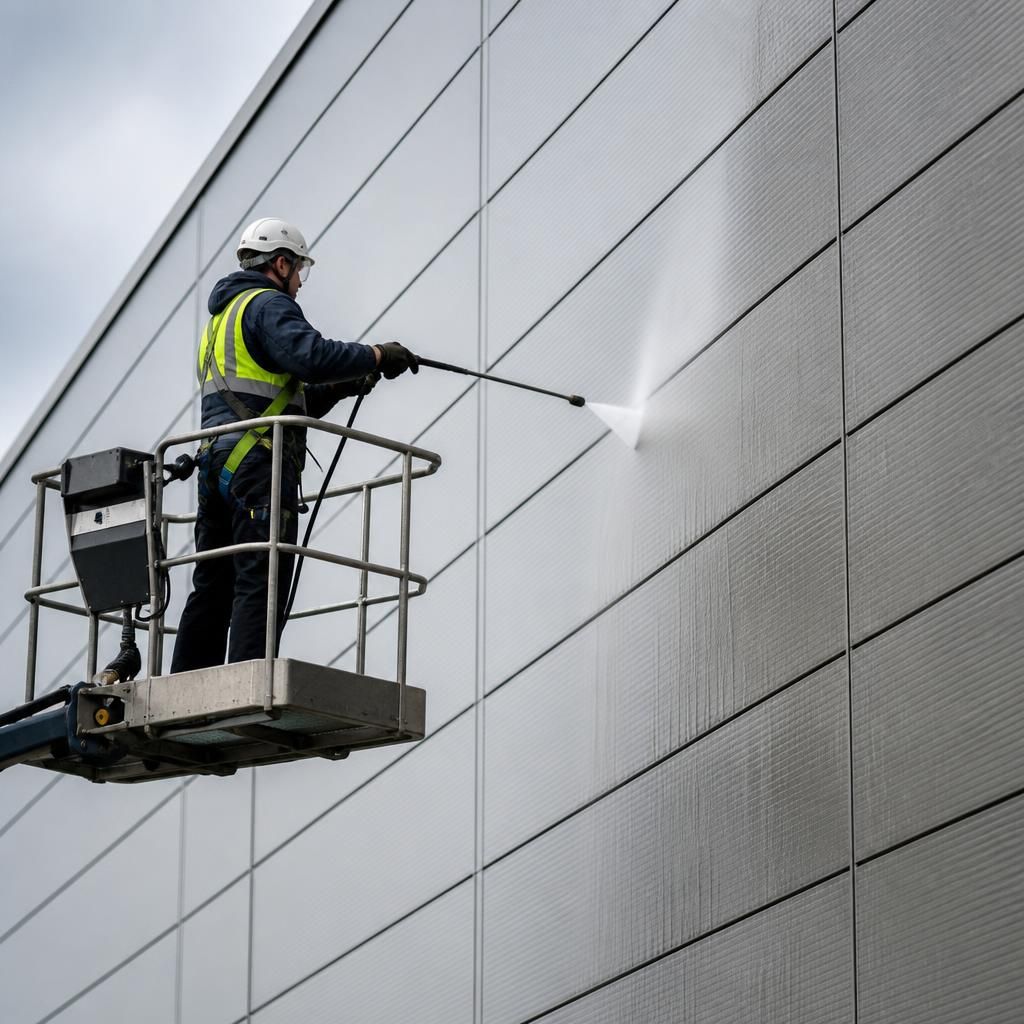
Sound, firmly fixed metal, aluminium, uPVC and fibre-cement cladding are generally suitable for controlled pressure washing, provided their coatings, joints and fixings are intact. The material alone does not determine suitability: weathering, corrosion, cracked panels, failed sealants and peeling finishes can make a surface vulnerable to water pressure.
A professional test clean should therefore be completed before the main work begins. This confirms that the selected pressure, nozzle, detergent and working distance remove the soiling without marking the coating or forcing water behind laps, trims and joints. Delicate, damaged or porous areas may require low-pressure washing, soft washing or steam cleaning instead.