
What safety measures should be implemented when undertaking cladding and render pressure washing on commercial properties?
Commercial cladding and render pressure washing should be controlled through a site-specific risk assessment, suitable access equipment and trained operatives using pressure settings appropriate to the surface. Measures should also include exclusion zones, personal protective equipment, protection of windows and electrical systems, safe management of water and chemicals, and checks for loose, damaged or vulnerable materials before cleaning begins.
Safe cladding and render pressure washing on commercial properties requires a site-specific risk assessment, competent operatives, suitable access equipment and carefully controlled cleaning methods. Before work starts, the contractor should inspect the building and surrounding area, identify hazards, select pressure and temperature settings appropriate to the surface, and establish controls to protect people, the structure, equipment and the environment.
Complete a site-specific risk assessment
The risk assessment should consider the building’s height, layout, occupancy, access restrictions and the condition of the cladding or render. It should identify risks including falling materials, fragile surfaces, live electrical equipment, vehicle movements, public access, slips, contaminated water, chemical exposure and falling objects. The method statement should explain how each risk will be controlled and should be reviewed if site conditions change.
Where the work falls within the scope of the Construction (Design and Management) Regulations, the relevant duties and communication arrangements must also be addressed. Site rules, emergency procedures and responsibilities should be explained to everyone involved before cleaning begins.
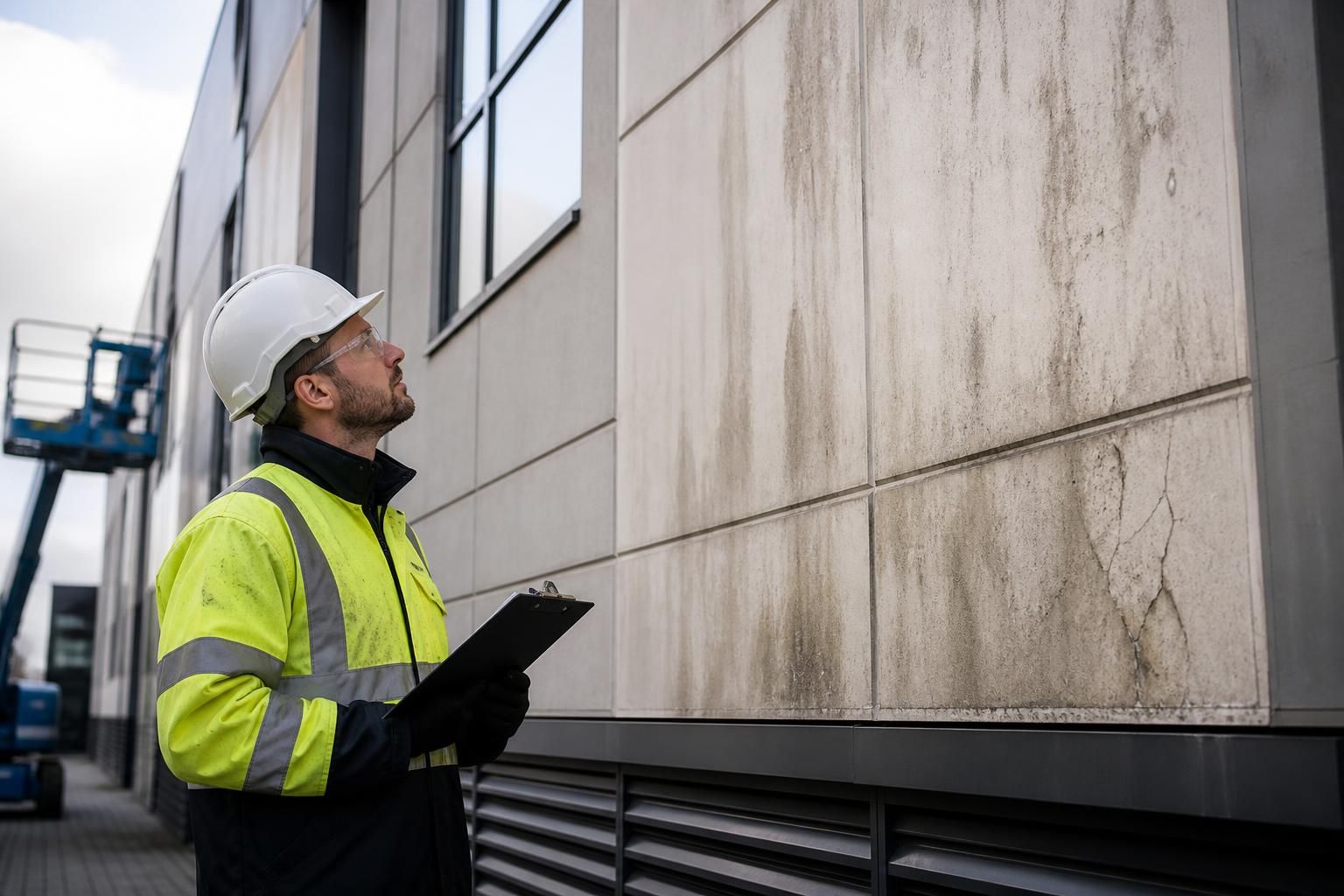
Inspect the façade before applying water
Cladding and render should be checked for loose panels, open joints, failed sealant, cracked render, delamination, corrosion, damaged coatings and areas where water could enter the building. Pressure washing can worsen an existing defect or drive water behind a panel, so unstable materials should be repaired or made secure before cleaning. Windows, doors, vents, roof edges, insulation systems and other vulnerable details need particular attention.
A small test area should be cleaned first where the surface, coating or soiling is unfamiliar. This helps confirm that the chosen pressure, flow, temperature and detergent will remove the contamination without etching, marking, discolouring or loosening the finish.
Use trained operatives and suitable equipment
Operatives should be trained in pressure-washing techniques, surface identification, chemical handling, work at height and emergency procedures relevant to the task. They should understand that the safest and most effective method is not always the highest pressure. Fan nozzles, controlled working distances and low-pressure or soft-washing techniques may be more appropriate for coated metal, insulated render systems, painted surfaces and aged materials.
Pressure washers, hoses, electrical supplies, pumps and access equipment should be inspected and maintained. Hoses should be routed to prevent trip hazards and protected from vehicles, sharp edges and excessive bending. Equipment must be used in accordance with the manufacturer’s instructions, with particular care around electrical connections and wet working conditions.
Control work at height and falling-object risks
Access should be selected according to the height, reach, duration and condition of the work area. Properly inspected mobile elevated work platforms, scaffolds or other suitable systems may be required; ladders should not be treated as a general work platform for prolonged pressure washing. Anyone using access equipment should be trained and authorised, with ground conditions, overhead obstructions and rescue arrangements checked in advance.
Tools, hoses and fittings must be secured so they cannot fall onto people or vehicles. Operatives should avoid directing spray towards unstable panels, roof edges or areas where fragments could be dislodged. A controlled exclusion zone should be maintained below and around elevated work, with barriers, warning signs and a banksman where site traffic or public movement makes this necessary.
Protect people with appropriate PPE
PPE should be selected following the risk assessment and may include waterproof and chemical-resistant gloves, protective footwear with slip-resistant soles, eye or face protection, hearing protection, suitable workwear and head protection. Respiratory protection may be necessary when using certain products or where cleaning can create hazardous mist, but it must be properly selected, fitted and maintained. PPE is an additional control and does not replace safe equipment, isolation and exclusion arrangements.
People working nearby should be kept away from spray, contaminated splash and falling debris. Building occupants should be informed about the work, particularly where entrances, windows, ventilation systems or external walkways could be affected. Cleaning should be paused if members of the public, unprotected workers or vehicles enter the controlled area.
Manage water, detergents and electrical hazards
Windows, doors, air-conditioning intakes, lighting, sockets, cameras, alarms and other electrical or sensitive equipment should be closed, isolated or suitably protected before washing. Water must not be allowed to enter the building through joints, vents or damaged areas. Any temporary electrical supply should be appropriate for wet conditions and protected by suitable safety devices.
Cleaning products should be assessed under the Control of Substances Hazardous to Health requirements. Operatives should follow the product safety data sheet, use the correct dilution, prevent incompatible products from mixing and store chemicals securely. Detergent should be applied only where suitable for the cladding or render and rinsed away in a controlled manner.
Run-off should be contained, collected or diverted so that dirty water, detergent, paint residues, oils or biological contamination do not enter surface-water drains, soil, neighbouring premises or watercourses. Drainage points should be identified before work starts, and the disposal method should comply with the site’s requirements and applicable environmental regulations. Slurry and standing water should be removed promptly to reduce slip risks.
Plan around weather, traffic and site operations
Wind, rain, frost, extreme temperatures and poor visibility can affect spray control, access equipment, drying times and the safety of people below. Work should be postponed where weather makes the method unsafe or could cause damage to the surface. Wind direction is particularly important when using detergents or working near roads, entrances and neighbouring buildings.
On occupied or active commercial sites, the cleaning plan should coordinate with deliveries, pedestrian routes, car parks and other contractors. Traffic management, temporary closures and a clearly signed alternative route may be needed. A designated person should monitor the exclusion zone and stop the work if conditions become unsafe.
Check the completed work
After cleaning, the façade should be inspected for remaining loose material, water ingress, surface damage, staining, chemical residue and areas requiring further attention. Protective coverings should be removed only after nearby equipment and openings are dry and safe. The site should be left free from hoses, waste, standing water and contaminated debris.
Records should include the risk assessment, method statement, equipment checks, chemical information, test-cleaning results, access inspections, incidents and any defects identified. If the inspection reveals damaged render, failed sealant, corrosion or loose cladding, that condition should be reported rather than concealed by cleaning. These controls help ensure that pressure washing improves the condition and presentation of the property without creating avoidable risks.
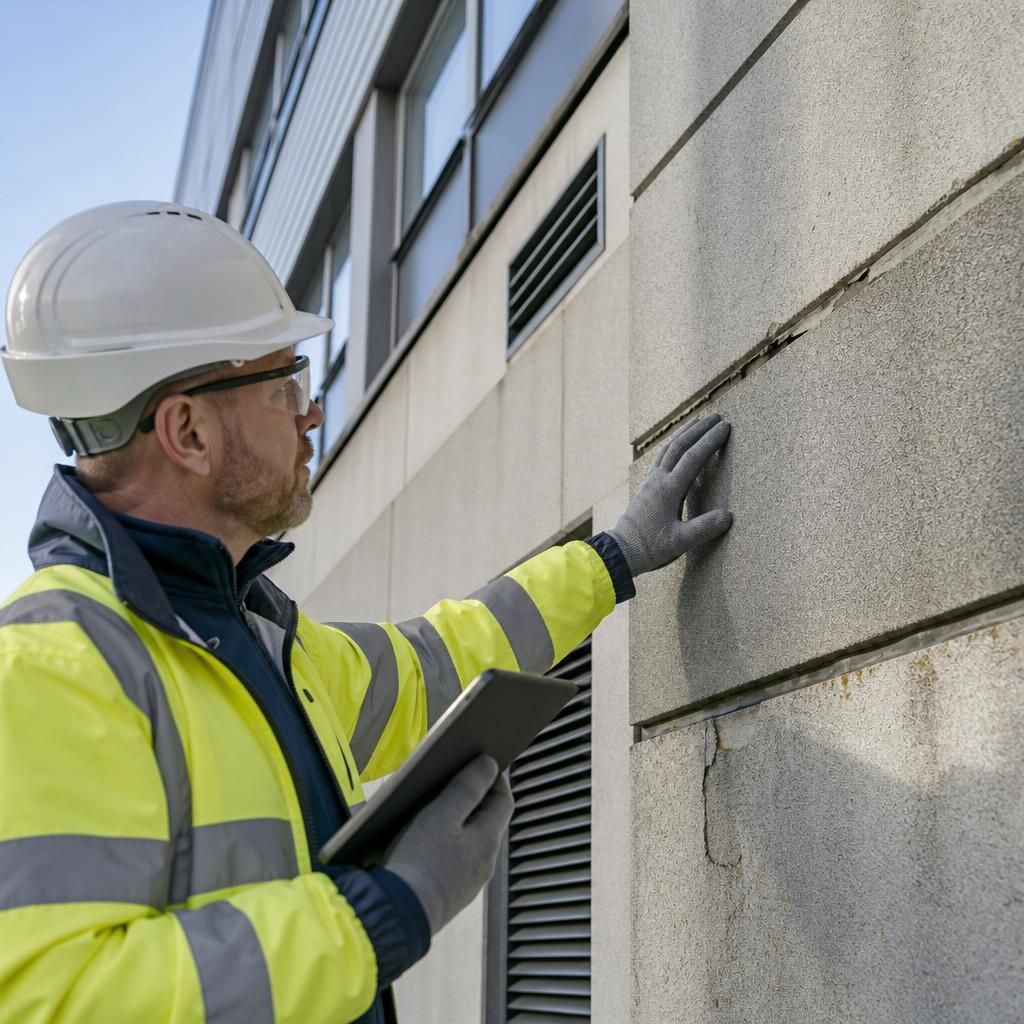
A pre-cleaning façade inspection is one of the most important safety measures when pressure washing commercial cladding or render. The contractor should check for loose panels, cracked or delaminated render, failed sealant, corrosion, open joints and damaged coatings before water or detergent is applied.
These defects can allow water behind the façade, worsen existing damage or cause fragments to fall during cleaning. Windows, doors, vents, roof edges, insulation systems and electrical equipment should also be identified and protected. Where the surface or coating is unfamiliar, a small test area should be cleaned first to confirm that the pressure, flow, temperature and detergent are suitable.