
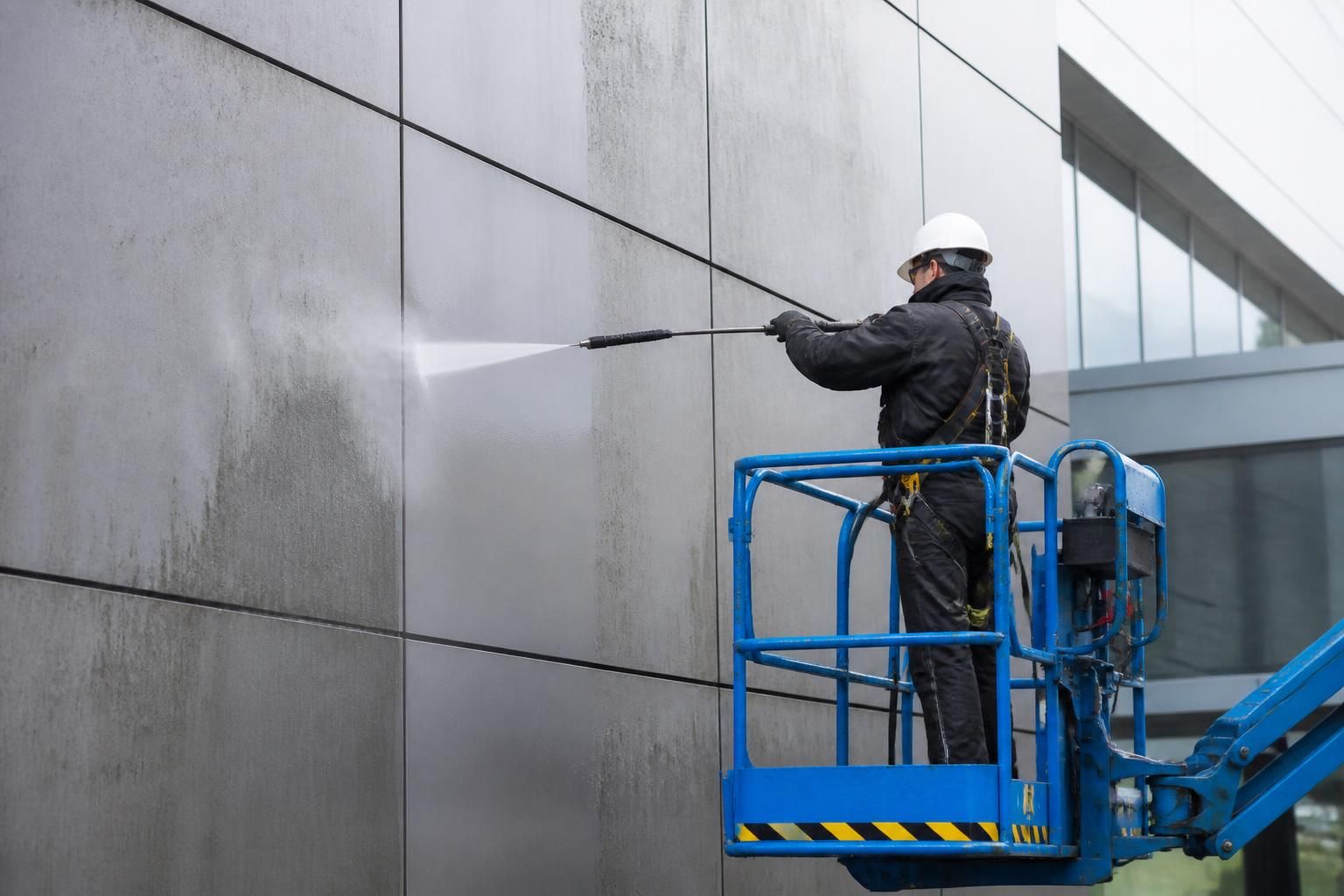
What safety measures are considered during cladding pressure washing?
Cladding pressure washing safety measures include a site risk assessment, suitable personal protective equipment, safe use of ladders, towers or powered access equipment, and controlled water pressure to protect workers, the building and surrounding areas. Operatives should also isolate vulnerable services, manage overspray and run-off, secure the work zone, and follow equipment and chemical handling procedures throughout the clean.
Safe cladding pressure washing starts with a documented site assessment, a suitable method statement and controls for people, property, equipment, water and cleaning chemicals. The cleaning team should inspect the cladding, surrounding ground conditions, access requirements and nearby hazards before work begins, then adjust the equipment and process to suit the building rather than applying excessive pressure as a standard approach.
Key safety measures typically include:
- Site-specific risk assessment: Identify fragile or damaged cladding, loose panels, overhead services, electrical equipment, glazing, public walkways, vehicle routes, uneven ground and areas vulnerable to water ingress.
- Safe access planning: Select suitable ladders, towers, scaffold, cherry pickers or other powered access equipment according to the height, reach, surface and ground conditions. Work-at-height controls should prevent falls and avoid placing equipment against unstable or delicate cladding.
- Competent operatives: Personnel should be trained to use pressure washers, steam systems, pumps, hoses and access equipment safely. Powered access equipment must be operated by appropriately trained people, with pre-use checks completed.
- Personal protective equipment: Depending on the task, this may include eye and face protection, waterproof protective clothing, gloves, safety footwear with suitable grip, hearing protection and head protection. Respiratory protection may also be required when particular chemicals, contaminants or spray conditions create an inhalation risk.
- Controlled water pressure and temperature: Operators should select settings that remove contamination without forcing water behind joints, seals, trims or panels. Pressure, nozzle selection, spray distance and temperature should be tested on an inconspicuous area before wider cleaning starts.
- Electrical precautions: Electrical installations, lighting, sockets, ventilation systems and other vulnerable services should be identified and protected or isolated where necessary. Water should not be directed towards live electrical equipment, openings or unsealed penetrations.
- Exclusion zones: Barriers, cones and warning signs should separate the work area from pedestrians, staff, visitors and vehicles. Where cleaning takes place beside a road, entrance or active car park, the site plan should include suitable traffic and pedestrian management.
Before applying water, operatives should check panel joints, sealants, flashings, vents, windows, doors and roof edges. Defects such as open joints, failed seals, corrosion, cracked render or loose sections can allow water behind the façade. These areas may need to be avoided, protected or repaired before cleaning. Windows and doors should be closed, and vulnerable openings covered where appropriate.
Water management is also an important safety control. Hoses should be routed to avoid trip hazards and protected from vehicles or sharp edges. Run-off should be directed away from entrances, electrical points, drains that cannot accept contaminated water and neighbouring premises. Where detergents, oil, algae, bird fouling, paint residues or other contaminants are present, the run-off may require collection, treatment or controlled disposal in line with site and environmental requirements.
Cleaning chemicals must be selected for the specific cladding or render and used in accordance with the product safety information. Operatives should follow COSHH controls, use the required protective equipment, prevent chemical contact with skin and eyes, and avoid mixing products unless the manufacturer expressly permits it. Containers should remain labelled and secured, with spill procedures available on site.
Equipment checks should cover the pressure washer, hoses, trigger guns, lances, nozzles, couplings, electrical leads, fuel systems and access equipment. Damaged hoses, leaking connections or faulty safety devices should be taken out of service. Hoses and cables should be positioned to reduce trip, abrasion and entanglement risks, while equipment should be shut down before adjustments, nozzle changes or maintenance.
Weather conditions can affect the safety of the work. High winds may make elevated access unsafe and can carry spray or chemicals beyond the exclusion zone. Freezing conditions can create slippery surfaces, while heavy rain, poor visibility or lightning may require the operation to pause. Supervisors should monitor conditions throughout the clean rather than relying only on the forecast.
Effective communication is needed when more than one operative, contractor or building representative is involved. The team should understand the work sequence, exclusion zone, emergency arrangements, access restrictions and stop-work procedure. A responsible person should monitor the area and ensure that barriers remain effective as the work progresses.
On completion, the team should inspect the cleaned façade and surrounding area, remove equipment safely, clear standing water and confirm that no damage, blocked access route, chemical residue or uncontrolled run-off remains. Any pre-existing defect, incident or change to the agreed method should be recorded and reported to the responsible site contact. These measures help protect operatives, occupants, visitors, the building fabric and neighbouring areas while allowing the cladding to be cleaned effectively.
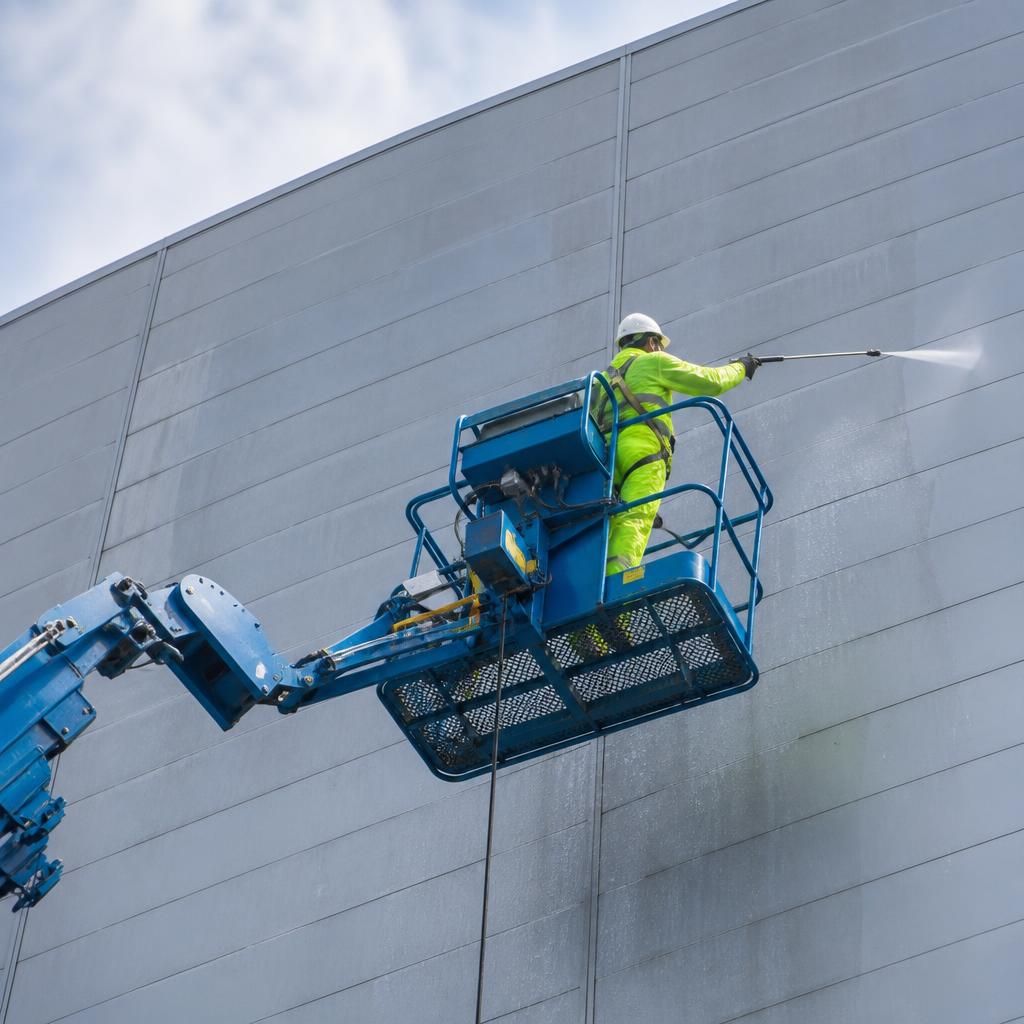
Safe access planning is a core cladding pressure washing measure because operatives must work at height without overreaching, destabilising equipment or placing loads against fragile panels. The method should account for the building’s height, façade profile, ground conditions, overhead obstructions and nearby pedestrians or vehicles.
Depending on the site, the team may use scaffold, towers or powered access equipment, with the equipment inspected and operated by trained personnel. Ladders are suitable only where the task, duration and conditions allow safe use. Access equipment should be positioned on stable ground, secured where necessary and kept clear of unprotected edges, overhead services and vulnerable cladding.