
What factors should be considered when selecting a pressure washing service for cladding and render cleaning?
When selecting a pressure washing service for cladding and render cleaning, consider the contractor’s experience with the specific surface, cleaning methods and equipment used, safety procedures, access arrangements, insurance and waste-water controls. A suitable service should inspect the building first, identify surface risks and staining, then provide a clear method statement and quotation based on the required level of cleaning rather than applying a standard pressure-washing approach.
Select a pressure washing service for cladding and render by assessing its experience with the specific substrate, proposed cleaning method, equipment, access arrangements, safety controls, environmental procedures and quotation detail. A competent contractor should inspect the building before work begins, identify the material and its condition, carry out a suitable test clean where necessary, and provide a clear method statement rather than applying the same pressure setting to every surface.
Experience with commercial cladding and render
Cladding and render can vary considerably in strength, finish, coating and water sensitivity. Ask whether the contractor has worked with the type of material present on your building, such as profiled metal cladding, powder-coated panels, composite panels, uPVC, cement-based render, textured render or painted surfaces. Experience should include dealing with common issues such as atmospheric soiling, algae, moss, bird fouling, traffic film, rust staining, efflorescence and remnants of construction work.
The contractor should understand that the visible stain is not always the cause of the problem. For example, failed sealant, damaged coatings, cracked render, corroded fixings or water ingress may need to be considered before cleaning. Cleaning should not be used to conceal defects that require repair.
Initial survey and surface assessment
A proper assessment should consider the substrate, surface coating, age, previous cleaning, existing damage and the type of contamination. It should also identify vulnerable areas around joints, vents, windows, doors, signage, electrical equipment and roof edges. Render may be weakened by cracking, delamination or previous frost damage, while coated cladding can be affected by oxidisation, chalking or an unstable finish.
Where the condition is uncertain, a small test area is useful. This allows the contractor to check whether the proposed pressure, temperature, detergent and dwell time are suitable, while also confirming the likely visual result. The test should be representative of the wider façade and should not be treated as proof that every area can be cleaned in exactly the same way.
Cleaning method and control of pressure
Pressure washing is only one part of the cleaning process. The result depends on nozzle selection, water flow, temperature, distance from the surface, chemical choice, dwell time and the operator’s technique. A reliable contractor should explain these controls and distinguish between pressure washing, soft washing, steam cleaning and low-pressure rinsing.
Higher pressure is not automatically more effective. Excessive pressure can strip coatings, mark render, force water behind panels, damage seals or increase the risk of surface erosion. For some façades, a low-pressure detergent treatment followed by controlled rinsing is more appropriate. Steam or hot-water cleaning may be useful for certain organic deposits and greasy soiling, but the method must still be matched to the material and its condition.
Ask for the proposed cleaning sequence, including pre-wetting, detergent application, agitation if required, rinsing and final inspection. The contractor should also explain how they will protect areas that are not intended to be cleaned and what will happen if the test area shows that the expected result cannot be achieved safely.
Suitability of equipment
Equipment should be selected for the building and the substrate, not simply for maximum output. A professional service may use pressure washers with adjustable flow and pressure, hot-water or steam systems, telescopic equipment, soft-bristle brushes, water-fed poles and specialist access equipment. The important consideration is whether the operator can control the process accurately at the required height and reach.
Equipment should be maintained and operated by trained personnel. Hoses, couplings, electrical connections and access equipment require inspection before use, particularly on active commercial sites. The contractor should also consider whether the water supply, drainage arrangements and available working space are adequate for the proposed system.
Access and site logistics
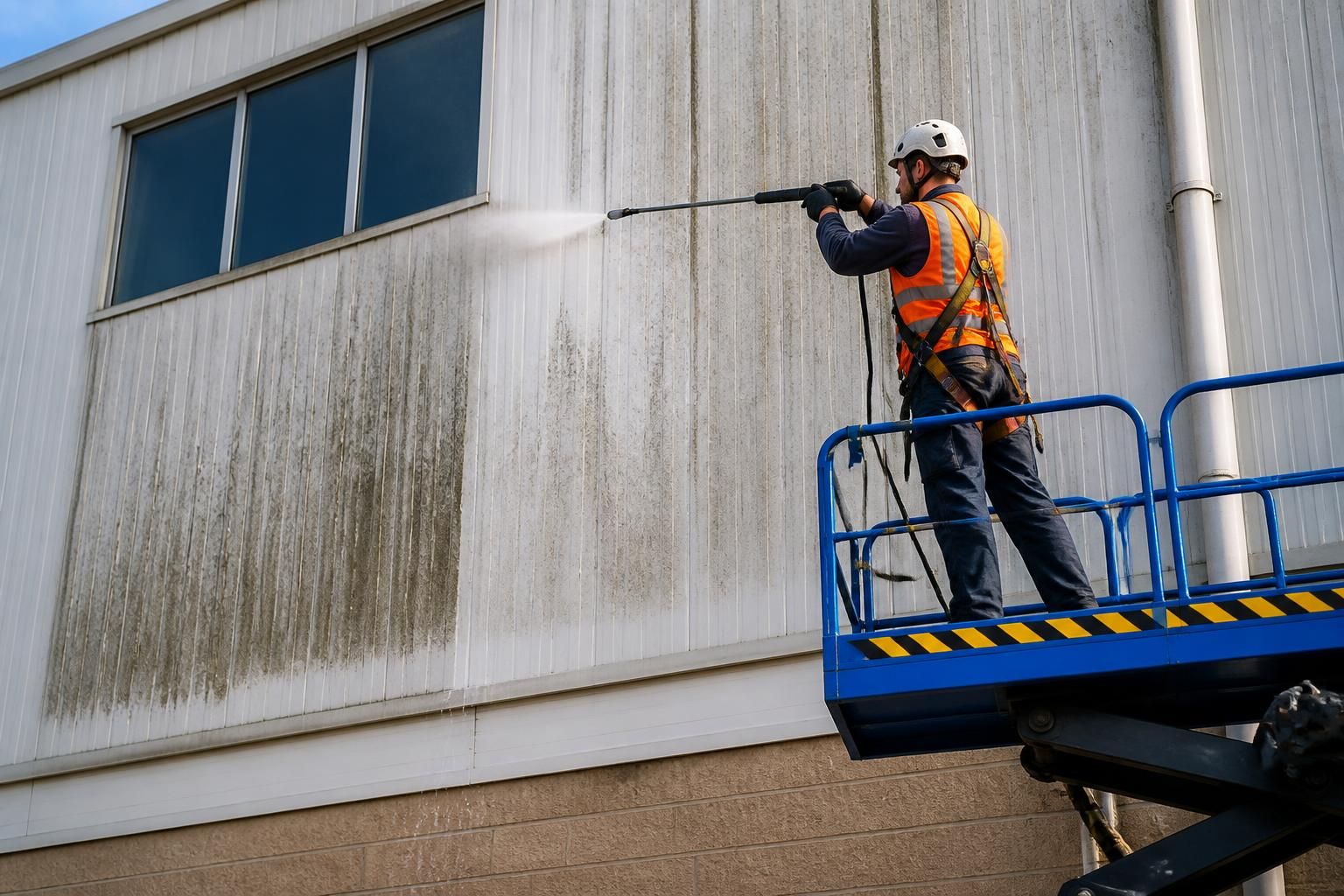
Cladding and render cleaning often involves work above ground level or across large façades. Discuss whether the contractor will use mobile elevating work platforms, scaffolding, tower systems, telescopic equipment or other access methods. The chosen arrangement should provide safe reach without forcing operators to work at an unsuitable angle or direct water into vulnerable areas.
Access planning should cover ground conditions, overhead obstructions, vehicle movements, pedestrian routes, neighbouring properties and the need to maintain entrances or business operations. On a live commercial site, agree working hours, exclusion zones, parking for equipment, water supply, power requirements and communication arrangements with the site representative.
Health and safety procedures
Request a suitable risk assessment and method statement before work starts. These documents should address work at height, high-pressure water, slips and trips, electrical hazards, falling debris, chemical exposure, traffic, members of the public and interaction with other contractors. They should be specific to the building and proposed method rather than generic paperwork.
Where access equipment is used, the operator should be appropriately trained and the equipment should be suitable for the ground and working conditions. The contractor should establish exclusion zones and control overspray, falling debris and unauthorised access. Appropriate personal protective equipment may include eye and face protection, gloves, protective footwear, hearing protection and chemical-resistant clothing, depending on the method.
Protection of windows, fixtures and building services
Before cleaning, confirm how windows, doors, vents, lighting, cameras, signage, air-conditioning units, sockets, loading-bay equipment and other fixtures will be protected. Water-sensitive components should be covered or isolated where appropriate, and openings should be checked so that water is not driven into the building.
It is also important to agree responsibility for removing or refitting temporary coverings, checking for leaks and reporting pre-existing damage. A professional contractor should record defects that are found during the survey or cleaning rather than proceeding as though the façade were in perfect condition.
Waste-water and environmental controls
Pressure washing can mobilise dirt, detergents, oils, paint residues and other contaminants. Ask how the contractor will prevent dirty water entering surface-water drains, soil, watercourses or neighbouring land. The plan may include drain covers, bunding, wet vacuum recovery, collection tanks, filtration or controlled discharge, depending on the site and the contamination.
Cleaning products should be selected for the surface and used in accordance with the manufacturer’s instructions and relevant site controls. The contractor should be able to explain how chemicals will be stored, handled and removed, and how run-off will be managed. Water use, noise, overspray and disturbance should also be considered when planning work near occupied premises or sensitive areas.
Insurance, competence and documentation
Check that the contractor holds appropriate public liability and employers’ liability insurance, where applicable, and ask for evidence if required by your procurement process. You may also need confirmation of operator training, access-equipment competence, chemical handling procedures and membership of relevant professional or trade schemes.
For larger commercial projects, useful documentation can include the survey record, risk assessment, method statement, product information, test-clean findings, insurance certificates, waste-transfer documentation and a completion report. Clear records help facilities managers demonstrate that the work was planned and carried out responsibly.
Quotation and scope of work
Compare quotations on the basis of scope and method, not price alone. The quotation should state which elevations or areas are included, the expected level of cleaning, access equipment, preparation, protection, detergents, waste-water handling, removal of loose debris and any exclusions. It should also identify whether repairs, paint removal, stain treatment or difficult-access areas are priced separately.
Be cautious of a quotation that promises complete stain removal without inspecting the façade. Some marks are caused by corrosion, permanent discolouration, coating failure or underlying damage and may not be removable through cleaning alone. A realistic contractor will explain the likely outcome and identify areas where improvement, rather than complete removal, is the safe expectation.
Scheduling and ongoing maintenance
Agree the timing of the work around weather, occupancy, deliveries, public access and other site activities. Temperature, wind and rain can affect detergent performance, drying and overspray control. The contractor should have a process for postponing or adapting work when conditions make the planned method unsafe or ineffective.
For properties exposed to traffic pollution, coastal air, industrial emissions, shade or persistent moisture, discuss whether a planned maintenance programme is more suitable than occasional reactive cleaning. The appropriate interval depends on the material, environment, appearance requirements and rate of soiling. A maintenance plan should specify inspection points, cleaning methods and any repairs that need monitoring.
Before appointing a service, ask for a written proposal that links the survey findings to the cleaning method, access plan, safety controls, environmental arrangements and price. This makes it easier to confirm that the contractor understands the building and reduces the risk of unsuitable pressure, unexpected costs or damage to the cladding and render.
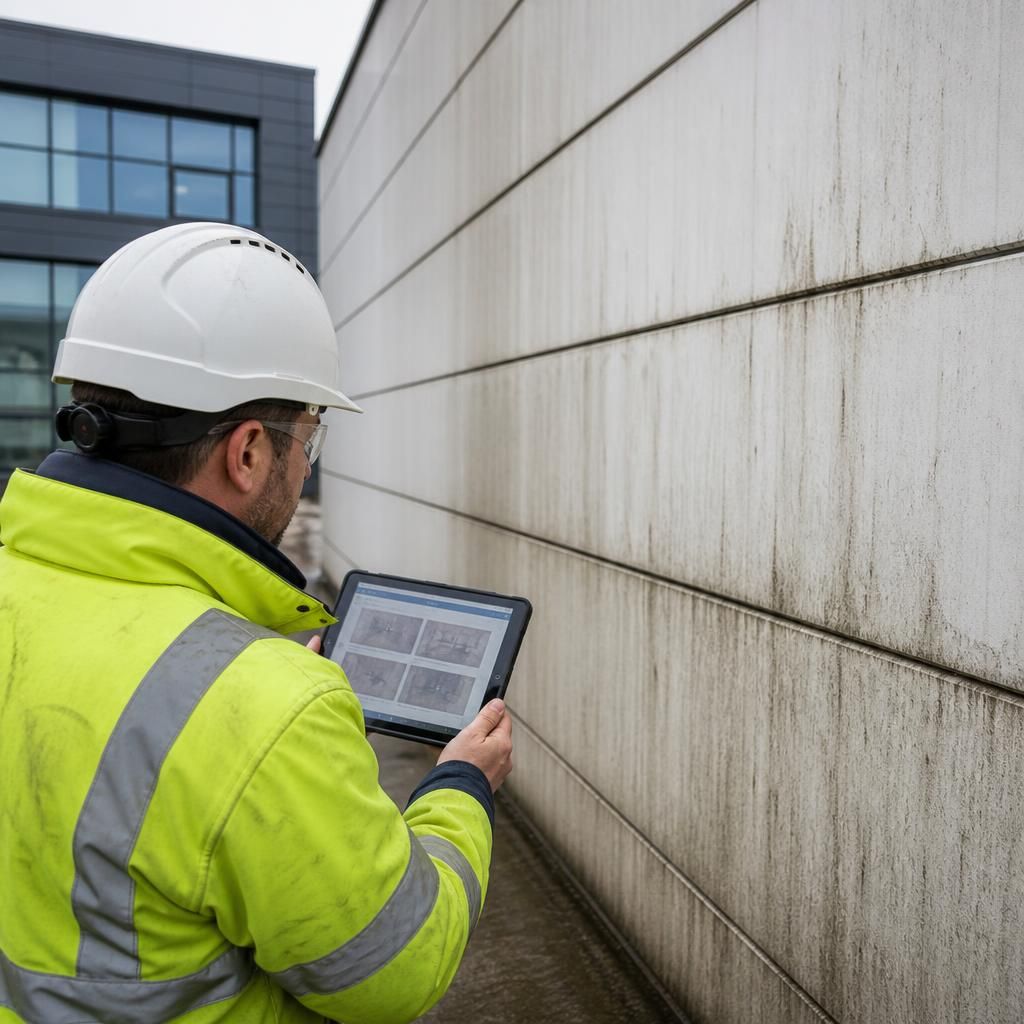
A pre-cleaning survey is one of the most important factors when selecting a pressure washing service for cladding and render. The contractor should identify the substrate, coatings, existing damage and type of staining before recommending pressure, temperature, detergents and access equipment.
A small test clean can then confirm whether the proposed method removes the soiling without stripping coatings, eroding render or forcing water behind panels. The findings should inform a written method statement and quotation, including any areas where cleaning may improve the appearance but cannot safely remove permanent discolouration or underlying defects.