
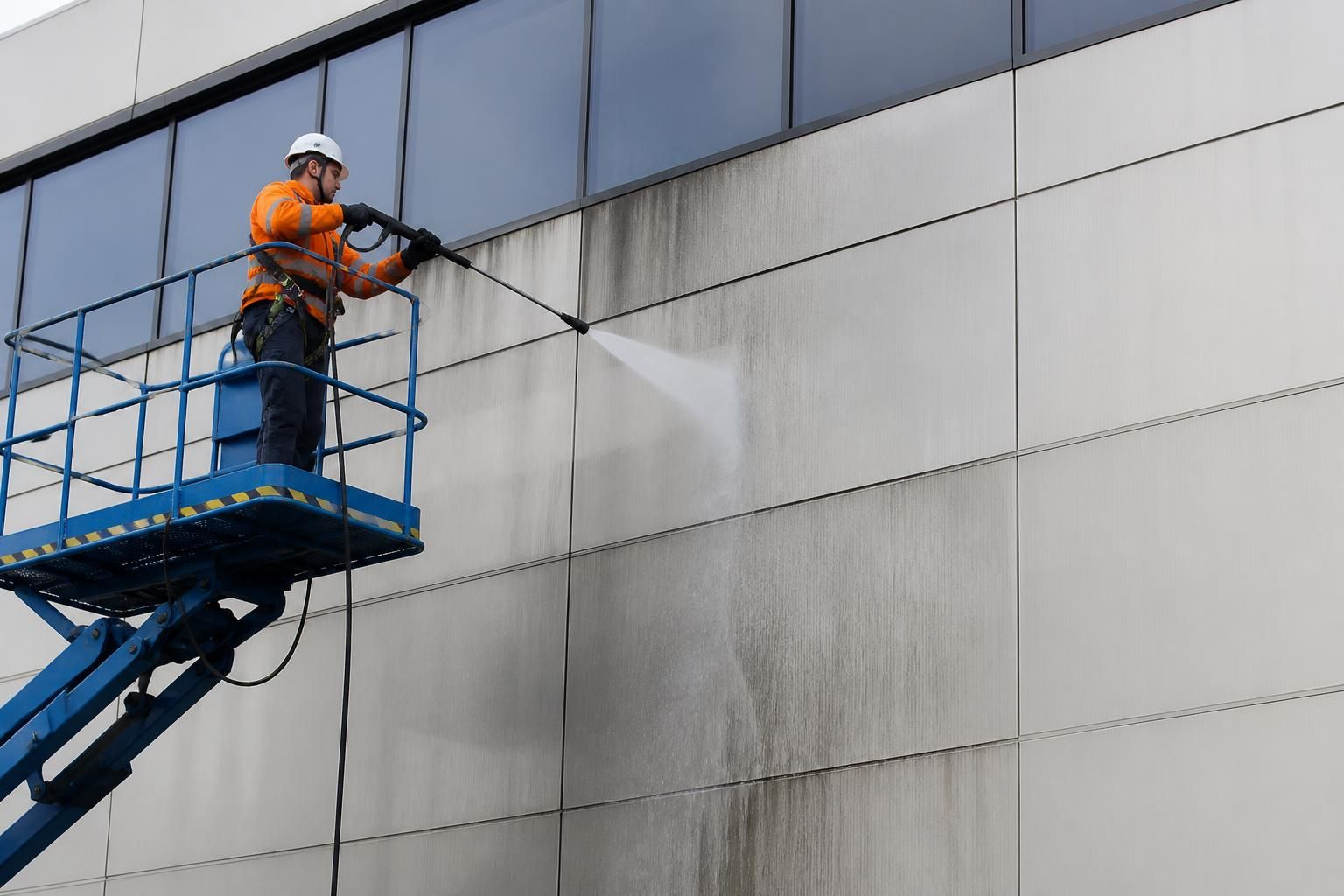
What are the specific materials and surface conditions suitable for cladding and render pressure washing?
Cladding and render pressure washing is generally suitable for sound, well-bonded surfaces such as coated metal, aluminium, uPVC, fibre cement, brick slips and mineral, cement or acrylic render, provided the cleaning pressure and method match the material. Surfaces should be assessed first for loose coatings, cracks, spalling, corrosion, failed sealant, open joints, damaged render or water ingress, as these conditions may require repairs or a gentler soft-washing or steam-cleaning approach instead.
Cladding and render pressure washing is generally suitable for sound, well-bonded surfaces that can tolerate controlled water pressure, including coated metal, aluminium, uPVC, fibre cement, brick slips and mineral, cement or acrylic render. The surface must be assessed before cleaning, because loose coatings, cracks, corrosion, failed sealant, open joints, damaged render and water ingress can make conventional pressure washing unsuitable or require a lower-pressure method.
Suitable cladding materials
- Coated and painted metal cladding: Factory-finished steel and aluminium panels can usually be cleaned when the coating is intact and firmly adhered. Pressure must be controlled to avoid lifting the finish, exposing the substrate or forcing water behind laps and joints.
- Aluminium cladding: Powder-coated, anodised and painted aluminium may be suitable, subject to the condition of the finish. Oxidised, chalking or heavily weathered aluminium requires careful testing, as aggressive cleaning can alter the appearance or remove a weak surface coating.
- uPVC cladding: uPVC panels are commonly suitable for low- to moderate-pressure cleaning. Care is needed around joints, trims, vents and brittle or sun-damaged sections, which can crack or allow water into the building envelope.
- Fibre cement panels: Fibre cement can generally be cleaned if the panels are stable and their coating is sound. Excessive pressure may damage the face, expose fibres or drive water into joints, so a controlled rinse or soft-washing process may be more appropriate than high-pressure cleaning.
- Brick slips and masonry-effect panels: These can often be cleaned using a carefully selected pressure and nozzle, provided the slips are secure and the joints are not eroded, open or failing. Older or poorly bonded systems should be treated more cautiously.
- Composite and other proprietary panels: Composite cladding should be assessed according to its facing material, coating and manufacturer’s cleaning guidance. A method that is safe for metal may be unsuitable for a delicate laminate, painted finish or sealed composite surface.
Suitable render materials
- Cement and sand render: Sound, well-cured cementitious render can usually tolerate controlled pressure washing. The surface should not be friable, hollow-sounding, excessively porous or weakened by frost, impact or prolonged damp.
- Mineral render: Mineral render may be cleaned when it is firmly bonded and structurally intact. It can be relatively porous, so water volume, pressure and drying conditions need to be managed to reduce saturation and prevent staining.
- Acrylic render: Acrylic render is often suitable for gentle pressure washing or a soft-washing approach. Its textured or decorative finish can be damaged by concentrated pressure, particularly where the coating has become brittle or weathered.
- Silicone and polymer-modified render: These finishes may be suitable for low-pressure cleaning where the surface is intact. The cleaning method should account for the texture, coating condition and any manufacturer’s restrictions.
- Painted render: Painted render can be cleaned if the paint is properly bonded. Flaking, blistering, powdering or heavily chalked paint should be stabilised or removed through an appropriate preparation process before pressure washing is considered.
Pressure washing is most appropriate where the contamination is held on the surface rather than embedded within a failing coating. Typical examples include dust, soil, traffic film, bird fouling, algae, moss and some surface deposits. Organic growth may require a compatible biocidal treatment as well as rinsing, because water pressure alone may not remove the underlying spores or prevent regrowth.
Surface conditions that should be present
- The cladding or render should be firmly attached, with no widespread movement, delamination or hollow areas.
- Coatings should be intact and sufficiently well bonded to withstand the selected cleaning process.
- Panels, fixings, trims, seals and joints should be stable, with no obvious gaps that could allow water behind the system.
- Render should be free from significant cracks, spalling, blown sections and loose aggregate.
- Metal surfaces should not have advanced corrosion, perforation or exposed substrate that could worsen when wetted.
- Drainage paths, weep holes and ventilation openings should be identified and protected from unnecessary water entry.
- Any previous repairs, patching or remedial coatings should be checked because they may respond differently from the surrounding material.
These conditions do not mean that every suitable surface should be cleaned with the same pressure. The correct approach depends on the substrate, coating, texture, age, contamination and location. A broad fan pattern, suitable nozzle, controlled water flow and an appropriate working distance are generally safer than a concentrated jet held close to the surface. Soft washing or steam cleaning may provide better control where the material is delicate or the contamination is biological.
Conditions requiring caution or an alternative method
Pressure washing should be reconsidered where there are loose or flaking coatings, open cracks, failed sealant, exposed insulation, corroded fixings, damaged joints, leaking penetrations or signs of water ingress. Render that sounds hollow, moves under light pressure or shows extensive blistering may need repair before cleaning. Similarly, cladding with failed laps, loose panels or deteriorated backing materials should not be treated as a routine wash-down.
Older painted surfaces may contain coatings that require additional assessment before disturbance. Where there is a risk of hazardous paint, asbestos-containing materials, unstable panels or contaminated run-off, the work should follow the relevant survey, control and disposal requirements rather than proceeding with standard pressure washing.
Highly porous or historic substrates, delicate decorative finishes and severely weathered surfaces may be better suited to low-pressure soft washing, steam cleaning or a specialist conservation method. These approaches can reduce mechanical impact while still addressing dirt and organic staining. They are not automatically risk-free: chemical compatibility, dwell time, rinsing and run-off control still need to be considered.
How the suitability assessment is carried out
- Identify the substrate, coating system, panel construction and any previous repairs.
- Inspect for cracks, loose areas, corrosion, failed joints, staining patterns and evidence of moisture penetration.
- Check whether the contamination is superficial, biological, oily, rust-based or embedded in the finish.
- Carry out a small test clean in an inconspicuous area to check for colour change, coating loss, surface marking, fibre exposure or water penetration.
- Select the least aggressive method that can achieve the required result, which may be pressure washing, soft washing, steam cleaning or a combination.
- Protect openings, electrical equipment, signage, landscaping and vulnerable adjoining surfaces before full cleaning begins.
A test area is particularly important where the cladding or render has been previously painted, repaired, sealed or exposed to prolonged weathering. It confirms how the surface responds and helps establish a consistent method across the elevation. If the test reveals loose material, colour transfer, coating failure or water ingress, cleaning should stop while the condition is reviewed.
In practical terms, the most suitable surfaces are cleanable, stable and well bonded, with contamination that can be removed without compromising the substrate or its protective finish. Where the surface condition is uncertain, Encanto Exterior Cleaning can assess the material, identify vulnerable areas and recommend a controlled pressure-washing, soft-washing or steam-cleaning specification appropriate to the building.
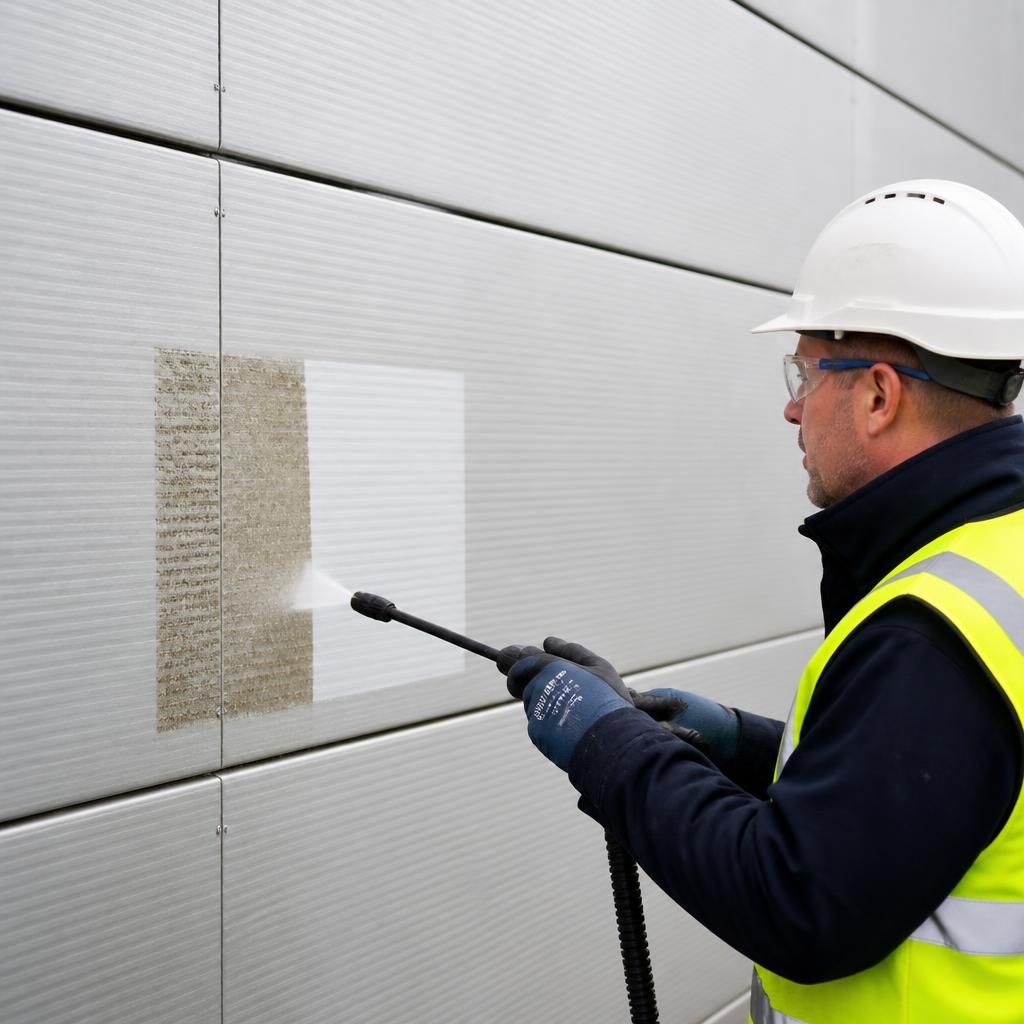
A test clean is the most reliable way to confirm whether cladding or render is suitable for pressure washing. It reveals how the coating, texture and substrate respond before the method is used across the full elevation.
The test area should be inconspicuous and checked for colour change, coating loss, surface marking, fibre exposure, water penetration or damage to joints and sealant. If the surface responds poorly, a lower-pressure soft wash or steam-cleaning process may be more appropriate. This assessment is especially important for weathered, painted, repaired or porous materials, where the visible condition may not reflect the strength of the underlying surface.