
What are the environmental benefits of using professional pressure washing services for cladding and render surfaces?
Professional pressure washing of cladding and render can reduce environmental impact through controlled water use, targeted cleaning and, where suitable, lower-impact detergents. Removing contaminants and maintaining surfaces also helps extend their service life, reducing the material waste and manufacturing impact associated with premature replacement.
Professional pressure washing can reduce the environmental impact of maintaining cladding and render by using water and cleaning products in a controlled way, removing contamination before it causes premature deterioration, and reducing the need for replacement materials. The environmental outcome depends on the method selected, the condition of the surface and how responsibly wastewater and detergents are managed.
More controlled water use
Commercial cleaning equipment applies water through calibrated nozzles and adjustable pressure, allowing the operator to match the application to the surface and the type of contamination. This is more controlled than uncontrolled hosing, particularly when cleaning large façades, canopies and rendered elevations. Experienced contractors can work in sections, apply water only where it is required and avoid repeatedly rinsing areas that are already clean.
Pressure washing is not automatically water-efficient. An unsuitable machine, excessive pressure or poor working method can waste water and increase the risk of surface damage. A responsible approach starts with an inspection and uses the lowest effective pressure, flow and cleaning time for the cladding or render being treated.
Lower-impact cleaning methods
Not every surface needs aggressive pressure or strong chemicals. Depending on the material and contamination, steam cleaning, low-pressure washing, soft washing or a combination of methods may be more appropriate. Steam can loosen organic growth, traffic film and some deposits with limited chemical use, while a carefully selected detergent can help break down contamination before rinsing.
Using less detergent can reduce the amount of chemical residue entering the drainage system and the surrounding environment. Where a cleaning product is necessary, it should be selected for compatibility with the surface and used in accordance with its safety and environmental instructions. Biodegradable does not mean that a product can be discharged without controls, so responsible cleaning still requires suitable containment and disposal procedures.
Reduced risk of polluted runoff
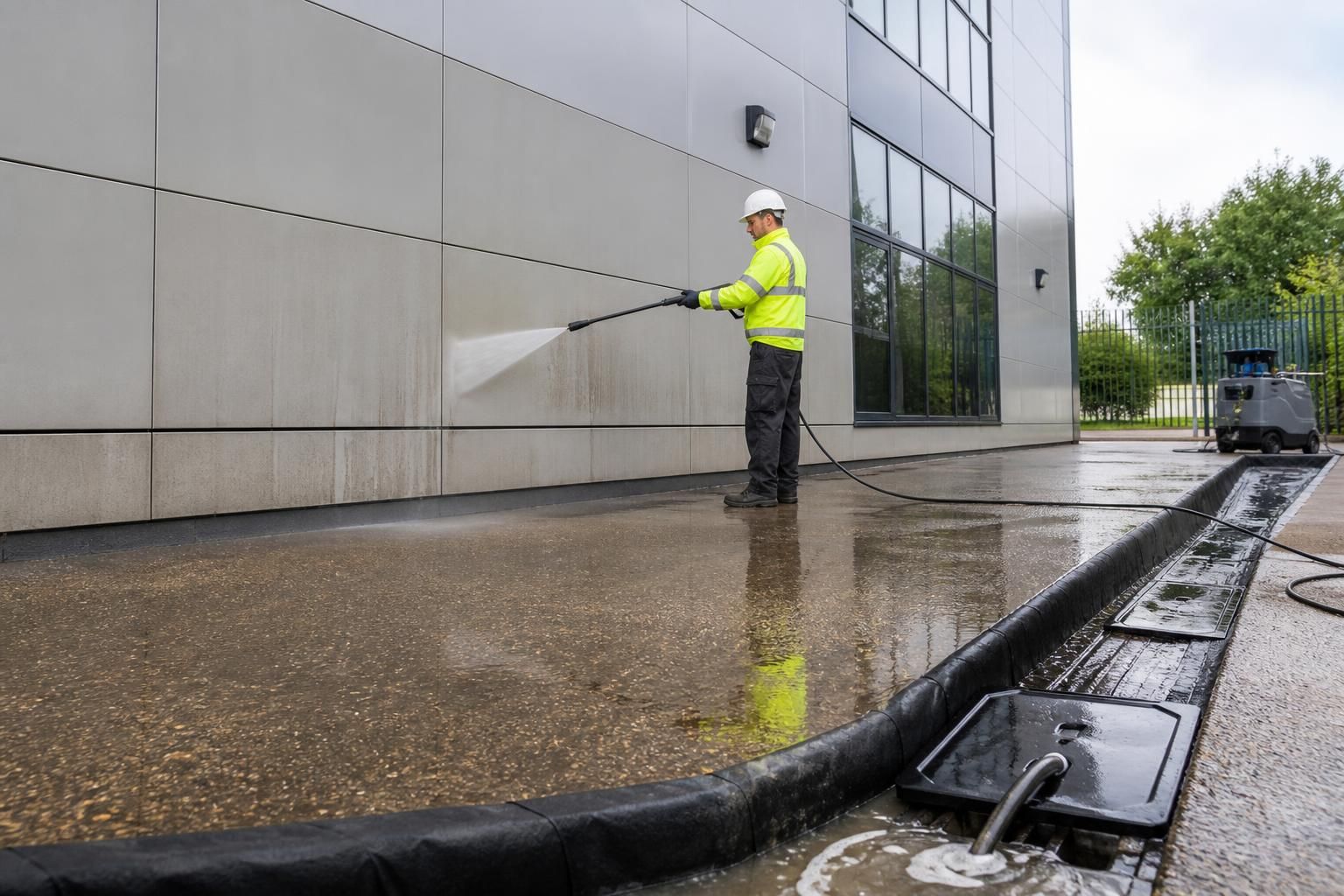
Cladding and render can hold dust, oils, vehicle emissions, algae, moss, bird fouling, paint residues and other contaminants. If wash water is allowed to run directly into surface-water drains, it may carry these pollutants into watercourses. Professional contractors assess drainage arrangements before work begins and can use drain covers, bunding, wet vacuums, collection systems or other suitable controls to prevent contaminated water from spreading.
Collected wastewater may need to be filtered, treated or removed for appropriate disposal, depending on its contents and the site requirements. This is especially important at industrial premises, car parks, construction sites and properties near watercourses. The correct process should be agreed before cleaning rather than treated as an afterthought.
Longer service life for cladding and render
Regular removal of damaging deposits helps preserve the existing building envelope. Organic growth can retain moisture, while salts, traffic film and industrial pollutants may contribute to staining or surface degradation. On render, persistent contamination can make defects harder to identify and may contribute to local deterioration. On cladding, deposits can affect coatings, joints and drainage details if they are left untreated.
Maintaining the surface does not replace repairs or protective treatment where these are needed, but it can help prevent avoidable deterioration. Extending the usable life of existing cladding and render reduces demand for new panels, render systems, coatings, packaging and the transport associated with manufacturing and installing replacement materials. It can also reduce construction waste sent for recycling or disposal.
Fewer unnecessary replacements and repeat treatments
A correctly specified clean can be less disruptive and less resource-intensive than replacing sound cladding or applying repeated unsatisfactory treatments. Before work starts, the surface should be checked for failed coatings, open joints, cracks, corrosion, friable render and areas where water could enter the building. Cleaning a defective surface without addressing those issues may create additional waste or require the work to be repeated.
Planned maintenance also allows contamination to be removed before it becomes heavily established. This may make future cleaning more straightforward, although the appropriate interval depends on the building’s location, exposure, materials and surrounding activities. A maintenance plan should be based on observed site conditions rather than an arbitrary schedule.
Reduced environmental impact from access and site operations
Efficient planning can reduce the resources used to reach high or difficult areas. A survey helps identify whether telescopic equipment, an elevated work platform, rope access or other access equipment is suitable. Selecting the safest practical method can limit unnecessary set-up, repeated visits and movement of equipment around the site. Access decisions must always follow a proper risk assessment; reducing environmental impact must not compromise worker or public safety.
When reviewing the environmental aspects of a cladding or render cleaning project, ask whether the contractor will:
- Inspect and identify the surface before selecting pressure, temperature, flow and cleaning products.
- Use the lowest effective pressure and a method suited to the material and contamination.
- Protect windows, joints, vents, landscaping and nearby surfaces from spray and chemical exposure.
- Prevent contaminated runoff from entering surface-water drainage where controls are required.
- Explain how wastewater, sludge and used absorbent materials will be handled.
- Use cleaning products responsibly and provide relevant product and safety information.
- Record defects found during cleaning so that repairs can be planned before deterioration becomes more extensive.
For commercial and industrial properties, the most sustainable approach is therefore not simply to use more pressure or less water. It is to combine a material-specific cleaning method with careful water management, runoff control, responsible chemical use and planned maintenance. Professional pressure washing supports environmental performance when it preserves existing surfaces and avoids preventable waste, while the method and site controls determine the actual result.
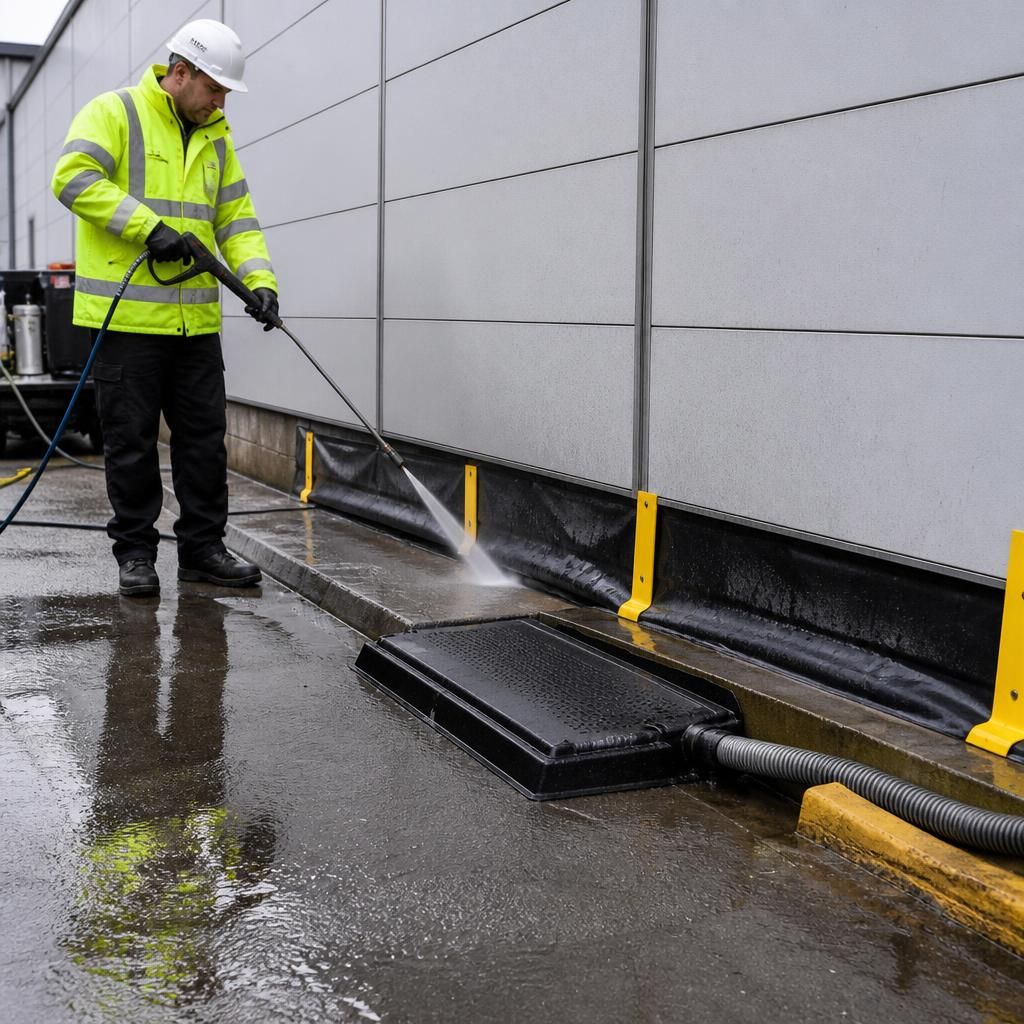
Professional cladding and render cleaning can reduce environmental harm by controlling contaminated wash water before it reaches surface-water drains. Dust, oils, algae, bird fouling and traffic film can be carried in runoff, so responsible contractors assess drainage arrangements and use suitable controls such as drain covers, bunding, wet vacuums or collection systems.
Collected wastewater should be filtered, treated or removed for appropriate disposal according to its contents and the site requirements. This approach is particularly important at industrial premises, car parks, construction sites and properties close to watercourses, where uncontrolled discharge could spread pollutants beyond the area being cleaned.