
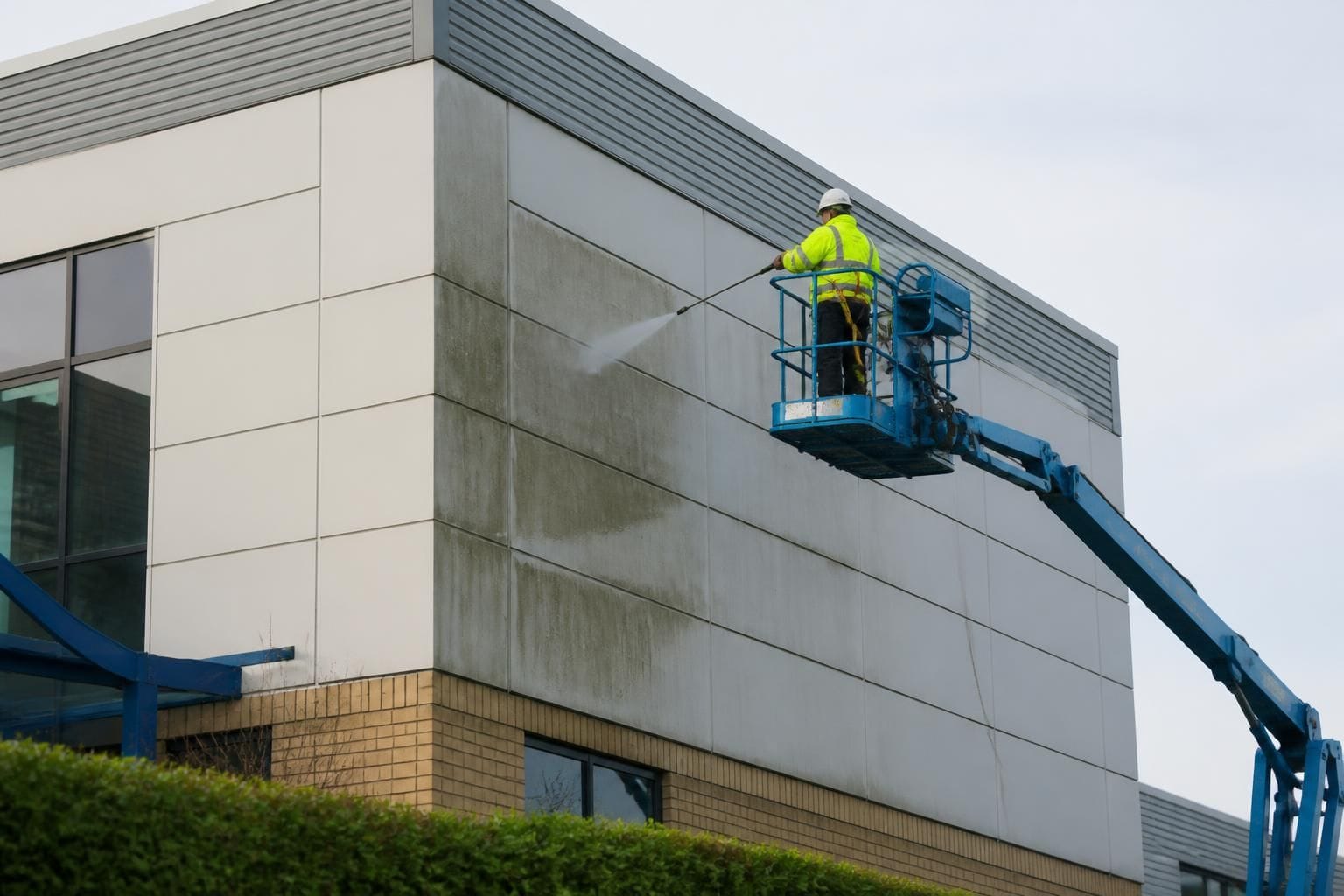
How often should cladding and render be pressure washed for optimal maintenance?
Commercial cladding and render should typically be pressure washed every 12–24 months, with the exact interval based on the building’s location, surface material, exposure to traffic or pollution, and level of soiling. More frequent cleaning may be needed where algae, moss, staining or weathering develops quickly, while well-maintained surfaces in sheltered areas may need less frequent treatment.
Commercial cladding and render should generally be pressure washed every 12–24 months for effective routine maintenance. The appropriate interval depends on the building’s location, surface material, exposure to traffic and pollution, surrounding vegetation, weather conditions and the speed at which dirt or biological growth returns. A visual inspection should always be used alongside a calendar-based schedule, particularly where the building’s appearance, safety or material condition is important.
Regular cleaning removes accumulated traffic film, dust, atmospheric pollution, algae, moss, bird fouling and other surface deposits before they become more difficult to treat. It also helps identify defects such as cracked render, failed sealant, corrosion, loose panels or damaged coatings at an early stage. Pressure washing should be planned as part of the building’s wider external maintenance programme rather than used only when the façade has become heavily soiled.
A 12–24 month interval is a useful starting point, but some properties need more frequent attention. Buildings in busy urban or industrial areas can collect airborne pollutants and traffic residue quickly. Premises close to major roads may also develop darker staining on elevations exposed to passing vehicles. Coastal locations, shaded façades and buildings near trees or dense vegetation may experience faster algae, lichen or moss growth because of persistent moisture and reduced sunlight.
More frequent cleaning may be appropriate for:
- Retail, hospitality and commercial premises where façade presentation affects customers and visitors.
- Industrial sites exposed to dust, exhaust emissions, process residue or heavy vehicle movements.
- Buildings in shaded or damp locations where algae, moss and organic staining return quickly.
- Properties managed under planned maintenance or appearance standards.
- Sites where bird fouling, graffiti or other localised contamination requires prompt removal.
In contrast, a sheltered building with limited pollution, good drainage and little biological growth may only require less frequent full cleaning, supported by periodic inspections and spot treatment. This does not mean the façade should be left unchecked. Small areas of staining can often be addressed before a complete clean becomes necessary.
The surface material determines how often it can be cleaned and which pressure washing method is suitable. Metal cladding, coated panels, uPVC, render and composite systems can respond differently to water pressure, heat and cleaning agents. Older, weathered or previously painted surfaces may have weakened coatings or open areas that require a more conservative approach. Render can be particularly sensitive where it is cracked, friable, poorly bonded or already suffering from water ingress.
Before recommending a cleaning interval, the condition of the surface should be assessed. This includes checking for:
- Existing cracks, flaking coatings, exposed substrate or loose render.
- Failed joints, gaps around windows and doors, and damaged seals.
- Rust staining, corrosion or deterioration around fixings and trims.
- Areas of algae, moss, lichen, mould, bird fouling or ingrained pollution.
- Drainage defects that are allowing water to run repeatedly over the façade.
- Previous repairs or coatings that may react differently during cleaning.
Cleaning should not be used to conceal an underlying defect. For example, recurring staining beneath a roof edge, parapet or gutter may indicate a drainage problem. If the source of the contamination is not corrected, the surface may become marked again soon after washing. Addressing the cause alongside the cleaning work usually provides better long-term results.
The cleaning method should also be matched to the level and type of soiling. A controlled low-pressure wash may be appropriate for general dirt on a sound surface, while steam cleaning or a carefully selected treatment may be more suitable for sensitive materials or biological deposits. Higher pressure is not automatically more effective. Excessive pressure can remove coatings, drive water into joints, roughen render or damage the surface profile. Test cleaning in an inconspicuous area helps confirm the safest pressure, temperature and cleaning solution before work proceeds across the full elevation.
For many commercial properties, the most practical approach is a planned cycle consisting of a condition survey, scheduled cleaning and follow-up inspection. The interval can then be adjusted according to how quickly contamination returns. Records should note the areas cleaned, the surface condition, any defects identified and recommendations for the next inspection. This creates a maintenance history and helps property managers plan access, budgets and associated repairs.
Seasonal conditions may influence the timing of the work. Cleaning is often easier when surfaces can dry properly and when weather conditions allow safe use of access equipment. However, work should not be delayed until heavy biological growth or staining has become established. Any cleaning programme should also consider water management, nearby occupants, vulnerable materials, drainage routes and the responsible collection or control of dirty run-off.
As a practical guide, arrange an initial professional assessment if the building has not been cleaned recently or if the surface condition is uncertain. After that, review the façade at least as part of the regular external maintenance programme and retain a planned 12–24 month cleaning cycle unless site conditions justify a shorter or longer interval. Promptly treat isolated staining, graffiti or biological growth rather than waiting for the next full wash. This approach keeps cladding and render presentable, limits the build-up of damaging deposits and helps prevent avoidable cleaning and repair costs.
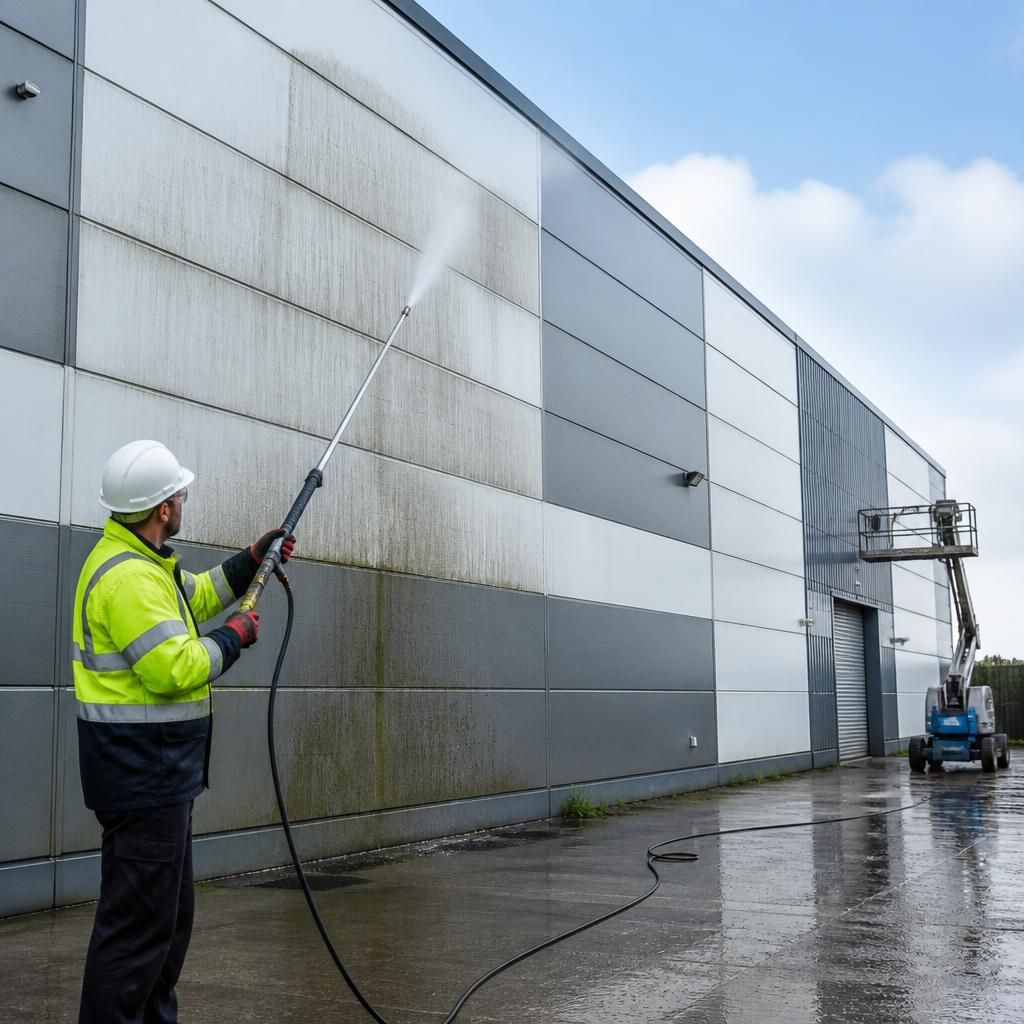
Cladding and render should usually be pressure washed every 12–24 months, but the correct interval depends on how quickly dirt, pollution and biological growth return. A building beside a busy road, in an industrial area or beneath overhanging trees may need more frequent cleaning than a sheltered property with good sunlight and drainage.
Routine inspections should therefore support the planned cleaning cycle. Check for traffic film, algae, moss, staining, failed sealant, cracked render and areas where water repeatedly runs over the façade. Treating localised contamination promptly and correcting drainage or surface defects can help prevent heavier soiling and avoid unnecessary pressure on vulnerable materials during future cleaning.