
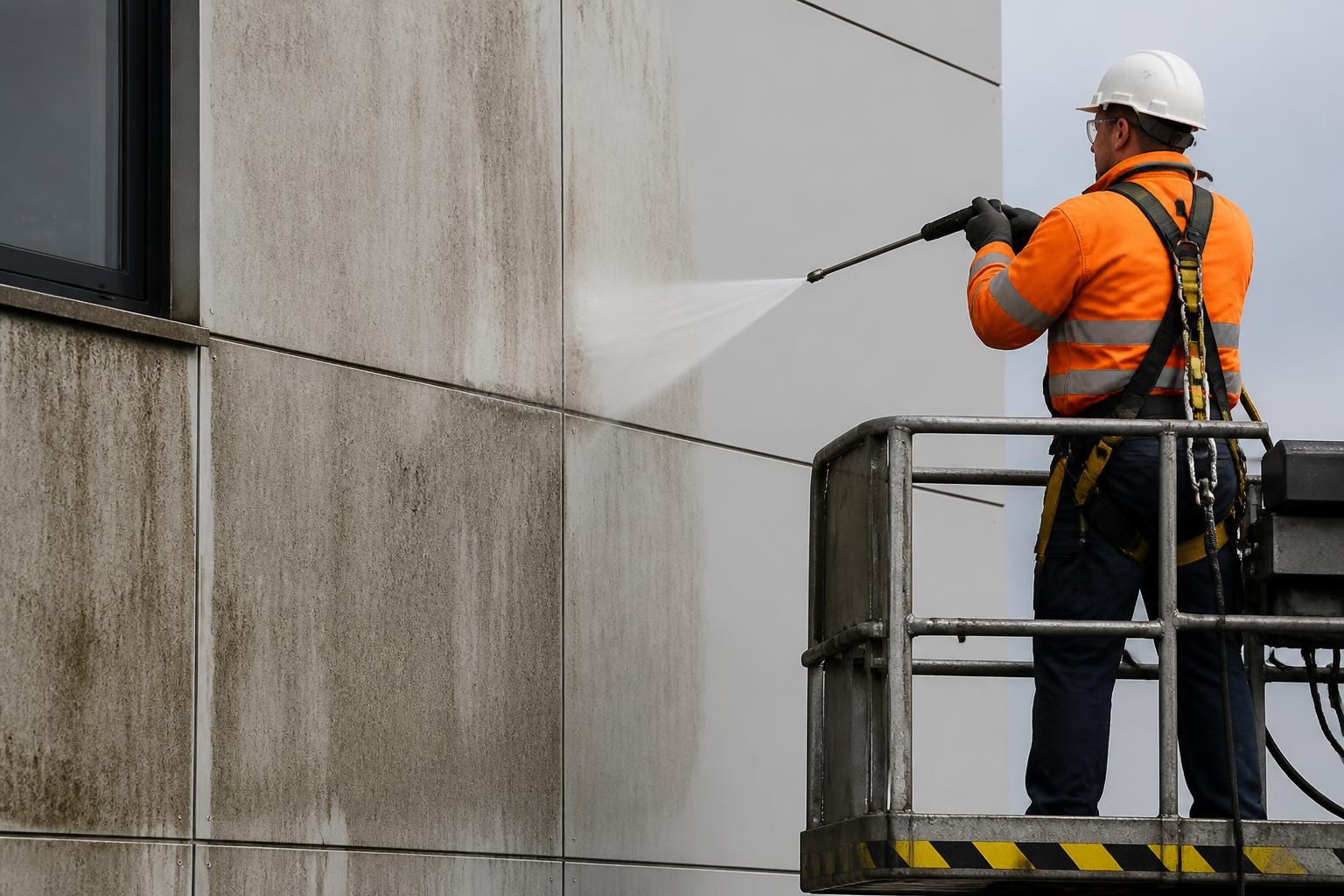
How does regular cladding and render pressure washing contribute to long-term cost savings for commercial properties?
Regular cladding and render pressure washing removes dirt, algae, pollution deposits and other contaminants before they contribute to staining, surface deterioration or trapped moisture. By protecting the building envelope, extending the service life of exterior finishes and identifying minor defects early, planned cleaning can reduce the need for expensive repairs, premature replacement and disruptive remedial work.
Regular cladding and render pressure washing can reduce long-term commercial property costs by preventing contaminants from accelerating surface deterioration, extending the service life of exterior finishes and revealing minor defects before they become major repairs. Planned cleaning also helps avoid premature repainting, replacement work and the operational disruption associated with heavily soiled or deteriorated façades.
Cladding and render are exposed to rain, traffic pollution, airborne grit, algae, moss, bird deposits and organic growth. If these deposits remain on the surface, they can retain moisture and create conditions that encourage staining, biological growth and gradual deterioration. On porous render, contamination can become embedded in the finish. On coated or profiled cladding, deposits may collect around joints, fixings, laps and drainage points, where they can make existing defects more difficult to identify.
Removing contamination as part of a planned maintenance programme helps protect the building envelope. It does not make the materials immune to weathering, but it can reduce avoidable wear and keep the exterior in a condition where routine inspections and minor repairs are more effective.
- Extending the useful life of finishes: Regular cleaning removes deposits that can discolour, abrade or degrade coatings and render finishes. Preserving the existing finish may delay the need for extensive preparation, recoating or replacement.
- Reducing remedial repair costs: Cleaning exposes cracked render, failed sealant, corrosion around fixings, damaged coatings and blocked drainage details. These issues can then be assessed and addressed before water ingress or progressive deterioration causes more extensive damage.
- Limiting moisture-related deterioration: Algae, moss and accumulated dirt can hold moisture against porous or damaged surfaces. Removing them helps the façade dry more effectively, although cleaning must be combined with appropriate repairs to cracks, joints, flashings and other sources of water entry.
- Preventing premature redecoration: A façade that is routinely cleaned may remain presentable for longer than one left to accumulate staining. This can reduce the frequency and extent of repainting or other cosmetic treatments.
- Reducing disruption to occupants and operations: Planned cleaning can be arranged around access requirements, trading hours and other site activities. Reactive façade repairs or replacement can require more extensive exclusion zones, access equipment and disruption to tenants, staff, visitors or customers.
- Protecting property presentation: A clean exterior supports the professional appearance of offices, retail premises, industrial units, managed estates and public buildings. This can help reduce complaints and avoid the need for urgent cleaning before inspections, viewings or contract-related visits.
The financial benefit is greatest when cleaning is treated as part of a wider planned maintenance programme rather than an isolated cosmetic service. Before work starts, the condition of the cladding or render should be reviewed, including its material, coating, age, previous treatments, areas of damage and likely causes of staining. This allows the cleaning method and frequency to be matched to the building rather than applying the same pressure or treatment across every surface.
Professional contractors should select water pressure, temperature, flow rate and cleaning products according to the substrate. Render may require a softer approach than robust metal cladding, while coated panels, composite materials, powder-coated finishes and aged surfaces may be vulnerable to excessive pressure or unsuitable chemicals. Steam cleaning or low-pressure washing may be more appropriate in some areas. Correct method selection prevents the cleaning process itself from creating costs through coating loss, surface marking, water penetration or damage to seals and joints.
Cleaning can also improve the quality of planned inspections. Once dirt and organic growth have been removed, defects are easier to distinguish from surface staining. A suitable service should report significant findings rather than simply completing the wash. Photographs, marked-up areas and maintenance notes can help property managers prioritise repairs, obtain accurate quotations and track changes over time.
Cost savings should be assessed across the full maintenance cycle, not only against the price of a single cleaning visit. Relevant considerations include access equipment, labour, water management, traffic or pedestrian control, waste handling, follow-on repairs and any impact on occupants. A planned visit may allow these requirements to be coordinated efficiently, whereas an urgent response to widespread staining, biological growth or water-related damage may involve more complex access and additional remedial work.
Regular pressure washing does not replace roof, façade or cladding inspections, and it cannot correct failed coatings, structural defects or defective drainage. It should also be postponed or adapted where surfaces are friable, badly delaminated, frost-affected or otherwise unsuitable for washing. Where damage is present, cleaning should be planned with the relevant repair or building maintenance specialist so that defects are not concealed or worsened.
For commercial properties, the most cost-effective approach is usually a documented maintenance plan based on the material, exposure, level of contamination, surrounding environment and condition of the finish. Inspection findings can be used to adjust the cleaning interval, concentrate work on high-risk elevations and schedule minor repairs before they develop into larger projects. In this way, cladding and render pressure washing becomes a preventative maintenance measure that supports longer service life, more predictable expenditure and fewer avoidable interruptions to the property.
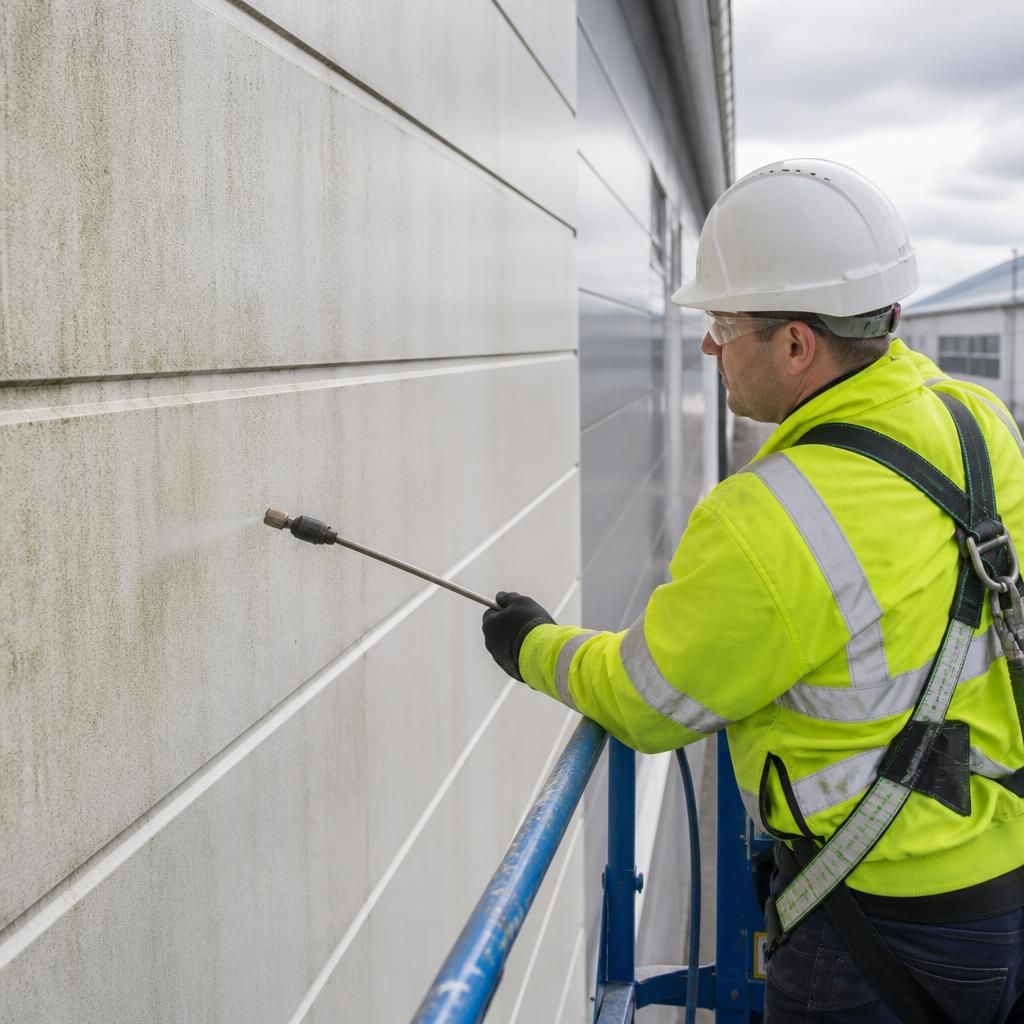
Regular cladding and render pressure washing helps control long-term costs by making minor defects easier to identify before they develop into expensive repairs. Once dirt, algae and other deposits are removed, property managers can inspect cracks, failed sealant, damaged coatings, corrosion around fixings and blocked drainage details more accurately.
Early reporting allows these issues to be scheduled alongside routine maintenance, reducing the likelihood of water ingress, widespread deterioration and disruptive reactive work. Cleaning should be carried out using a method suited to the surface, as excessive pressure or unsuitable chemicals can damage render, coatings, seals and joints and create avoidable costs.
Arrange Your Cladding and Render Cleaning Assessment
Arrange a cladding and render cleaning assessment to review the surface condition, contamination and most suitable cleaning method for your commercial property. We can also identify maintenance issues that may require attention before they develop into more costly repairs.