
Can pressure washing remove all types of stains from cladding and render?
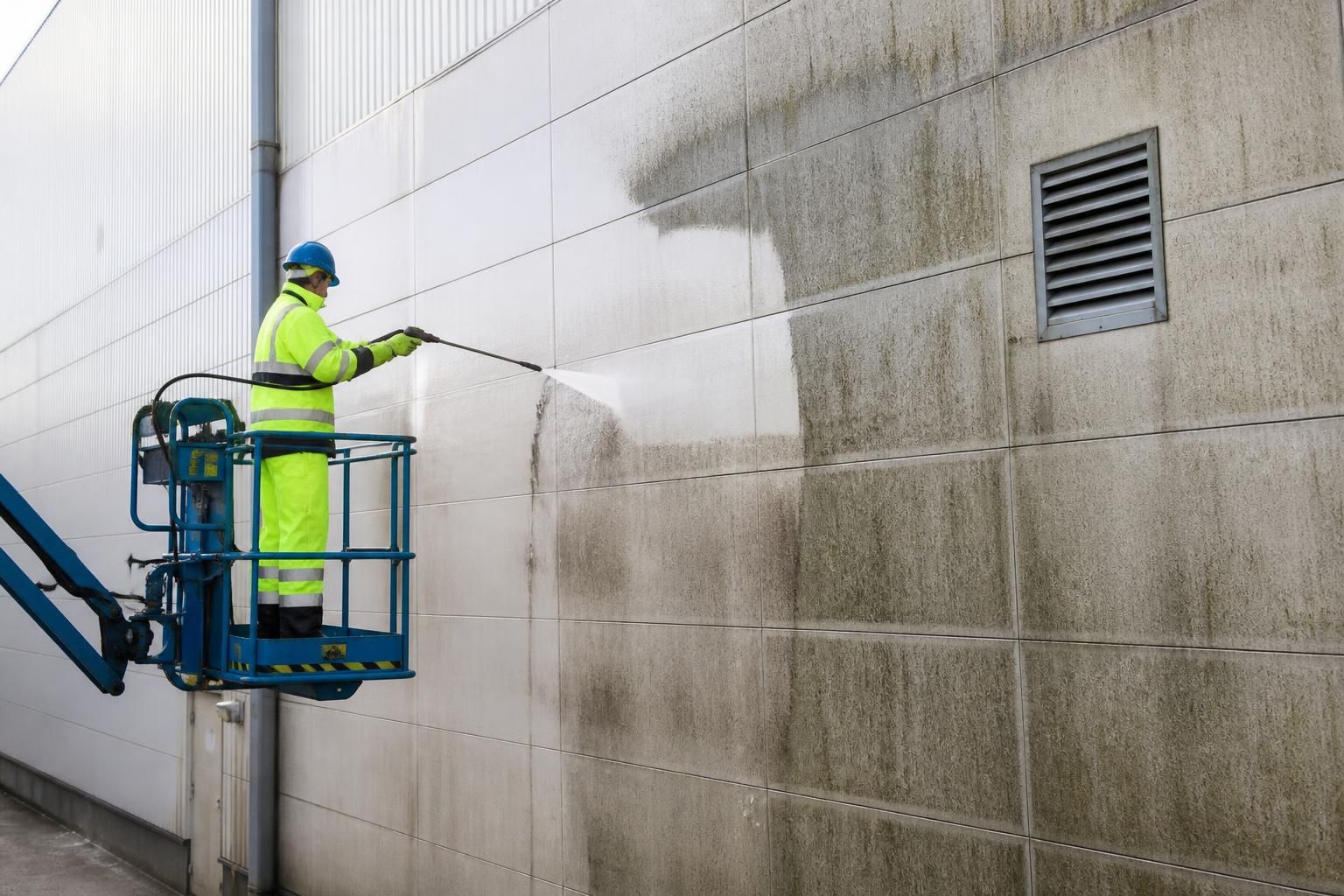
Pressure washing can remove many surface stains from cladding and render, including dirt, algae, moss and some organic growth, but it will not remove every mark. Oil, rust, ingrained pollutants, paint and staining caused by damaged or porous materials may require specialist detergents, steam cleaning, stain treatment or remedial work, with the method selected according to the surface and stain.
Pressure washing can remove many surface stains from cladding and render, but it cannot remove every type of marking. Dirt, dust, algae, moss, bird fouling and some organic growth usually respond well to a carefully controlled clean. Oil, rust, paint, deeply ingrained pollution, sealant and staining caused by substrate damage may need specialist detergents, steam cleaning, targeted treatment or remedial work instead.
The result depends on the type of stain, how long it has been present, the condition and porosity of the surface, and the pressure, temperature and cleaning solution used. A stain that appears to be on the surface may have penetrated porous render or may be linked to corrosion, water ingress or deterioration behind the cladding. Increasing the pressure is not a reliable solution and can cause more damage than the original mark.
Stains that pressure washing can commonly remove
- Loose dust, soil and general atmospheric dirt.
- Algae, moss, lichen and other organic growth, particularly when treated with an appropriate biocidal or detergent solution before rinsing.
- Bird fouling and surface deposits, provided the material is suitable and the contamination is handled using appropriate hygiene controls.
- Light traffic film and residues around entrances, service areas and loading bays.
- Some cobwebs, loose paint flakes and surface debris, although sound paint should not be stripped unintentionally.
Pre-treatment is often important for biological growth. A detergent or biocidal product can loosen contamination and reduce the need for aggressive pressure. Rinsing alone may make a façade look cleaner temporarily without addressing spores or residues, so the treatment should be selected according to the surface and the type of growth present.
Stains that may require additional treatment
- Oil and grease: These may need a suitable degreaser, dwell time and controlled agitation before low-pressure rinsing. On porous render, oil can be absorbed below the visible surface and may not be fully removable.
- Rust: Rust runs may originate from fixings, brackets, reinforcing components, gutters or other metalwork. A rust-removal treatment may improve the mark, but the source must also be corrected or the staining is likely to return.
- Paint, adhesive and sealant: Removal may involve a carefully selected solvent, poultice, steam process or specialist abrasion. The method must not soften coatings, expose the substrate or spread the residue across the façade.
- Ingrained pollution and carbon deposits: Traffic film and industrial pollution can bond to textured or porous surfaces. Detergent cleaning, hot water or steam may be more appropriate than high pressure.
- Efflorescence: White, powdery deposits on render are usually caused by salts moving through the material with moisture. Washing the surface may remove loose deposits, but it will not resolve the underlying damp or water movement.
- Water marks and run-off staining: These may be associated with defective sills, gutters, flashings or drainage details. Cleaning should be combined with an inspection of the source.
Cladding and render need different cleaning controls
Metal cladding, coated panels, composite panels, uPVC elements and other manufactured surfaces can be vulnerable to coating failure, corrosion, oxidation and damage to joints or seals. The pressure and nozzle should be selected to avoid forcing water behind panels or into vulnerable interfaces. Existing scratches, chalking, faded coatings and exposed metal should be recorded before work begins.
Render varies considerably in hardness, texture, age and porosity. Cement-based, polymer-modified, painted and textured renders do not all tolerate the same method. Excessive pressure can remove the surface finish, open pores, dislodge weak areas or leave visible cleaning lines. Soft, weathered or cracked render is often better suited to a low-pressure chemical clean, steam cleaning or another controlled approach rather than conventional high-pressure washing.
How the correct method is selected
- Inspect the façade, including cracks, failed coatings, loose render, corroded fixings, open joints and areas of water ingress.
- Identify the stain and determine whether it is biological, mineral, oily, chemical, paint-related or caused by an underlying defect.
- Check the cladding or render manufacturer’s cleaning guidance where it is available, along with any restrictions relating to coatings, joints and drainage.
- Carry out a discreet test clean to assess the response of the surface and confirm that the proposed method will not cause discolouration, scarring or coating loss.
- Select the least aggressive effective combination of water pressure, temperature, detergent, dwell time and rinsing technique.
- Protect surrounding materials, windows, entrances, landscaping and drainage systems, and manage contaminated run-off appropriately.
A professional clean should therefore aim for safe and consistent improvement rather than promise that every mark will disappear. Test areas can show whether a stain is removable, partially reducible or embedded in the material. Where cleaning cannot provide an acceptable result, the appropriate recommendation may be repair, repainting, replacement of a damaged panel, correction of a water source or specialist stain remediation.
For commercial premises, it is also useful to distinguish between removable contamination and permanent discolouration before approving the work. Photographs and condition notes taken before cleaning help establish whether marks are caused by ageing, coating breakdown or a defect rather than by removable dirt. This prevents unnecessary pressure washing and helps plan any follow-up repairs.
In practical terms, pressure washing is effective for many external deposits, but it is only one part of cladding and render cleaning. The safest and most effective outcome comes from matching the treatment to the stain and surface, using a test area, and addressing any defect responsible for recurring staining.
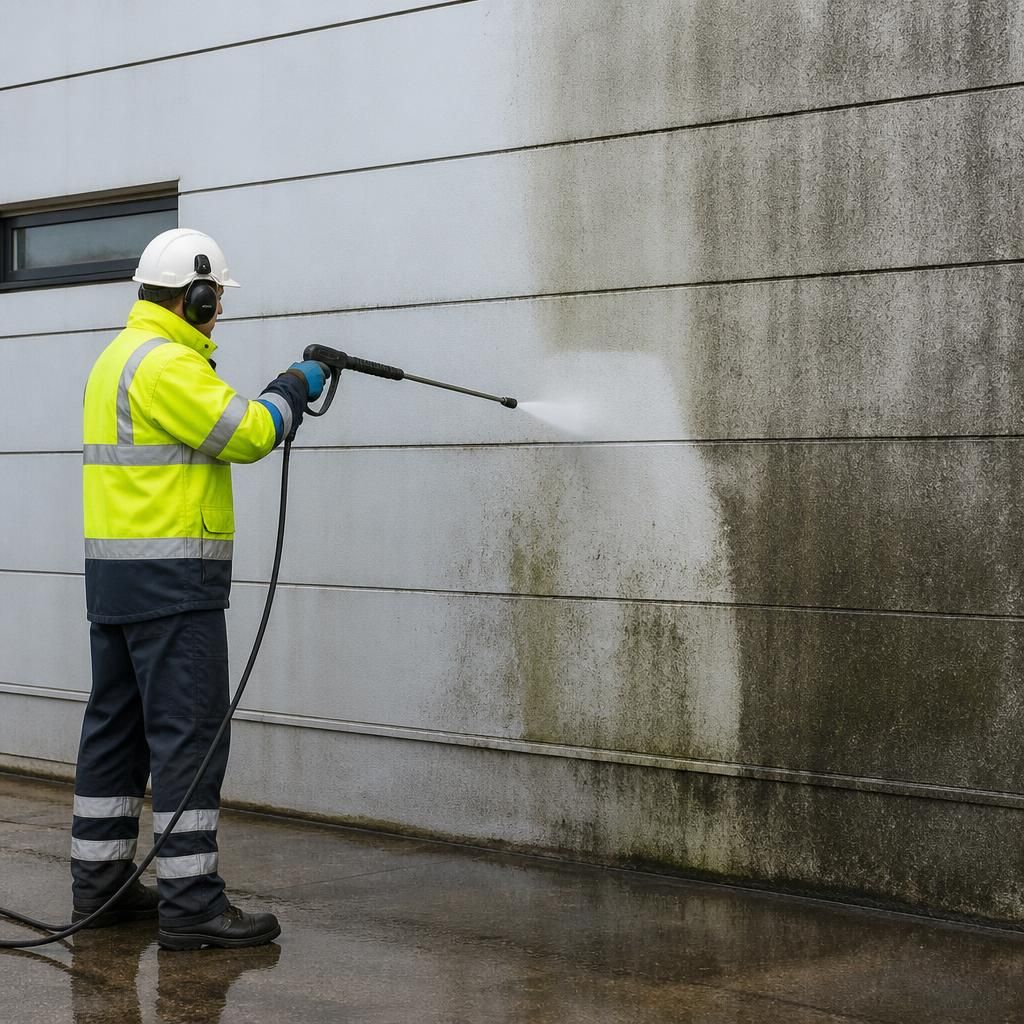
Pressure washing removes many surface deposits from cladding and render, but it cannot remove every stain. Dirt, algae, moss, bird fouling and loose atmospheric pollution often respond well to a controlled clean, while oil, rust, paint, efflorescence and deeply ingrained pollution may require detergents, steam cleaning or specialist stain treatment.
The correct method depends on both the contamination and the surface condition. Increasing pressure is not a reliable way to remove a persistent mark and may strip coatings, open porous render or force water behind cladding panels. A discreet test area helps establish whether the stain is removable, reducible or embedded in the material before wider cleaning begins.