
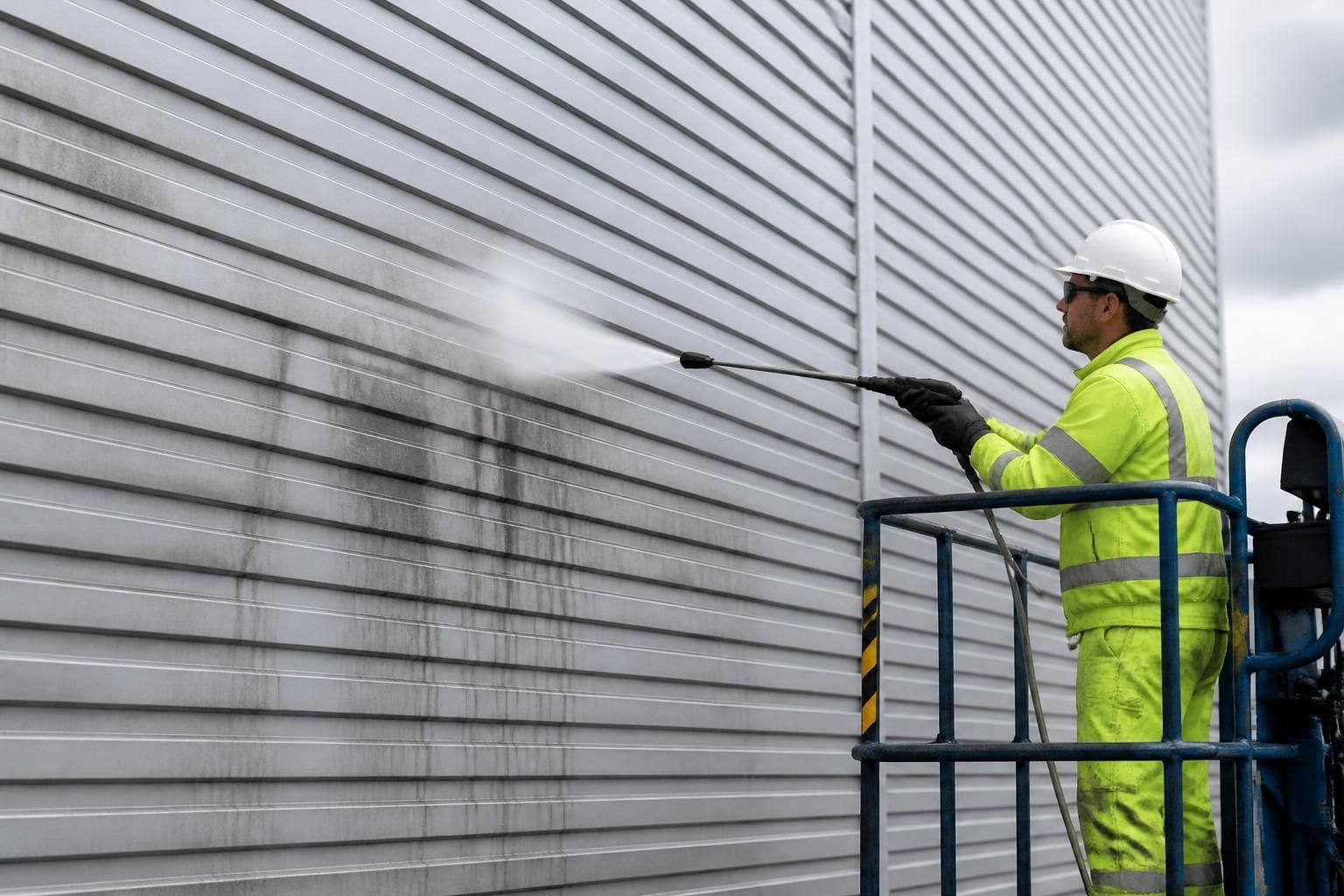
Can cladding pressure washing damage the surfaces?
Yes, cladding pressure washing can damage surfaces if excessive pressure, unsuitable nozzles, incorrect cleaning chemicals or poor technique are used. Professional cleaning protects the cladding by assessing its material and condition first, then using controlled pressure, suitable equipment and appropriate rinse methods.
Yes, cladding pressure washing can damage surfaces when the pressure, water temperature, nozzle, cleaning chemical or operating technique is unsuitable for the material. Damage may include scratched coatings, lifted paint, water ingress, opened joints, surface pitting, staining and permanent changes to the appearance of the cladding. Used correctly, however, controlled pressure washing is a suitable maintenance method for many commercial cladding systems.
The main risk is treating all cladding as though it has the same strength and finish. Metal composite panels, coated steel, aluminium, render, profiled sheets, sealed panels and older painted surfaces each respond differently to water pressure and cleaning products. A method that is appropriate for robust powder-coated metal may be too aggressive for weathered paint, brittle render or a panel with failing joints.
Before cleaning, the surface should be assessed for its material, coating, age, condition and construction. Particular attention is needed where there is:
- Peeling, chalking, blistering or flaking paint
- Corrosion, exposed metal or damaged protective coatings
- Cracked render, loose areas or friable surfaces
- Open seals, defective joints, gaps around fixings or damaged flashings
- Existing dents, scratches, staining or discolouration
- Delicate signage, vents, electrical fittings or other attached components
This inspection helps establish whether pressure washing is suitable and identifies defects that should be repaired or reported before work begins. Cleaning cannot correct failed coatings, loose panels or defective seals, and directing water at these areas may make the problem worse.
How pressure washing can cause damage
Excessive pressure can erode coatings, mark softer substrates and force water behind laps, trims or seals. Holding the lance too close to the surface increases the impact of the water and can create visible stripes or localised damage. A narrow or rotating nozzle may be unsuitable for delicate finishes, particularly when used by an operator who has not tested the surface first.
Incorrect cleaning chemicals can also cause damage. Strong alkaline or acidic products may dull a painted finish, attack aluminium, weaken sealants or leave residues. Some chemicals can react with existing corrosion or alter the colour of a coating. Using more detergent does not necessarily improve the result; the product must be compatible with the surface and thoroughly rinsed away.
Heat requires similar care. Steam or hot-water cleaning can be effective for grease, biological growth and ingrained deposits, but temperature must be controlled according to the substrate and coating. Heat applied to a vulnerable or already failing finish can soften coatings, affect sealants or accelerate damage. Cold-water pressure washing is not automatically safer either, as high impact can still harm the surface.
How professional methods reduce the risk
A controlled cleaning process normally includes a visual inspection, identification of the cladding system, protection of vulnerable areas and a small test clean in an inconspicuous location. The test area helps confirm whether the chosen pressure, nozzle, temperature and chemical produce the required result without affecting the finish. The method can then be adjusted before larger areas are treated.
Good practice includes keeping the lance at a suitable distance, using a fan spray where appropriate, avoiding direct spraying into joints and working methodically across the elevation. Operators should not concentrate the spray on one point or use pressure to compensate for an unsuitable chemical or insufficient dwell time. The rinse should remove loosened dirt and detergent without driving contaminated water into the building fabric.
Windows, doors, vents, lighting, electrical equipment, air-intake points and sensitive landscaping should be protected as part of the preparation. Run-off should also be managed so that dirty water and cleaning products do not enter drains or affect nearby surfaces. On larger premises, access equipment must be selected and positioned so that the operator can maintain consistent control rather than working from an unstable or overly distant position.
When pressure washing may not be appropriate
Pressure washing should be reconsidered where cladding is severely corroded, the coating is failing extensively, render is loose, insulation or backing materials may be exposed, or joints and penetrations are not watertight. A lower-pressure soft washing method, steam cleaning, hand cleaning or a specialist restoration approach may be more suitable. In some cases, cleaning should wait until repairs, re-sealing or coating work has been completed.
Render deserves particular caution because its strength and texture vary considerably. High pressure can remove the surface layer, expose aggregate, widen cracks or create patches that are difficult to blend. Delicate painted or powder-coated cladding can also show uneven cleaning if one area has weathered differently from another. A professional assessment should therefore consider both the material and the condition of the finish, not just the type of dirt present.
Signs that a cleaning method is too aggressive
During or after cleaning, warning signs include paint lifting, a change in gloss or colour, visible spray lines, new pitting, exposed substrate, loosened sealant, water appearing inside the building or damage to adjacent fittings. Work should stop if these signs occur so the surface can be reassessed. Any pre-existing defects and any changes identified during the work should be documented and communicated to the responsible property manager.
For commercial and industrial buildings, the safest approach is to agree the scope, access arrangements, test-cleaning process and reporting requirements before work starts. Providing information about previous coatings, known leaks, repairs and manufacturer restrictions can help ensure that the cleaning method is appropriate. A suitable method statement and risk assessment should also cover work at height, water run-off, nearby occupants, traffic, electrical hazards and protection of the building envelope.
In summary, pressure washing itself does not automatically damage cladding. Damage results from applying an uncontrolled or incompatible method to the wrong surface or condition. Material assessment, test cleaning, controlled pressure, suitable chemicals, careful rinsing and proper access arrangements allow most suitable cladding and render surfaces to be cleaned effectively while protecting their finish and the building beneath.
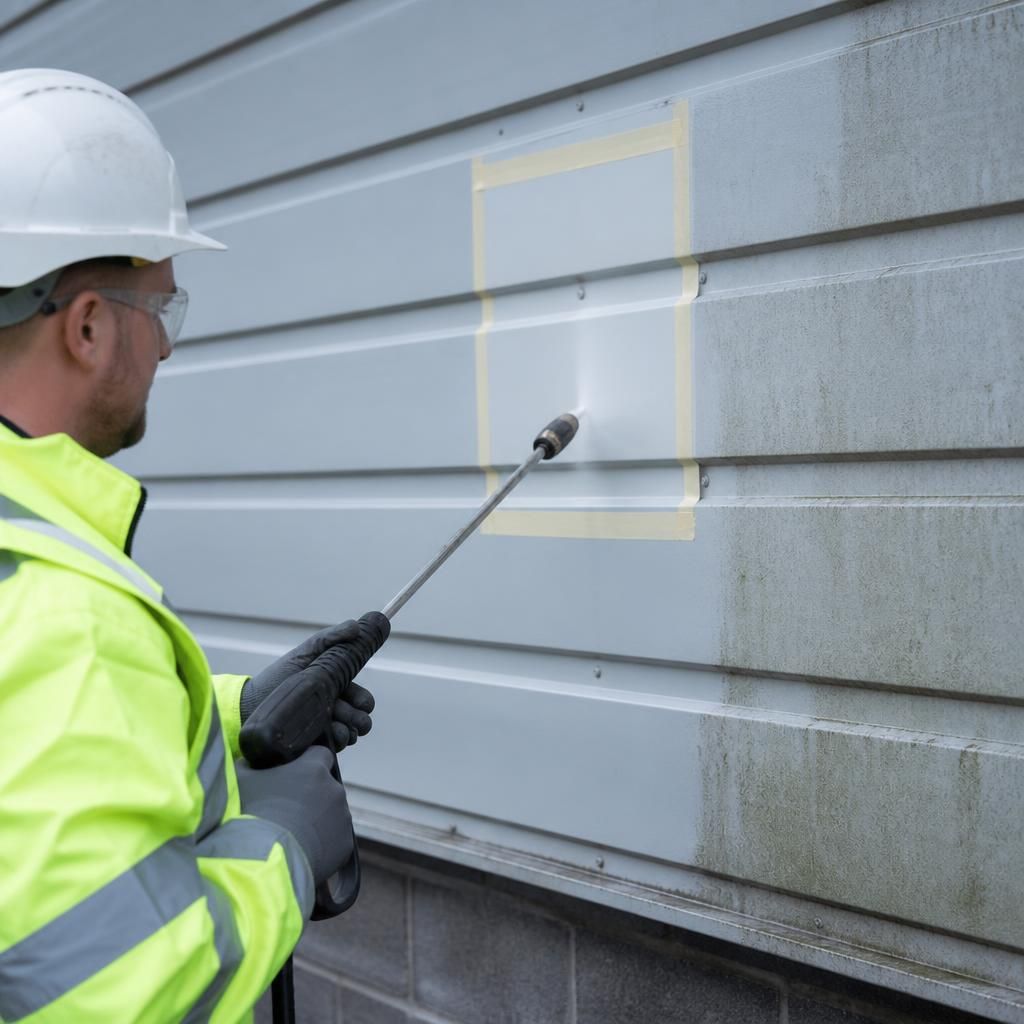
Cladding pressure washing is safest when the cleaning method is tested and adjusted for the specific surface before the main work begins. A small test area can reveal whether the pressure, nozzle, water temperature and cleaning solution are suitable without risking widespread damage to the coating or substrate.
The operator should check the test area for changes in colour, gloss, texture, paint adhesion, sealant condition and water penetration. If the finish remains intact, cleaning can continue using a controlled fan spray, suitable working distance and consistent movement. Where the surface reacts poorly, a lower-pressure method, steam cleaning or careful hand cleaning may be more appropriate.