
What surfaces are best suited for pressure cleaning?
Pressure cleaning is best suited to durable, water-resistant surfaces such as concrete, brick, paving, tarmac, stone, render and some metal cladding. The correct pressure, water temperature and cleaning method must be matched to each surface to remove dirt, algae, oil or graffiti without causing surface damage.
The surfaces best suited to pressure cleaning are durable, water-resistant materials such as concrete, brick, paving, tarmac, natural stone, certain renders, metal cladding and some roof coverings. These surfaces can usually tolerate controlled water pressure when the nozzle, distance, temperature and cleaning solution are matched to the material and the contaminant. Pressure alone is not the objective: the safest and most effective result comes from using the lowest effective pressure and an appropriate cleaning method.
Pressure cleaning is particularly useful for removing surface dirt, algae, moss, traffic film, oil residues, atmospheric soiling, bird deposits and some graffiti. Before cleaning, the surface should be assessed for age, condition, coatings, joints, cracks, previous repairs and areas where water could enter. A test clean in an inconspicuous location helps confirm that the proposed method will remove the contamination without marking or weakening the substrate.
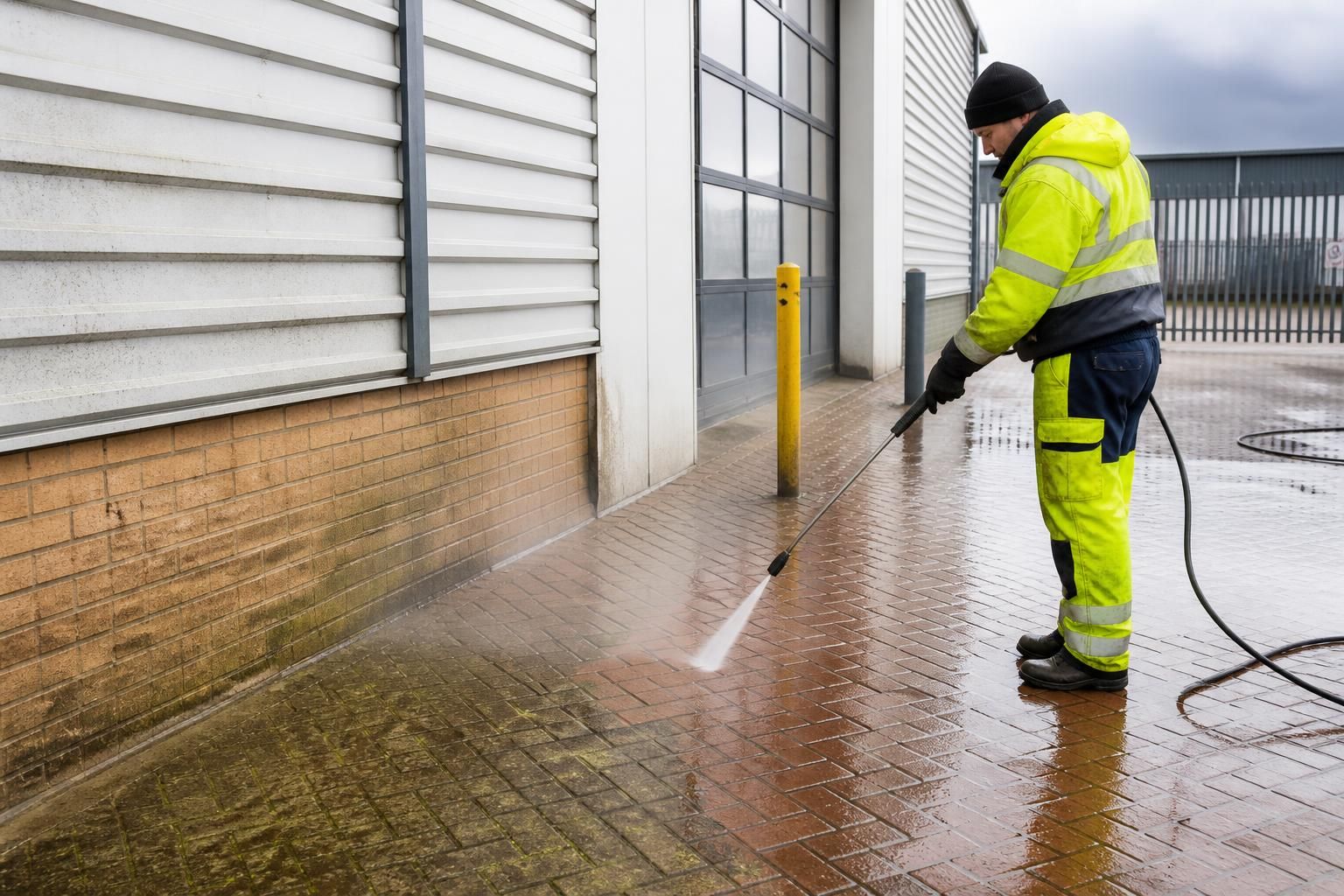
Concrete is one of the most suitable surfaces for pressure cleaning. It is commonly used for loading areas, service yards, car parks, paths, steps and hardstanding. Controlled pressure can remove ingrained dirt, algae, tyre marks and some oil contamination. Oil and grease may need a suitable degreasing treatment and dwell time before rinsing, as pressure washing alone may only spread the residue across the surface. Older or damaged concrete still requires care because aggressive cleaning can expose aggregate, enlarge cracks or leave visible cleaning patterns.
Brickwork can generally be cleaned safely, particularly where the bricks and mortar are sound and the surface is not highly weathered. Lower-pressure washing, steam cleaning or a soft-washing approach may be more appropriate than a high-pressure lance. Excessive pressure can erode mortar joints, damage the brick face and drive water into the wall. Efflorescence, paint, cement staining and biological growth may each require a different treatment, so the cleaning method should be selected according to both the brick type and the contamination.
Block paving, concrete paving and slabs are well suited to pressure cleaning when their joints and edges are stable. Cleaning can remove algae, moss, soil and general foot-traffic deposits from paths, courtyards and paved areas. Care is needed around loose blocks, damaged joints, decorative finishes and jointing sand. After cleaning, joints may need inspection and, where appropriate, reinstatement with a suitable jointing material. Drainage channels and gullies should also be checked so that removed debris does not obstruct the system.
Tarmac and asphalt can be pressure cleaned to remove dirt, moss, algae and some surface deposits from roads, forecourts, footways and car parks. The pressure and nozzle distance must be controlled because excessive force can lift loose aggregate, damage worn areas or leave light and dark bands. Oil contamination often needs a compatible cleaning agent and careful recovery of the wash water. Newly laid, cracked or friable surfaces should be assessed before any mechanical cleaning is undertaken.
Natural stone may respond well to pressure cleaning, but its suitability depends on the stone’s density, finish and condition. Granite and some robust paving stones are generally more resistant, while softer or more porous materials such as certain limestones and sandstones can be etched, discoloured or damaged by excessive pressure. A gentler pressure, wider spray pattern, steam or a specialist stone-cleaning treatment may be preferable. Acidic or strongly alkaline products should not be used without confirming their compatibility with the stone and surrounding materials.
Render and coated façades can sometimes be cleaned effectively, particularly when the surface is sound and the coating is designed to withstand washing. However, render is more vulnerable than concrete or paving. High pressure can remove the finish, expose the substrate, create streaking or force water behind cracks and failed joints. Low-pressure cleaning, soft washing or steam cleaning is often safer for painted render, textured coatings and external insulation systems. Any loose, blistered or flaking area should be repaired or stabilised rather than cleaned aggressively.
Metal cladding and other metal surfaces are often suitable for controlled pressure cleaning to remove atmospheric dirt, algae and bird deposits. The condition of the paint or factory-applied coating is important. Damaged coatings, exposed fixings and open laps can allow water into the building envelope. A suitable detergent and lower-pressure rinse may provide a better result than forceful cleaning. Cleaning products must also be compatible with the metal, coating, sealants and nearby glazing.
Roof coverings require a particularly cautious approach. Robust tiles and some metal roofing may be cleaned using controlled methods, but high-pressure cleaning can dislodge tiles, strip protective finishes, damage seals and force water beneath the covering. Fragile, aged or porous tiles may be better suited to soft washing or low-pressure treatments. Roof access, fall protection, fragile areas, water run-off and the potential spread of moss or biological matter must be considered before work begins.
Some materials are not automatically suitable for conventional pressure cleaning. Timber, painted surfaces, aged mortar, soft stone, damaged render, loose coatings, artificial finishes and delicate architectural details can be marked or stripped by excessive pressure. Asbestos-containing materials must not be treated as a routine pressure-cleaning surface; their condition and the applicable legal and safety requirements must be assessed by appropriately qualified specialists. Electrical equipment, vents, seals and vulnerable openings also need protection regardless of the substrate.
The most appropriate technique is selected by considering:
- the material, age, porosity and structural condition of the surface;
- the type, depth and spread of the contamination;
- the surface coating, sealant, paint or previous repair;
- the required water pressure, flow, temperature and spray pattern;
- access constraints, working height and nearby sensitive areas;
- drainage, water recovery and the safe handling of cleaning residues; and
- the finish required, particularly where appearance must remain consistent across a large façade or paved area.
For commercial and industrial sites, a method statement and site assessment should identify vulnerable surfaces, access requirements, water run-off controls and any areas requiring a different treatment. Where a surface is uncertain, a controlled test area is preferable to applying the same pressure across the whole site. This approach helps preserve the substrate while achieving a consistent clean and reducing the risk of damage, rework or unnecessary water use.
In practical terms, concrete, sound brickwork, stable paving and suitable tarmac are usually the strongest candidates for pressure cleaning. Stone, render, cladding and roofing can also be cleaned, but they require more careful selection of pressure, temperature and treatment. The condition and construction of the surface matter as much as the material name, which is why each project should be assessed before the cleaning system is chosen.
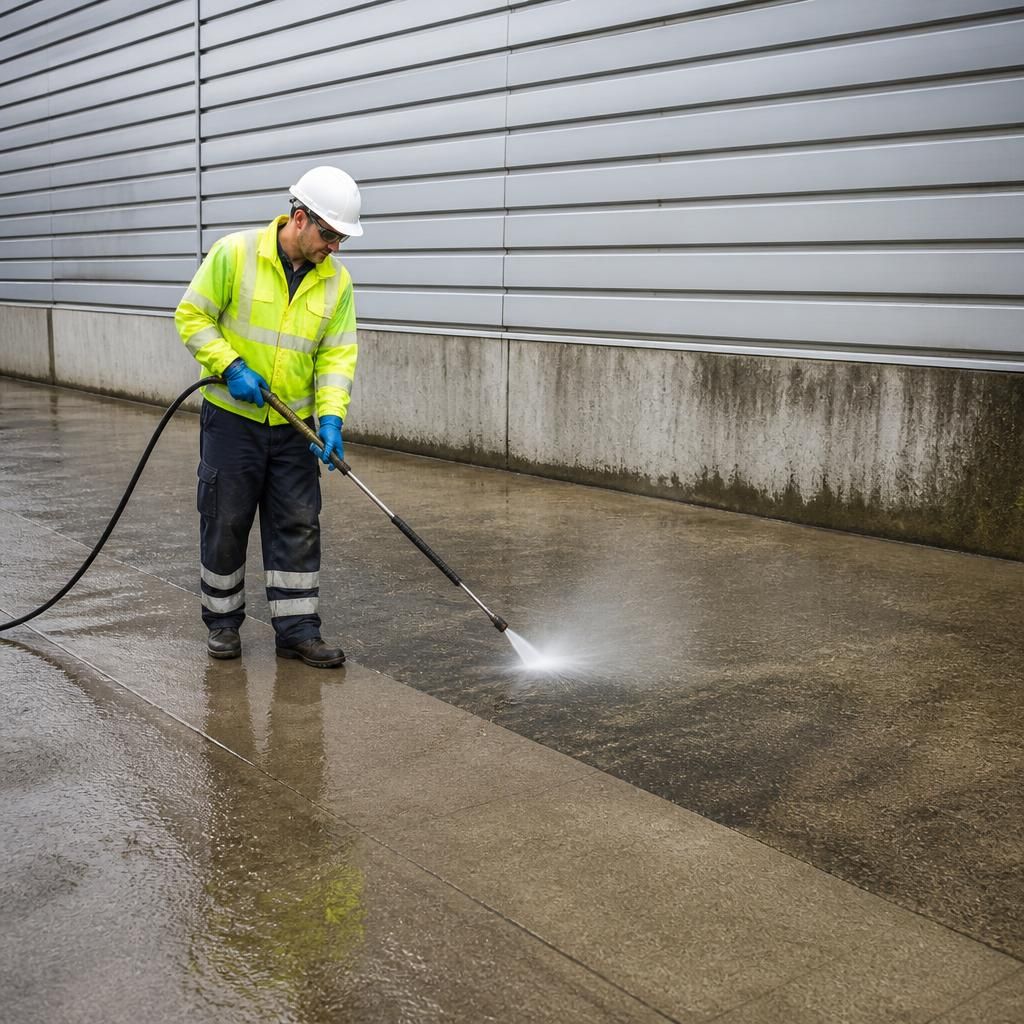
The suitability of a surface for pressure cleaning depends on its condition as well as its material. Sound concrete, stable paving and robust brickwork usually tolerate controlled cleaning, while cracked, weathered, porous or coated surfaces may require lower pressure, steam cleaning or a soft-washing treatment.
A small test area should be cleaned before the main work begins. This confirms that the selected pressure, nozzle, water temperature and cleaning solution remove the contamination without exposing aggregate, eroding mortar, lifting coatings or causing visible streaks. The cleaning method can then be adjusted for different areas of the same property, helping to protect vulnerable surfaces and achieve a consistent finish.
Arrange a Professional Surface Assessment
Arrange a professional surface assessment with Encanto Exterior Cleaning to identify the safest and most effective pressure cleaning method for your property. We will review the surface condition, contamination, access and drainage requirements before work begins.