
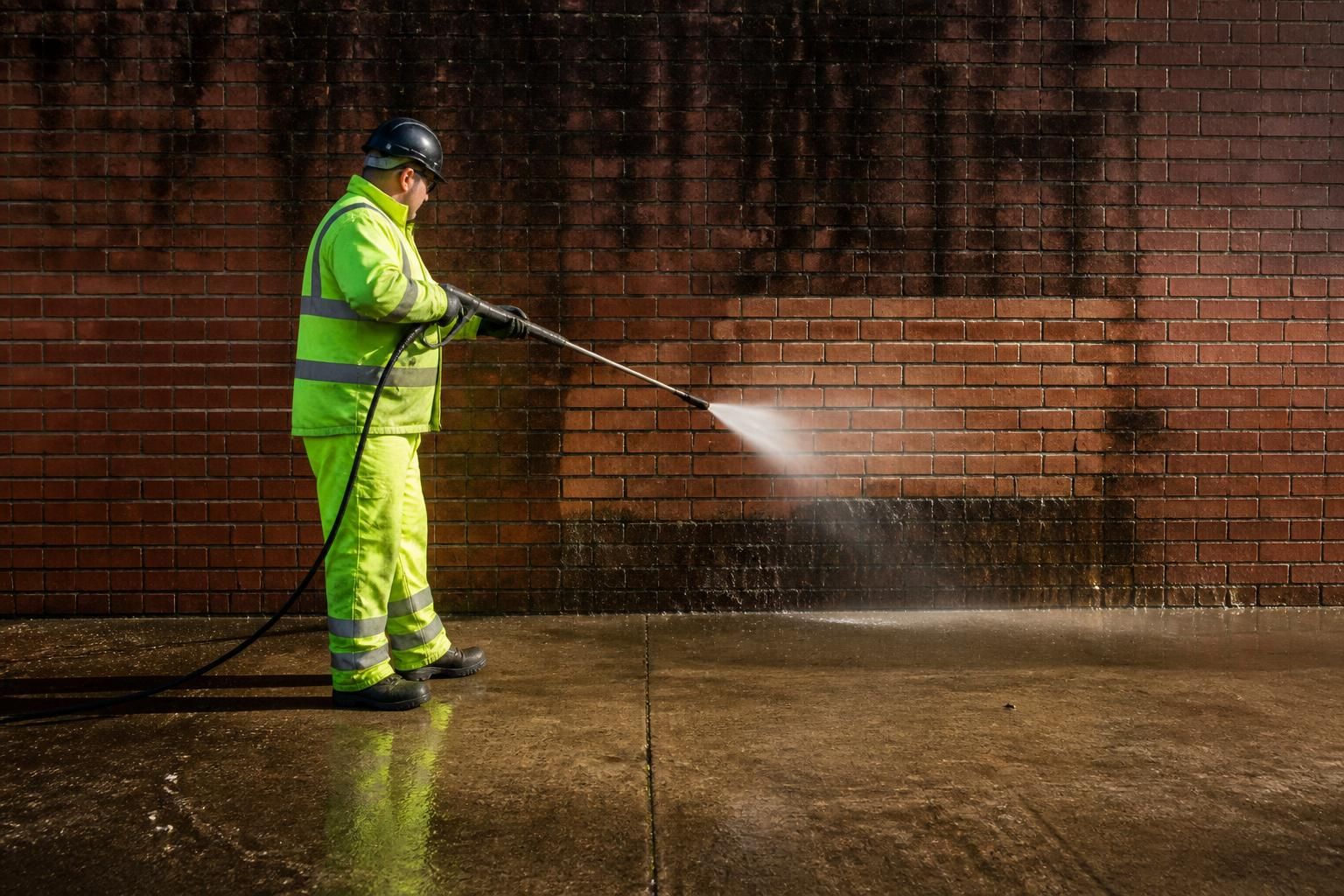
What specific cleaning techniques do you use for different surfaces such as concrete and brick to ensure effective and safe cleaning?
We match the cleaning method to each surface’s condition, age and construction, using controlled pressure washing, low-pressure cleaning, steam or soft washing where appropriate. Concrete is typically cleaned with measured pressure and suitable detergent or surface-cleaner equipment, while brick is treated more gently to protect mortar joints, prevent water penetration and remove staining without damaging the face of the brick.
Effective surface cleaning depends on matching the pressure, water temperature, cleaning solution, nozzle, distance and recovery method to the material and the contaminant. We inspect the surface first, identify weak or damaged areas, and carry out a controlled test clean before treating the wider area. This allows us to remove dirt, staining, algae, oil or graffiti without unnecessarily eroding the surface, opening joints or driving water into the building fabric.
Concrete is generally robust, but it is not indestructible. We usually clean sound concrete with controlled pressure washing, often using a rotary surface cleaner to produce an even finish and reduce streaking. The pressure is adjusted according to the concrete’s age, finish and condition. We use lower pressure around cracks, exposed aggregate, damaged edges and joints, while detergent or hot water may be used where grease, oil or ingrained traffic film is present. Surface cleaners and suitable pre-treatment help loosen contamination before rinsing, rather than relying on excessive pressure.
Oil and fuel staining on concrete often requires a degreasing treatment and sufficient dwell time so the product can break down the contaminant. We then agitate or rinse the area in a controlled manner and manage the resulting wastewater appropriately. Some older or deeply penetrated stains may leave a shadow after cleaning; this is assessed before work begins so the expected result is clear. Pressure alone is not always the safest or most effective way to remove oily contamination.
Brickwork is treated more cautiously because the brick face and mortar joints can be porous, weathered or vulnerable to abrasion. We normally begin with low-pressure water cleaning, a soft-washing method or steam cleaning, depending on the type of brick and the staining present. The aim is to remove surface contamination while preserving the fired face of the brick and preventing mortar loss. We avoid directing a concentrated jet into joints, cracks, vents or openings, and take additional care where the brickwork has been repointed or is already deteriorating.
For algae, moss, lichen and organic growth on brick, we may apply a compatible biocidal or detergent treatment before a controlled rinse. This reduces the need for aggressive pressure and helps address contamination below the immediate surface. Soot, atmospheric deposits and general grime may respond to steam or a carefully selected low-pressure cleaning solution. Paint, cement residue and other hard deposits require a separate assessment, as mechanical removal or stronger treatment can mark the brick if used without testing.
Mortar and pointing are often more vulnerable than the brick itself. We inspect for open joints, friable mortar, previous repairs and signs of water penetration before cleaning. Where pointing is weak, we reduce the pressure and change the cleaning approach, and we may recommend repair before or after cleaning if that is necessary to protect the wall. Rinsing is controlled to limit water entering the façade, particularly around defective joints, window openings and service penetrations.
Other common surfaces are cleaned using similarly material-specific methods:
- Natural stone: pressure, temperature and detergent selection are adjusted for the stone’s porosity, finish and mineral composition. Soft stone, polished surfaces and limestone require particularly gentle treatment to avoid etching or surface loss.
- Cladding and coated metal: low-pressure washing with a compatible detergent is generally preferred. We check for failed coatings, corrosion, loose panels and vulnerable seals before rinsing.
- Render: soft washing or low-pressure cleaning is used where high pressure could remove the finish, expose the substrate or cause cracking and water ingress.
- Block paving and concrete paving: we use controlled pressure and suitable surface-cleaning equipment, taking care around joints, drainage channels and jointing sand. Re-sanding may be considered where cleaning has removed loose material.
- Roofs and fragile surfaces: the method is selected according to the roofing material and condition. Soft washing, steam or specialist access methods may be safer than direct high-pressure cleaning.
Before cleaning, we check for loose material, structural defects, failing paint, previous coatings, electrical equipment, drainage routes and areas where water could enter. We also consider nearby vehicles, pedestrians, landscaping and neighbouring properties. Test patches are particularly important when the surface has been painted, sealed, repaired or exposed to aggressive contamination, because the visible result and the surface response can vary across the same elevation.
During the work, operators keep the lance at a suitable distance and use the widest practical spray pattern rather than concentrating force in one place. We work progressively, monitor the surface as contamination is removed, and stop if the substrate begins to show damage or an unexpected reaction. Detergents are selected for the material and contaminant, applied for the required dwell time, and rinsed thoroughly where appropriate. Wastewater and chemical run-off are contained or directed through suitable drainage controls in line with the site assessment.
This approach provides a cleaner result while protecting the surface’s appearance, structure and service life. It also means that the method can be adjusted during the project if the substrate proves weaker, more porous or more heavily contaminated than the initial inspection indicated.
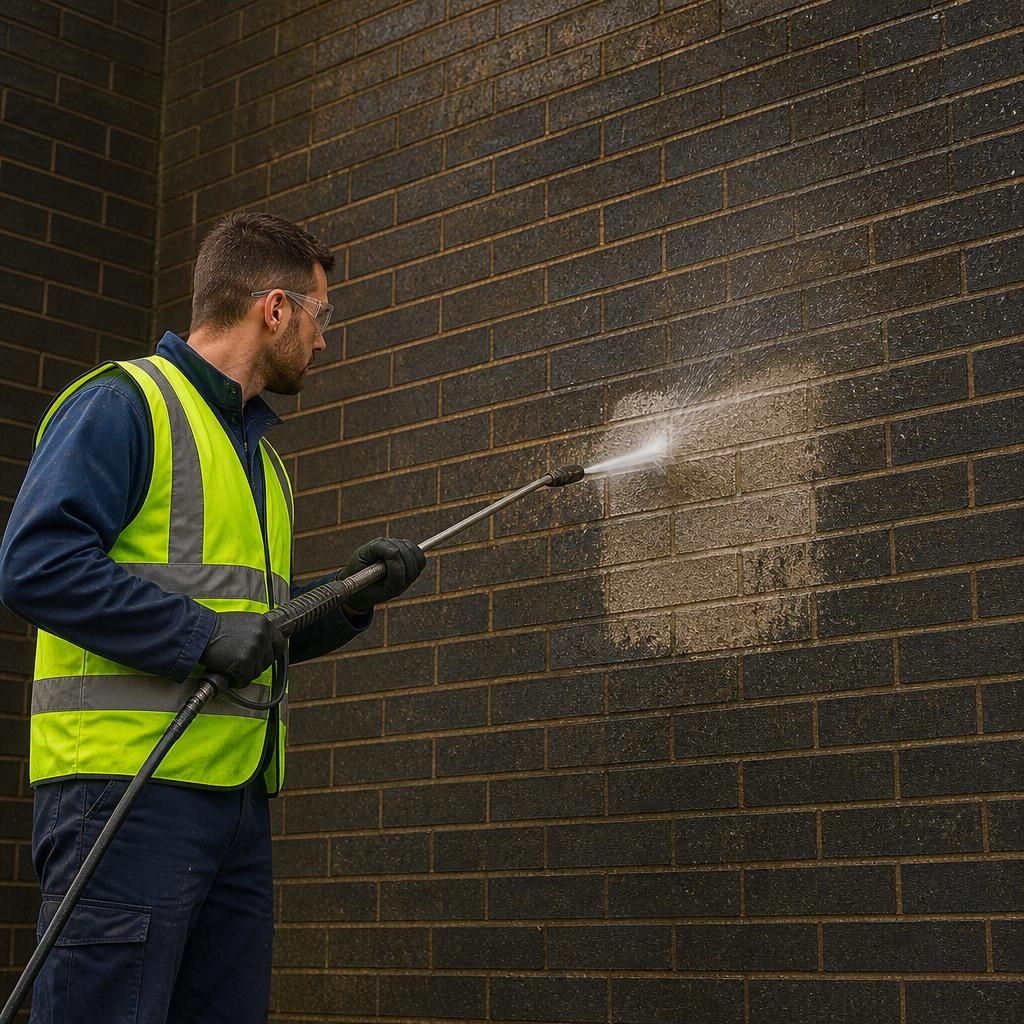
A test patch is a controlled trial area used to confirm that the selected pressure, temperature, cleaning solution and nozzle are safe for the surface before wider cleaning begins. This is particularly important on aged concrete, porous brick, weathered mortar, painted finishes and previously repaired areas, where the substrate may react differently from the surrounding surface.
We assess the test area after cleaning and drying, checking for surface marking, mortar loss, colour change, etching, coating damage or excessive water absorption. If necessary, we reduce the pressure, increase the cleaning distance, change the spray pattern or use steam, detergent or soft washing instead. Only once the method gives a suitable result without harming the material do we proceed across the rest of the elevation or paved area.
Arrange a Surface-Specific Cleaning Assessment
Arrange a surface-specific cleaning assessment with Encanto Exterior Cleaning to confirm the safest and most effective method for your concrete, brick or other exterior surfaces. We will review the substrate, contamination and site conditions before recommending the appropriate cleaning process.