
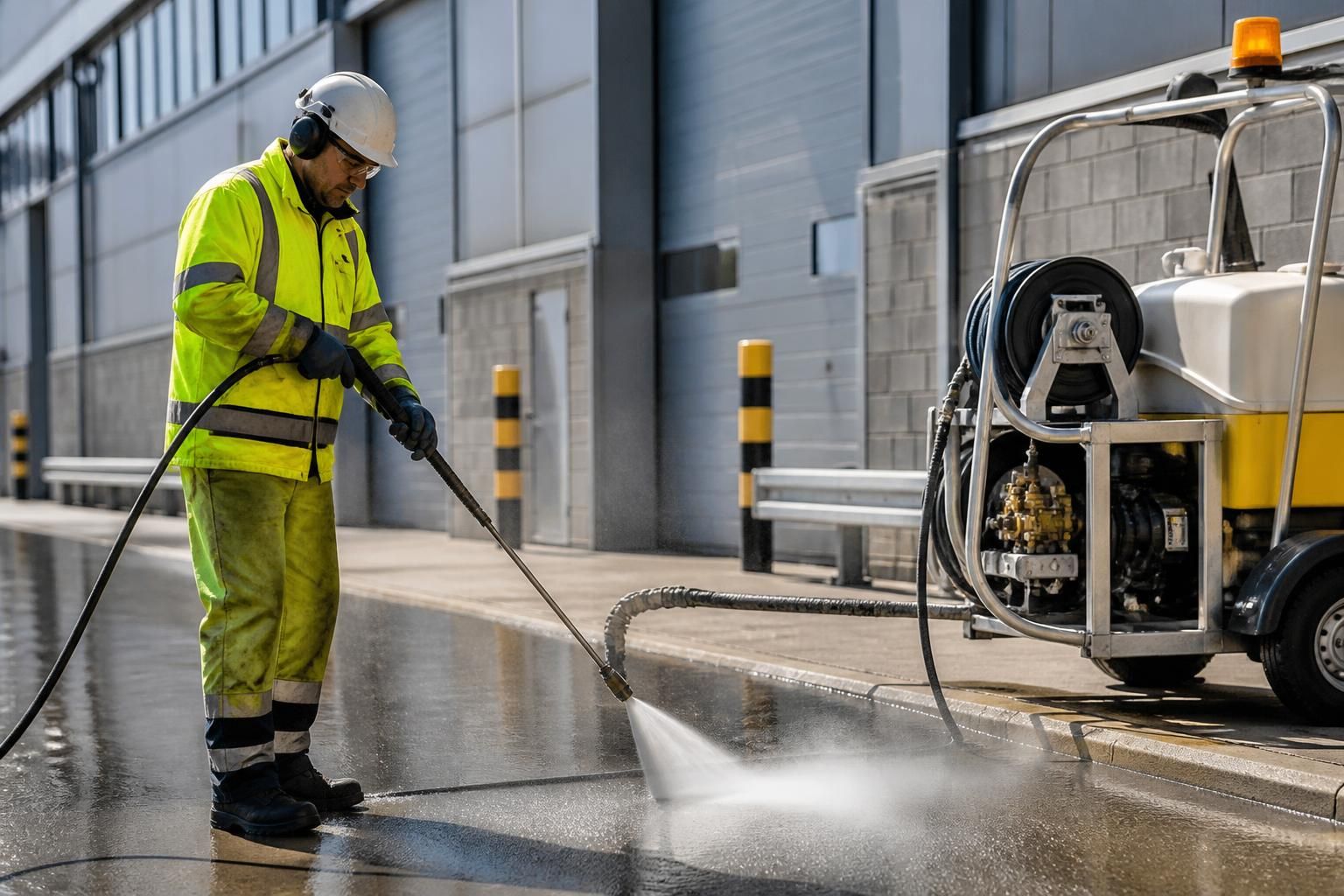
What factors should be considered when choosing pressure cleaning equipment?
Choosing pressure cleaning equipment depends on the surface, type of contamination, required cleaning power, water availability, access requirements and site safety conditions. For commercial and industrial work, also consider water and fuel efficiency, noise, waste-water control, operator training, equipment reliability and the level of technical support available.
The right pressure cleaning equipment is determined by the surface, contamination, required cleaning rate, available utilities, access conditions and environmental controls. A machine with the highest pressure is not automatically the best choice: effective commercial cleaning depends on balancing pressure, water flow, temperature, cleaning accessories and operator control so that contamination is removed without damaging the substrate.
Match the equipment to the surface
Begin by identifying the material to be cleaned and its condition. Concrete, block paving and robust industrial floors may tolerate higher pressure and greater water flow, whereas brickwork, stone, render, painted surfaces, cladding and roof materials may require lower pressure, wider spray patterns or a softer cleaning method. Weathered, cracked, loose or previously coated surfaces need particular care because water can enter defects or remove finishes.
Equipment should also allow the operator to adjust the pressure, nozzle selection and working distance. This provides better control when a site contains several materials, such as a commercial building with masonry, glazing surrounds, metal cladding and paved access areas.
Consider the type of contamination
Oil, grease, traffic film, algae, moss, cement residue, chewing gum and graffiti do not respond to the same combination of pressure and temperature. Water flow and mechanical action may be sufficient for loose dirt, while ingrained grease can require heated water and a suitable detergent. Graffiti removal may require a carefully selected chemical treatment, controlled pressure and a compatible abrasive or soft-washing approach, depending on the coating and substrate.
Choosing equipment only by its maximum pressure can produce poor results and increase the risk of surface damage. Look for a system that supports interchangeable nozzles, surface cleaners, extension equipment, detergent application and controlled rinsing. These features make it easier to adapt the method to the contaminant rather than forcing every task into one setting.
Compare pressure and water flow
Pressure describes the force available at the nozzle, while water flow affects how quickly loosened dirt and residues are flushed away. A high-pressure, low-flow machine may provide useful control for detailed work, but it may be inefficient for large car parks or extensive concrete areas. Higher flow can improve productivity on broad, durable surfaces, although it creates greater demands for water supply, drainage and wastewater management.
For commercial projects, assess the working output in real site conditions rather than relying solely on the machine’s maximum specification. Hose length, nozzle choice, water restrictions, operator technique and the distance from the equipment can all affect performance.
Decide whether hot or cold water is required
Cold-water equipment can be suitable for general dirt, dust, loose organic matter and many routine external cleaning tasks. Heated equipment is more effective where grease, oil, food residue or heavy traffic film needs to be softened. Heat can reduce reliance on aggressive chemicals, but it also requires suitable fuel, ventilation, handling controls and protection for heat-sensitive materials.
Where hot water is being considered, check the substrate, nearby seals and coatings, drainage arrangements and the manufacturer’s operating guidance. The appropriate choice may be a combination of controlled heat and moderate pressure rather than maximum settings.
Assess water supply and efficiency
Confirm whether the site provides a reliable mains supply, suitable flow and an accessible connection point. If not, equipment may need a buffer tank or another approved water arrangement. Planned water use should account for pre-wetting, detergent application, rinsing and any repeated passes.
Water-efficient equipment, trigger-controlled lances and surface-cleaning attachments can reduce unnecessary consumption. However, using too little water can prolong the work or leave residues behind, so efficiency should be measured by the result achieved and the total process rather than by flow alone.
Check access, mobility and reach
Equipment selection must reflect the physical layout of the site. Consider vehicle access, hose routes, stairs, narrow service areas, plant rooms, roof spaces and the distance between the machine and the workface. Compact equipment may be preferable in confined areas, while larger projects may benefit from trailer-mounted or truck-mounted systems with longer hose runs and greater capacity.
Façades, roofs and elevated areas may require telescopic poles, lifting equipment, powered access or other specialist systems. The cleaning machine must be compatible with that access method, and hoses, lances and attachments must be secured and managed to prevent trip, snagging and falling-object hazards. Pressure cleaning from height should not be improvised with unsuitable equipment.
Include safety controls in the specification
Suitable equipment should have dependable trigger controls, emergency shut-off arrangements, stable frames, guarded moving or hot parts and hoses rated for the operating conditions. Operators need clear instructions on pressure settings, nozzle selection, chemical handling, electrical safety, manual handling and the risks of injection injuries, slips and flying debris.
Before work starts, the equipment should form part of the site-specific risk assessment and method statement. This includes checking the substrate, isolating vulnerable areas, controlling public and vehicle movements, identifying overhead or buried services and providing appropriate personal protective equipment. Where electrical equipment is used outdoors, the power supply and protection arrangements must be suitable for the environment.
Plan for wastewater and chemical control
Pressure cleaning can mobilise oil, silt, paint particles, detergents and other pollutants. Equipment should therefore support controlled collection, containment or recovery of wastewater where required. Drain protection, wet vacuum systems, bunding, filtration and approved disposal arrangements may be necessary, particularly near surface-water drains, watercourses, food areas or sensitive landscaping.
Detergent injection systems should allow accurate application and thorough rinsing. Chemical compatibility with the surface, surrounding vegetation and drainage system must be checked before use. Low-water equipment is not automatically environmentally suitable if it produces concentrated contaminated runoff that is not properly controlled.
Consider noise, emissions and site restrictions
Engine-driven and heated machines can create noise, exhaust emissions and heat. Electric equipment may be more suitable for enclosed areas, noise-sensitive premises or locations with strict emissions controls, provided that the site has an appropriate power supply and the equipment can deliver the required performance. Battery-powered tools can assist with smaller or detailed tasks but may not provide the duration or output needed for extensive industrial cleaning.
Working hours, nearby occupants, ventilation, fuel storage and local site rules should all influence the choice. Where equipment will operate near the public or an occupied building, quieter accessories and effective screening may be as important as cleaning power.
Evaluate reliability and support
For ongoing commercial work, reliability, serviceability and availability of replacement parts are as important as the initial specification. Check the inspection and maintenance requirements, hose and pump servicing, filter access, protection against frost and the availability of technical support. Equipment that is difficult to maintain can cause delays and inconsistent cleaning results.
Operators should be trained on the specific machine and attachments rather than relying on general pressure-washing experience. A planned maintenance regime, pre-use checks and records of faults or repairs help identify issues before they affect a scheduled project.
Use a practical selection process
- Survey the surfaces, contamination, condition and areas that must be protected.
- Define the required cleaning method, including pressure range, water flow, temperature and chemical use.
- Check water, electricity, fuel, drainage, access and storage arrangements at the site.
- Assess risks from height, traffic, pedestrians, electrical systems, wastewater and nearby occupants.
- Choose compatible nozzles, surface cleaners, hoses, poles, recovery equipment and personal protective equipment.
- Test the proposed method in an inconspicuous area and adjust the settings before wider cleaning begins.
For commercial and industrial premises, the most suitable equipment is the system that delivers a controlled result safely and efficiently across the actual site conditions. A professional assessment should consider the whole cleaning process, including preparation, application, rinsing, access, wastewater recovery and follow-up maintenance, rather than selecting a machine on pressure rating alone.
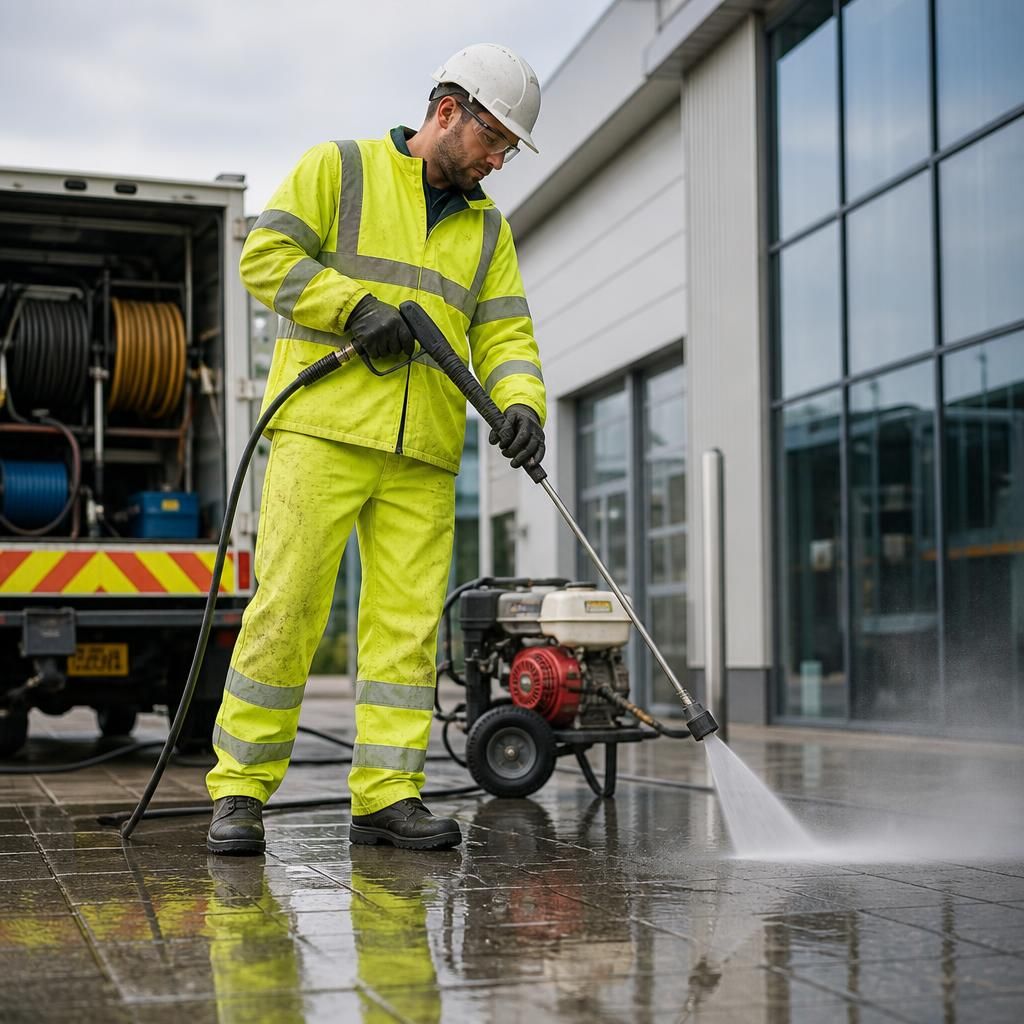
Choosing pressure cleaning equipment is not simply a matter of selecting the machine with the highest pressure rating. The equipment should match the surface, contamination and working environment. Durable concrete may benefit from higher water flow and a surface-cleaning attachment, while brick, cladding, painted finishes and roof materials often require lower pressure, wider spray patterns and greater operator control. Hot water can help loosen oil and grease, but cold water may be more appropriate for general dirt or heat-sensitive coatings.
Access and wastewater arrangements are equally important. Hose length, powered access, water supply, drainage protection and recovery equipment should all be considered before work begins. A controlled test on an inconspicuous area helps confirm the correct pressure, nozzle, temperature and cleaning agent without relying on maximum settings.