
What environmental considerations do you incorporate into your pressure cleaning services to minimise ecological impact?
We minimise the ecological impact of pressure cleaning by selecting the lowest effective pressure, temperature and water flow for each surface and contaminant, while using biodegradable cleaning products where appropriate. We also control runoff, prevent contaminated water entering drains or watercourses, recover and dispose of waste responsibly, and use efficient equipment and access methods to reduce water, chemical and fuel consumption.
Our pressure cleaning services minimise ecological impact by using the least intensive combination of pressure, water flow, temperature and cleaning product that will safely remove the contamination. We assess each site and surface before work begins, then control water use, prevent polluted runoff, select products carefully and manage all recovered waste through appropriate disposal routes.
Site assessment and method selection
Environmental controls start with understanding the site rather than applying the same cleaning method everywhere. We consider the surface material, type and extent of contamination, nearby drains and watercourses, ground conditions, weather, access requirements and the sensitivity of surrounding landscaping or habitats. This helps us decide whether pressure washing, steam cleaning, soft washing, manual treatment or a combination of methods is most appropriate.
Using the lowest effective pressure reduces water use and limits the risk of removing surface material, damaging coatings or creating unnecessary contaminated runoff. On delicate façades, masonry, painted surfaces and older materials, a lower-pressure or steam-based approach may be more suitable than aggressive cleaning. We also avoid cleaning during conditions that could carry wastewater beyond the controlled work area, such as heavy rain or unsuitable wind.
Efficient use of water and energy
We regulate water flow and use equipment suited to the scale and nature of the work, rather than allowing water to run continuously without purpose. Targeted cleaning, controlled application and staged rinsing help avoid excessive consumption while still achieving a consistent result. Where practical, equipment is switched off during pauses and work is planned to reduce unnecessary travel, refuelling and repeated access operations.
Temperature is selected according to the contaminant and surface. Heated water or steam can sometimes remove oils, grease and biological growth with less reliance on chemical treatment, but heating water also requires energy. We therefore balance cleaning effectiveness with energy use and select the most efficient method that remains safe for the substrate and the surrounding environment.
Responsible use of cleaning products
Cleaning chemicals are used only when they provide a clear benefit over water, pressure, steam or mechanical treatment. Where a product is appropriate, we select a formulation suitable for the surface and contamination, follow the manufacturer’s instructions and use the lowest effective concentration. Biodegradable products may be used where suitable, although biodegradability alone does not make a substance safe to discharge into a drain or watercourse.
Products are stored, transported and handled to prevent spills. Our operatives follow relevant product safety information and take account of the risks posed to people, plants, animals, metals, coatings and drainage systems. Chemical application is controlled so that it remains within the intended treatment area, with appropriate dwell times and thorough rinsing or recovery where required.
Runoff and drainage controls
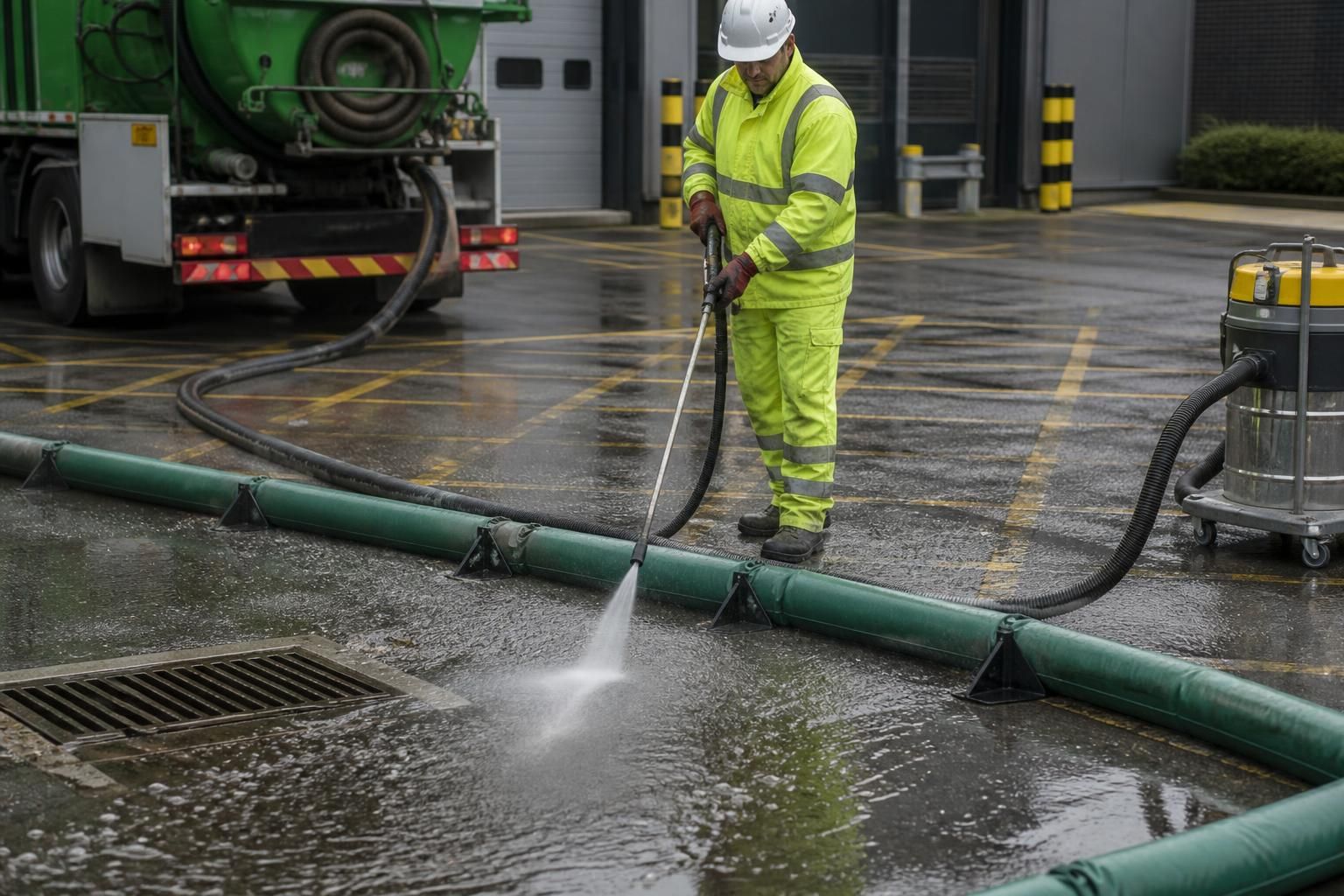
Pressure cleaning wastewater can contain silt, detergents, oil, fuel residues, paint particles, heavy metals, biological material or other pollutants. It must not be allowed to enter surface-water drains, open ground or watercourses without suitable assessment and permission. Before work starts, we identify drainage routes and distinguish surface-water drainage from foul drainage wherever possible.
Depending on the site and contamination, controls may include drain covers, bunds, booms, temporary barriers, wet vacuums, collection points and other recovery equipment. We work to contain and recover dirty water rather than dispersing it across a wider area. Where discharge to a drainage system is proposed, it is subject to the site operator’s requirements and any relevant consent. If wastewater cannot be discharged appropriately, it is collected for removal and disposal through a suitable waste contractor.
We take additional care with oil-stained areas, car parks, loading bays, industrial premises, graffiti removal and locations close to rivers, ponds, protected land or planted areas. The control measures depend on the substance present and the vulnerability of the surrounding environment, so a more detailed assessment may be needed before work begins.
Waste recovery and disposal
Recovered sludge, sediment, paint residue, chemical solution, absorbent materials and other cleaning waste are kept under control and handled according to their contents. We do not treat contaminated material as ordinary surface water simply because it has been diluted during cleaning. Waste is segregated where practical and transferred using appropriate disposal or recovery arrangements, with documentation retained when required by the project or waste regulations.
For graffiti and spray paint removal, the method is selected to limit the spread of paint particles and avoid unnecessary damage to the underlying surface. Collection and containment are particularly important where coatings, solvents or residues may affect drainage or soil.
Protection of surrounding areas
We protect nearby planting, soil, landscaped areas, vehicles, building entrances and neighbouring property from overspray, splashback and chemical contact. Access equipment and work zones are positioned to reduce the need for repeated passes and to keep cleaning operations within the agreed area. Wildlife, nesting areas and sensitive vegetation are considered during planning, and work may be adjusted if site conditions create an avoidable environmental risk.
For larger commercial and industrial projects, environmental controls are incorporated into the method statement and site briefing. The plan can identify the products and equipment to be used, drainage arrangements, wastewater controls, waste handling procedures, spill response measures and any client-specific environmental requirements.
Monitoring and continual improvement
During the work, operatives monitor water behaviour, runoff clarity, equipment performance and the condition of the surface. If contamination is spreading, drainage controls are not effective or the planned method is causing unnecessary impact, work is paused and the approach is reviewed. After completion, the area and drainage controls are checked before barriers or covers are removed.
These measures do not mean that pressure cleaning has no environmental impact; the appropriate controls depend on the site, contaminant and discharge arrangements. They do ensure that environmental risks are identified in advance and managed through proportionate methods, efficient resource use, controlled wastewater handling and responsible waste disposal.
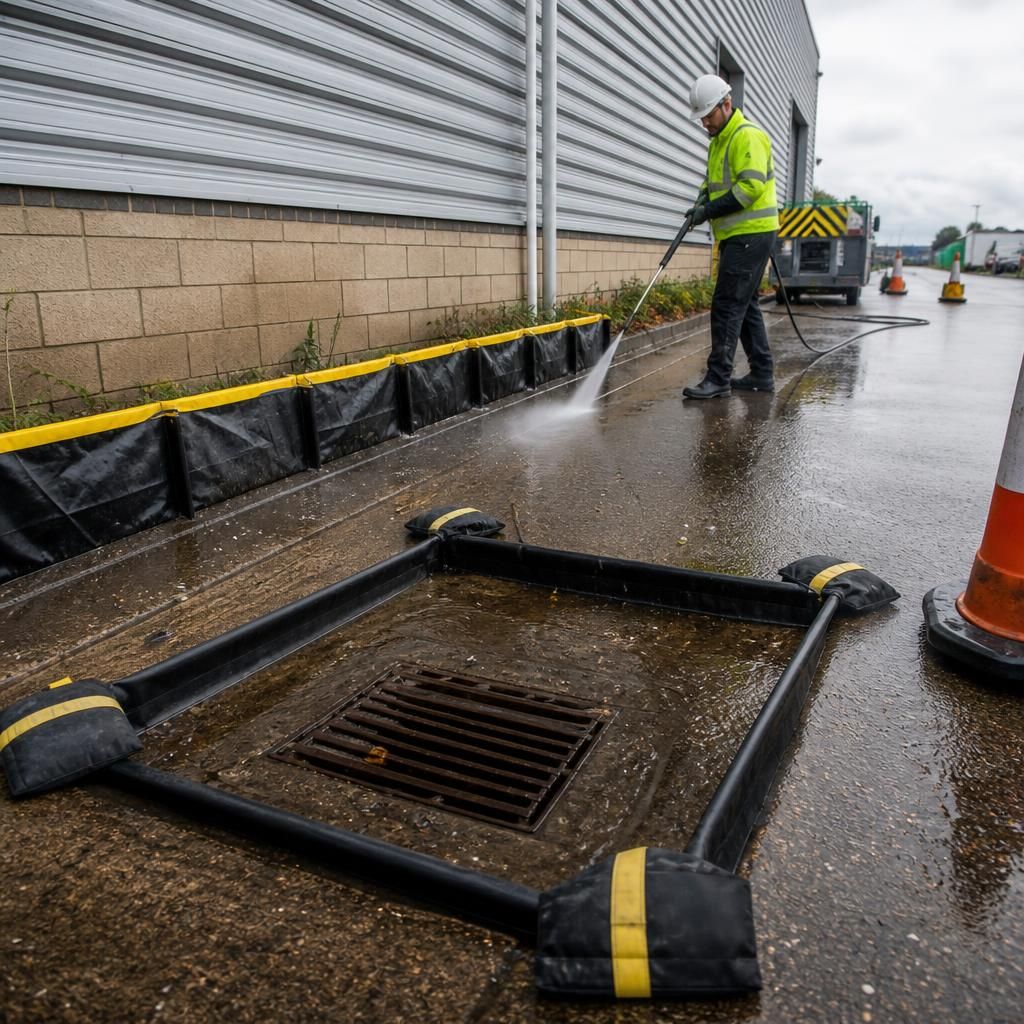
Controlling contaminated runoff is a key environmental measure during pressure cleaning. Wastewater can carry oil, fuel residues, paint particles, detergents, sediment and biological material, so it must not be allowed to spread into surface-water drains, soil or nearby watercourses.
Before cleaning, we identify drainage routes and assess the type of contamination. Depending on the site, we may use drain covers, temporary barriers, bunds, wet vacuums or collection points to contain and recover dirty water. Where discharge is permitted, it is managed in line with the site’s requirements and any relevant consent. If it cannot be discharged appropriately, it is collected for removal through a suitable waste contractor.
These controls are particularly important when cleaning oil-stained car parks, loading bays, industrial areas and graffiti. The work is monitored throughout, and the method is reviewed if runoff begins to spread or the controls are not performing as intended.