
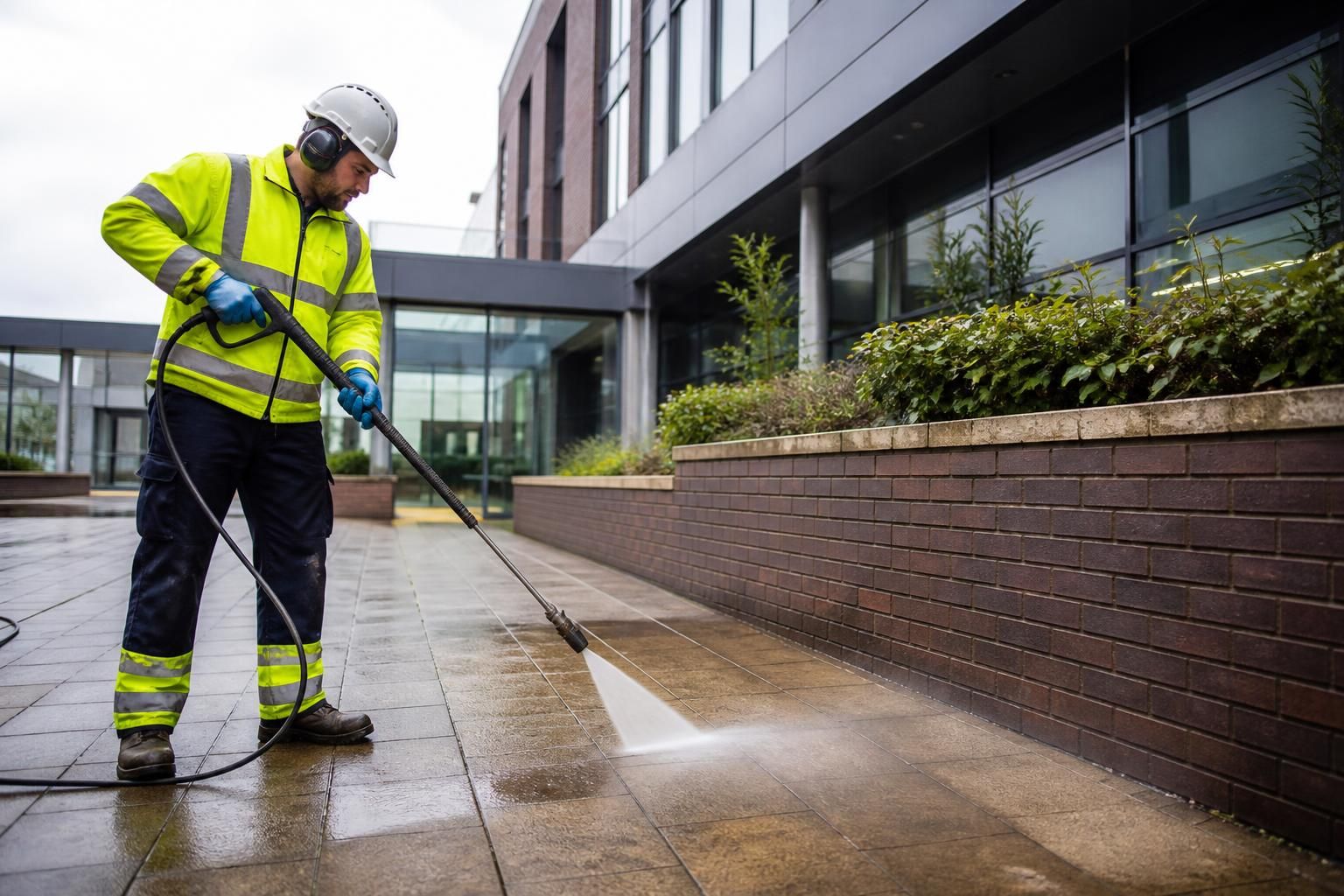
What surfaces can be pressure washed apart from concrete?
Pressure washing can safely clean many surfaces besides concrete, including brickwork, block paving, natural stone, tarmac, building cladding, render, roofs, decking and metalwork. The correct pressure, water temperature, nozzle and cleaning method depend on the material’s condition and surface finish to prevent damage.
Pressure washing can be used on a wide range of exterior surfaces apart from concrete, including brickwork, block paving, natural stone, tarmac, building cladding, render, roofs, decking, uPVC and some metalwork. The safe approach depends on the material, its age and condition, the type of dirt being removed, and the cleaning equipment used. Pressure, water temperature, nozzle selection and working distance must be adjusted for each surface rather than applying the same setting everywhere.
Brickwork and block paving
Brick walls, brick paving and concrete block paving can usually be pressure washed to remove dirt, algae, moss, traffic film and surface staining. A controlled fan nozzle is generally preferable to a concentrated jet, particularly where mortar joints are weathered or the bricks have a softer face. Excessive pressure or holding the lance too close can erode mortar, mark the brick surface or force water into the wall.
Block paving may also require treatment for weeds and organic growth between the joints. Cleaning can disturb jointing material, so the surface may need re-sanding once it is fully dry. Oil, chewing gum, paint and other stains may require a separate treatment rather than simply increasing the water pressure.
Natural stone
Many natural stone surfaces can be cleaned with pressure washing, including granite, some sandstone, paving slabs and certain limestone surfaces. However, stone varies considerably in hardness, porosity and resistance to water. Softer or friable stone can be etched, pitted or stripped of its surface finish by an aggressive jet. Sandstone and limestone may also absorb water and cleaning products, making controlled application and thorough rinsing important.
Stone paving should be inspected for cracks, loose pieces, old repairs and unstable joints before cleaning. Where the surface is particularly delicate, low-pressure washing, steam cleaning or a soft-washing method may be more appropriate than conventional high-pressure cleaning.
Tarmac and asphalt
Car parks, driveways, access roads and service yards made from tarmac or asphalt can be washed to remove mud, algae, tyre marks and general surface contamination. The cleaning pressure must be kept under control because a strong, narrow jet can loosen aggregate, expose the binder or leave visible striping. Newly laid or deteriorating tarmac requires particular care, and oil contamination may need a compatible degreasing treatment followed by responsible recovery of the run-off.
Building cladding and metal panels
Commercial cladding made from coated metal, composite panels, uPVC or other manufactured materials is often suitable for pressure washing. Cleaning removes atmospheric soiling, bird fouling, algae and deposits around joints and fixings. The method should account for the coating and panel profile: aggressive pressure, unsuitable chemicals or hot water can damage paint finishes, seals and protective coatings.
Cladding should be checked for loose panels, failed sealant, exposed insulation and vulnerable electrical fittings before work starts. Water should not be directed into vents, louvres, door mechanisms or unsealed joints. A controlled rinse from a suitable distance usually produces a more even result than repeatedly working close to the panel.
Render, painted walls and masonry coatings
Render can sometimes be pressure washed to remove algae, dirt and staining, but it is more vulnerable than sound brick or concrete. Cracked, hollow, blown or poorly bonded render can be dislodged by water pressure. Painted render may also flake if the coating has already failed or if the wrong nozzle is used.
For these surfaces, the cleaner should first identify areas of damage and test a small, inconspicuous section. Low-pressure washing or soft washing is often safer where the objective is to remove biological growth without abrading the finish. Any openings, windows, vents and nearby fixtures should be protected from water ingress.
Roofs and roof coverings
Some robust roof coverings can be cleaned, including certain concrete tiles, clay tiles and metal roofing. Roof cleaning is not automatically suitable for every roof, however. High pressure can remove the weatherproof surface of tiles, dislodge overlapping coverings, damage flashing and drive water beneath the roof system. Older tiles may be brittle even when they appear intact.
Roof work should therefore begin with an inspection of the covering, ridge and verge details, flashings, gutters and access requirements. Low-pressure methods, steam cleaning or a controlled biocidal treatment may be more suitable than high-pressure washing, particularly for delicate tiles and roofs with established moss growth. Safe access and prevention of falling debris are essential.
Decking and timber
Timber decking, fences and external wooden structures can be washed, but wood fibres are easily raised by a concentrated jet. This leaves a rough, furred appearance and may create grooves or uneven colour. Pressure should be reduced, the nozzle kept moving with the grain, and a suitable working distance maintained.
Softwood, aged timber, damaged boards and previously weathered surfaces need more care than sound hardwood. Cleaning does not replace subsequent protection: once the timber has dried properly, the owner may need to consider staining, sealing or other maintenance recommended for that particular product.
uPVC, composite materials and plastic surfaces
uPVC fascias, soffits, frames, doors, shutters and some composite surfaces can generally be cleaned with a controlled low-pressure rinse. Strong jets may mark plastic, force water behind trims or damage seals. Composite decking should be checked against the manufacturer’s care guidance because some boards have a textured or capped finish that can be scratched or stripped by unsuitable equipment.
Metalwork, railings and external fixtures
Steel gates, railings, security barriers, storage units and other external metalwork can be washed to remove dirt, salt deposits and organic growth. Pressure washing will not correct corrosion, failing paint or exposed metal, and a strong jet may remove sound coating around a damaged area. After cleaning, corroded or unprotected metal may require drying, preparation and repainting to prevent further deterioration.
Electrical housings, external lighting, sensors, access-control equipment and mechanical components should be isolated or protected. Water must not be directed into switches, sockets, motors or control panels.
Surfaces that need particular caution
- Glass: glass may be rinsed using suitable low-pressure equipment, but concentrated jets can damage seals, frames and surrounding finishes. Stubborn deposits may require a specialist method.
- Painted or coated surfaces: pressure can lift loose paint and expose the substrate, so testing and preparation are necessary.
- Old or damaged masonry: loose mortar, open joints and unstable faces can worsen if water pressure is too high.
- Roof coverings: fragile tiles, slate, leadwork and aged membranes should not be treated as though they were hard paving.
- Artificial grass: excessive pressure can disturb infill, lift edges or damage the backing. Rinsing and brushing may be more appropriate.
How the correct method is selected
A professional assessment considers the substrate, surface finish, contamination, drainage and the consequences of water entering the building or surrounding area. The cleaning method may involve pressure washing, hot-water washing, steam cleaning, soft washing or a combination of techniques. A test area helps confirm that the chosen pressure and treatment remove the dirt without changing the colour, texture or protective coating.
Surrounding walls, vehicles, doors, vents, planted areas and drainage points should be protected before work begins. Run-off containing oil, paint, chemicals or heavy sediment may need to be contained and recovered rather than allowed to enter surface-water drains. Once cleaning is complete, the surface should be checked for remaining contamination, damaged areas and any maintenance that may now be required.
In practical terms, pressure washing is suitable for far more than concrete, but suitability is determined by condition and construction rather than appearance alone. Using the lowest effective pressure and the appropriate nozzle, temperature and cleaning agent provides a safer, more consistent result across commercial, industrial and residential exterior surfaces.
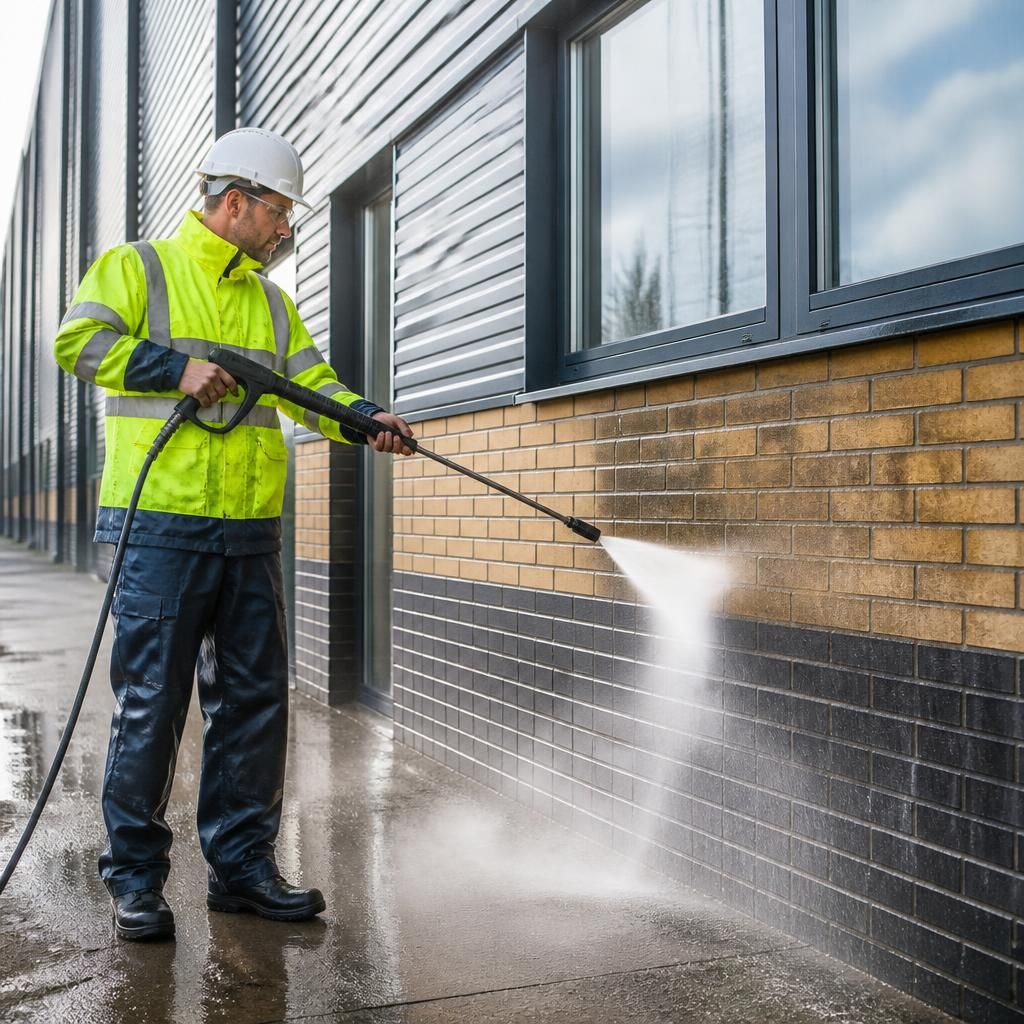
Pressure washing can clean brickwork, block paving, natural stone, tarmac, cladding, render, roofs, decking and metalwork, but each surface requires a different cleaning approach. Pressure, nozzle type, water temperature and working distance must be selected according to the material’s strength, finish and condition.
Before cleaning, the surface should be checked for loose mortar, cracked render, damaged coatings, failed joints, fragile tiles or exposed electrical fittings. A small test area helps confirm that the chosen method removes dirt without etching stone, raising timber fibres, stripping paint or forcing water into vulnerable areas. Where high pressure is unsuitable, low-pressure washing, steam cleaning or soft washing may provide a safer alternative.