
What specific pressure levels and nozzle types are best suited for cleaning different concrete surfaces like brick walls and cement pavers?
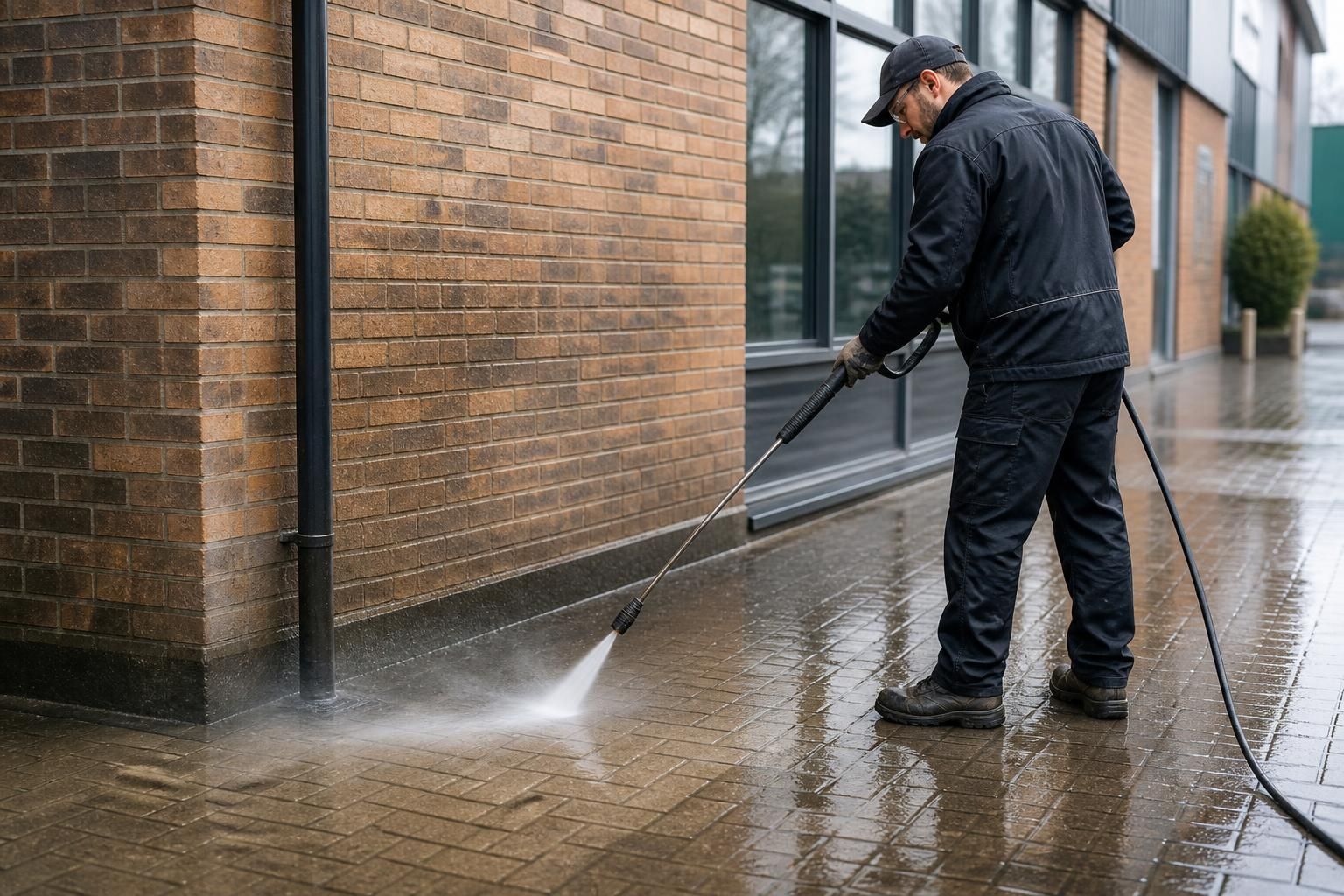
Use a wide fan nozzle and moderate pressure, typically around 80–120 bar, for brick walls, beginning at the lower setting; for sound cement pavers and hard concrete, around 120–180 bar with a 25° fan nozzle or surface-cleaning attachment is usually suitable. Avoid pinpoint nozzles and use turbo nozzles only where the material is sound and testing confirms they will not erode joints or mark the surface.
For most concrete cleaning, use the lowest pressure that removes the contamination without damaging the surface. A wide fan nozzle and moderate pressure of around 80–120 bar is generally suitable for sound brick walls, while sound cement pavers and hard, well-finished concrete can usually tolerate around 120–180 bar with a 25° fan nozzle or a surface-cleaning attachment. These are starting ranges rather than fixed settings: the correct choice depends on the material, age, finish, joint condition, contamination and distance between the nozzle and surface.
Brick is masonry rather than concrete, and its relatively soft face and mortar joints require more care than dense poured concrete. Begin at the lower end of the pressure range and use a 40° or similarly wide fan nozzle where possible. A wide spray spreads the water force over a larger area, reducing the risk of cutting into the brick face, removing weathered material or scouring mortar. Keep the lance moving in consistent passes and avoid directing the spray straight into joints, cracks, vents, pointing or damaged areas.
For robust, sound brickwork, a 25° fan nozzle may be appropriate after a test area has confirmed that the surface is not being marked. It should still be held at a controlled working distance rather than close to the wall. Narrower 15° nozzles concentrate considerably more force and are normally reserved for hard, localised deposits on suitable surfaces, not general cleaning of brick façades. A zero-degree or pinpoint nozzle should not be used on brick, mortar joints or other vulnerable masonry because it can leave lines, pits and permanently uneven finishes.
Sound cement pavers can generally be cleaned more firmly than older brickwork. Around 120–180 bar with a 25° fan nozzle is often effective for general dirt, algae and weathering on dense pavers. A surface-cleaning attachment is usually preferable for larger paved areas because it keeps the spray more evenly distributed and helps produce a consistent finish. It also reduces the likelihood of visible striping caused by moving a lance too slowly or holding it at an inconsistent distance.
Pressure must be reduced where cement pavers are aged, friable, surface-scaled, cracked or made from a softer decorative mix. Start below the normal working range and increase gradually only if the surface remains intact. Pay particular attention to jointing sand, resin joints and edge restraints. Excessive pressure can remove joint material, expose aggregate, widen existing defects or dislodge pavers, even when the paver itself appears sound.
Dense poured concrete, reinforced concrete hardstandings and well-finished slabs may accept the higher end of the working range, particularly when removing ingrained grime or biological growth. A 25° fan nozzle or rotary surface cleaner is usually the most suitable general-purpose option. A turbo nozzle can be considered for isolated, stubborn deposits on sound, unpainted concrete, but it should be used cautiously. Its rotating concentrated jet can create circular marks, expose aggregate or produce a visibly different texture if left in one position.
Decorative, stamped, brushed, exposed-aggregate and painted concrete require a more conservative approach. The finish may be easier to alter than the underlying concrete, and pressure can remove decorative coatings or loosen exposed aggregate. Use a wide fan pattern, lower pressure and a greater working distance, then inspect the test area after rinsing and drying. Painted or coated surfaces may need a soft-washing or low-pressure cleaning method rather than conventional high-pressure cleaning.
Nozzle angle is as important as the pressure shown on the machine:
- 40° fan nozzle: Suitable for delicate or weathered surfaces, general rinsing and initial testing. It provides the broadest distribution of water force.
- 25° fan nozzle: A practical choice for sound cement pavers, hard concrete and carefully tested robust masonry. It offers useful cleaning power without the concentration of a narrow jet.
- 15° fan nozzle: Intended for harder, localised contamination on suitable surfaces. Use it selectively and keep it moving; it is not normally the right choice for general façade or paver cleaning.
- Turbo nozzle: Suitable only for carefully tested, sound and uncoated hard surfaces where a concentrated rotating action is justified. It should not be used routinely on brick, soft concrete, joints or decorative finishes.
- Zero-degree nozzle: Generally unsuitable for concrete paving, brickwork and mortar because the pinpoint jet can cause pitting, gouging and permanent marks.
The pressure at the surface is affected by more than the machine’s bar setting. Nozzle size, water flow, lance distance, spray angle and the condition of the pump all influence the force delivered. Holding a nozzle closer to the surface increases its impact, while working further away softens the clean. Keep the nozzle at a consistent angle and distance, normally using an overlapping sweep rather than stopping over one spot.
A professional cleaning process should begin with a visual inspection and a small test patch in an inconspicuous location. The test should assess both immediate cleaning performance and possible damage, including colour change, exposed aggregate, disturbed pointing, loss of jointing material and visible striping. The chosen pressure and nozzle can then be adjusted before the main area is treated. On larger sites, different elevations or paving zones may require separate settings.
Pre-treatment can also reduce the pressure needed. Removing loose debris first, applying an appropriate treatment for algae or organic growth, and allowing suitable dwell time can loosen contamination before rinsing. This is often safer than trying to remove every deposit with a narrow, high-force jet. Oil, rust, paint and construction residues may require different methods, and increasing pressure alone is not always effective or appropriate.
During cleaning, protect adjacent vehicles, glazing, doors, electrical equipment, landscaping and drainage points. Avoid forcing water behind cladding, beneath thresholds or into open joints. Runoff should be managed so that loosened dirt, sediment and cleaning residues do not enter unsuitable drains or spread across already cleaned areas.
In practical terms, use a wide fan nozzle and approximately 80–120 bar as a cautious starting point for brick walls, then adjust only after testing. For sound cement pavers and hard concrete, approximately 120–180 bar with a 25° fan nozzle or surface-cleaning attachment is commonly effective. Reduce the pressure for deteriorated, decorative or jointed surfaces, and avoid pinpoint nozzles unless a specialist assessment confirms that a particular hard, localised area can safely withstand them.
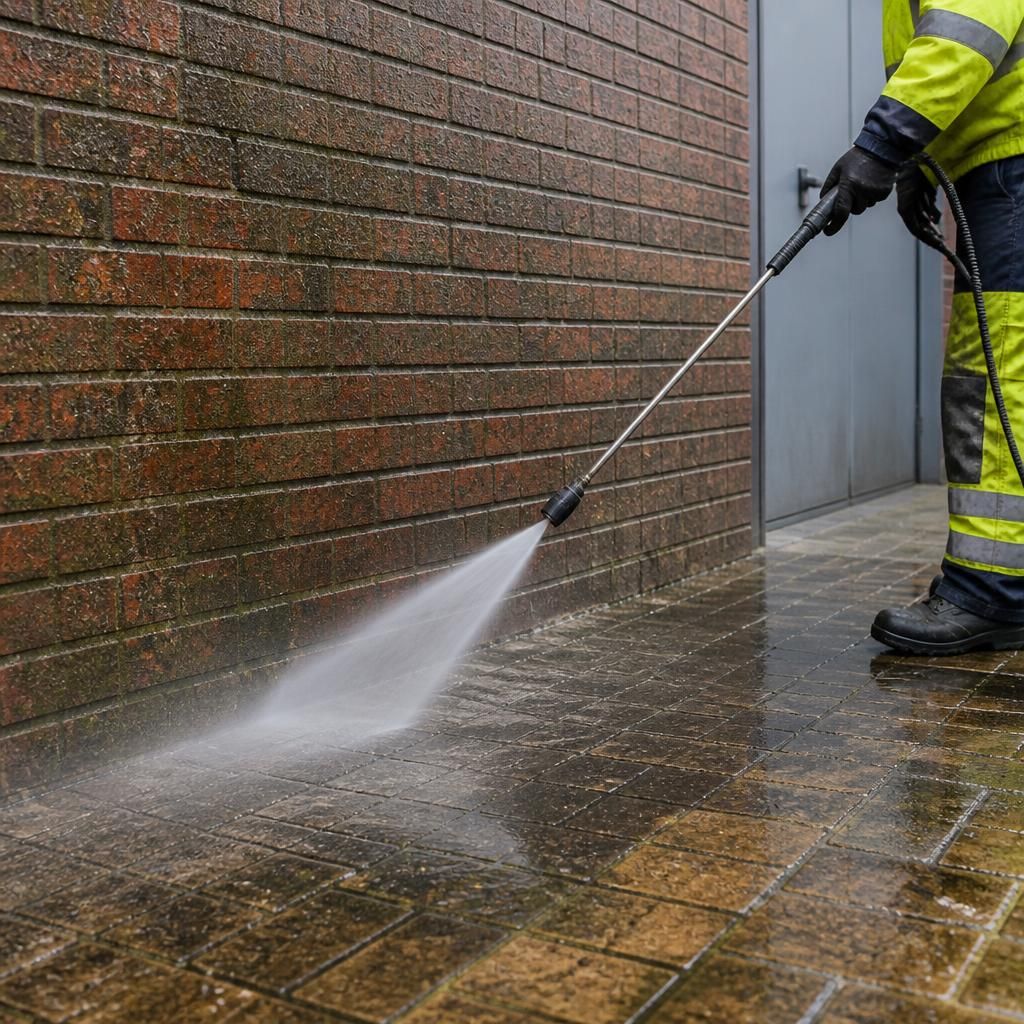
The safest nozzle and pressure setting depend on the surface’s strength, finish and joint condition. Begin with a wide 40° fan nozzle and low pressure on brickwork, using approximately 80–120 bar as a cautious working range. Sound cement pavers and hard concrete can generally be cleaned at approximately 120–180 bar with a 25° fan nozzle or rotary surface-cleaning attachment.
Always test an inconspicuous area first and increase pressure gradually only if the surface remains intact. Avoid zero-degree nozzles, which can pit brick and concrete, and use turbo nozzles only on sound, uncoated concrete where testing confirms they will not mark the surface or remove jointing material.