
What safety measures are in place during the pressure cleaning of concrete surfaces to protect surroundings and prevent accidents?
Professional pressure cleaning of concrete surfaces is controlled through a site-specific risk assessment, trained operatives, suitable PPE, equipment checks and clearly managed exclusion zones to protect people, vehicles and nearby property. Water runoff, spray drift, fragile surfaces, electrical hazards and access routes are assessed in advance, with appropriate pressure settings, barriers, signage and collection or drainage measures used to prevent accidents and environmental harm.
Pressure cleaning of concrete surfaces is managed safely through a site-specific risk assessment, trained operatives, inspected equipment, suitable personal protective equipment and controlled work areas. Before cleaning starts, the team assesses people, vehicles, buildings, drainage, electrical equipment, surface condition, access arrangements, water runoff and any nearby activities. These controls help prevent injuries, property damage, uncontrolled spray and pollution while allowing the concrete to be cleaned effectively.
Site assessment and method statement
A suitable method is agreed before work begins. The assessment considers the type and condition of the concrete, the cleaning objective, the required pressure and flow, nearby materials, working height and the presence of members of the public or other contractors. Where appropriate, a risk assessment and method statement sets out the equipment, sequence of work, exclusion arrangements, access requirements, emergency procedures and measures for handling wastewater.
Old, cracked, spalled or poorly bonded concrete is inspected before pressure is applied. The operator can then adjust the pressure, nozzle, distance and cleaning technique, or recommend an alternative method where high-pressure water could worsen existing defects. Joints, edges, sealants, painted markings and vulnerable adjoining surfaces are also identified and protected.
Trained operatives and equipment checks
Pressure cleaning is carried out by operatives who understand the equipment, the surface being treated and the hazards associated with high-pressure water. Hoses, trigger guns, lances, nozzles, couplings, pumps and safety devices are checked before use. Damaged or leaking equipment is removed from service, and hoses are positioned to reduce trip hazards, sharp bends and contact with vehicles or hot surfaces.
Operators maintain a secure grip and stable footing, particularly where water, algae, oil or silt can make concrete slippery. The lance is never directed towards people, animals, vehicles, glazing, electrical equipment or unprotected building openings. Equipment is shut down before adjustments, nozzle changes or attempts to clear a blockage.
Personal protective equipment
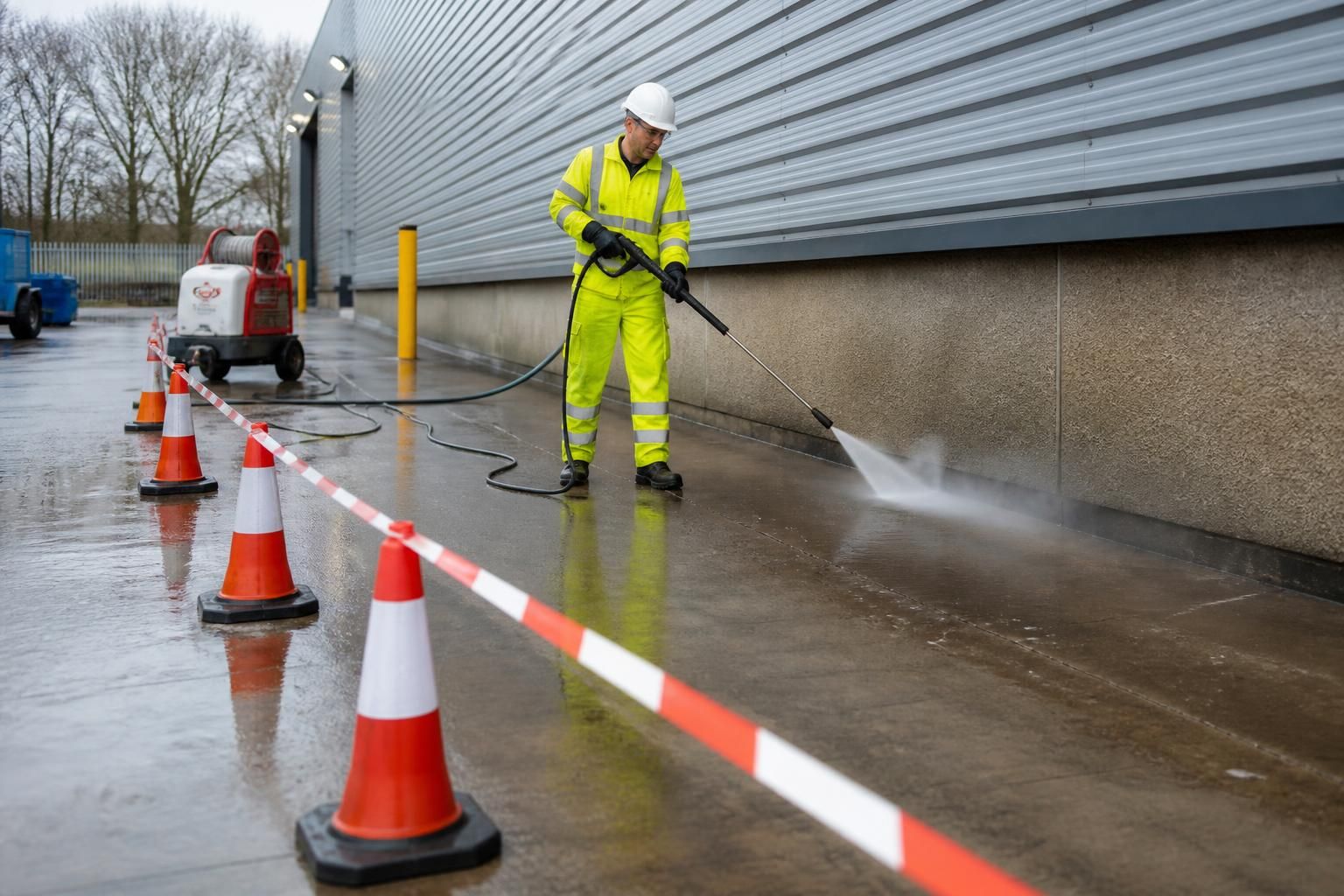
Personal protective equipment is selected for the task and site conditions. This commonly includes waterproof protective clothing, suitable gloves, eye or face protection, safety footwear with slip-resistant soles and hearing protection where noise levels require it. Additional protection may be needed when removing contaminated deposits, bird fouling, mould, coatings or substances that present a biological or chemical risk.
PPE supports, but does not replace, safer working methods. Controls such as isolation, barriers, safe positioning and careful pressure selection are used first wherever practicable.
Exclusion zones and protection of surroundings
A clearly defined exclusion zone keeps pedestrians, staff, visitors and vehicles away from the spray, hose lines and wet surfaces. Barriers, cones and warning signs are positioned at entrances, walkways, loading areas and other points where people could enter the work area. Where cleaning takes place near an occupied building or public route, access may be temporarily redirected or a banksman used to manage movements.
Nearby doors, vents, windows, delicate façades, signage, vehicles and stored materials are closed, covered or shielded where necessary. The operator controls the spray direction and works away from vulnerable areas. Spray drift is considered in relation to wind, adjacent premises and passing traffic, with work paused or modified if conditions make containment unreliable.
Managing water, slips and drainage
Water and loosened dirt can create immediate slip and trip risks, especially on sloping concrete, ramps, steps and pedestrian routes. Cleaning is planned so that wet areas are kept within the controlled zone and are rinsed, squeegeed, extracted or allowed to drain safely before the area is reopened. Warning signs remain in place until the surface is safe for normal use.
Drainage points are checked before work begins. Mud, oil, silt, detergents and other contaminants are prevented from entering surface-water drains or escaping onto roads and neighbouring property. Drain covers, drain guards, bunding, wet vacuums, booms or other collection measures may be used where runoff requires control. Wastewater is disposed of in accordance with the site requirements and applicable environmental controls rather than being discharged without consideration.
Electrical, vehicle and access hazards
Electrical installations, temporary power supplies, lighting, sockets and cables are kept away from water and protected from spray. The team identifies overhead and ground-level services before setting up equipment. Vehicles and mobile plant are separated from the work area, with engines, movements and deliveries coordinated to avoid contact with hoses or operatives.
For car parks, yards and industrial sites, the cleaning sequence is planned around traffic routes and operational activities. Work at height or in areas with difficult access requires suitable access equipment, stable positioning and additional controls. Pressure washing from an unsafe ladder, unstable platform or unprotected edge is not acceptable.
Pressure selection and surface protection
The safest effective setting is selected for the concrete and the type of contamination. Operators normally begin with a controlled test area and inspect the result before proceeding. Excessive pressure, an unsuitable nozzle, a short working distance or prolonged attention on one spot can remove the surface layer, expose aggregate, enlarge cracks or damage joints. Consistent movement and the correct stand-off distance help produce an even finish without concentrating force in one area.
Care is taken around expansion joints, drainage channels, repaired sections, decorative finishes and adjoining brick, render, paint or sealant. These materials may require lower-pressure cleaning, shielding or a different technique from the main concrete surface.
Monitoring and completion checks
The work area is monitored throughout the clean for changing weather, runoff, blocked drains, equipment faults, damaged surfaces and unauthorised access. The team communicates with the site contact if conditions change or an unexpected hazard is found. Cleaning is paused when controls are no longer effective.
On completion, hoses and equipment are removed, barriers remain until surfaces and access routes are safe, and the area is checked for standing water, residual debris, damaged edges or contamination. Any pre-existing defects or issues identified during the work are recorded and reported to the responsible site contact. This combination of planning, controlled operation and final inspection protects people and surrounding property while maintaining the concrete to the required standard.
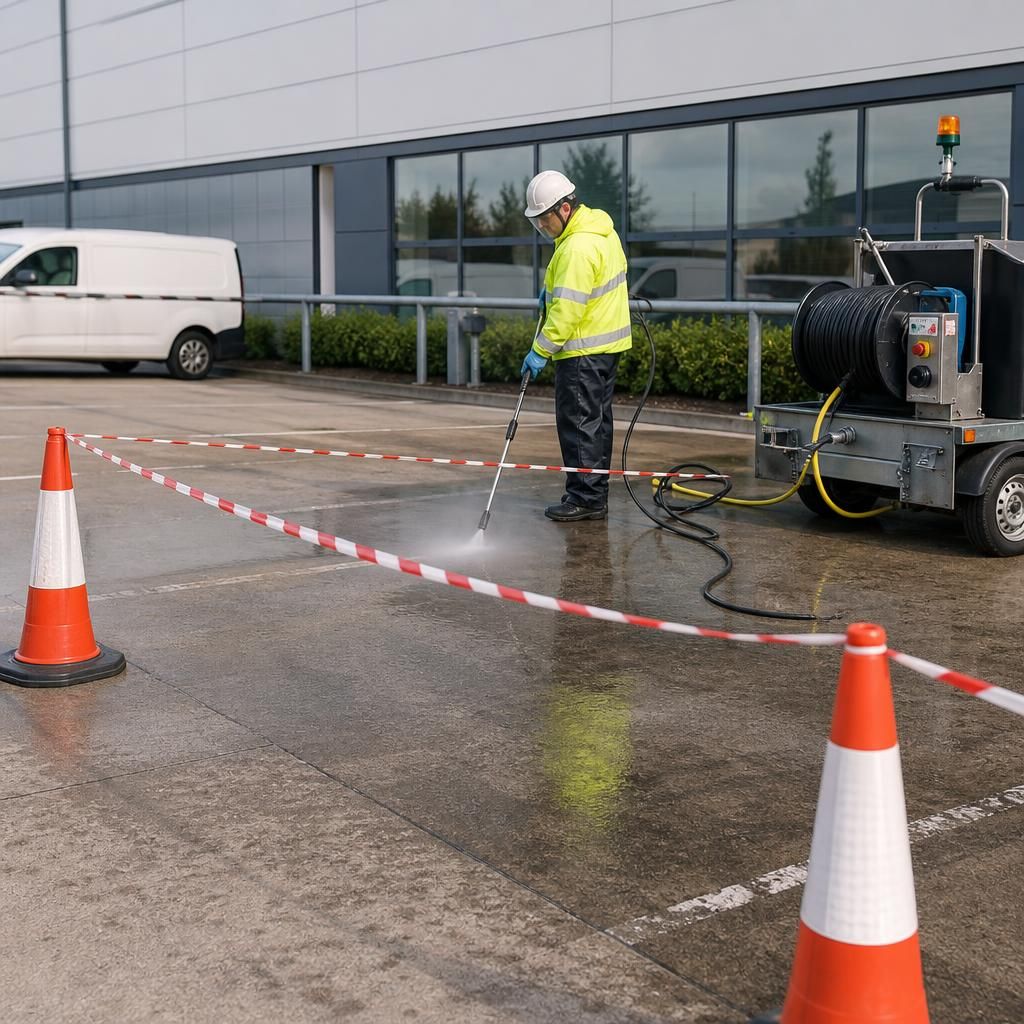
Exclusion zones are a key safety measure during pressure cleaning of concrete surfaces. Barriers, cones and warning signs keep pedestrians, vehicles and site staff away from high-pressure spray, trailing hoses and wet areas until the surface is safe to use.
The cleaning team also protects surrounding property by controlling spray direction, shielding nearby doors, glazing, signage and equipment, and pausing work if wind causes spray drift. Drainage points are checked in advance, with drain guards, wet vacuums or bunding used where dirty water, oil, silt or detergent could enter surface-water drains or escape onto roads and neighbouring premises.