
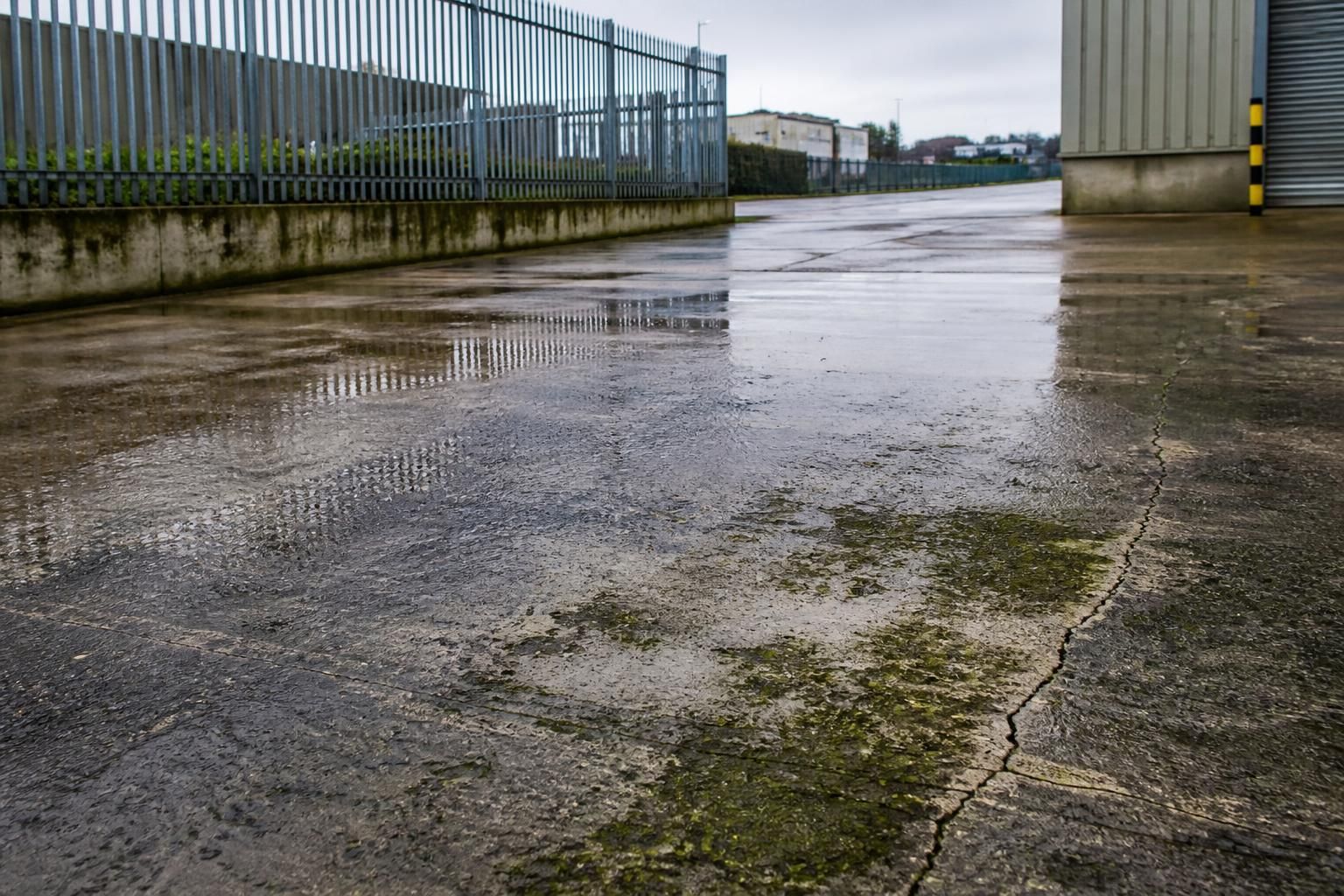
What are the potential long-term impacts on concrete surfaces if pressure washing is not performed regularly?
If concrete is not pressure washed regularly, dirt, oil, algae and other contaminants can become embedded, causing persistent staining, slippery surfaces and a deteriorated appearance. Over time, trapped moisture and contaminants may contribute to surface erosion, spalling and cracking, making professional cleaning and repairs more difficult and costly.
Irregular pressure washing can allow dirt, oil, algae, moss, organic matter and de-icing residues to remain on concrete for long periods. Over time, these contaminants can become embedded in the surface, causing persistent staining, slippery conditions, unpleasant odours and a gradual deterioration in appearance. Where moisture and contaminants remain trapped, the concrete may also become more vulnerable to surface erosion, cracking, spalling and costly remedial work.
The long-term effects depend on the concrete’s age, condition, location and use. A lightly used, sheltered slab will not deteriorate at the same rate as a busy car park, loading area, service yard, footpath or public access route. However, regular professional cleaning helps prevent surface contamination becoming established and makes it easier to identify defects before they worsen.
Persistent staining and embedded contamination
Dust, traffic film, tyre marks, oil, food residues and other substances can bond to the pores in concrete. Oil is particularly difficult to remove once it has been left to migrate into the slab. Repeated rainfall may spread the stain rather than wash it away, while vehicle movements and foot traffic can work contaminants further into the surface.
When cleaning is eventually carried out, heavily embedded staining may require pre-treatment, controlled agitation or more than one cleaning stage. In some cases, a mark may be reduced but not completely removed without affecting the surrounding concrete. Regular cleaning is therefore a preventative measure as well as an appearance-maintenance task.
Algae, moss and increased slip risk
Shaded or damp concrete can support algae, moss and other organic growth. These deposits retain moisture and can create a slippery film, particularly on ramps, steps, walkways, entrances and other areas used by pedestrians. As growth spreads, it can obscure changes in level, drainage problems and early surface defects.
Pressure washing removes the established growth and the residue that supports it. It does not, by itself, prevent regrowth where drainage, shading or persistent dampness remains, so the underlying conditions should also be considered when planning ongoing maintenance.
Moisture-related deterioration
Concrete is porous. If contaminated areas remain wet for extended periods, water can penetrate through small pores, cracks and existing weaknesses. In exposed locations, repeated wetting and drying can contribute to surface breakdown. During cold weather, water within cracks or damaged areas can freeze and expand, gradually widening defects and loosening the surface.
De-icing salts and other contaminants can make this problem more serious by encouraging moisture retention and, where reinforced concrete is involved, contributing to corrosion risk if they penetrate sufficiently. Pressure washing will not reverse structural damage, but removing residues and exposing the surface for inspection can support a more effective maintenance programme.
Surface erosion, scaling and spalling
Long-term contamination can conceal scaling, flaking or small areas of spalling. Vehicle traffic, impact, abrasion and water movement may then continue to affect the weakened areas. If defects are overlooked, loose material can spread and create trip hazards or leave the concrete more exposed to further weathering.
Cleaning should be combined with a condition assessment. If the surface is already weak, excessively aggressive pressure, unsuitable nozzles or poor technique can remove sound material as well as contamination. Professional cleaning should therefore be adjusted to the concrete’s condition, with lower-pressure methods, wider spray patterns or steam cleaning used where appropriate.
Damage to appearance and site presentation
Uneven staining and dark traffic lanes can make a forecourt, car park, façade base or service yard look neglected even when the underlying structure remains sound. On commercial premises, this can affect the presentation of entrances, pedestrian routes and customer-facing areas. Contamination can also transfer to footwear, vehicles and adjacent surfaces.
Routine cleaning keeps deposits from becoming heavily established and helps maintain a more consistent appearance across the site. It also provides an opportunity to check drainage, joints, kerbs, cracks and access routes before minor issues become more disruptive.
Higher future cleaning and repair requirements
Delaying maintenance can mean that a later clean requires more preparation, specialist treatment and controlled access. Staining may need additional attention, organic growth may have spread to adjoining areas, and damaged sections may require patching or replacement before they can be cleaned safely. The total cost is influenced by the condition of the concrete, not simply by the time since the previous clean.
Regular pressure washing does not mean applying high pressure on a fixed schedule. The appropriate interval should reflect the site’s exposure to traffic, oil, weather, shade, organic growth and public use. High-risk areas may need more frequent inspections and targeted cleaning, while sheltered low-use surfaces may require less frequent treatment.
For the best long-term result, cleaning should be planned alongside repairs, drainage checks and any suitable sealing programme. A professional assessment can identify whether contamination is the main issue or whether cracking, settlement, failed joints or structural deterioration also require attention. This approach prevents irregular cleaning from developing into avoidable safety hazards, permanent staining or more extensive concrete repairs.
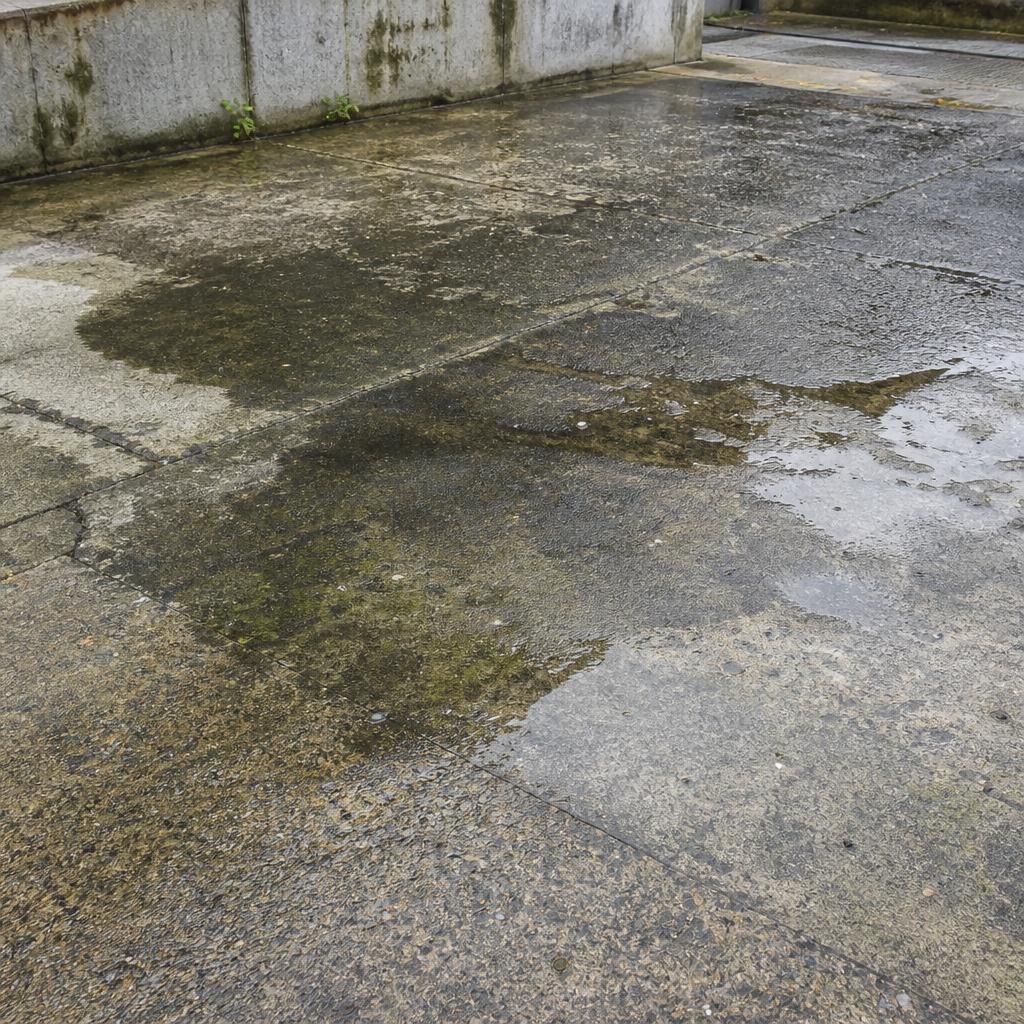
Irregular pressure washing allows oil, algae, moss, traffic film and de-icing residues to remain embedded in porous concrete. Over time, these contaminants can leave persistent staining, create slippery surfaces and retain moisture, increasing the risk of surface erosion, scaling and frost-related damage where existing cracks or weaknesses are present.
Routine professional cleaning helps remove contamination before it becomes difficult to treat and makes defects such as cracking, failed joints or early spalling easier to identify. Cleaning should be matched to the concrete’s condition: deteriorated areas may require lower pressure, wider spray patterns or steam cleaning to avoid removing sound material along with the dirt.