
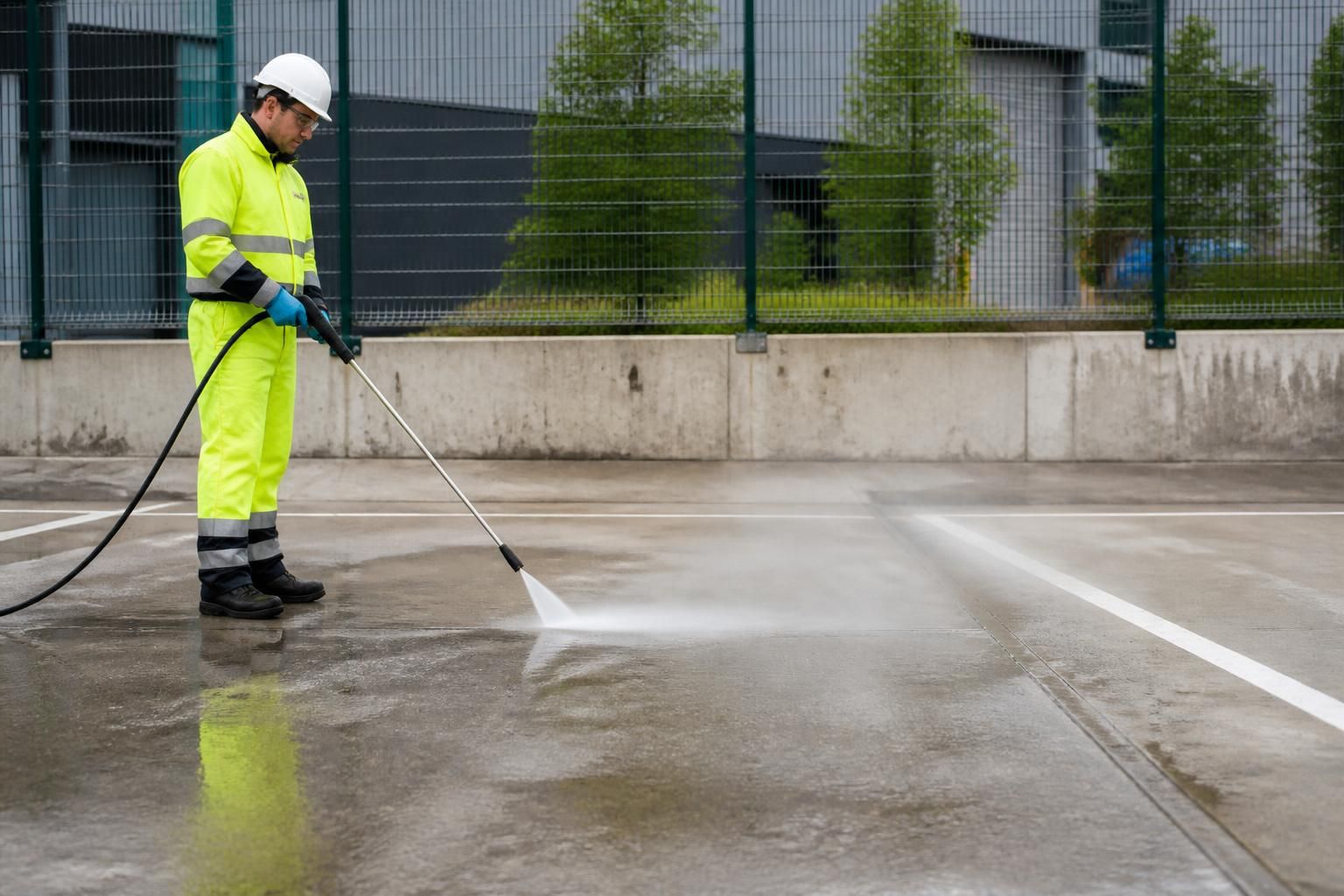
What are the environmental benefits of choosing pressure washing over traditional cleaning methods for concrete surfaces?
Pressure washing can reduce the environmental impact of cleaning concrete by using targeted water pressure to remove dirt, algae, oil and surface deposits with less reliance on harsh chemical cleaners. When carried out professionally, controlled water use and appropriate wastewater management can also help limit runoff, pollution and unnecessary repeat cleaning compared with less efficient traditional methods.
Pressure washing can reduce the environmental impact of cleaning concrete by using targeted water pressure to remove dirt, algae, oil residues and surface deposits with less reliance on chemical cleaners. When the work is planned and carried out professionally, controlled water use, appropriate equipment and responsible wastewater management can also reduce pollution, unnecessary repeat cleaning and the amount of cleaning material sent to site.
The environmental benefit is not simply that pressure washing uses water instead of chemicals. Its overall impact depends on the equipment selected, the condition of the concrete, the type of contamination and how runoff is controlled. A professional assessment helps ensure that the lowest effective pressure, suitable nozzle and appropriate cleaning method are used rather than applying excessive water or force.
Reduced reliance on chemical cleaners
Many traditional concrete-cleaning methods depend on detergents, degreasers, solvents, acids or other treatment products. These may leave residues that can enter soil, surface water or drainage systems if they are not collected and disposed of correctly. Pressure washing often removes general dirt, dust, moss, algae and loose deposits through mechanical action alone, reducing the need for chemical treatment.
Chemicals may still be appropriate for specific contamination, particularly ingrained oil or biological growth, but they should be selected carefully and applied only where necessary. Using a targeted pre-treatment followed by pressure washing can be more responsible than applying a strong chemical solution across an entire concrete area. The treatment should be compatible with the surface and managed in accordance with the product instructions and site drainage requirements.
More efficient use of water
Pressure-washing equipment concentrates water through a controlled nozzle, allowing the operator to clean a defined area and direct the spray at the contaminant. This is generally more efficient than leaving a hose running, repeatedly scrubbing by hand or flushing a surface for an extended period. Operators can adjust the pressure, flow and working method to match the concrete and the level of soiling.
Water efficiency also depends on preparation. Removing loose debris before washing, working in manageable sections and avoiding unnecessary passes can reduce water consumption. On larger commercial sites, an agreed cleaning plan can help prevent repeated visits caused by incomplete treatment or inconsistent results.
Lower risk of contaminated runoff
Concrete cleaning can mobilise oil, silt, heavy deposits, traffic residue and other pollutants. Allowing this material to flow directly into surface-water drains can harm waterways and may breach site or environmental requirements. Responsible pressure washing therefore includes consideration of where the water will go before cleaning begins.
Depending on the site, controls may include drain protection, temporary barriers, wet-vacuum recovery, collection of slurry and controlled discharge to an approved foul-water connection or other suitable disposal route. Recovered wastewater may require further handling, particularly where oil, chemicals or construction residues are present. This approach prevents the environmental benefit of reduced chemical use from being undermined by uncontrolled runoff.
Less waste from disposable cleaning materials
Mechanical cleaning can reduce the need for large quantities of disposable cloths, abrasive pads, chemical containers and absorbent materials. On extensive concrete areas such as service yards, loading bays, car parks and pedestrian paving, this can reduce the volume of consumable waste generated during routine maintenance. Where absorbents are needed for oil control, they should be gathered and disposed of according to the type of contamination.
Protection of the existing surface
Keeping sound concrete clean can help identify and address problems such as oil contamination, algae, organic growth, surface deposits and blocked drainage channels before they become more difficult to manage. Removing deposits can also improve inspection and maintenance access. Extending the useful service life of an existing slab or paved area may avoid the environmental impacts associated with premature repair, removal, transport and replacement.
Pressure must be selected carefully to avoid damaging the concrete. Excessive pressure, an unsuitable nozzle or holding the spray too close can expose aggregate, strip a weak surface or enlarge existing defects. On old, cracked or deteriorating concrete, a lower-impact method may be more environmentally responsible than aggressive cleaning. A professional operator will assess the surface first and use test cleaning where necessary.
Reduced transport and energy impacts
Pressure washing can often complete cleaning with fewer separate products and less manual handling than methods based on transporting, mixing and applying several chemical treatments. Efficient equipment and well-planned access can also reduce the time vehicles and machinery remain on site. However, pressure washers use electricity or fuel, so equipment should be operated efficiently and selected for the scale of the work. The environmental outcome is improved when unnecessary engine running, idle time and repeat journeys are avoided.
Safer management of biological growth
Moss, algae and organic deposits can make concrete slippery and may spread across adjacent areas if they are not removed properly. Pressure washing can physically remove much of this growth without routinely applying biocides across the whole surface. Any remaining treatment should be limited to the areas that need it, with runoff controls used to protect planted areas, soil and drainage systems.
How pressure washing compares with traditional cleaning
Traditional cleaning is not one single process. Sweeping and manual brushing may have a low chemical impact but can be slow and less effective on ingrained deposits. Chemical cleaning can achieve results on particular stains but creates additional requirements for product selection, storage, application and wastewater control. Abrasive methods may remove contamination quickly but can generate dust, waste material and surface wear.
Pressure washing is often a lower-impact option for routine concrete maintenance because it combines mechanical cleaning with a targeted water flow. It is not automatically the greenest choice in every situation. The most suitable method depends on the contamination, the condition and finish of the concrete, drainage arrangements, access restrictions and the ability to recover or lawfully discharge wastewater.
For commercial and industrial premises, the best environmental result comes from treating pressure washing as part of a controlled maintenance process. This includes surveying the area, identifying drains and sensitive surroundings, selecting the least aggressive effective settings, preventing contaminated runoff, using chemicals only when justified and recording any disposal requirements. These measures allow concrete surfaces to be cleaned effectively while limiting water use, chemical exposure, waste and avoidable damage.
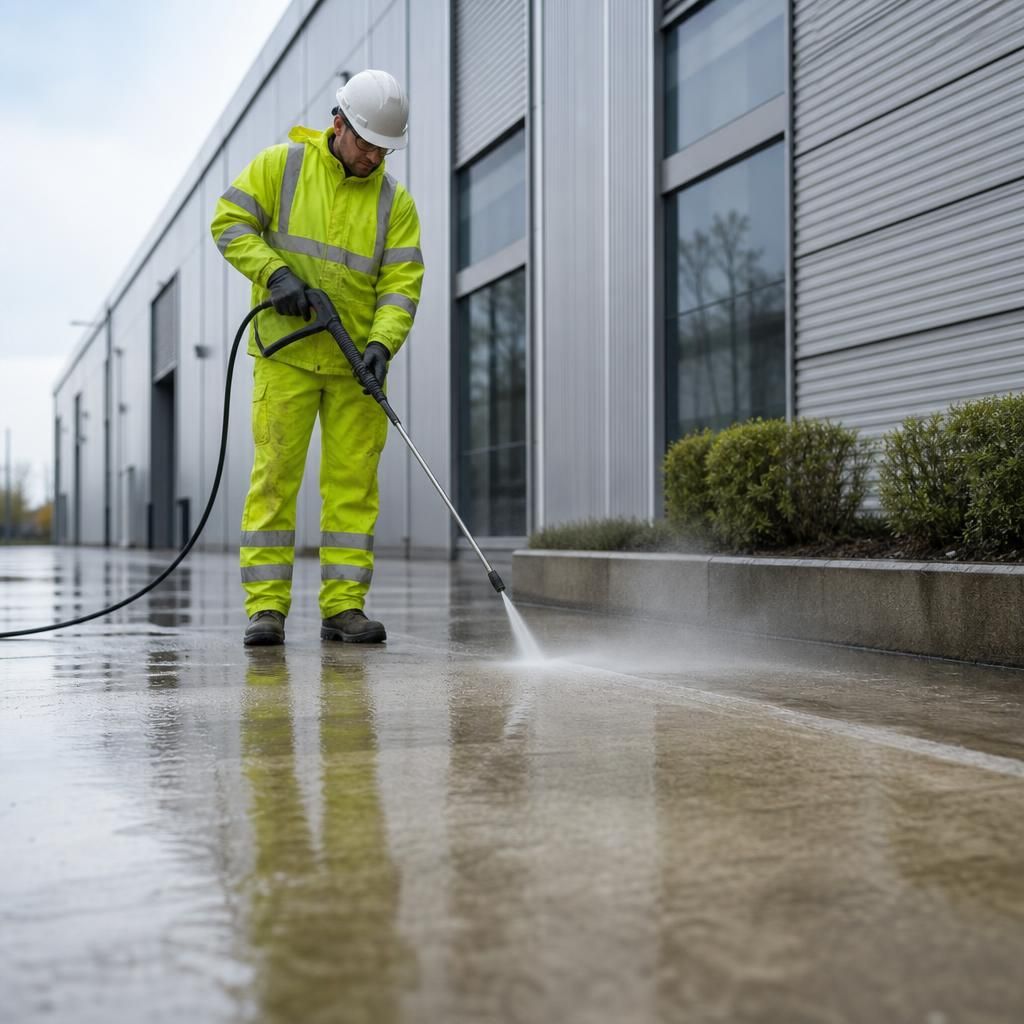
The main environmental benefit of professional pressure washing is reduced chemical use, provided contaminated wastewater is controlled. Targeted water pressure can remove dirt, algae and loose deposits from concrete without applying cleaning products across the whole area. Where oil, silt or other pollutants are present, the wash water should be contained, recovered and disposed of through an appropriate route rather than allowed to enter surface-water drains.
Drain protection, temporary barriers and wet-vacuum recovery can help prevent polluted runoff from reaching soil, planted areas and waterways. This controlled approach allows concrete to be cleaned effectively while limiting chemical exposure, unnecessary water use and the risk of transferring contaminants elsewhere on the site.