
What are the environmental advantages of pressure washing concrete compared to chemical cleaning methods?
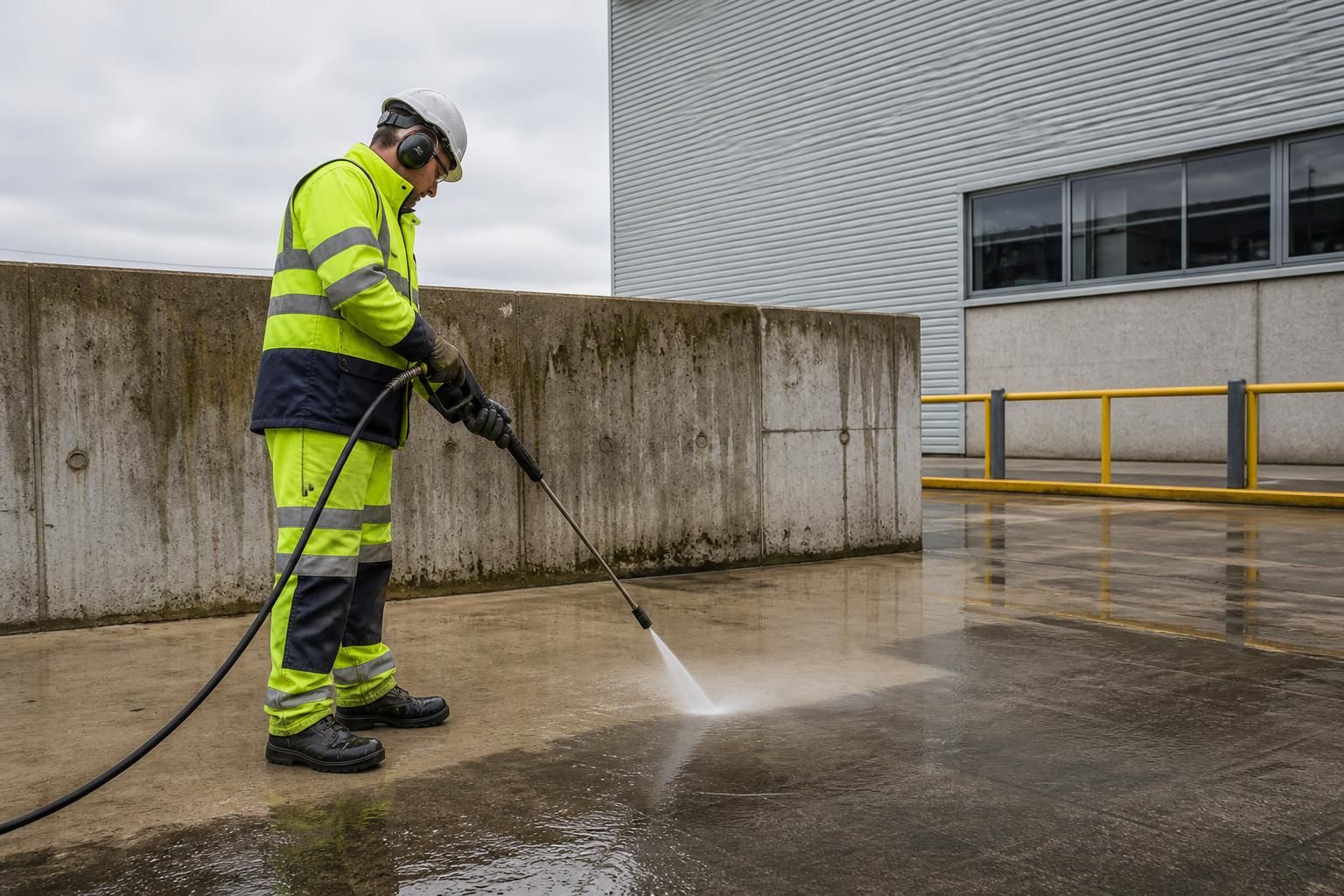
Pressure washing concrete can reduce environmental impact by relying mainly on water and mechanical force rather than chemical cleaning agents that may contaminate soil, drains and waterways. When wastewater is properly contained and disposed of, it also helps limit harmful runoff, chemical residues and risks to surrounding plants, wildlife and surface water.
Pressure washing concrete generally has a lower environmental impact than chemical cleaning because it uses mechanical force and water to remove dirt, algae, moss, dust and many surface deposits, rather than relying on substances that can remain on the concrete or enter drainage systems. The advantage is greatest when the work is planned properly and the wastewater is contained, filtered and disposed of in accordance with site and environmental requirements.
Reduced use of chemical cleaning agents
Many routine concrete cleaning tasks do not require strong acids, solvents, biocides or high-alkaline products. A suitable pressure washer can break the bond between the surface and accumulated grime without introducing additional chemical residues. This reduces the risk of cleaning agents reaching soil, planted areas, surface water or groundwater.
Chemicals can also affect the surrounding environment indirectly. Overspray and residue may harm vegetation, disturb aquatic life or alter the pH of water entering a drain or watercourse. Pressure washing is not automatically chemical-free, as a professional may use a carefully selected treatment for oil, biological growth or other difficult contamination. However, using the least aggressive suitable method helps limit the quantity and hazard of any product required.
Lower risk of persistent residues
Some chemical products can leave residues on porous concrete, particularly where the surface is cracked, weathered or heavily contaminated. These residues may be released gradually by rain or subsequent washing. Water-based pressure cleaning leaves little material behind once the surface has been rinsed thoroughly, making it easier to inspect the result and confirm that the cleaning process is complete.
This is particularly relevant on car parks, service yards, loading areas and public spaces, where residues could be tracked onto roads or carried into drainage systems. Removing the contaminant mechanically, while managing the wash water, provides better control over what leaves the site.
More controlled wastewater management
The environmental performance of pressure washing depends heavily on how wastewater is handled. The wash water may contain oil, fuel, silt, heavy metals, paint particles, organic matter or other pollutants already present on the concrete. Sending this water directly into a surface-water drain or onto surrounding ground can cause pollution, even if no cleaning chemical has been used.
For commercial and industrial work, suitable controls can include drain covers, bunding, temporary barriers, wet vacuums, collection tanks, filtration and controlled discharge. The correct method depends on the site, the contaminant and the drainage arrangements. Collected water should be assessed and disposed of through an appropriate route rather than assumed to be safe because it appears clear.
Efficient removal with less site disturbance
Pressure washing can often clean large concrete areas without excavating, replacing or heavily abrading the surface. Preserving sound concrete avoids the material use, transport and waste associated with unnecessary repairs or replacement. It can also reduce the need for repeated chemical applications where dirt and organic growth are being removed from the surface rather than masked.
Professional equipment and the correct nozzle, pressure and distance can improve water efficiency while protecting the concrete. Excessive pressure can damage the cement matrix, expose aggregate or create a rougher surface that holds dirt more readily. Correct adjustment therefore has both environmental and maintenance benefits: it avoids rework, prevents avoidable material loss and supports a longer service life.
Lower exposure for surrounding areas
Where chemical products are used, precautions are needed to protect planted areas, building materials, vehicles, workers and members of the public from splashes, vapour and overspray. Pressure washing still requires exclusion zones and control of spray, but it avoids many of the storage, handling and application risks associated with concentrated cleaning chemicals.
Steam cleaning or hot-water pressure washing may also be suitable for certain contaminants. These methods can improve the removal of grease and biological matter while reducing dependence on detergents. They must still be selected carefully, as heat and pressure can affect sealants, joints, coatings and older concrete.
Important limitations
Pressure washing is not a completely impact-free process. It uses water and electricity or fuel, and the wash water may carry pollutants away from the concrete. Chemical cleaning can sometimes be the more controlled option for a specific contaminant, particularly when a low-pressure treatment is needed to protect fragile or deteriorating material. The environmentally preferable approach is therefore the least intensive method that achieves the required result safely.
For each project, the cleaning method should be matched to the concrete condition, the type of contamination, nearby drains and watercourses, and the site’s wastewater arrangements. In practical terms, pressure washing provides the strongest environmental advantage when it replaces unnecessary chemical use, uses only the water and pressure required, protects the surrounding area and includes a documented plan for capturing or managing contaminated runoff.
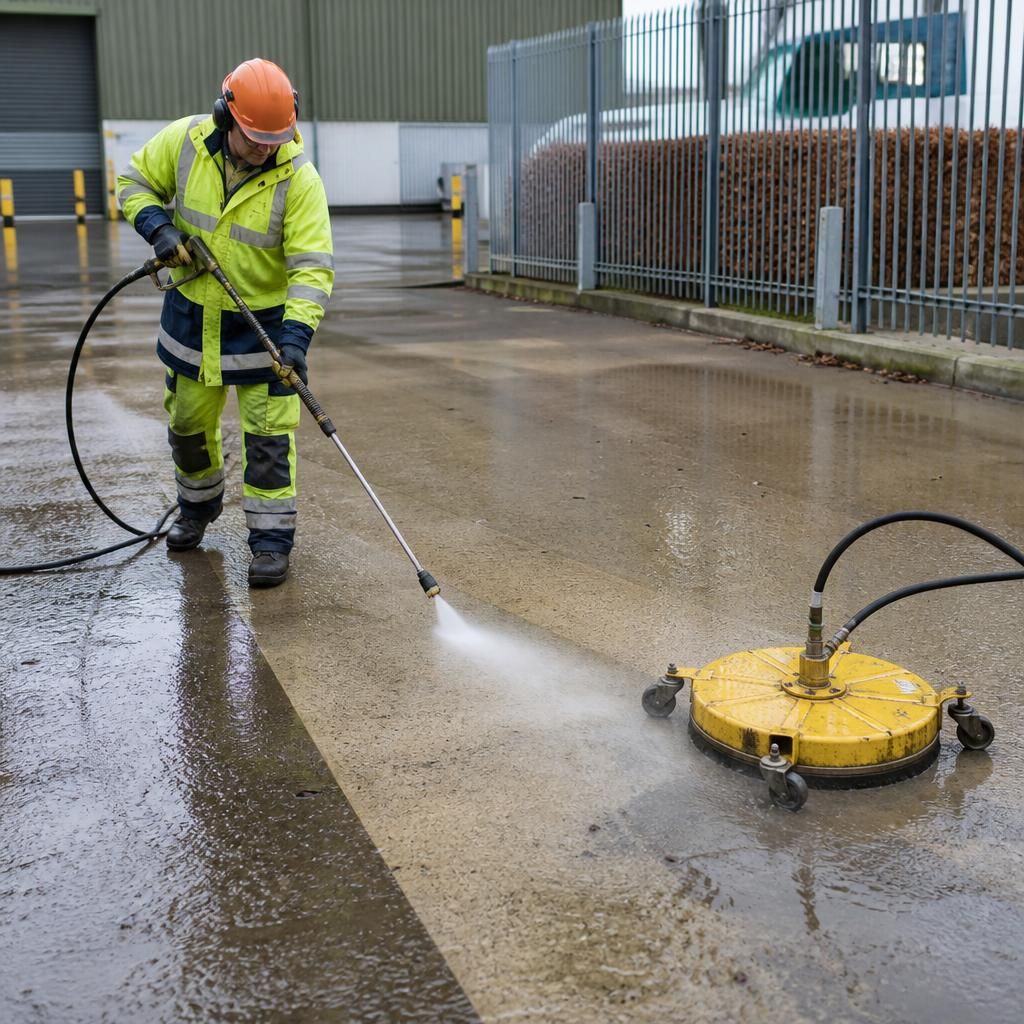
The main environmental advantage of pressure washing concrete is the reduced need for chemical cleaning agents. Water and mechanical force can remove dirt, algae, moss and many surface deposits without leaving chemical residues that could reach soil, planted areas or drainage systems.
However, pressure washing is only environmentally responsible when the resulting wastewater is managed correctly. Concrete wash water may contain oil, fuel, silt, paint particles or other pollutants already present on the surface. Drain covers, temporary barriers, wet vacuums and filtration can help prevent contaminated water entering surface-water drains or surrounding ground. The appropriate control depends on the site, the contamination and the available drainage arrangements.
Using the lowest effective pressure and water volume also reduces surface damage, waste and unnecessary repeat cleaning. This makes pressure washing a lower-impact option where it replaces avoidable chemical use while still providing proper control of runoff.