
What are the benefits of using pressure washing over traditional cleaning methods for concrete surfaces?
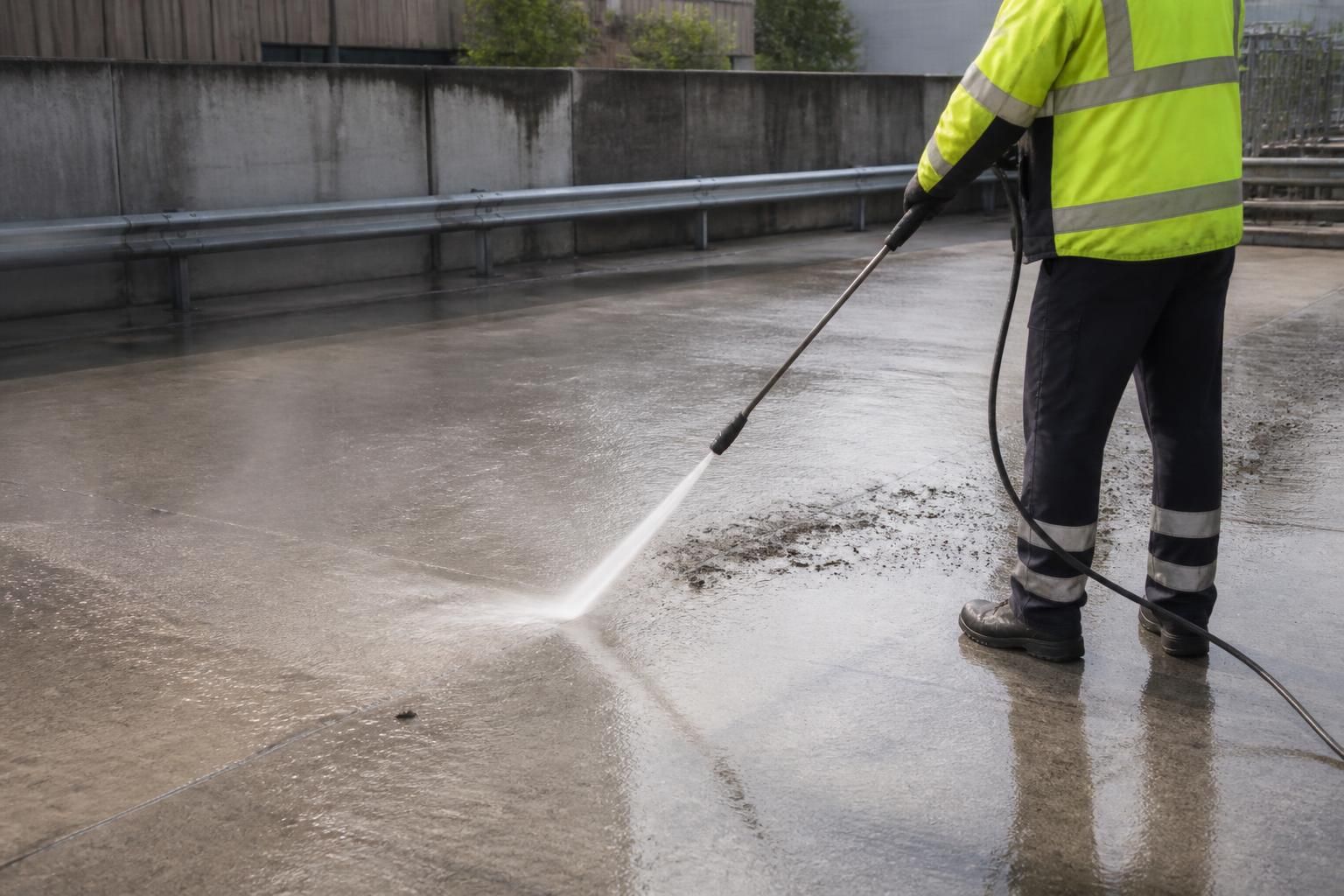
Pressure washing removes dirt, algae, moss, oil and other deposits from concrete more quickly and thoroughly than many traditional scrubbing or chemical cleaning methods. It uses controlled water pressure to restore appearance, improve slip resistance and reduce the need for harsh cleaning products, when carried out at a pressure suitable for the concrete’s condition.
Pressure washing is often more effective than traditional scrubbing, brushing or chemical cleaning for concrete because it uses a controlled jet of water to dislodge embedded dirt and surface deposits quickly. When the pressure, flow rate and nozzle are selected for the concrete’s condition, it can remove algae, moss, mud, tyre marks, oil residues and general staining while restoring a more uniform appearance with less manual effort.
More thorough removal of surface contamination
Concrete is porous, so dirt and organic growth can become lodged in its texture rather than remaining only on the surface. Sweeping and ordinary mopping remove loose debris but rarely reach these deposits. Pressure washing drives water into the surface profile and lifts contamination from joints, textured finishes, kerbs and other difficult areas. Professional cleaning can also combine pressure washing with appropriate detergents or degreasers where a stain has penetrated the concrete.
Faster coverage of large areas
Traditional cleaning methods usually rely on repeated brushing, hand scrubbing and rinsing. This can be labour-intensive and inconsistent across extensive concrete areas such as car parks, loading bays, paths, yards and service areas. Pressure washing covers broad surfaces more efficiently and can produce a more consistent finish, provided the operator works methodically and allows for the condition and layout of the site.
Improved appearance without relying solely on chemicals
A pressure washer can remove a significant amount of soiling through mechanical action from water alone. This may reduce the need for strong chemical products compared with a process based primarily on chemical treatment. Where chemicals are needed for oil, biological growth or other stubborn contamination, they should be selected for the surface and used in a controlled way, followed by suitable rinsing and recovery of run-off where required.
Better slip resistance and site presentation
Algae, moss, dirt and greasy residues can make concrete more slippery, particularly in shaded, damp or heavily trafficked areas. Removing these deposits helps restore the texture of the surface and can reduce avoidable slip hazards. Cleaning also supports the professional presentation of entrances, pedestrian routes, commercial yards and customer-facing premises. Pressure washing does not replace repairs or formal slip-risk controls, but it is an important part of keeping hardstanding clean and serviceable.
Effective treatment of different types of staining
The correct cleaning approach depends on the contaminant. Surface dirt and organic growth may respond well to pressure and suitable treatment products, while oil and grease often require a dedicated degreaser and dwell time before rinsing. Rust, paint, tyre marks and efflorescence may need more specialised methods. Pressure washing is therefore not simply a matter of using the highest available pressure; pre-treatment, agitation, hot water or other techniques may be required for a reliable result.
Less risk of uneven manual cleaning
Hand cleaning can leave visible differences between heavily scrubbed and lightly treated areas. Poorly rinsed chemical products may also leave residue or cause temporary discolouration. Professional pressure cleaning is carried out in controlled passes, with attention to edges, joints, drainage points and changes in surface condition. This helps create a more even finish and makes it easier to identify areas that need repair rather than attempting to clean them repeatedly.
Suitable for planned maintenance
Regular professional cleaning helps prevent layers of dirt, organic growth and staining from becoming increasingly difficult to remove. It can support the appearance and usability of concrete around commercial and industrial premises, while allowing surface defects, failed joints, cracking or drainage problems to be noticed sooner. The appropriate cleaning interval depends on footfall, vehicle movements, exposure to moisture, nearby trees, industrial activity and the type of concrete.
Pressure must be matched to the concrete
The main advantage of pressure washing is controlled cleaning, not maximum force. Excessive pressure, an unsuitable nozzle, holding the lance too close or repeatedly cleaning one area can erode the cement paste, expose aggregate, mark the surface or worsen existing deterioration. Older, cracked, spalled or weak concrete should be assessed before work begins. Operators should test a discreet area, maintain a suitable working distance and adjust the technique as the surface changes.
Traditional methods still have a place for delicate areas, isolated marks, tight spaces and surfaces that cannot tolerate water pressure. However, for sound concrete with widespread contamination, professional pressure washing generally provides a quicker, more thorough and more practical clean than manual scrubbing alone. The best results come from combining an inspection-led method with suitable water pressure, nozzle selection, pre-treatment, run-off management and careful post-cleaning checks.
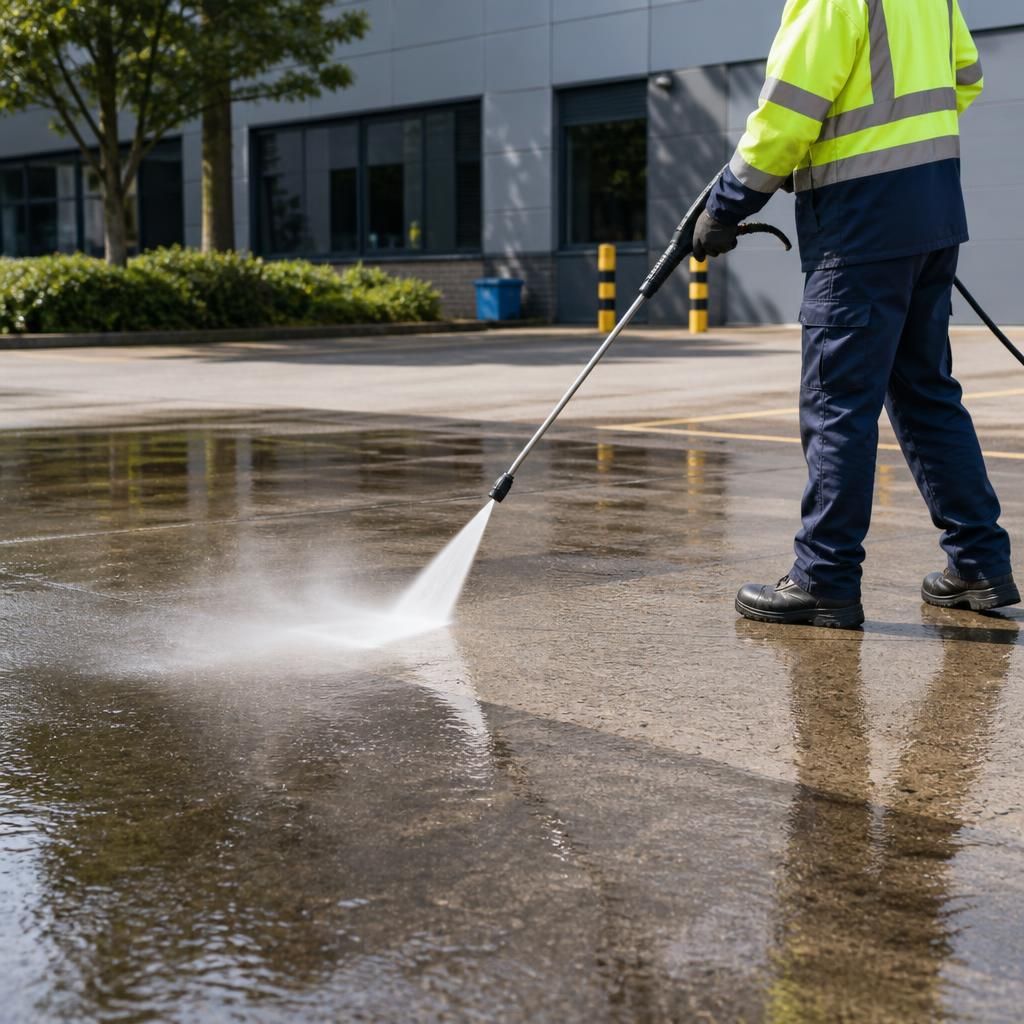
Pressure washing cleans sound concrete through the controlled mechanical action of water, loosening dirt, algae, moss, tyre marks and other deposits that sweeping, mopping or hand scrubbing may leave embedded in the surface texture.
This makes it particularly suitable for larger areas such as car parks, yards, paths and loading bays, where traditional methods can be slow and uneven. The pressure, nozzle and working distance must be matched to the concrete’s condition; excessive force can damage weak, cracked or deteriorating surfaces. Where oil or grease is present, a suitable degreaser and controlled rinsing may be used alongside the pressure washing process.