
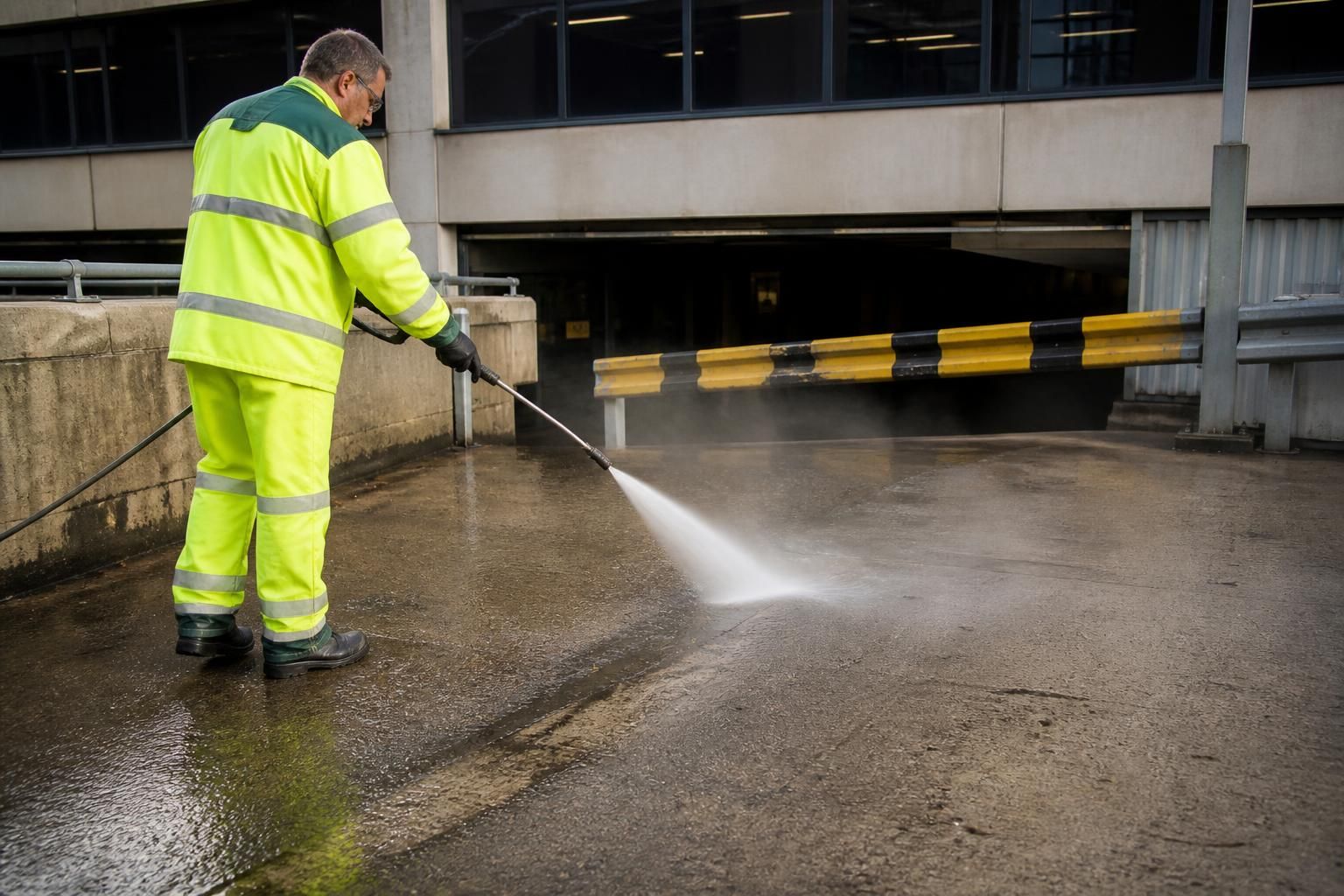
How often should professional pressure cleaning be performed to maintain the quality and appearance of concrete surfaces?
Professional pressure cleaning should be scheduled according to the concrete’s condition, footfall, vehicle use, weather exposure and level of staining, with busy commercial surfaces generally needing more frequent treatment than lightly used areas. Regular inspections help identify when cleaning is needed before dirt, algae, oil and surface staining become difficult to remove or affect safety and appearance.
Professional pressure cleaning should be scheduled according to how the concrete is used, its exposure to weather and traffic, and the type of contamination present. Lightly used concrete may only need cleaning when inspection identifies visible soiling, while busy commercial areas, car parks, service yards and public walkways usually benefit from planned cleaning at regular intervals rather than occasional reactive work.
A practical starting point is to arrange a professional condition inspection at least annually. The inspection should assess staining, algae, moss, oil deposits, chewing gum, tyre marks, efflorescence, surface wear and any areas becoming slippery. The cleaning frequency can then be adjusted to the site rather than applying the same programme to every concrete surface.
More frequent pressure cleaning is generally appropriate where concrete is exposed to:
- Heavy pedestrian traffic, particularly around entrances, shopping areas, schools, transport facilities and public buildings.
- Regular vehicle movements, loading activity, fuel handling or oil contamination.
- Leaves, soil, standing water, tree cover or poor drainage that encourage algae and moss.
- Winter weather, road salt and repeated wetting and drying.
- Food waste, chewing gum, litter or other contaminants that can become embedded in textured concrete.
- Strict appearance or safety requirements, such as managed commercial estates, hospitality premises and local authority sites.
Surfaces with heavy use or persistent contamination may require cleaning as part of a planned maintenance programme, with additional treatment after spills, construction work or periods of particularly wet weather. Less exposed areas, such as lightly used concrete walls or sheltered hardstanding, may remain satisfactory for longer between professional cleans if they are inspected and kept free from damaging deposits.
Visible dirt is not the only indication that cleaning is due. Darkening, green growth, slippery patches, oil marks, accumulated grit and staining around drainage points can indicate that contamination is affecting the surface. On commercial premises, these issues can also make the site look poorly maintained and may increase slip, trip or vehicle-management concerns. Prompt removal is preferable to allowing deposits to harden or penetrate textured concrete.
The correct frequency also depends on the concrete’s condition. Sound, well-finished concrete can normally tolerate appropriate professional pressure cleaning when the pressure, water flow, nozzle and technique are selected correctly. Older, cracked, spalled or weakened concrete needs a condition assessment first. Excessive pressure or an unsuitable nozzle can remove the cement-rich surface, widen existing defects or force water into vulnerable areas. Cleaning may therefore need to be gentler, supplemented by steam cleaning or followed by repairs and protective measures.
Seasonal planning can improve results. A clean before periods when the site is most visible or heavily used can remove accumulated grime, while follow-up inspections after winter can identify salt deposits, organic growth and surface deterioration. Spillages and graffiti should be addressed promptly rather than waiting for the next routine visit, because some contaminants become more difficult to remove with time.
For a commercial property, the most effective approach is a documented maintenance schedule. Record the condition of each concrete area, the contaminants found, the cleaning method used and any repairs or drainage issues identified. Review the schedule after each visit. If staining returns quickly, the cause may be poor drainage, leaking equipment, traffic patterns or inadequate waste management rather than simply a need for more pressure washing.
Professional pressure cleaning should be brought forward when concrete becomes slippery, visibly stained, heavily soiled or difficult to maintain with routine sweeping. It should also be carried out after substantial construction activity or a significant oil or chemical spill, using a method suitable for the contaminant and with appropriate control of run-off. Regular, condition-led cleaning protects appearance and helps prevent deposits from contributing to longer-term surface deterioration.
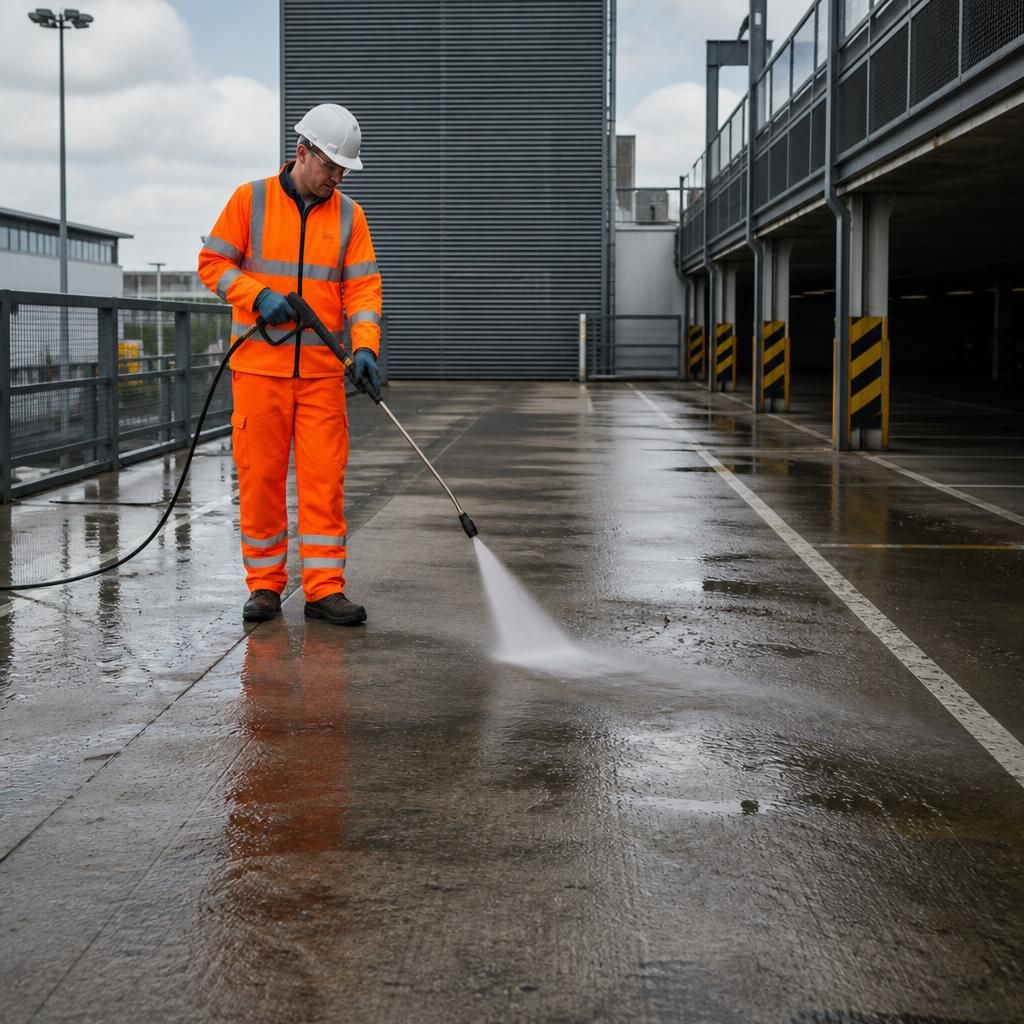
Professional pressure cleaning should be performed according to the concrete’s condition, usage and exposure rather than on a fixed timetable. Busy car parks, service yards, entrances and public walkways usually need more frequent cleaning than sheltered, lightly used areas because traffic, oil, grit, algae and weather-related deposits build up more quickly.
An annual professional inspection provides a useful baseline for assessing staining, surface wear, drainage and slip risks. The cleaning schedule can then be adjusted for the site, with additional visits after oil spills, construction work, winter weather or periods of persistent dampness. Prompt treatment is important where deposits are becoming embedded, as hardened contamination is more difficult to remove and may contribute to surface deterioration.
Schedule Your Professional Concrete Cleaning Assessment
Arrange a professional assessment of your concrete surfaces to establish a cleaning schedule based on usage, contamination, condition and safety requirements. Contact Encanto Exterior Cleaning to plan the appropriate pressure cleaning programme for your site.