
How does pressure washing help in removing oil stains from concrete?
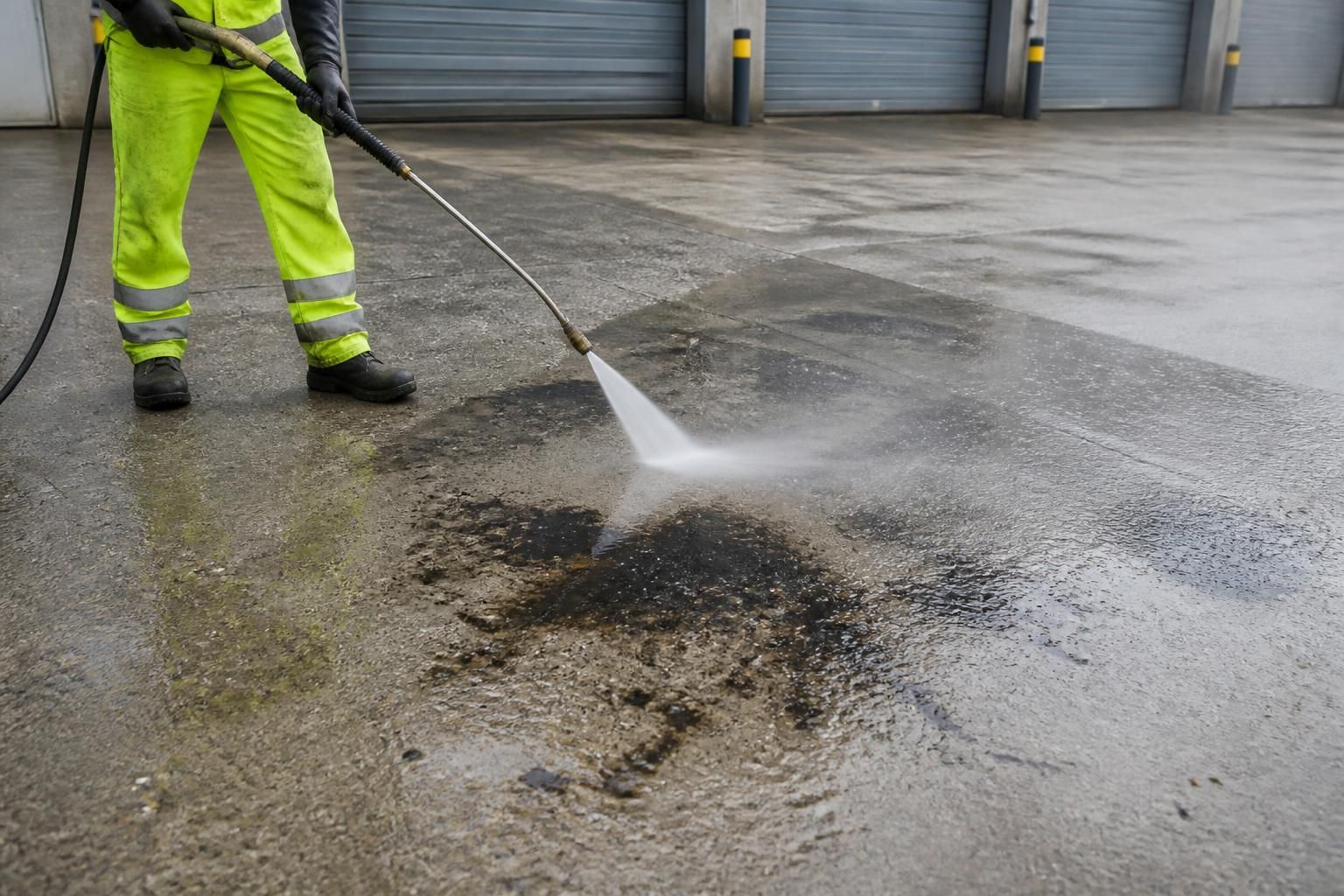
Pressure washing removes oil stains from concrete by using concentrated water pressure, often with a suitable detergent or heated water, to lift oil from the surface and porous areas of the slab. For older or deeply absorbed stains, professional pre-treatment and repeat cleaning may be needed, with wastewater controlled to prevent contamination of drains and surrounding ground.
Pressure washing helps remove oil stains from concrete by combining water pressure, suitable cleaning agents and, where appropriate, heated water to lift oil from the slab’s surface and porous areas. The water breaks up the surface residue, while pre-treatment helps loosen oil that has soaked into the concrete. Professional cleaning may require several passes, particularly where stains are old, heavily trafficked or deeply absorbed.
Concrete is porous, so oil can penetrate below the visible surface rather than remaining as a removable film. Pressure washing is most effective when the stain is assessed first and treated according to its age, size and depth. Fresh spills are generally easier to remove, whereas older marks may have bonded with dust and grime or migrated further into the slab.
A typical professional cleaning process includes:
- Inspecting the area: The concrete is checked for cracks, weak edges, surface deterioration, previous coatings and nearby drainage points. This helps determine the appropriate pressure, water temperature and nozzle pattern.
- Removing loose contamination: Grit, leaves and surface debris are cleared so that the cleaning equipment can work directly on the oil-affected area.
- Applying a suitable pre-treatment: A concrete-safe degreaser or detergent is applied where necessary. It helps emulsify the oil, making it easier for the pressure washer to separate it from the surface. The product must be selected and used in accordance with its instructions and the site’s environmental requirements.
- Agitating and rinsing: The treated area is worked with controlled pressure and an appropriate nozzle. A surface cleaner may be used on larger hard-standing areas to provide more even coverage and reduce splash compared with a narrow lance.
- Repeating treatment where needed: A single wash may improve the appearance without removing all of the oil held within the concrete. Further treatment can be required, but excessive pressure is not a substitute for proper stain treatment.
- Managing the wastewater: Run-off containing oil, detergent and suspended dirt must be controlled and collected or directed to an approved disposal arrangement. It should not be allowed to enter surface-water drains or soak into surrounding ground.
Heated pressure washing can improve the removal of oily deposits because warmth reduces the viscosity of many oils and helps cleaning agents work more effectively. However, heat and pressure must be matched to the condition of the concrete. Excessive pressure, an unsuitable nozzle or holding the lance too close can erode the cement surface, expose aggregate, create striping or damage old and deteriorating areas.
Pressure washing does not always restore stained concrete to its original colour. Deeply absorbed oil may leave a shadow after cleaning, particularly where the slab has been exposed for a long period. In these circumstances, a professional may recommend repeated degreasing, an absorbent treatment or a specialist remediation approach. If the oil has affected a painted, sealed or resin-coated surface, the cleaning method must also protect that finish.
For commercial premises, oil-stained concrete should be addressed promptly because it can create slip risks, leave an untidy impression and attract further dirt. Regular cleaning of service yards, loading areas, car parks and other vehicle-accessible surfaces can prevent deposits from building up, although the appropriate frequency depends on traffic, vehicle activity and the source of the contamination.
Professional pressure washing is preferable to indiscriminate high-pressure cleaning because it combines surface assessment, controlled equipment use and responsible wastewater handling. Encanto Exterior Cleaning can tailor the process to the concrete’s condition and the requirements of the site, helping to remove oil contamination without causing avoidable damage to the surface or surrounding areas.
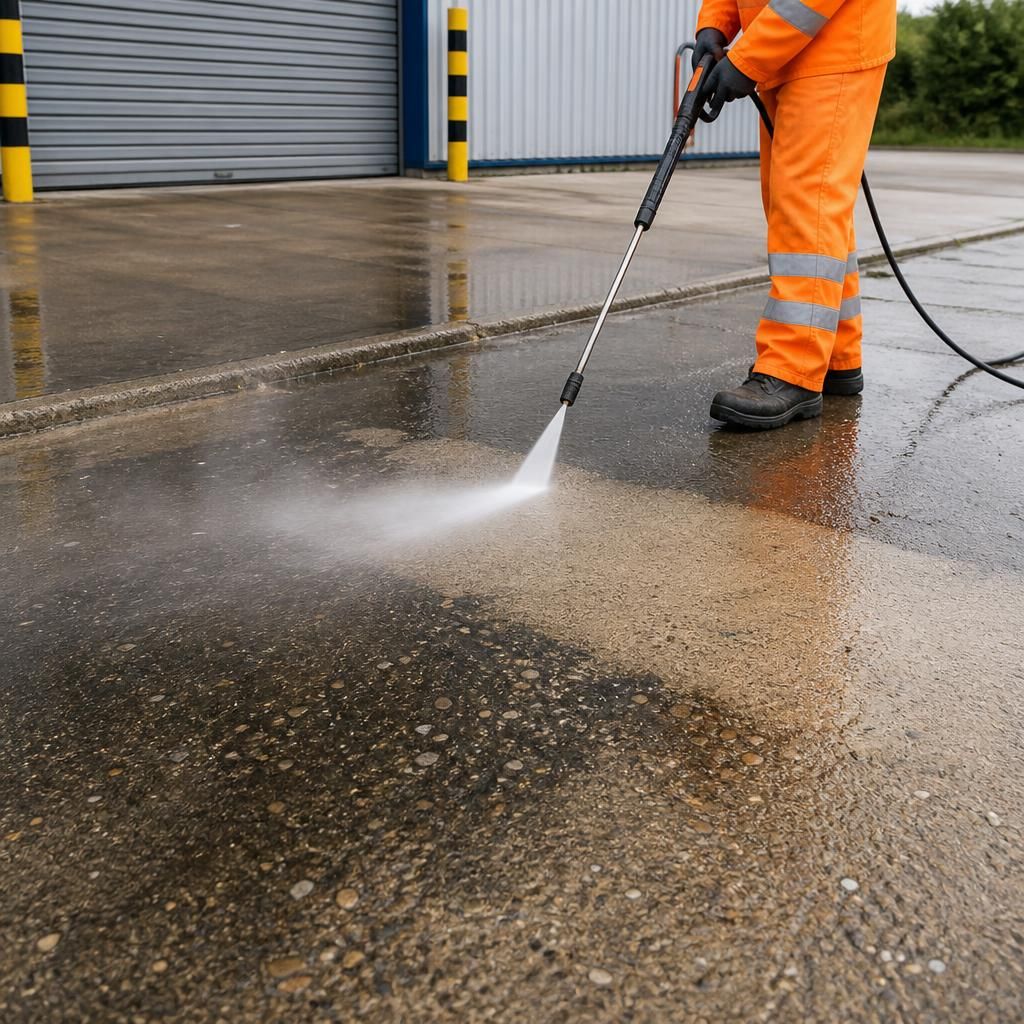
Pressure washing removes oil stains from concrete by combining controlled water pressure with suitable pre-treatment. A concrete-safe degreaser helps break down oil that has penetrated the porous surface, while the pressure washer lifts the loosened residue from the slab. Heated water may improve the process where oily deposits are particularly persistent.
The equipment must be matched to the concrete’s condition. Excessive pressure or an unsuitable nozzle can erode the cement surface, expose aggregate or leave visible cleaning marks. For commercial areas, wastewater containing oil and detergent should also be controlled and collected appropriately rather than allowed to enter surface-water drains.