
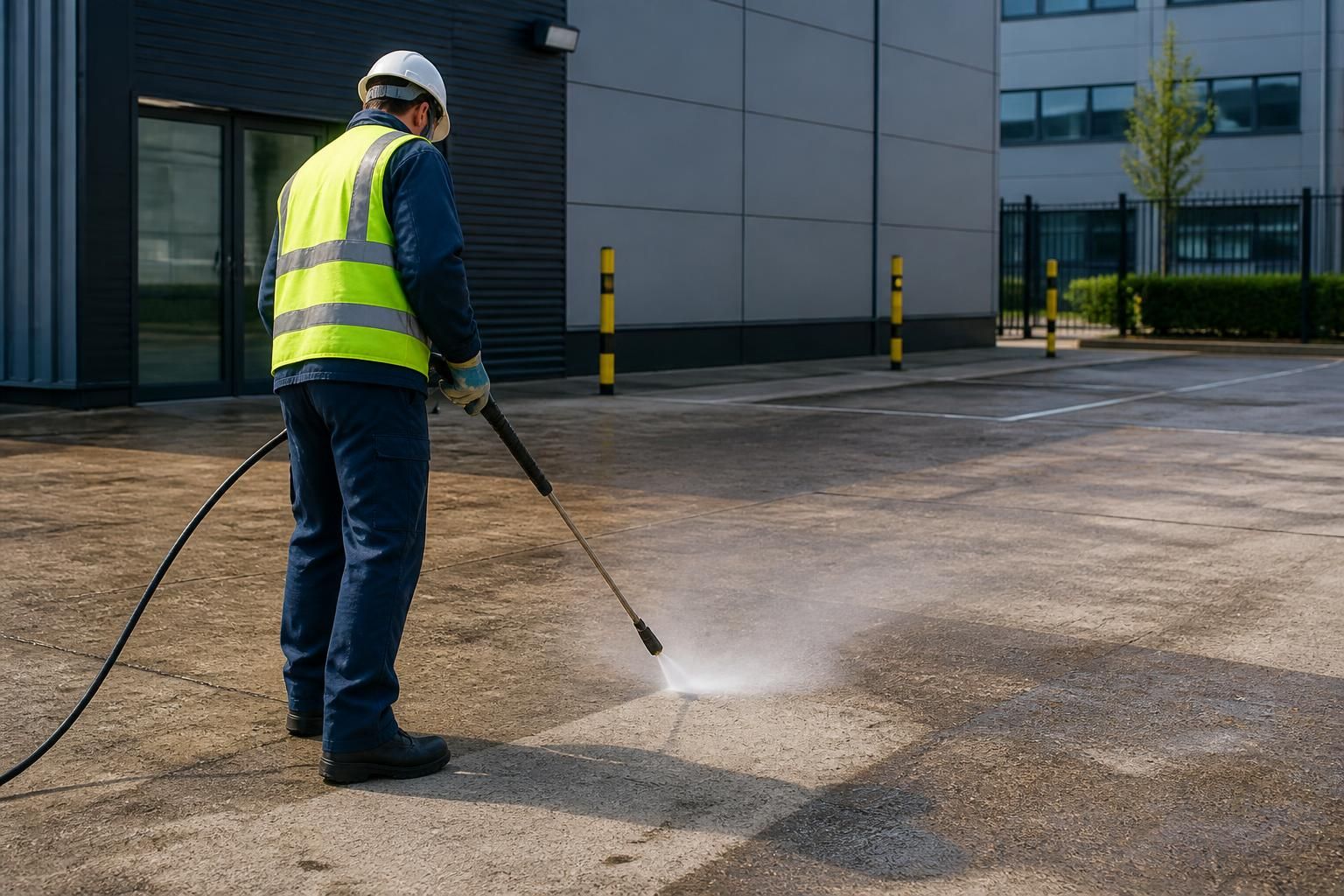
Can pressure washing be safely used on old or deteriorating concrete?
Pressure washing can be used on old or deteriorating concrete, but only after assessing its condition and adjusting the pressure, nozzle and cleaning method accordingly. Weak, cracked or delaminated concrete may be damaged by excessive pressure, so gentle cleaning or an alternative method may be safer.
Pressure washing can be used on old or deteriorating concrete, but it is only safe when the surface has enough structural integrity to withstand controlled water pressure. A preliminary inspection should identify cracking, surface erosion, delamination, loose aggregate, exposed reinforcement, failed repairs and unstable joints. Where concrete is weak or friable, high-pressure cleaning can remove the cement paste, widen defects and leave the surface rougher or more vulnerable to water penetration.
Age alone does not determine whether concrete can be pressure washed. Older concrete may remain sound and suitable for careful cleaning, while comparatively newer concrete can be unsafe to wash if it has been poorly installed, chemically damaged, frost-damaged or neglected. The key consideration is the condition of the surface and the type of contamination being removed.
What damage can excessive pressure cause?
- Remove the weakened outer layer, exposing coarse aggregate and creating a visibly pitted finish.
- Break away loose edges around cracks, joints, holes and previous repairs.
- Widen existing cracks or drive water into voids beneath delaminated sections.
- Dislodge friable material from worn concrete, blockwork or adjoining surfaces.
- Damage sealants, joint fillers, coatings and line markings.
- Force water into the substrate or building perimeter, increasing the risk of damp-related problems where drainage and detailing are poor.
These risks increase when a narrow nozzle is used too close to the surface, when the operator remains in one position for too long, or when a powerful machine is selected without matching its output to the concrete condition. Pressure should not be used to compensate for unsuitable preparation or an incorrect cleaning method.
How a professional assessment is carried out
Before cleaning, the surface should be examined for loose or hollow-sounding areas, scaling, spalling, exposed aggregate, rust staining, movement at joints and signs of previous repairs. Particular care is needed around drainage channels, thresholds, expansion joints, loading areas, steps, ramps and edges where concrete may already be thinner or damaged. The surrounding building fabric should also be considered, including doors, vents, electrical equipment, painted surfaces and vulnerable landscaping.
A small test area is normally the safest way to establish a suitable method. This allows the operator to check whether the selected pressure, nozzle pattern, distance and cleaning solution remove the contamination without scarring the concrete. The test area should be reviewed after drying, as some damage is less apparent while the surface is wet. If the concrete sheds grit, becomes visibly rougher or shows exposed aggregate, the cleaning approach should be reduced or changed.
Safer cleaning methods for deteriorating concrete
- Use the lowest effective pressure rather than starting with the machine’s maximum output.
- Select a wider spray pattern and maintain a consistent working distance.
- Keep the lance moving evenly, avoiding concentrated passes over one area.
- Use controlled rinsing and allow time for a suitable detergent or degreaser to loosen contamination before washing.
- Choose steam or low-pressure cleaning where heat and dwell time can remove deposits with less mechanical impact.
- Work from sound areas towards vulnerable edges and avoid directing water into cracks, joints or open voids.
- Protect nearby surfaces and control run-off so loosened dirt, oils and cleaning residues do not spread across the site.
Steam cleaning or other low-impact techniques may be preferable for light organic growth, atmospheric soiling and some surface deposits. For oil, grease, paint or embedded contamination, the method must be selected according to the pollutant and the condition of the concrete. A chemical treatment is not automatically safer: unsuitable products can attack cementitious materials, discolour the surface or create hazardous run-off. Any detergent should be compatible with the substrate and used in accordance with its safety and environmental requirements.
When pressure washing should be avoided
Pressure washing should normally be postponed where the concrete is actively shedding material, has extensive delamination, contains unstable repairs, has severe spalling or shows exposed and corroding reinforcement. It is also unsuitable where water could enter a building, affect electrical installations or undermine a damaged edge. Cleaning cannot repair structural defects. A qualified building or concrete specialist should assess significant movement, deep cracking, reinforcement corrosion or areas that sound hollow before cleaning is planned.
In some cases, loose material should be removed by hand, defects repaired and the concrete allowed to cure before any wider cleaning takes place. Where the surface is too fragile to wet-clean, dry methods or limited manual treatment may be more appropriate, although these also require controls for dust, debris and surrounding occupants.
Site safety and protection
Commercial and industrial concrete cleaning should include a review of access, pedestrian and vehicle movements, slip hazards, drainage and run-off controls. Operators should use appropriate personal protective equipment, maintain safe hose and lance handling, and isolate the work area where spray, debris or wet surfaces could affect other people. Water should not be directed towards live electrical equipment, unsealed openings or sensitive plant and machinery. Cleaning residues, oil-contaminated water and other waste should be managed in line with site requirements and applicable environmental controls.
After cleaning, the concrete should be inspected once dry. Any newly exposed defects, loss of surface material or failed joints should be recorded rather than concealed. Depending on the condition and use of the area, repairs, joint replacement or a compatible protective treatment may help reduce future water and contaminant ingress. Protective coatings should only be applied to a clean, sound and suitably dry substrate.
For old or deteriorating concrete, the safest approach is a condition-led assessment, a controlled test clean and a method that removes contamination without unnecessarily abrading the surface. Where the concrete is structurally unsound, cleaning should wait until the underlying defect has been assessed and addressed.
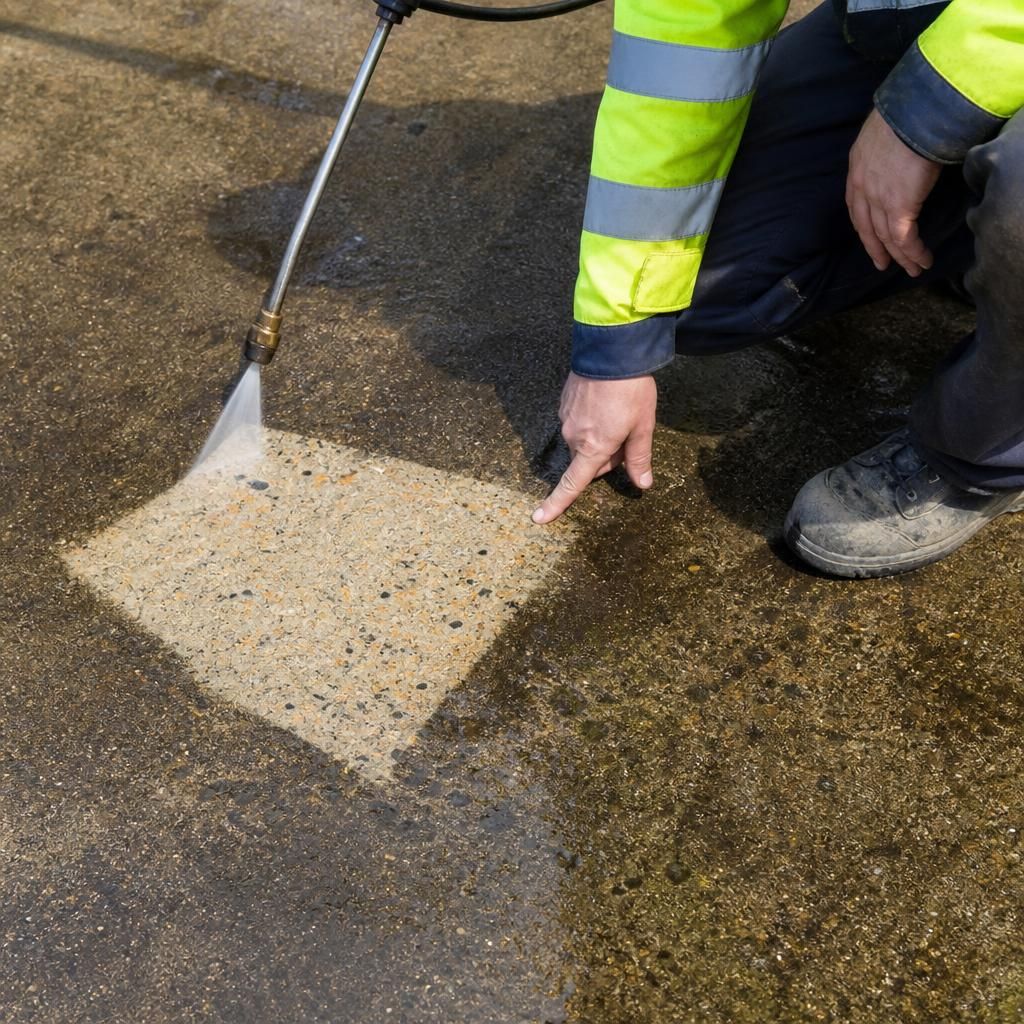
A controlled test clean is the safest way to determine whether old or deteriorating concrete can withstand pressure washing. The operator should select a discreet area and assess the result after the concrete has dried, checking for exposed aggregate, increased roughness, surface loss or widened cracks.
If the test causes damage, the cleaning method should be changed to lower pressure, a wider spray pattern, steam cleaning or gentle manual treatment. A failed test indicates that wider pressure washing may worsen the concrete rather than simply remove its surface dirt.