
What surfaces are suitable for industrial pressure cleaning?
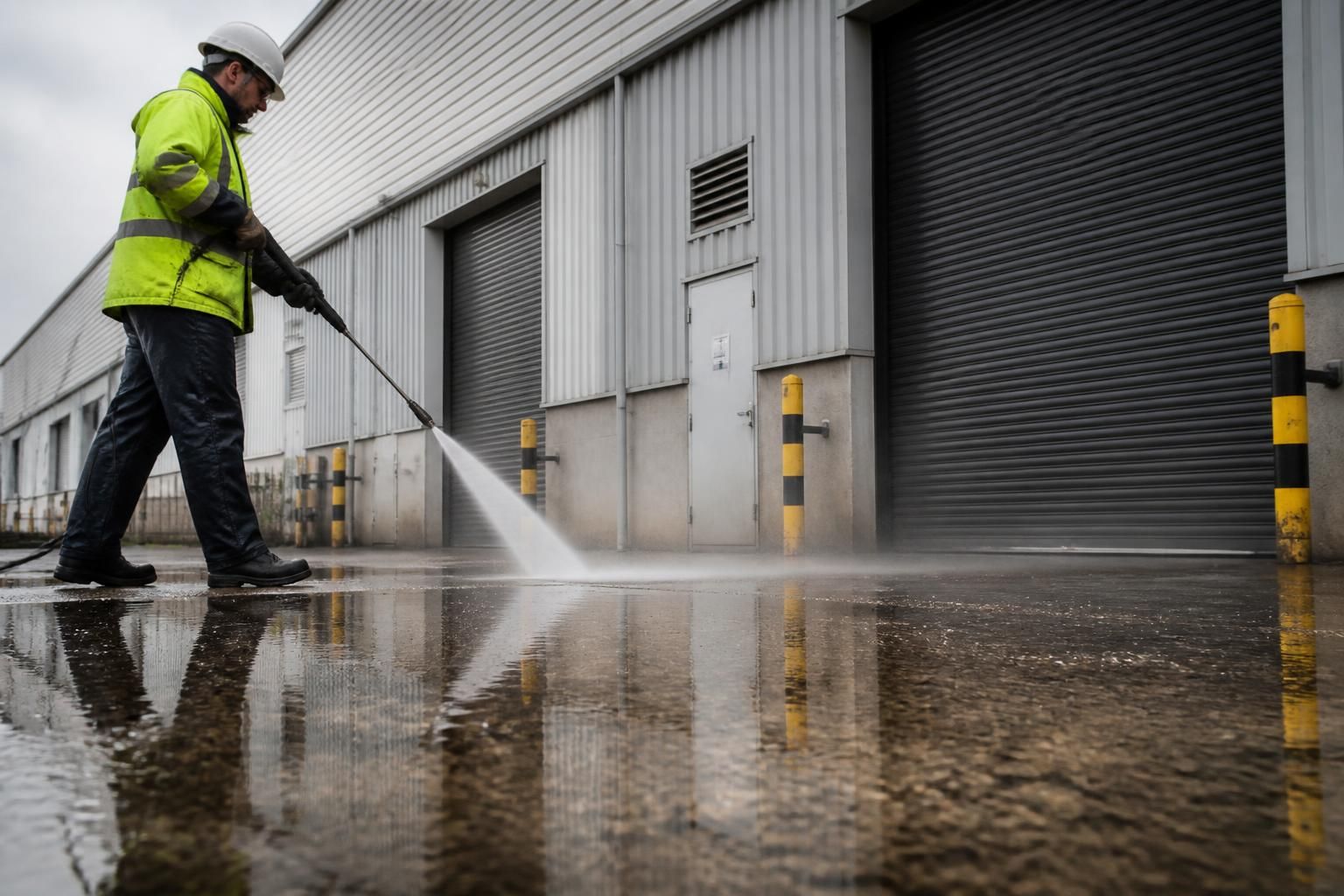
Industrial pressure cleaning is suitable for durable surfaces such as concrete, paving, tarmac, brickwork, stone, cladding, metal, roofs and car parks, provided the pressure and cleaning method are matched to the material. Delicate, weathered or coated surfaces require a controlled assessment first to prevent damage to joints, finishes, insulation or protective coatings.
Industrial pressure cleaning is generally suitable for hard, sound surfaces that can tolerate controlled water pressure, including concrete, block paving, tarmac, brickwork, natural stone, some cladding, metalwork, roofs and car parks. The correct method depends on the material’s condition, surface coating, joints and surrounding drainage. Pressure should always be selected to remove contamination without eroding the substrate, opening joints or damaging protective finishes.
A professional assessment is important before work begins. The cleaning contractor should identify the surface, check for cracks, loose sections, failed pointing, corrosion, flaking coatings and areas of previous repair, then select the appropriate pressure, nozzle, distance, temperature and cleaning solution. Where high-pressure water could cause damage, a lower-pressure, steam-cleaning or soft-washing method may be more suitable.
Concrete and reinforced concrete
Sound concrete is one of the most suitable materials for industrial pressure cleaning. It is commonly cleaned on loading bays, service yards, walkways, plant areas, steps, ramps and car parks to remove dirt, oil residues, algae, moss, tyre marks and general traffic soiling.
Care is needed around cracks, spalled concrete, exposed aggregate and expansion joints. Excessive pressure can remove the surface paste, expose aggregate or force water into damaged areas. Oil and chemical contamination may also require a suitable degreaser and controlled recovery of the resulting wastewater rather than pressure washing alone.
Block paving and concrete paving
Block paving, slabs and other concrete paving can usually be cleaned effectively, particularly where moss, algae, weeds and accumulated soil have developed in joints. The operator should avoid dislodging blocks or removing excessive jointing material. After cleaning, joints may need to be refilled with an appropriate material, especially where the paving is subject to vehicle movement or drainage depends on stable joints.
Older or settled paving should be checked for movement before cleaning. A pressure-washing process will not correct subsidence, broken edges or failed bedding, and cleaning unstable areas too aggressively can make the defect worse.
Tarmac and asphalt
Tarmac and asphalt can be pressure cleaned when the surface is intact and properly bonded. This is useful for car parks, access roads, yards and pedestrian routes where surface dirt, organic growth and some spillages need to be removed.
The surface should not be treated as if it were concrete. Excessive pressure or heat can loosen aggregate, mark the binder or damage weak, aged and recently laid areas. Particular care is needed around potholes, patched sections, open joints and edges. Oil contamination may require a compatible treatment and appropriate wastewater controls.
Brickwork and masonry
Sound engineering brick and robust external masonry can often be cleaned with controlled pressure. This may remove atmospheric dirt, algae, bird fouling and some surface deposits from industrial buildings, boundary walls and commercial façades.
Older brickwork, soft brick, lime mortar and weathered pointing are more vulnerable. High pressure can erode the brick face, enlarge pores and remove mortar from joints. It can also drive water into the wall, potentially affecting internal finishes or insulation. Low-pressure cleaning, steam cleaning or a carefully tested masonry-cleaning system is often preferable for historic, delicate or heavily weathered elevations.
Natural and manufactured stone
Granite, some sandstone, dense limestone and manufactured stone may be suitable, but their performance varies considerably. Stone can be porous, layered, friable or vulnerable to staining and surface erosion. The cleaning method should therefore be tested in an inconspicuous area before the main work starts.
Pressure alone may not remove oil, rust, carbon deposits or biological growth safely. The operator may need to combine gentle water pressure with steam or a material-compatible cleaning agent. Joints, carved details and stone coatings require particular care.
Cladding and external panels
Many metal, powder-coated, plastic and composite cladding systems can be cleaned with low or moderate pressure, provided the finish is intact and the system is suitable for wet cleaning. Cleaning can remove traffic film, dust, algae, bird deposits and general atmospheric soiling from façades and industrial units.
Pressure must be controlled around panel laps, seals, vents, louvres, trims, access doors and damaged coatings. Water forced behind panels can affect insulation, fixings or internal areas. Coated surfaces should be checked for chalking, peeling, corrosion and compatibility with any cleaning agent. Some composite panels and ageing plastics may be marked by aggressive nozzles or hot water.
Metalwork, plant and structural components
Steelwork, railings, gates, tanks, ducting and other metal surfaces may be pressure cleaned to remove dust, grease, algae and loose contamination before maintenance or repainting. The process must account for corrosion, fragile coatings, electrical components and areas where water could collect.
Pressure cleaning is not a substitute for preparation where rust, failing paint or hazardous residues are present. Exposed metal may need drying, corrosion treatment or recoating after cleaning. Electrical equipment, controls and sensitive plant should be isolated or protected, and the cleaning method must not force water into bearings, motors or control cabinets.
Roofs and roof coverings
Some robust roofs, including suitable metal roofing, concrete tiles and certain industrial roof coverings, can be cleaned under controlled conditions. The operator must first check the roof’s age, construction, condition, access requirements and waterproofing details.
High pressure can damage tiles, strip protective finishes, loosen fixings or drive water beneath laps and seals. Fragile sheets, ageing coatings, rooflights and areas containing suspected asbestos must not be treated as ordinary pressure-cleaning surfaces. A separate survey and specialist method may be required, particularly on older industrial buildings.
Surfaces requiring caution or an alternative method
- Loose, cracked, delaminated or severely weathered materials may fail under water pressure.
- Painted, powder-coated, sealed or waterproofed surfaces may lose their finish if the pressure or cleaning agent is unsuitable.
- Render, insulated render systems and lightweight façade panels can be damaged or allow water behind the finish.
- Wood, soft plastics, rubber membranes and some resin-bound surfaces usually require a gentler approach.
- Glass, seals, vents, electrical fittings and delicate signage should not be exposed to uncontrolled pressure.
- Surfaces contaminated with chemicals, fuel, biological waste or other hazardous substances need a task-specific risk assessment and wastewater plan.
Before cleaning, the site team should confirm the required finish and identify any areas that must remain dry. Test cleaning helps establish whether the proposed method removes the contamination without changing the colour, texture or coating. It also provides an opportunity to check splash risks, drainage capacity and the effect on adjacent materials.
Industrial pressure cleaning is therefore best understood as a controlled process rather than a single setting used across an entire site. Concrete may tolerate a more robust treatment than aged brickwork, cladding or a coated roof, while sensitive areas may be better served by steam cleaning or low-pressure washing. Matching the technique to the surface condition protects the building fabric, reduces avoidable repairs and produces a more consistent result across large commercial and industrial premises.
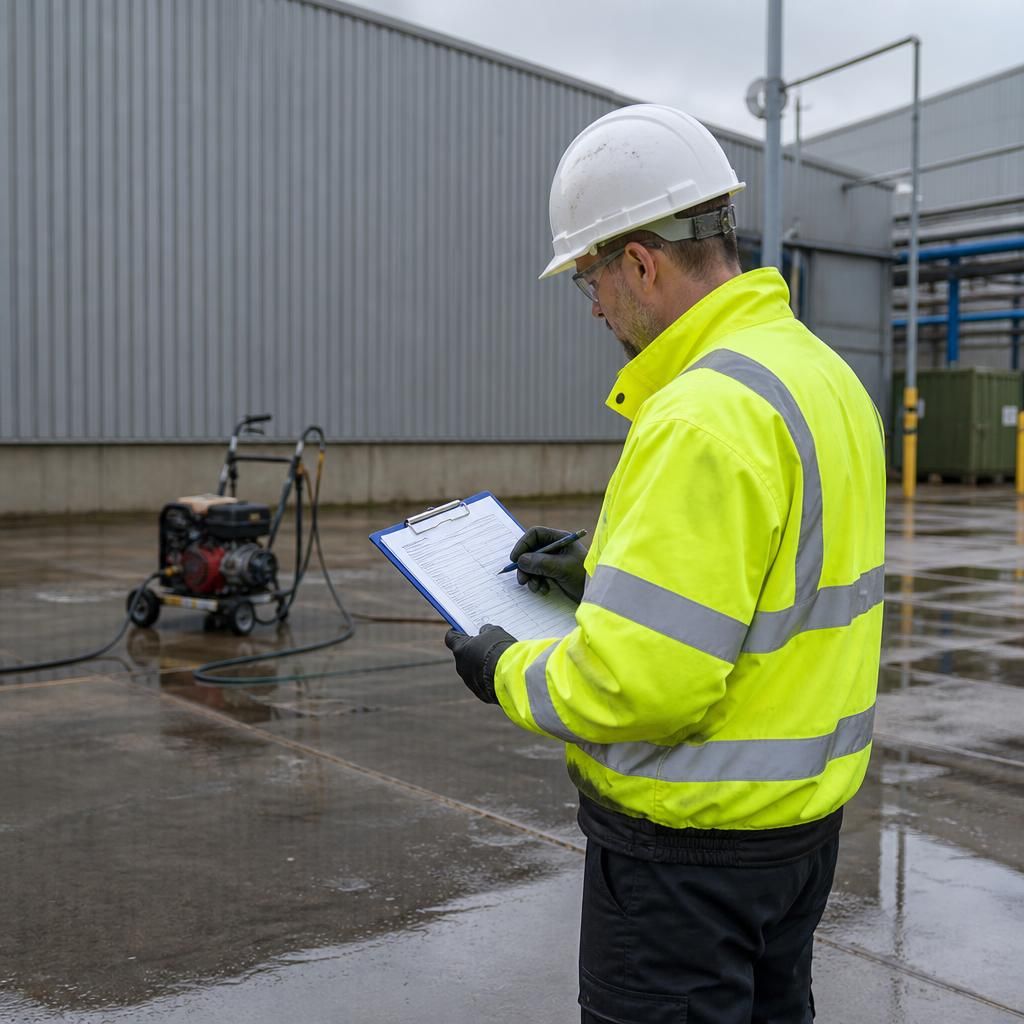
Industrial pressure cleaning is suitable only when the surface and its condition can tolerate the selected pressure, temperature and cleaning solution. The same material may need different treatment depending on age, damage, coatings, joints and previous repairs.
A professional assessment should check for cracks, loose pointing, corrosion, delamination, failed seals and areas where water could enter the building. A small test-cleaned section can confirm that the method removes contamination without eroding the substrate, lifting coatings or changing the surface appearance. Where pressure washing presents a risk, steam cleaning or low-pressure washing may provide a safer alternative.