
What cleaning agents are used in industrial pressure cleaning, and are they environmentally friendly?
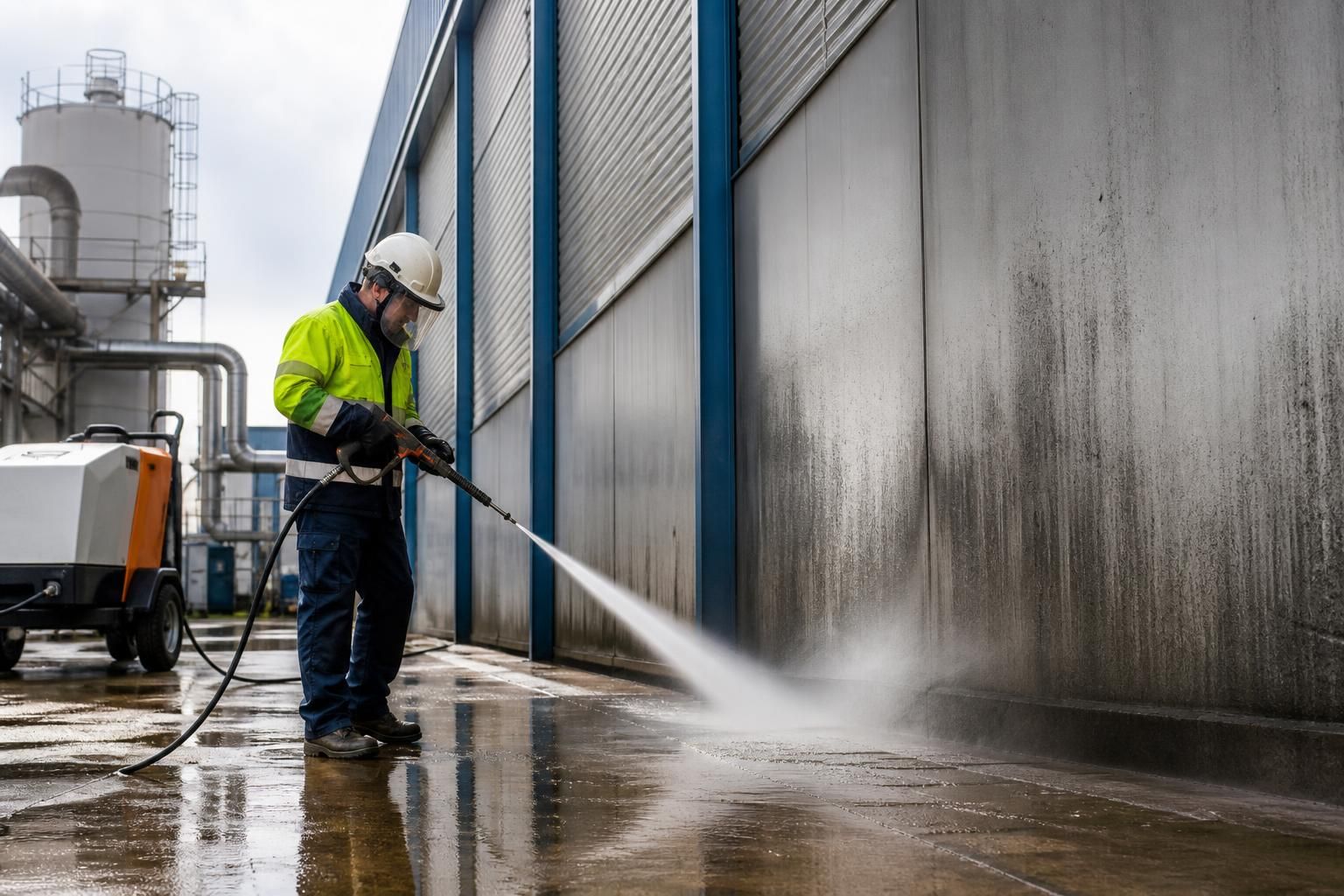
Industrial pressure cleaning may use water alone, alkaline or neutral detergents, degreasers, biocidal treatments, traffic-film removers and specialist products for oil, cement or graffiti. Some are biodegradable and lower-impact, but environmental friendliness depends on the product, dilution, surface, wastewater controls and disposal method, so agents should be selected and contained according to the site and applicable regulations.
Industrial pressure cleaning may use water alone, neutral detergents, alkaline cleaners, degreasers, traffic-film removers, biocidal treatments, acidic descalers and specialist products for substances such as oil, cement, rust or graffiti. Some products are readily biodegradable or formulated to have a lower environmental impact, but no cleaning agent is automatically environmentally friendly in every situation. The overall impact depends on the product, dilution, application method, surface, contamination removed and how the resulting wastewater is contained, treated and disposed of.
Water-only cleaning is usually the lowest-impact option where pressure, temperature and dwell time are sufficient to remove the dirt. It can be suitable for loose dust, soil, some general staining and surface deposits. However, using water alone is not always the most sustainable approach. A suitable detergent can loosen contamination more effectively, reducing agitation, repeat cleaning and water use. The correct choice should therefore be based on the whole cleaning process rather than the ingredient list alone.
Common cleaning agents used in industrial pressure cleaning include:
- Neutral detergents: These contain surfactants that help water wet the surface and lift general dirt, grease and traffic film. They are commonly selected for painted surfaces, façades, cladding and areas where aggressive chemistry is unsuitable.
- Alkaline cleaners and degreasers: These are used for oils, fats, heavy road film and industrial residues. Stronger alkaline products can be effective on hard, compatible surfaces but may damage coatings, aluminium, natural stone or surrounding vegetation if poorly selected or rinsed.
- Traffic-film removers: These are formulated for road dirt, exhaust deposits, rubber residue and oily grime found on car parks, loading areas and transport facilities. Their environmental profile varies considerably, particularly where solvents or powerful builders are present.
- Biocidal and fungicidal treatments: These may be used to control algae, moss, mould and organic growth. They require careful application because the active ingredients can be harmful to aquatic life if allowed to enter surface-water drainage systems.
- Acidic cleaners and descalers: These can remove cement residue, limescale, efflorescence and certain mineral deposits. They need strict surface compatibility checks, controlled dilution and thorough neutralisation or recovery where appropriate.
- Specialist graffiti, paint and adhesive removers: These may contain solvents, emulsifiers or other powerful ingredients. Product selection should consider the substrate, existing coatings and the risk of vapour, run-off or damage to the surface.
- Rust and oxidation treatments: These are used on certain metals and hard surfaces, but acidic or chelating ingredients can create additional wastewater controls and may not be suitable for nearby drainage or sensitive materials.
Biodegradable does not mean harmless. A biodegradable detergent can break down over time, but it may still affect aquatic organisms, alter water chemistry or cause pollution if concentrated product or contaminated run-off reaches a stream, pond or surface-water drain. Similarly, a product described as plant-based or eco-friendly still needs to be used at the correct dilution and kept out of uncontrolled drainage. The product’s safety data sheet, technical data sheet and instructions for use are more useful than a general environmental claim on the label.
The contamination being removed is also important. Water recovered from an oily yard, workshop, fuel area or loading bay may be environmentally harmful even when no detergent has been used. Pressure cleaning can mobilise hydrocarbons, metals, silt, cement, paint particles, faecal matter and other pollutants. In these circumstances, the wastewater should be treated as contaminated and managed accordingly.
A responsible agent-selection process normally considers:
- the type and severity of contamination;
- the material, coating and condition of the surface;
- whether hot water, steam, pressure or agitation could reduce the need for chemicals;
- the product’s hazard classification, pH, aquatic toxicity, biodegradability and transport requirements;
- the lowest effective concentration and contact time;
- the presence of plants, watercourses, drains, pedestrians, vehicles and sensitive equipment;
- how wastewater will be captured, filtered, separated, treated or removed from site; and
- the requirements of the site owner, drainage operator and relevant environmental controls.
On many commercial sites, the most sustainable approach is to use the least aggressive product that will achieve the required result, apply it accurately and prevent unnecessary run-off. Pre-testing a small, inconspicuous area helps confirm that the chemical will not etch, bleach, soften or strip the surface. Controlled application through suitable equipment can also limit overspray and avoid applying product to areas that do not require treatment.
Wastewater control is as important as chemical choice. Surface-water drains generally discharge to the environment without the same treatment associated with foul drainage, so dirty wash water should never be allowed to enter them without appropriate authorisation. Depending on the site and contamination, controls may include drain covers, bunding, temporary barriers, wet vacuums, recovery tanks, filtration, oil separation or collection for removal by an authorised waste contractor. Discharge to the foul sewer may require permission or trade effluent consent from the relevant sewerage provider, and some wastewater may need specialist disposal rather than discharge.
Industrial cleaning plans should identify drainage routes before work begins. This includes locating surface-water and foul drains, checking nearby watercourses, protecting vulnerable areas and agreeing what will happen if unexpected contamination is discovered. A method statement and risk assessment should cover chemical handling, storage, dilution, personal protective equipment, ventilation, spill response and wastewater management. Safety data sheets should be available to the cleaning team and relevant site representatives.
Lower-impact practice does not mean avoiding chemicals in every case. An unsuitable water-only process may require repeated cleaning, higher pressure or excessive heating, which can increase water and energy consumption and shorten the life of a coating or surface. Conversely, using a strong chemical where a neutral detergent would work creates avoidable risk. The appropriate balance is to match the chemistry and cleaning method to the contamination, use only what is necessary and control the residues afterwards.
Businesses commissioning industrial pressure cleaning should ask which agents are proposed, why they are needed, whether a test area will be completed, and how wastewater will be contained and disposed of. It is reasonable to request product data sheets, COSHH information, the planned dilution, details of drainage protection and confirmation of any required discharge arrangements. A contractor should be able to explain these points in practical terms rather than relying solely on descriptions such as “green”, “natural” or “eco-safe”.
For facilities in Birmingham, the West Midlands and elsewhere in the UK, environmental controls should be agreed with the site operator and checked against the requirements of the relevant sewerage provider and environmental regulator. Particularly careful planning is needed at industrial estates, construction sites, transport depots, food premises, petrol-related facilities and locations close to watercourses. If the waste stream is uncertain, it should be contained until its correct treatment or disposal route has been confirmed.
In summary, industrial pressure cleaning agents can be used responsibly, but their environmental performance depends on the complete operation. Water-only cleaning is preferable where it is effective; biodegradable, neutral or lower-hazard products can reduce risk where chemistry is necessary; and contaminated wastewater must be captured and managed regardless of the detergent selected. Careful product selection, accurate dosing, surface testing, trained handling and documented drainage controls provide a more reliable measure of sustainability than the product label alone.
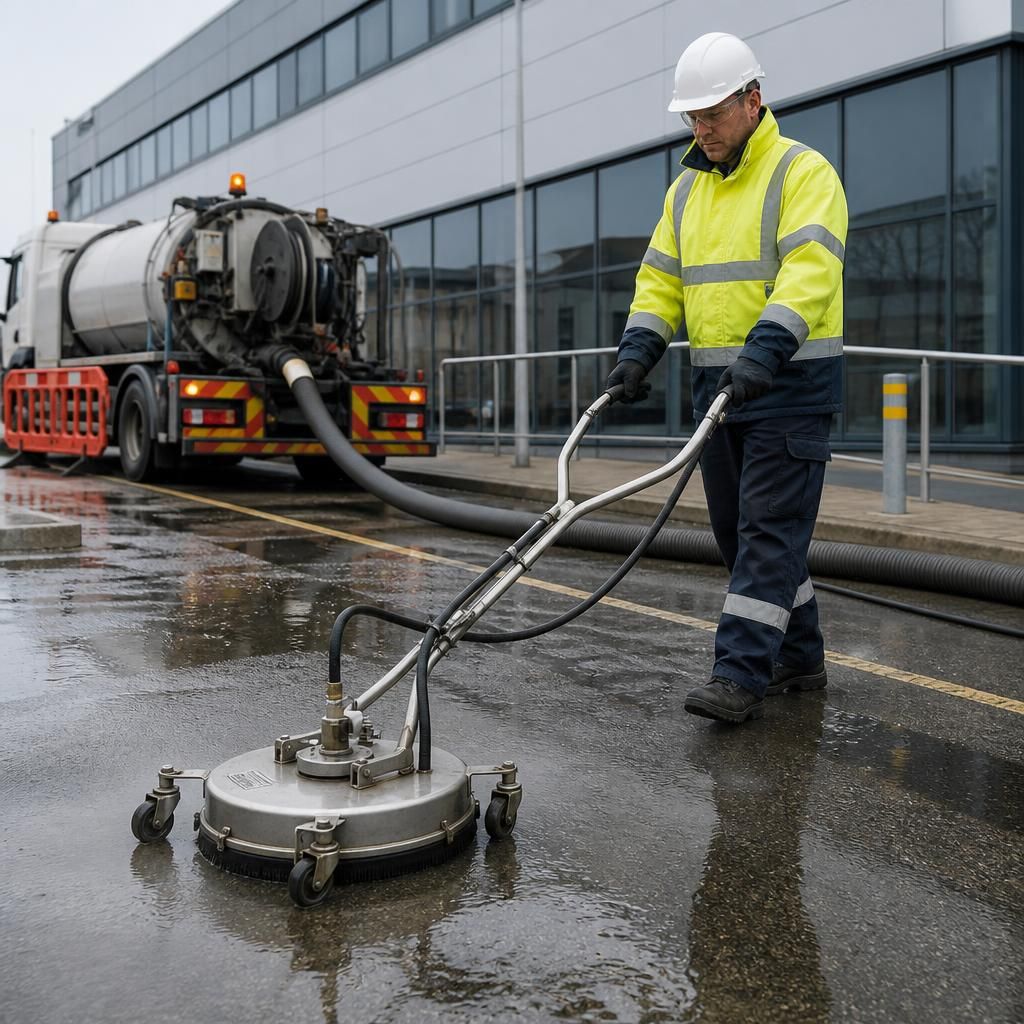
The environmental impact of an industrial pressure cleaning agent depends as much on wastewater control as on the product itself. Even a biodegradable detergent can cause pollution if concentrated residue, oil, metals, silt or other loosened contaminants enter a surface-water drain or nearby watercourse.
Before cleaning begins, the drainage layout should be checked and vulnerable drains protected. Depending on the contamination and site conditions, wash water may need to be recovered with wet vacuums, filtered, passed through an oil separator, treated or removed by an authorised waste contractor. Any proposed discharge to a foul sewer should be agreed with the relevant sewerage provider.
Using the least aggressive effective product, applying it at the correct dilution and capturing the resulting wastewater provides a more reliable environmental safeguard than choosing a product labelled “eco-friendly” without checking its safety and technical data.