
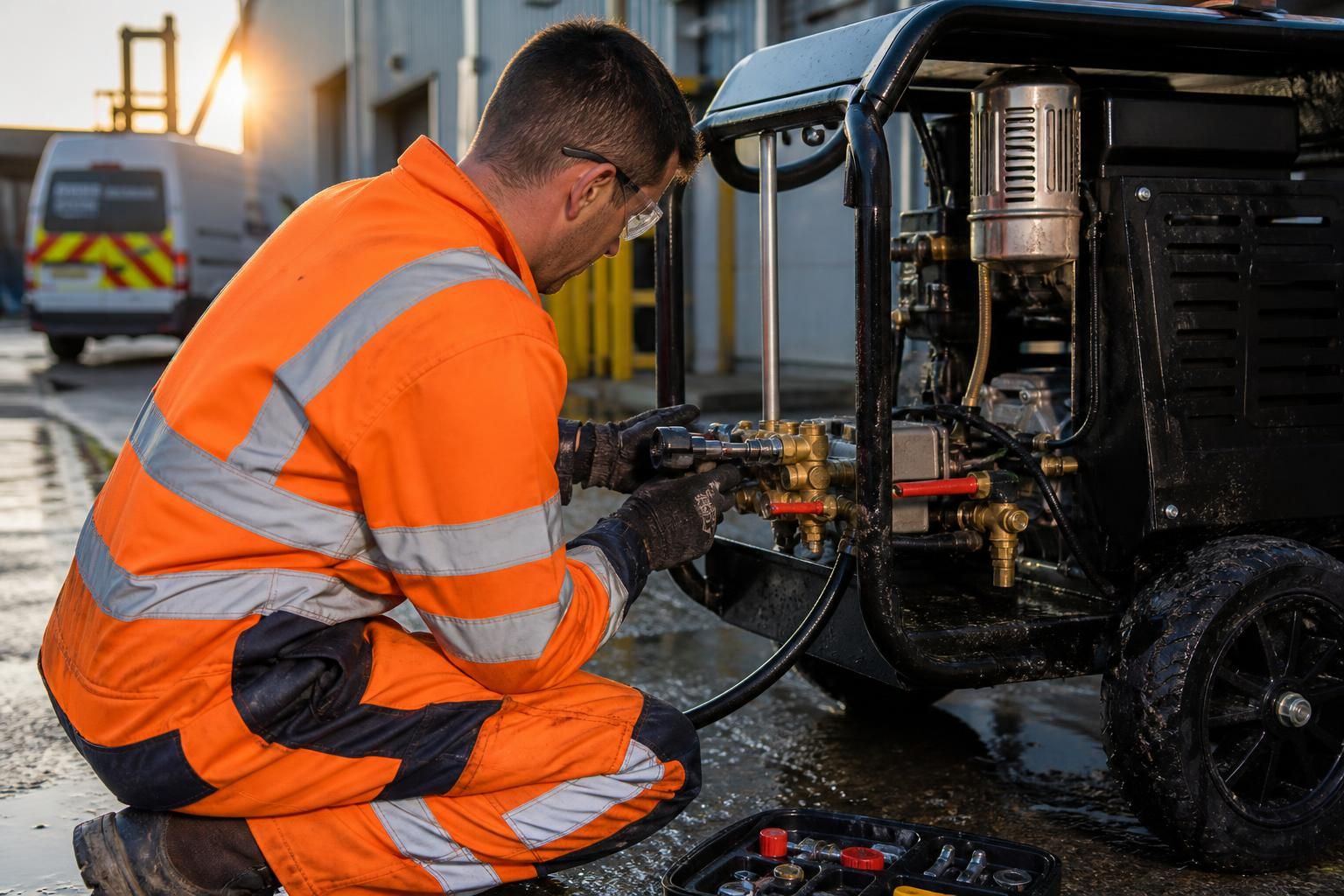
What are the maintenance requirements for industrial pressure cleaning equipment?
Industrial pressure cleaning equipment requires regular inspection, cleaning and servicing to keep pumps, hoses, nozzles, engines, electrical systems and safety controls operating safely and efficiently. Maintenance should follow the manufacturer’s instructions and include prompt replacement of worn or damaged components, with competent servicing for pressure, fuel and electrical systems.
Industrial pressure cleaning equipment requires planned inspection, cleaning, testing and servicing to keep it safe, reliable and efficient. Maintenance should cover the pump, hoses, lance, trigger, nozzles, water supply, heating system, engine or motor, electrical components, detergents and safety controls. The manufacturer’s instructions should be the starting point, supported by a risk-based schedule that reflects how often the equipment is used, the operating pressure, water quality and the conditions on site.
Before any maintenance is carried out, the machine should be switched off, isolated from its power or fuel supply and allowed to cool. The trigger should be operated with the equipment safely isolated to release trapped pressure, and the hose, lance and other components should be disconnected only when pressure has been removed. Suitable personal protective equipment should be worn, particularly where the equipment has been used with cleaning chemicals, contaminated water or hazardous deposits.
Routine checks before and after use
- Inspect high-pressure hoses for cuts, abrasions, bulges, kinks, exposed reinforcement, damaged couplings or signs of chemical deterioration. A hose that has been crushed, stretched or repaired incorrectly should be removed from service.
- Check the trigger gun, lance, safety lock and quick-release couplings for secure operation and visible damage.
- Examine nozzles for blockage, corrosion or wear. A worn nozzle can alter the spray pattern and operating pressure, increasing water consumption and placing additional strain on the pump.
- Check the water inlet, filter and supply hose for leaks, restrictions or contamination. The pump should not be operated without an adequate water supply unless the equipment is specifically designed for that purpose.
- Look for oil, fuel, coolant, detergent or water leaks around the pump, engine, motor, boiler and connections.
- Confirm that guards, covers, emergency stops and warning labels are present and secure.
- After use, flush detergent and dirty water from the system where appropriate, clean the external surfaces and store hoses without tight bends or sharp kinks.
Pump and pressure system maintenance
The pump is one of the most important service items on an industrial pressure washer. Pump oil should be checked for the correct level and condition, then changed at the interval specified by the manufacturer. Milky oil may indicate water contamination, while discolouration, metal particles or a falling oil level can indicate internal wear or a seal problem. These signs require investigation rather than continued operation.
Inlet filters and strainers should be cleaned regularly so that debris does not reach the pump. Seals, valves, plungers, pressure regulators and unloading valves should be inspected during planned servicing. Fluctuating pressure, excessive vibration, unusual noise, overheating or a persistent loss of performance may indicate a blocked filter, worn nozzle, inadequate water supply, damaged seal or pump fault. Pressure adjustments should only be made by a competent person using suitable test equipment; increasing the pressure beyond the machine’s rated limit is unsafe.
Hoses, lances, nozzles and fittings
Pressure accessories are subject to mechanical damage and fatigue, particularly on construction sites and large premises where hoses are dragged across hard surfaces or exposed to vehicles. Hoses should be routed away from traffic, hot surfaces, sharp edges and areas where they can be trapped. Couplings should be kept clean and fully engaged, and incompatible fittings should not be forced together.
Nozzles should be cleaned with the correct tool rather than improvised wire or objects that can enlarge the orifice. Accessories must be rated for the equipment’s pressure, temperature and chemical use. A damaged lance, trigger gun, hose or coupling should be replaced with a suitable rated component, not temporarily secured with tape or an unapproved repair.
Hot-water, fuel and engine systems
Hot-water machines require additional checks. The burner, fuel lines, tank, combustion chamber, thermostat, ignition system and exhaust should be inspected and serviced in accordance with the manufacturer’s requirements. Soot, unusual fumes, poor ignition or unstable temperature control can indicate incomplete combustion or a ventilation problem. Fuel leaks and damaged exhaust components require immediate attention.
For petrol or diesel-driven equipment, check engine oil, filters, cooling systems, belts, battery connections and fuel condition. Fuel should be stored and handled safely, and the engine should be operated only where exhaust gases can disperse safely. For electric machines, inspect plugs, cables, switches, isolators and residual current protection for damage or moisture ingress. Electrical repairs and testing should be completed by a suitably competent person.
Cleaning, storage and winter protection
Cleaning the machine after use prevents detergent residue, silt, oil and corrosive contaminants from damaging components. Do not direct high-pressure water at control panels, electrical connections, bearings or engine air intakes unless the equipment is designed for that method of cleaning. Allow components to dry as required, then store the machine in a secure, ventilated location protected from frost, impact and unauthorised use.
Where temperatures may fall below freezing, the pump, hose and accessories should be drained and protected in line with the manufacturer’s instructions. Water left in the system can freeze, expand and damage seals, valves, manifolds and the pump head. Equipment that has been stored for an extended period should be inspected before being returned to service, rather than started immediately.
Planned servicing and safety testing
Routine operator checks do not replace planned servicing. A competent technician should service the equipment at the manufacturer’s recommended intervals and sooner if it is heavily used, exposed to abrasive water or chemicals, or showing signs of deterioration. Servicing may include pressure and flow checks, oil and filter changes, inspection of seals and valves, burner or engine servicing, electrical safety checks and verification of safety devices.
Maintenance records should identify the machine, the work completed, parts replaced, test results, faults found and the date of the next inspection. This provides a useful history for diagnosing recurring problems and demonstrates that equipment has been managed responsibly. Hoses, electrical components, lifting points and other safety-critical items should be inspected in accordance with applicable manufacturer guidance, workplace procedures and relevant UK requirements.
When equipment should be taken out of service
- There is a leak of water, fuel, oil, detergent or exhaust gas.
- The hose, trigger gun, lance, coupling, plug, cable or guard is damaged.
- Pressure is unstable, unexpectedly high or significantly lower than normal.
- The pump, engine, motor or burner produces abnormal noise, vibration, smoke or heat.
- A safety lock, emergency stop, thermostat or other protective control does not operate correctly.
- The machine has been exposed to impact, frost damage, flooding or contamination that could affect its safe operation.
Defective equipment should be labelled, isolated and repaired or replaced by a competent person. Continuing to use a machine because it still produces a spray can turn a minor defect into a pump failure, hose rupture, electrical incident or uncontrolled discharge. Consistent pre-use checks, proper cleaning after each task, manufacturer-led servicing and accurate records provide the most effective maintenance approach for industrial pressure cleaning equipment.
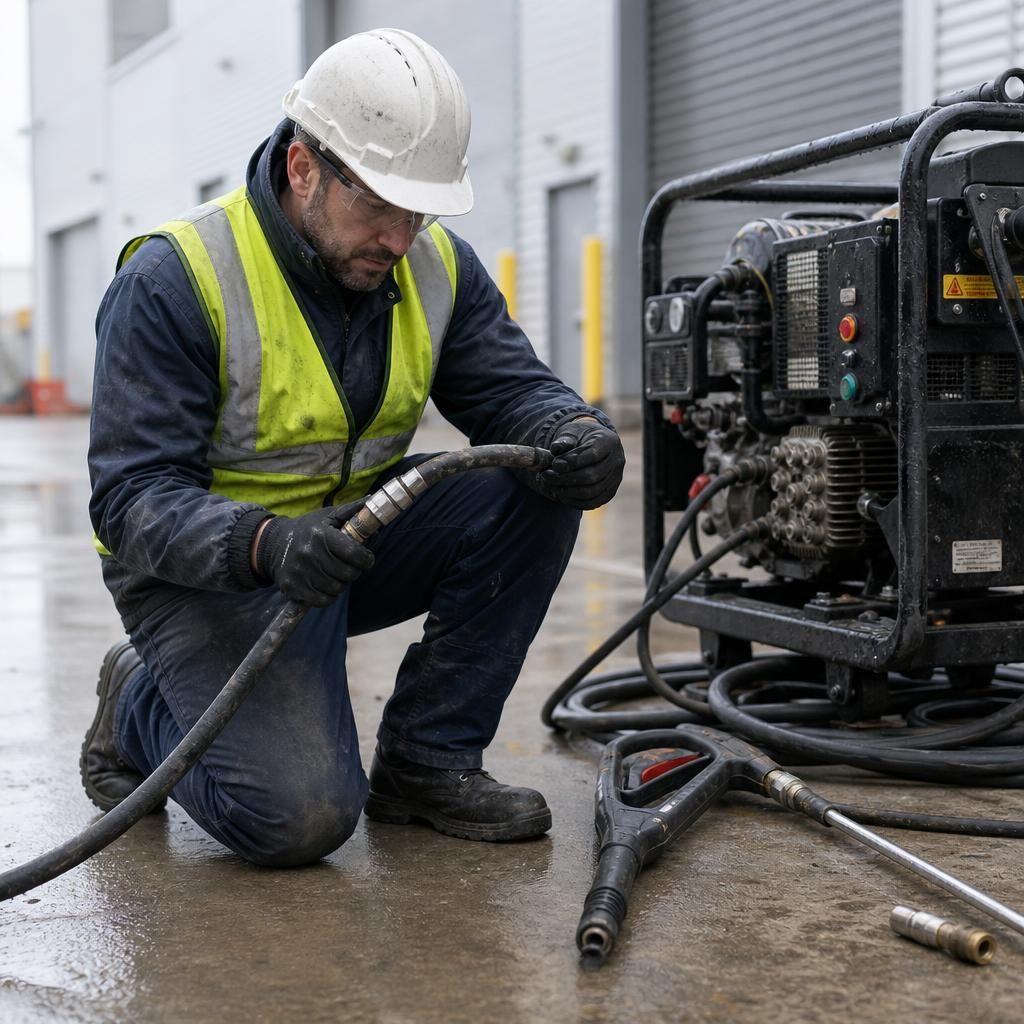
Routine pre-use inspections are a key maintenance requirement for industrial pressure cleaning equipment. Before starting work, check the high-pressure hose, trigger gun, lance, couplings, nozzle, water inlet, cables, guards and emergency controls for damage, leaks or restricted flow.
Do not use equipment with a split hose, loose coupling, damaged electrical cable, unstable pressure or a failed safety control. Isolate and label defective machinery, then arrange repair or replacement by a competent person. After cleaning, flush the system as required, remove residue and store hoses without tight bends to help prevent avoidable damage.
Need help maintaining your industrial pressure cleaning equipment?
Need support with industrial pressure cleaning equipment maintenance or scheduled servicing? Speak to Encanto Exterior Cleaning to discuss your requirements and arrange dependable cleaning support across Birmingham, the West Midlands or the UK.