
What are the key benefits of using industrial pressure cleaning for building maintenance?
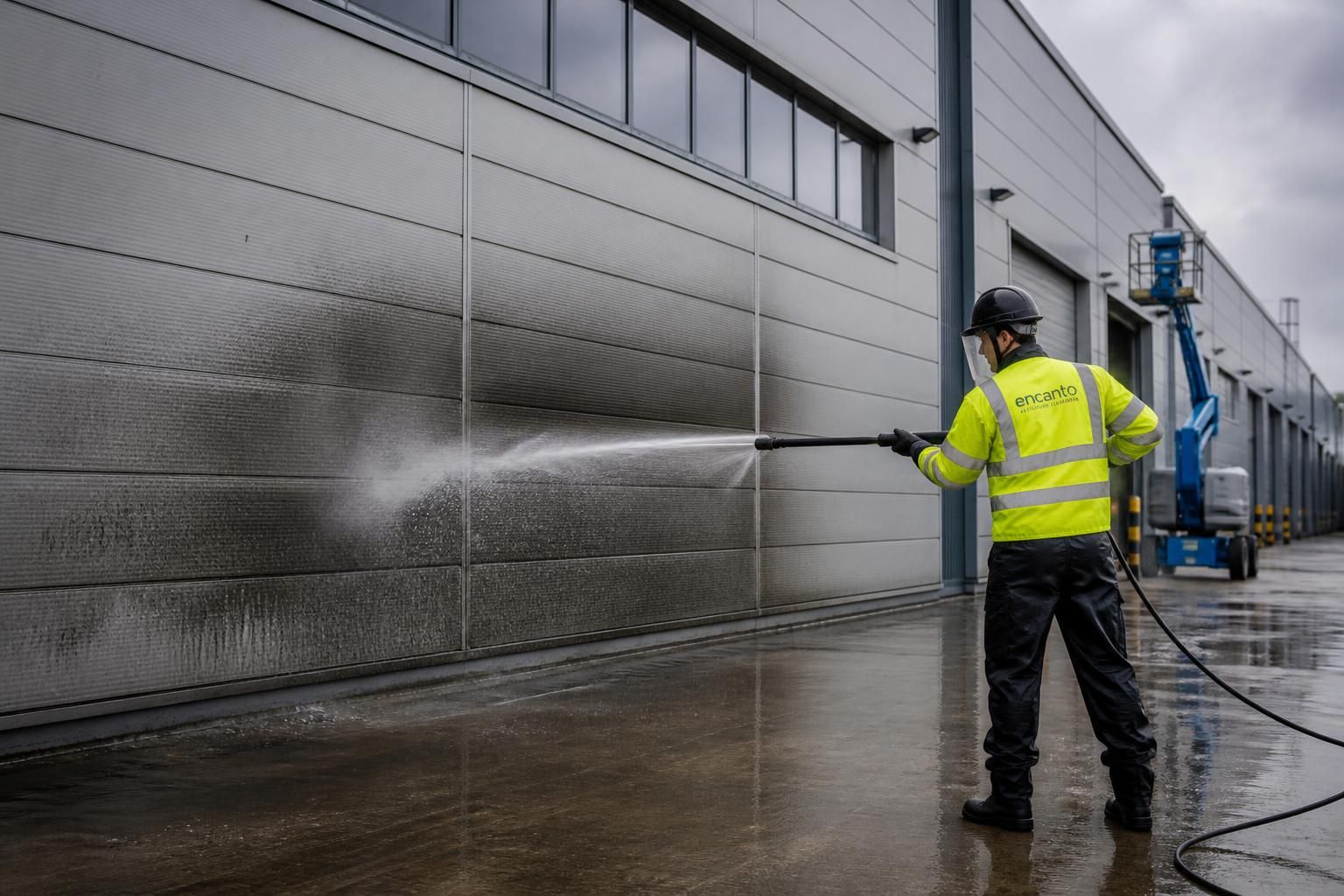
Industrial pressure cleaning removes ingrained dirt, oil, biological growth, pollutants and other contaminants from building exteriors, helping protect surfaces and maintain a safe, professional appearance. Scheduled, correctly specified cleaning can reduce maintenance costs, extend surface life, improve hygiene and safety, and identify defects such as cracked coatings or blocked drainage at an early stage.
Industrial pressure cleaning provides an efficient way to remove ingrained dirt, oil, traffic film, biological growth, pollutants and loose surface deposits from large commercial and industrial buildings. When the pressure, temperature, water volume, cleaning agent and access method are specified for the surface, it supports safer premises, protects building materials, reduces avoidable maintenance costs and preserves a professional appearance.
Key benefits for building maintenance include:
- removing contaminants that can accelerate surface deterioration;
- reducing slip, hygiene and fire-load risks associated with accumulated dirt, oils and organic growth;
- extending the serviceable life of façades, cladding, paving, roofs and other external surfaces;
- improving the appearance and presentation of commercial premises;
- making defects and maintenance issues easier to identify;
- covering large areas efficiently compared with many manual cleaning methods; and
- supporting planned maintenance rather than relying only on reactive repairs.
It helps prevent premature surface deterioration. Dirt, atmospheric pollutants, algae, moss, bird fouling, oils and other deposits can retain moisture against a surface or create conditions that encourage corrosion, staining and biological growth. On masonry, concrete, paving and some cladding systems, regular removal of these contaminants can help limit deterioration and keep protective coatings functioning as intended. Cleaning does not replace repairs or coating renewal, but it can reduce the build-up that contributes to avoidable wear.
The method must be matched to the material. Excessive pressure can damage pointing, coatings, render, timber, sealants and fragile finishes. For this reason, professional industrial cleaning should begin with a survey, identification of the surface and a controlled test area. Low-pressure application, hot water, steam cleaning or a suitable detergent may be more appropriate than maximum-pressure washing.
It improves safety around the property. Oil, grease, algae and moss can make yards, loading areas, walkways, stairs and car parks slippery, particularly when wet. Removing these deposits can improve traction and reduce hazards for employees, visitors, pedestrians and vehicles. Cleaning can also remove accumulated waste from service areas and reduce conditions that attract pests or create unpleasant odours.
Pressure cleaning is a maintenance measure, not a substitute for a formal risk assessment. Drainage, pedestrian control, traffic management, contaminated run-off and temporary changes to access must be considered before work begins. Where oil, chemicals, bird fouling or other hazardous substances are present, the waste water and residues may require controlled collection and disposal.
It protects the appearance and professional presentation of a building. Façades, entrances, signage surrounds, cladding, forecourts and car parks are exposed to weather, traffic pollution and frequent contact. Removing these deposits restores a more uniform finish and helps prevent isolated staining from becoming harder to treat. This is particularly relevant for sites that receive customers, tenants, contractors or members of the public.
Cleaning should be treated as part of the building’s planned external maintenance programme. A clean surface makes later inspections more reliable and allows defects such as cracked render, failed sealant, damaged pointing, loose coatings, blocked drainage and corrosion to be seen more readily. Identifying these issues early can help the facilities team arrange targeted repairs before water ingress or further deterioration develops.
It can reduce whole-life maintenance costs. The immediate cost of cleaning should be considered alongside the potential cost of replacing damaged materials, repainting heavily soiled surfaces or repairing defects that have been concealed by deposits. Planned cleaning may also reduce the need for intensive restoration treatments. The financial benefit depends on the building material, exposure, contamination level, access requirements and the frequency selected, so it should be assessed as part of the wider maintenance plan rather than assumed for every surface.
Industrial pressure cleaning is also efficient for large areas. Specialist equipment can deliver controlled water pressure and flow across façades, paved areas, car parks, roofs and industrial yards, while access equipment allows trained operatives to reach elevated surfaces. This can reduce disruption when the work is properly sequenced around deliveries, working hours, tenants and other site activities. Efficiency still depends on preparation, the condition of the surface and whether additional treatments or repairs are required.
It supports hygiene and environmental control. Removing organic matter, waste residues and accumulated grime can improve the cleanliness of external work areas and service zones. However, responsible cleaning requires more than directing water at a surface. Run-off should be prevented from entering unsuitable drains or watercourses, and cleaning agents should be selected according to the contamination and surface. Where possible, water use should be controlled, residues contained and wastewater handled in accordance with site procedures and applicable requirements.
Hot water or steam can sometimes remove grease and biological contamination with less reliance on aggressive chemicals. That does not make every application automatically environmentally harmless: energy use, water consumption, wastewater, detergents and the nature of the removed contamination all affect the environmental impact. The appropriate approach is the least intensive method that achieves the required result without damaging the substrate.
For building owners and facilities teams, the main practical benefit is better control of external asset condition. A suitable cleaning schedule can be coordinated with inspections, painting, roof maintenance, drainage work and compliance checks. Before arranging the work, consider the surface types, contamination, access, nearby people and vehicles, drainage, weather conditions, required finish and any restrictions on water or chemicals. A competent contractor should explain the proposed method, test sensitive areas where necessary, protect adjacent features and provide clear information about preparation and aftercare.
Industrial pressure cleaning delivers the best maintenance value when it is planned rather than used indiscriminately. Correct method selection protects the building, controlled working practices protect people and the environment, and documented inspections help turn cleaning findings into useful repair and maintenance actions.
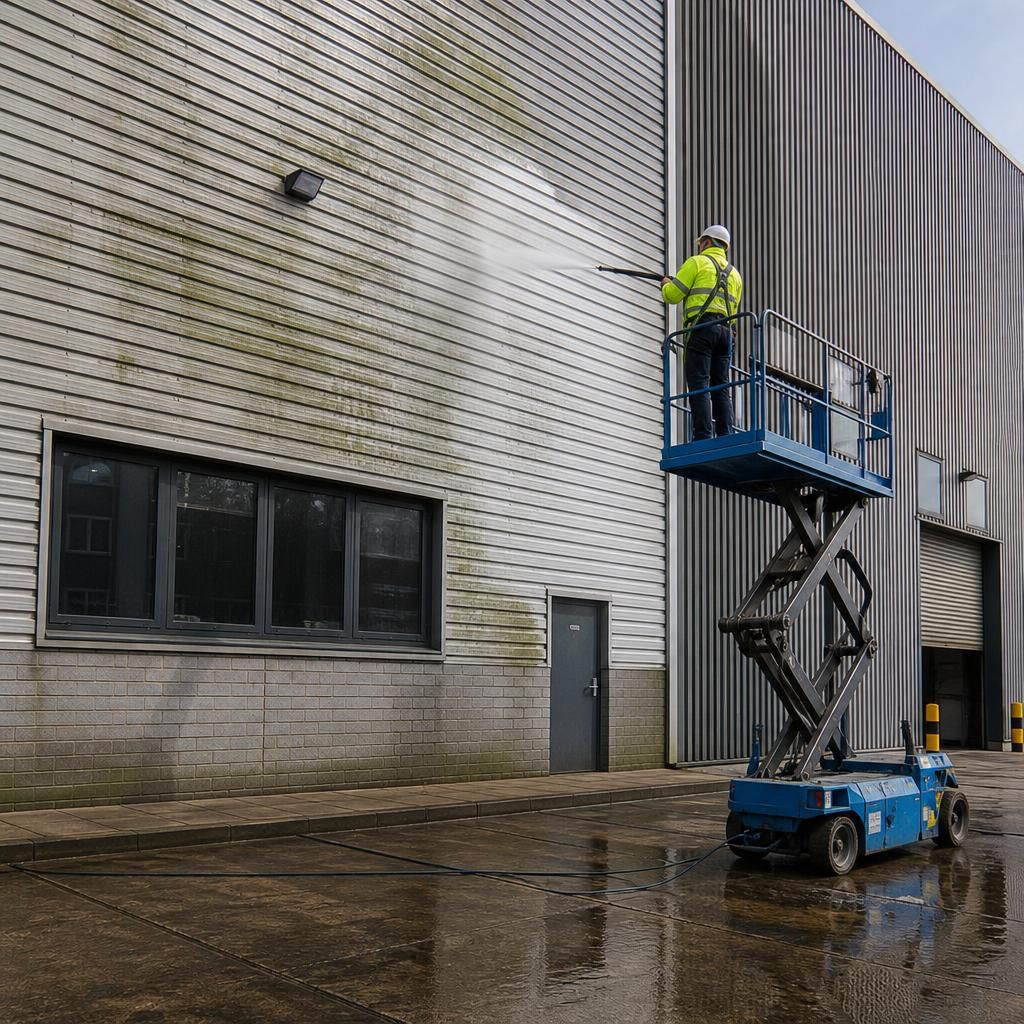
One of the main benefits of industrial pressure cleaning is that it supports planned building maintenance by making surface defects easier to identify. Once dirt, algae, oil, traffic film and other deposits have been removed, facilities teams can inspect façades, cladding, paving, roofs and service areas more accurately.
Cleaning may reveal cracked render, failed sealant, damaged pointing, corrosion, loose coatings or blocked drainage before these issues lead to more extensive deterioration. It does not replace a formal inspection or repair work, but it gives maintenance teams clearer information for prioritising remedial action and coordinating cleaning with wider property maintenance.