
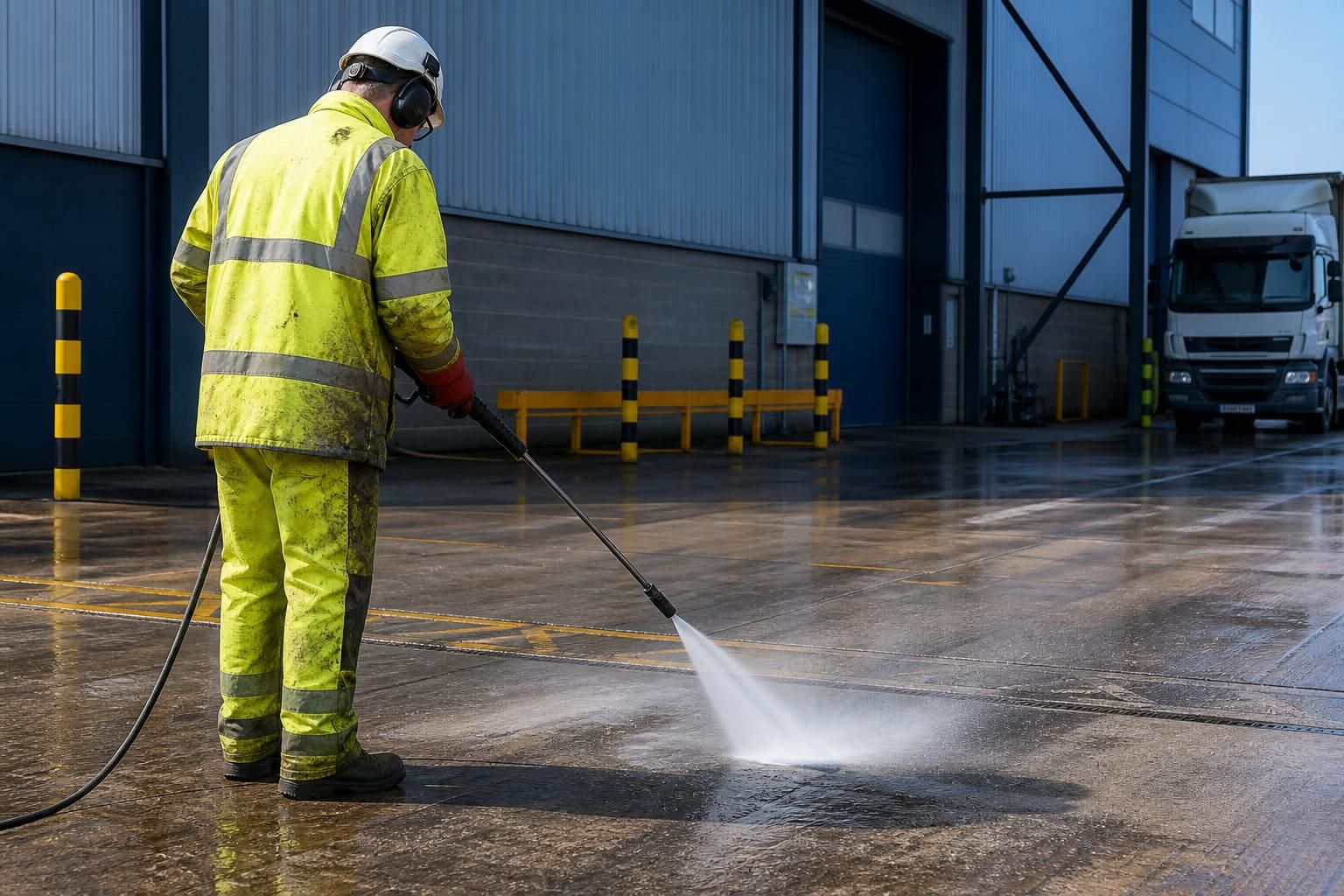
How often should industrial pressure cleaning be scheduled for optimal results?
Industrial pressure cleaning should be scheduled according to the site’s footfall, exposure to weather and pollution, surface type, contamination levels and safety requirements, rather than on a fixed calendar alone. Many facilities benefit from planned seasonal or periodic cleaning supported by routine inspections, with additional pressure cleaning after spills, construction work, severe weather or the build-up of hazardous deposits.
Industrial pressure cleaning should be scheduled according to the condition and use of the site, not by applying one fixed interval to every facility. The most suitable programme considers footfall and vehicle movements, exposure to weather and pollution, the type of surface, the rate at which contamination returns, health and safety risks, operational requirements and any inspection or compliance obligations. Planned cleaning is normally supported by routine inspections, with additional work arranged after spills, construction activity, severe weather or the build-up of hazardous deposits.
A practical starting point is a risk-based cleaning plan. Low-risk areas with limited public access and slow contamination build-up may only require periodic industrial pressure cleaning, provided inspections show that the surfaces remain safe and presentable. Busy commercial premises, transport areas, loading bays, public-facing façades and industrial sites commonly need more frequent attention because traffic, oils, dust, organic growth and atmospheric pollution accumulate quickly. The correct interval should be confirmed through site inspections and adjusted when the condition of the surface changes.
Factors that determine cleaning frequency include:
- Footfall and vehicle movements: Entrances, walkways, car parks, service yards and loading areas collect dirt more rapidly where people, forklifts, delivery vehicles or heavy plant are regularly present.
- Pollution and environmental exposure: Buildings near busy roads, construction activity, manufacturing operations or coastal conditions may develop staining and deposits more quickly than sheltered sites.
- Contamination type: Loose dust may be removed during routine maintenance, whereas oil, grease, algae, bird fouling, chewing gum, cement residue and chemical deposits can require specialist treatment and prompt removal.
- Surface material and condition: Concrete, brick, stone, metal cladding, render, roofing materials and painted surfaces have different cleaning tolerances. The method and frequency must avoid surface erosion, coating damage or water penetration.
- Safety requirements: Slippery organic growth, oil contamination, mud and accumulated debris can create risks for pedestrians, vehicles and employees. Areas presenting a foreseeable hazard should be treated as soon as reasonably practicable rather than left until the next routine visit.
- Appearance and client standards: Retail, hospitality, office and managed property sites may require a regular appearance-led programme, particularly around entrances, signage and other prominent elevations.
- Access and operational constraints: Cleaning may need to be coordinated with working hours, deliveries, tenant access, traffic management, water recovery and equipment requirements.
Typical scheduling patterns can be useful for planning, but they should be treated as guidance rather than a universal rule. High-use areas may need regular inspection and cleaning when contamination reaches an agreed threshold. Building façades and cladding may be cleaned as part of planned annual or seasonal maintenance, while roofs, gutters and external hardstanding can be reviewed before and after periods of severe weather. Low-use areas may be cleaned less often if inspections confirm that there is no material deterioration, safety issue or unacceptable appearance.
Seasonal planning is particularly useful in the UK. Spring cleaning can address winter grime, organic growth and deposits exposed by wet weather. Autumn inspections can identify leaves, moss and blocked drainage routes before heavier rainfall. Cold conditions can make water-based cleaning unsuitable or increase slip and freezing risks, so the programme may need to account for temperature, drying time and safe access. After storms or flooding, surfaces should be assessed for silt, debris, staining and contamination before normal operations resume.
Routine inspections are essential between cleaning visits. A responsible site plan should record the condition of key areas, the type and extent of contamination, any safety concerns, previous treatments, changes in site use and whether the last method achieved the required result. Photographs and simple condition records help identify recurring problems and show whether cleaning intervals should be shortened, extended or combined with other maintenance work.
Pressure cleaning should not be used automatically for every contamination problem. Oil and grease may require an appropriate detergent and controlled recovery of wastewater. Cement, mortar and other construction residues may need specialist removal to prevent etching or permanent staining. Organic growth may return if the underlying moisture or drainage issue is not addressed. Where staining is caused by defective coatings, failed seals, damaged pointing or leaking services, cleaning alone will not resolve the cause. Identifying these conditions helps prevent unnecessary repeat cleaning and protects the substrate.
Additional cleaning should be arranged promptly after specific events. These include fuel or chemical spills, food or waste leaks, graffiti, construction and refurbishment work, flooding, fire-related deposits, heavy sediment accumulation and any incident that leaves a surface slippery or contaminated. Prompt action can reduce staining, prevent contamination from spreading and lower the risk of permanent damage. The relevant safety data and waste-handling requirements should be considered before work begins, particularly where unknown substances may be present.
Cleaning frequency should also be reviewed when the site changes. A new tenant, increased deliveries, building works, altered drainage, expanded parking area or change in production activity can significantly affect contamination levels. Conversely, improved housekeeping, repairs to drainage and better control of vehicle or waste areas may allow the programme to be refined without compromising standards.
To establish an appropriate schedule, review each area by risk and function:
- Map the surfaces and areas requiring cleaning, including façades, cladding, roofs, hardstanding, car parks, yards, walkways and service zones.
- Record the main contamination sources and how quickly deposits return.
- Identify surfaces that could become slippery, degraded or difficult to inspect if cleaning is delayed.
- Check access, drainage, wastewater controls, traffic management and suitable working conditions.
- Set inspection points and cleaning triggers for each area rather than using one interval for the entire site.
- Review the results after each visit and amend the programme where the cleaning method or frequency is not producing a durable outcome.
More frequent cleaning is not always better. Excessive pressure, unsuitable chemicals or unnecessary repeat treatments can wear surfaces, damage coatings, increase water and energy use and create avoidable wastewater. The objective is a controlled maintenance programme that removes contamination before it becomes a safety, appearance or material problem, while using the least aggressive effective method.
For complex industrial premises, the schedule should be documented within the wider planned maintenance and health and safety arrangements. It should identify responsible parties, access requirements, suitable equipment, environmental controls, isolation or traffic-management needs, and the records to be retained. A specialist assessment can then match the cleaning frequency to the actual conditions at the facility and provide a programme that can be revised as usage, weather and surface condition change.
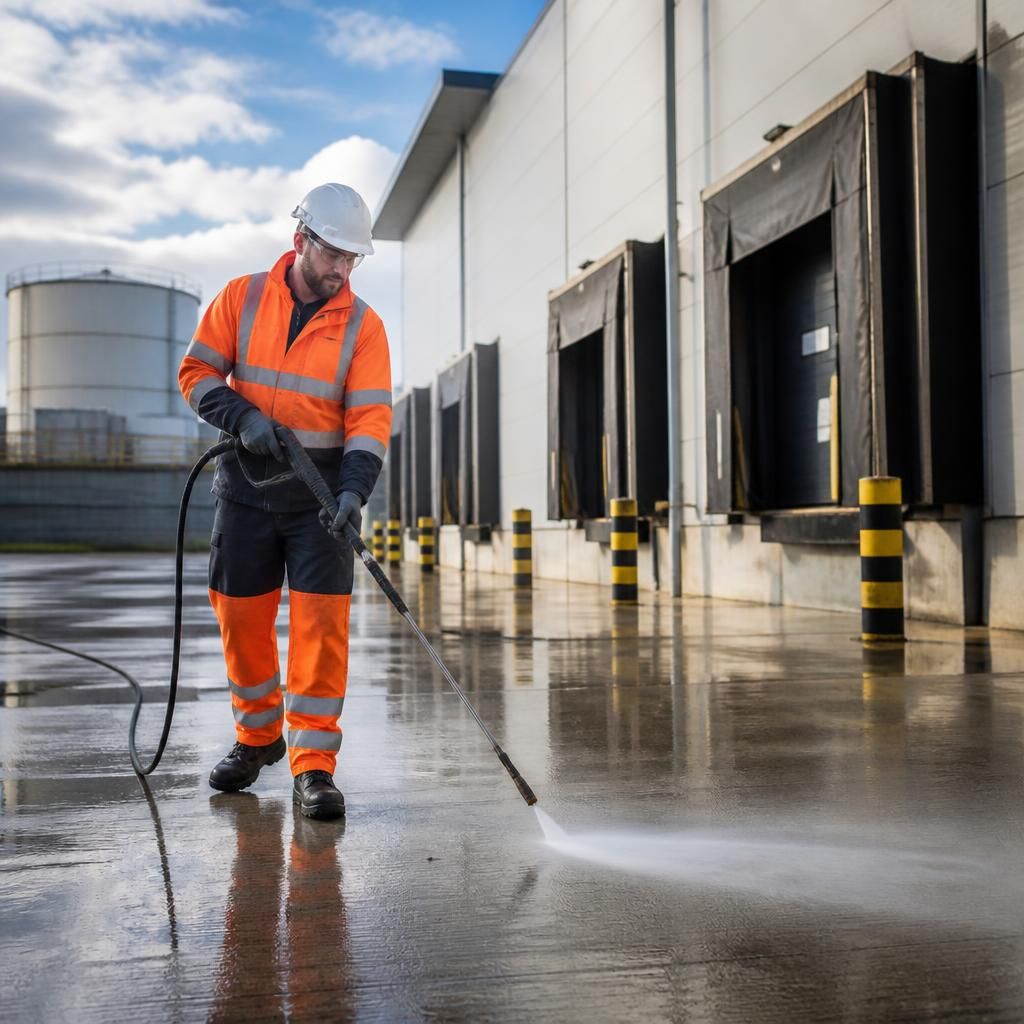
Industrial pressure cleaning should be scheduled using routine inspections and condition-based triggers, rather than relying on a fixed interval alone. Check high-use areas such as entrances, loading bays, walkways, car parks and service yards for oil, organic growth, mud, dust and other deposits that could affect safety, appearance or surface condition.
Record changes in contamination, site usage, drainage and weather exposure after each inspection. Arrange cleaning sooner after spills, construction work, flooding or severe weather, and review the planned frequency when deposits return quickly or the surface remains clean for longer. This approach keeps the programme proportionate while avoiding unnecessary pressure washing, water use and potential surface wear.