
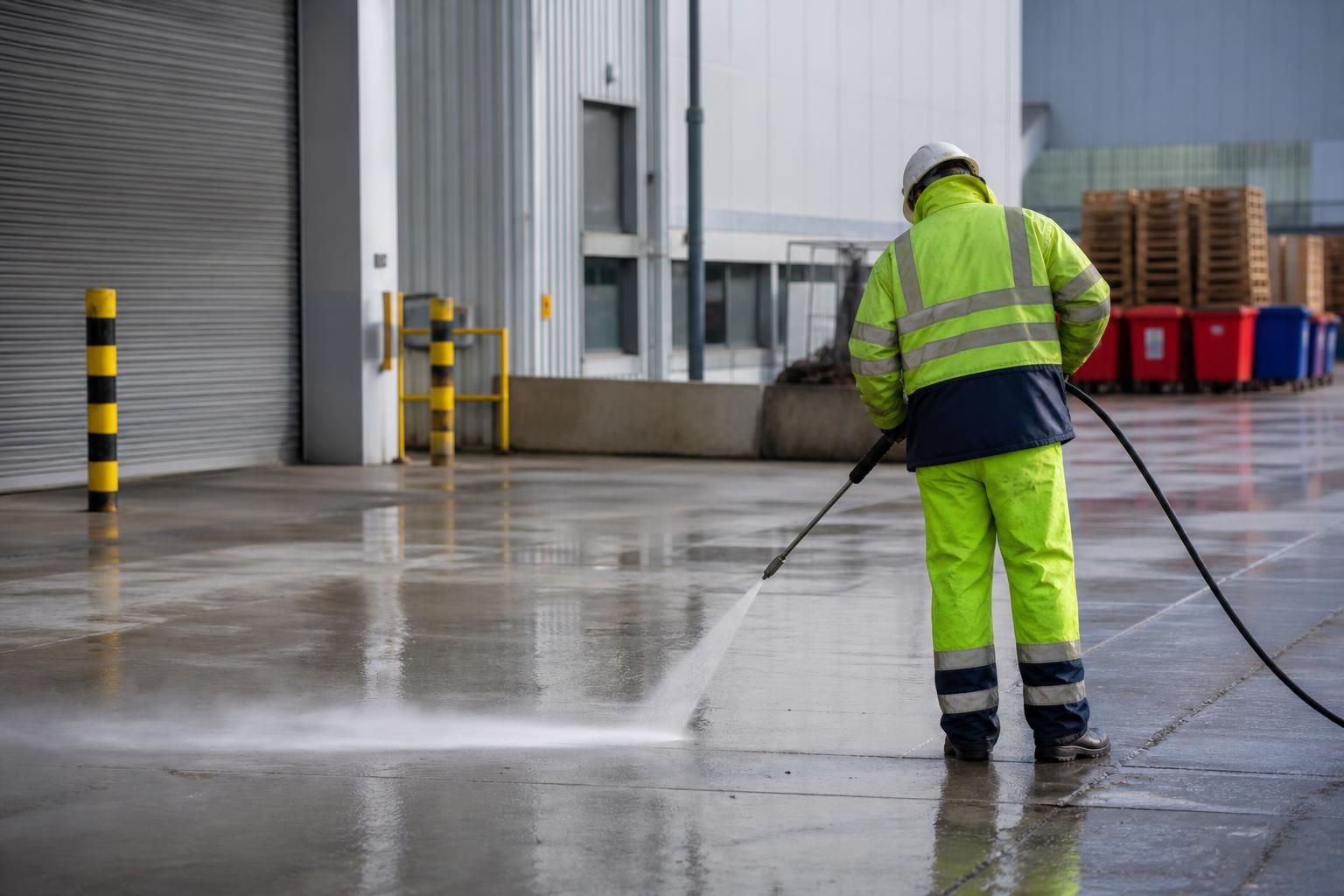
How do I determine the appropriate frequency for industrial pressure cleaning at my facility?
Determine industrial pressure cleaning frequency by assessing footfall and vehicle traffic, the type and severity of contamination, surface materials, site conditions, weather exposure, and health and safety requirements. Use routine inspections to set a practical schedule, with more frequent cleaning for high-use or heavily exposed areas and condition-based cleaning for lower-risk surfaces.
The appropriate frequency for industrial pressure cleaning should be based on the condition and use of each area, rather than a standard calendar interval. Assess footfall, vehicle movements, contamination, surface type, weather exposure, health and safety requirements, and the consequences of allowing deposits to remain. High-use or high-risk areas may need planned cleaning at short intervals, while sheltered, low-traffic surfaces can usually be managed through inspection-led maintenance.
Start with a site and surface assessment. Identify the areas that require cleaning and record the factors that affect how quickly they become soiled. A facility may need different frequencies for entrances, loading bays, car parks, cladding, roofs, service yards and plant areas. Treating the whole site as though it has the same cleaning requirement can lead to unnecessary work in some locations and inadequate control in others.
- Footfall: Entrances, pedestrian routes, stairs and shared access areas collect soil, grit, food residue and general debris more quickly than restricted areas.
- Vehicle traffic: Loading bays, delivery routes and parking areas are exposed to tyre marks, oil, hydraulic fluid, mud and contaminated water. Turning points and vehicle standing areas often require particular attention.
- Contamination: Establish whether the main issue is loose dirt, organic growth, grease, oil, atmospheric soiling, cement residue, rust staining, algae, moss or graffiti. Different deposits build up at different rates and may require different cleaning methods.
- Surface material: Concrete, brick, natural stone, metal cladding, painted finishes, render and roofing materials have different tolerances and cleaning requirements. A surface should not be cleaned more aggressively or more often than necessary.
- Exposure: Shaded, damp or north-facing areas generally retain moisture and organic growth for longer. Sheltered elevations may accumulate atmospheric deposits, while exposed areas may receive more windblown dirt and rainwater staining.
- Operational risk: Consider whether contamination creates a slip, trip, hygiene, fire, drainage or equipment risk, or affects the presentation of a customer-facing site.
Use risk to set priorities. The most suitable schedule is usually based on the consequence of contamination as well as its appearance. A visible stain on a low-use wall may be a cosmetic issue, whereas grease in a pedestrian route or algae on an access surface may create an immediate safety concern. Give priority to areas where deposits could affect people, vehicles, production, drainage or compliance with site procedures.
For industrial and commercial premises, it is useful to divide surfaces into three broad categories:
- High-priority areas: Frequently used entrances, walkways, ramps, loading zones, waste areas and surfaces exposed to oil or other slippery substances. These should be inspected regularly and cleaned promptly when contamination appears.
- Routine-maintenance areas: External walls, cladding, paved yards, car parks and other surfaces that gradually collect dirt or atmospheric deposits. These can normally be managed through planned cleaning supported by condition checks.
- Low-priority or condition-led areas: Sheltered elevations, infrequently accessed surfaces and areas where soiling is slow and has little operational consequence. Inspection can determine when cleaning is justified.
Combine planned cleaning with inspections. A fixed programme provides predictability, but inspections prevent the schedule from becoming disconnected from actual site conditions. During inspections, look for darkening or staining, organic growth, slippery deposits, blocked drainage, failing coatings, loose surface material, graffiti and changes in the appearance or texture of the substrate. Record the location, likely cause and severity of each issue so that future cleaning can be planned more accurately.
Where a facility has existing maintenance records, use them to identify patterns. Compare cleaning dates with weather conditions, operational changes, construction activity, traffic levels and the appearance of contamination after previous work. If an area becomes soiled soon after cleaning, the cause may be a drainage defect, leaking vehicle, failed seal, nearby construction, ineffective detergent selection or a source of recurring contamination. Correcting that cause may be more effective than simply increasing the cleaning frequency.
Allow for seasonal and operational changes. Wet weather can encourage algae and moss, while winter conditions may bring mud, road residue and increased debris. Dry periods can leave dust and fine particles on façades and hardstanding. Construction, refurbishment, changes in delivery patterns, increased occupancy or a new waste-handling arrangement can also alter the amount and type of contamination. Review the schedule when the way a site is used changes rather than waiting for the next routine review.
Do not confuse frequent cleaning with effective cleaning. Excessive pressure, unsuitable chemicals or repeated cleaning of a vulnerable finish can cause surface wear, remove coatings, drive water into joints or increase the risk of staining. The correct approach is to select the least aggressive method that safely removes the contamination, including pressure washing, steam cleaning, soft washing or manual treatment where appropriate. The cleaning frequency should support the condition and service life of the surface, not undermine it.
Before setting a recurring programme, confirm the surface condition and carry out a suitable test clean where the material or coating is sensitive. The method should account for pressure, temperature, flow, dwell time, nozzle selection, chemical compatibility, water recovery and disposal requirements. A specialist contractor can help distinguish between deposits that need immediate removal and weathering that can be monitored.
Plan around site operations. Cleaning may need to take place outside production, delivery or public access periods. Allow time for equipment setup, exclusion zones, drying and any inspection required before an area is reopened. On sites where runoff could enter drains or contact sensitive ground, include containment, recovery and disposal arrangements in the plan. A less frequent but well-coordinated clean is not suitable if it leaves a high-risk area contaminated for too long.
A practical schedule should state the areas covered, the cleaning method, inspection responsibilities, access arrangements, expected condition standard and the circumstances that trigger an additional visit. It should also identify who reports new contamination and how urgent issues are escalated. This creates a maintenance system that can be audited and adjusted rather than relying on visual impressions or an arbitrary annual appointment.
In most facilities, the best result comes from a combination of regular inspections, planned periodic cleaning and responsive treatment of spills, graffiti, organic growth or other developing hazards. Review the frequency after each major clean and whenever site conditions change. If contamination is returning quickly, investigate its source and reassess the method, not just the interval. This condition-based approach keeps surfaces safe and presentable while avoiding unnecessary cleaning and associated cost, disruption and environmental impact.
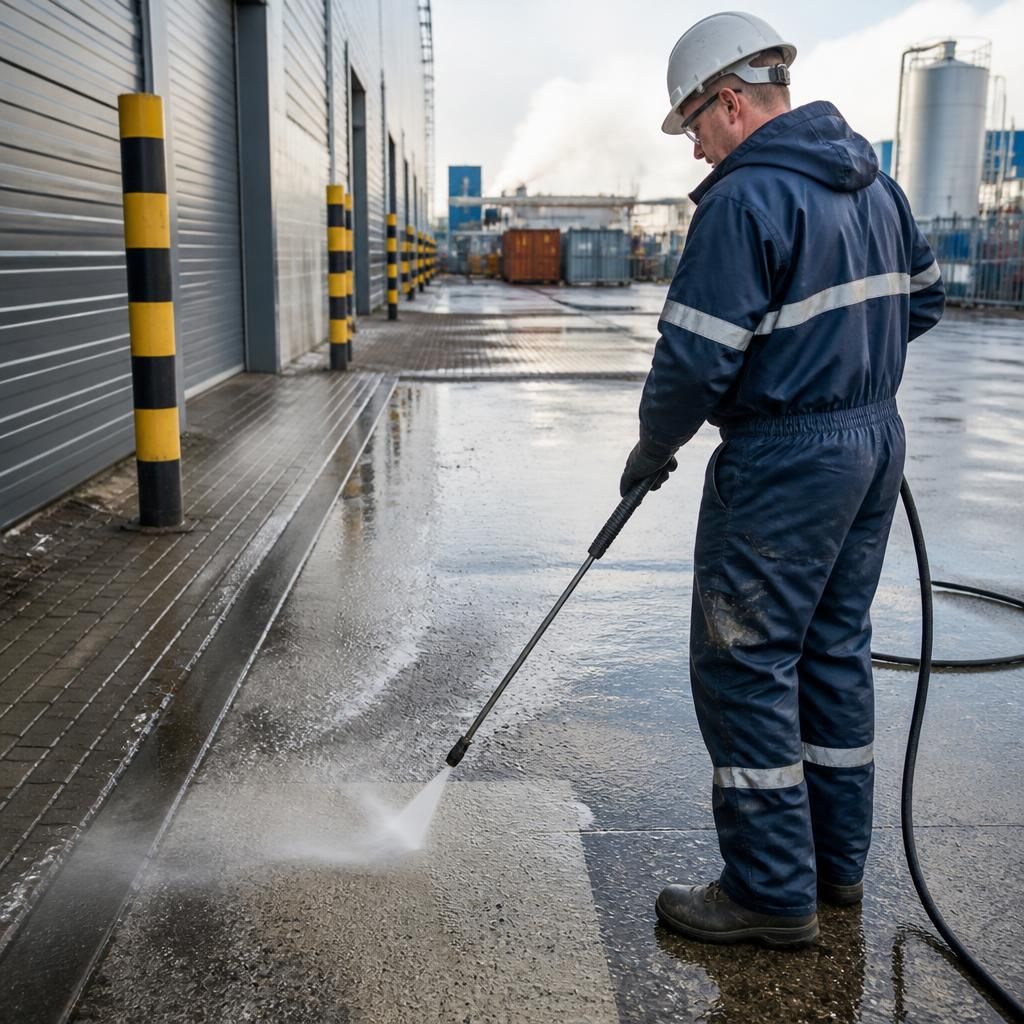
Industrial pressure cleaning frequency should be set by the condition and risk of each area, not by applying one fixed interval across the whole facility. High-use surfaces, loading bays and areas exposed to oil, algae or heavy traffic usually need more frequent inspections and prompt cleaning, while sheltered, low-traffic surfaces can often be managed through condition-led maintenance.
Record recurring contamination during inspections and look for its cause. Mud may indicate poor drainage, while repeated oil deposits could point to leaking vehicles or plant. Correcting the source can reduce cleaning requirements more effectively than simply increasing the frequency. Review the programme after changes to traffic, production, construction work or seasonal conditions.