
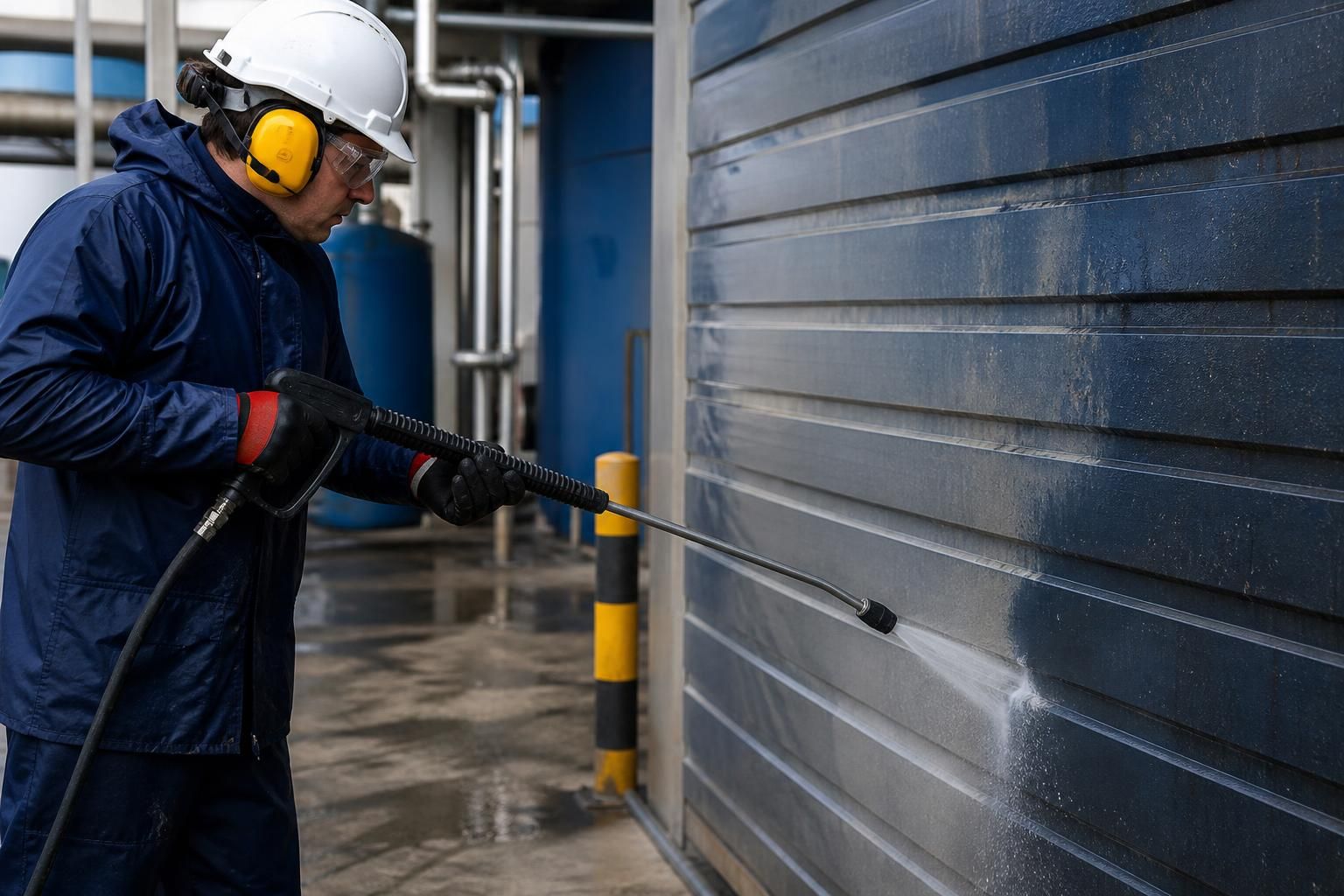
How can I assess the environmental impact and sustainability of industrial pressure cleaning services?
Assess the sustainability of industrial pressure cleaning by reviewing water consumption, energy use, cleaning chemicals, wastewater and waste handling, as well as the contractor’s controls for preventing polluted runoff. A responsible provider should explain its methods, use water and chemicals efficiently, recover or contain wastewater where required, and provide evidence of safe disposal and suitable environmental procedures.
Assess the sustainability of industrial pressure cleaning by examining the complete service, not just the pressure washer. The main factors are water consumption, energy use, cleaning chemicals, wastewater and sludge management, waste handling, pollution prevention, equipment maintenance and the contractor’s environmental controls. A responsible assessment should consider both the environmental impact of the cleaning method and whether the work is being planned efficiently for the condition, surface and site.
Start by defining the scope of the work. Ask the contractor to explain which areas will be cleaned, the expected level of cleanliness, the equipment and access methods required, and how the cleaning programme will avoid unnecessary repeat visits. Cleaning only the surfaces and frequency required for safe, compliant and presentable premises is generally more sustainable than applying an identical method across every area. A site survey should identify sensitive surfaces, nearby watercourses, drainage arrangements, oil contamination, traffic routes and any areas where runoff could cause pollution.
Review water use and recovery. Pressure cleaning can use water more efficiently than an unrestricted hose, particularly where the equipment has suitable flow controls and operators use the correct nozzle and pressure for the surface. However, water efficiency depends on the whole process. Ask whether the contractor:
- Uses equipment with controlled flow and avoids leaving water running when cleaning is paused;
- Selects pressure, temperature and nozzle settings appropriate to the soil and surface;
- Uses dry removal or mechanical preparation where this can safely reduce washing;
- Collects, recovers or contains wastewater where the site conditions require it;
- Can record water consumption or provide a reasonable method for comparing usage between visits; and
- Sources water lawfully and avoids drawing from supplies or locations that have not been approved for the purpose.
Water consumption should not be assessed in isolation. A lower water volume is not automatically more sustainable if it requires aggressive chemicals, excessive heating or creates contaminated runoff. The most suitable method is the one that achieves the required result while minimising the combined impact of water, energy, chemicals and waste.
Examine energy use and emissions. Ask what powers the cleaning equipment and how the contractor limits unnecessary fuel or electricity use. Relevant considerations include the use of efficient pumps, avoiding excessive engine idling, maintaining burners and hoses, selecting cold-water cleaning where it is effective, and using lower-emission or electric equipment where site conditions allow. Hot-water cleaning can improve results on oils, grease and some biological deposits, but heating water uses additional energy. The contractor should therefore be able to explain why heated water is needed rather than using it as the default setting.
Access equipment also forms part of the environmental assessment. Poor planning can result in repeated repositioning, additional vehicle movements and extended engine use. Suitable access planning, consolidated visits, well-maintained equipment and realistic working areas can reduce these impacts without compromising safety.
Check how cleaning chemicals are selected and controlled. The environmental profile of a chemical depends on its formulation, concentration, quantity, application method and destination after use. Do not rely solely on descriptions such as “eco-friendly” or “biodegradable”. Request the product name, safety data sheet and information about dilution, surface compatibility, aquatic toxicity, biodegradability and disposal requirements where relevant.
A responsible process should use the least hazardous product that will achieve the required result, apply it at the correct dilution and prevent overspray or unnecessary application. Chemical selection must also account for the surface being cleaned. A product that is suitable for one façade, roof or hard-standing may damage another material or create a more difficult waste stream. Chemicals should be stored securely, labelled correctly and handled in line with the relevant control measures.
Give particular attention to wastewater and polluted runoff. Used water may contain detergents, oils, metals, paint particles, biological material, silt or other contaminants removed from the surface. It should not be allowed to enter surface-water drains, watercourses or ground unless the discharge is permitted and suitable. Surface-water drainage commonly leads to the environment rather than a treatment works, so directing contaminated wash water into a drain can create a pollution risk even when the water appears clear.
Before work begins, establish which drains are foul, surface-water or combined, and identify the approved disposal route. Depending on the site and contaminants, controls may include drain covers, bunding, booms, temporary containment, wet vacuums, filtration, settlement, collection tanks or licensed wastewater removal. Where a discharge is proposed, the contractor should confirm that it is permitted by the relevant site owner, sewerage undertaker or environmental regulator. Evidence may include a documented method statement, discharge approval, waste transfer documentation or records from an authorised disposal provider.
For industrial sites, wastewater arrangements should be agreed before cleaning starts. If testing, treatment or specialist disposal is needed, this should be included in the quotation and method statement rather than treated as an unexpected extra. The contractor should also have a clear response procedure for spills, damaged containment or accidental entry into a drain.
Assess solid waste and contaminated materials. Pressure cleaning can produce sludge, silt, paint flakes, moss, oil residues, disposable filters, empty containers and contaminated absorbents. Ask how these materials will be collected, stored, classified and removed. Waste should be kept separate where this reduces contamination, stored so it cannot wash into drainage, and transferred using the appropriate documentation. A contractor should be able to identify whether waste is non-hazardous or hazardous rather than making an unsupported assumption based on its appearance.
Where coatings, lead-based paint, heavy metals, oils or other hazardous substances may be present, the cleaning plan may require additional surveys, containment and specialist waste controls. Abrasive or high-pressure removal of coatings can spread particles beyond the immediate work area, so the method should address dust, overspray and collection before work begins.
Review the contractor’s environmental management arrangements. Useful evidence is more reliable than general claims. Request relevant documents such as:
- A site-specific method statement and environmental risk assessment;
- Details of water, chemical and wastewater controls;
- Safety data sheets and chemical usage records where appropriate;
- Waste transfer notes or other disposal records;
- Pollution prevention and spill response procedures;
- Equipment inspection and maintenance records;
- Training or competency records for operators handling chemicals, wastewater or access equipment; and
- Any environmental policy, certification or internal audit information that is relevant to the service.
Formal certification can support an assessment, but it should not replace site-specific questions. The important issue is whether the contractor’s stated procedures are actually applied by the operatives carrying out the work. During site visits, look for labelled containers, protected drains, controlled hoses, suitable spill equipment, orderly waste storage and operators who understand the agreed environmental controls.
Compare the proposed method with realistic alternatives. Ask whether steam cleaning, soft washing, mechanical cleaning, low-pressure washing, dry cleaning or a combination of methods could achieve the required outcome with less water, energy or chemical use. The correct comparison must include surface risk, worker safety, access requirements, wastewater production, durability of the result and the likelihood of repeat treatment. A method that appears low-impact at the equipment stage may be less sustainable if it causes surface damage, shortens the life of a coating or requires frequent re-cleaning.
Also consider the environmental impact of the underlying maintenance decision. Prompt removal of corrosive deposits, oil, algae or aggressive biological growth can help protect façades, roofs, paving and industrial structures from deterioration. Extending the serviceable life of existing materials may avoid more resource-intensive repair or replacement. This benefit should be considered alongside, rather than used to excuse, poor control of water, chemicals or waste.
Use practical questions when comparing quotations. A sustainable quotation should state what is included in the price, including water use, chemical application, wastewater recovery, transport, access equipment and waste disposal. Ask the contractor to identify any assumptions about drainage, contamination or permits and to explain what would happen if conditions differ from the initial survey. Beware of proposals that promise an environmental result without describing the controls used to achieve it.
For ongoing contracts, agree the records that will be supplied after each visit. These might include areas cleaned, chemicals used, incidents or near misses, wastewater arrangements, waste removed and any changes needed for the next service. Reviewing these records helps identify avoidable water use, repeated cleaning, equipment faults and recurring pollution risks. It also provides an auditable basis for environmental reporting and contractor review.
In practice, the strongest assessment combines a documented site survey, a suitable low-impact cleaning method, controlled water and chemical use, lawful wastewater and waste disposal, competent operatives and records that demonstrate what happened on site. Encanto Exterior Cleaning can help establish these requirements during planning for commercial and industrial work across Birmingham, the West Midlands and the UK, particularly where façades, cladding, roofs, car parks or contaminated hard surfaces require careful runoff and access controls.
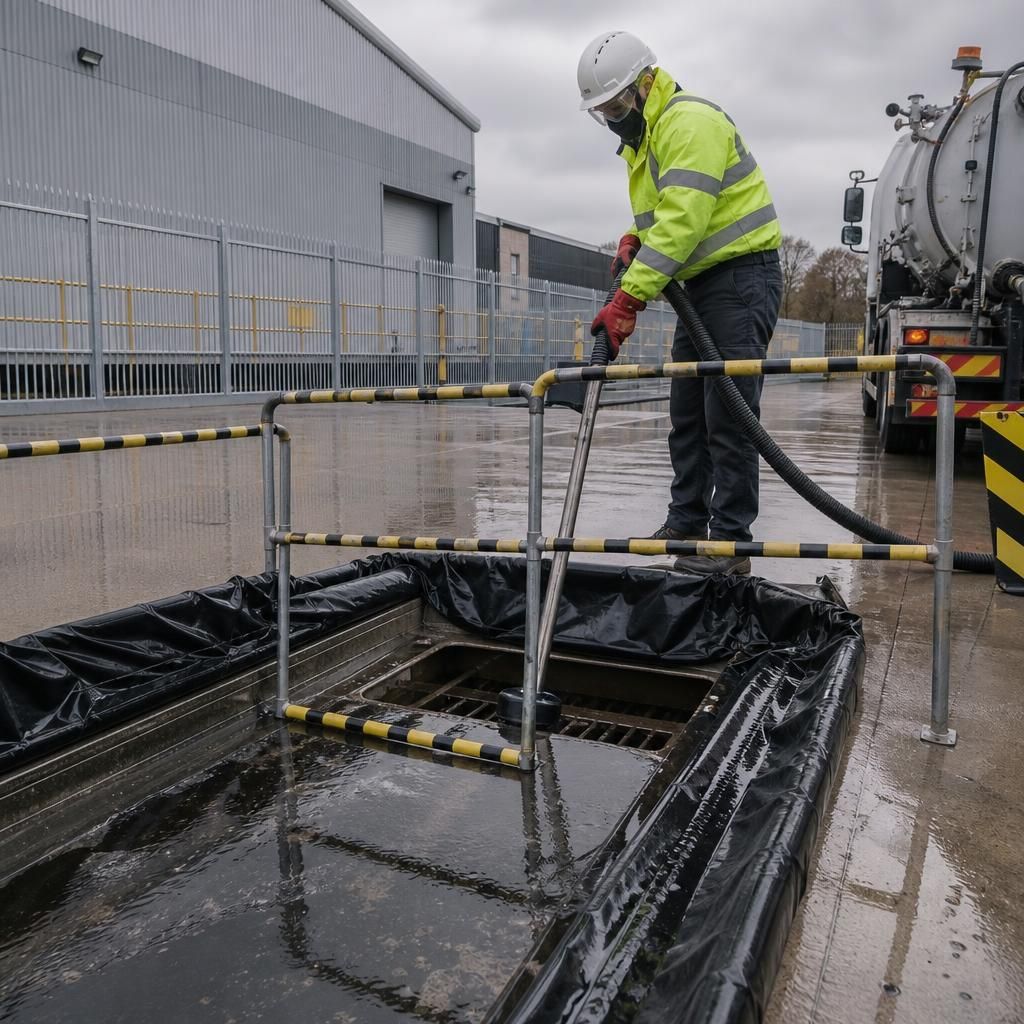
Wastewater control is one of the clearest ways to assess the sustainability of industrial pressure cleaning. Wash water can contain oil, detergents, silt, paint particles and other contaminants, so it should not be allowed to enter surface-water drains, watercourses or ground without suitable approval.
Before work starts, the contractor should identify drainage routes and explain how runoff will be prevented, collected, filtered or removed. Depending on the site, this may involve drain covers, bunding, wet vacuums, settlement tanks or licensed wastewater disposal. A site-specific method statement and disposal records provide useful evidence that the agreed controls were followed.