
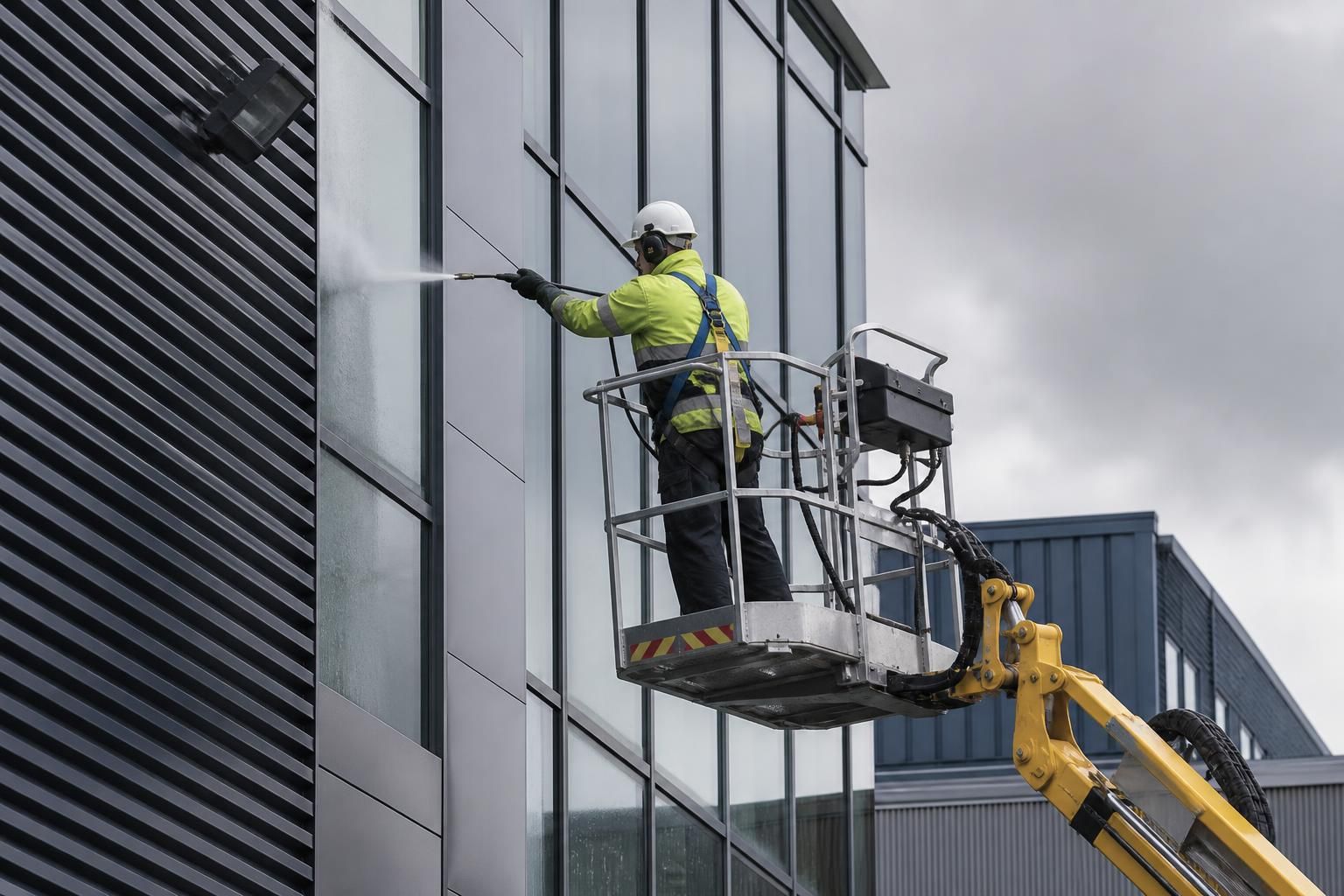
How do you ensure that your pressure cleaning services adhere to health and safety regulations, particularly when working at heights or in challenging environments?
We ensure our pressure cleaning services comply with UK health and safety requirements through documented risk assessments, method statements, trained operators, inspected equipment and appropriate PPE. For work at height or in challenging environments, we select suitable access equipment, establish exclusion zones, control water, electrical and chemical hazards, and monitor the work throughout.
Our pressure cleaning services are managed through documented risk assessments, method statements, competent operatives, inspected equipment and active site supervision. For work at height or in challenging environments, we plan the access method, control the pressure-washing hazards and review conditions throughout the job so that cleaning is carried out in line with applicable UK health and safety requirements.
Before work starts, we assess the building, surfaces, contaminants, access routes, surrounding activities and likely environmental conditions. The assessment considers hazards including falls, falling objects, vehicle movements, unstable surfaces, fragile roofs, overhead services, electrical equipment, contaminated run-off, chemicals, noise, high-pressure water and restricted access. The findings are recorded in a site-specific risk assessment and method statement, which sets out the cleaning sequence, controls, equipment and emergency arrangements.
Our planning reflects the requirements of relevant UK legislation and guidance, including the Health and Safety at Work etc. Act, the Work at Height Regulations, the Provision and Use of Work Equipment Regulations, and the Control of Substances Hazardous to Health Regulations where chemicals or hazardous contaminants are involved. Where lifting equipment is used, applicable inspection requirements are also considered. The exact controls depend on the site and the proposed cleaning method rather than being applied as a standard checklist.
Work-at-height controls
- We avoid working at height where a suitable ground-level method, such as telescopic equipment or controlled low-level cleaning, can achieve the required result.
- Where height access is necessary, we select suitable equipment such as access platforms, towers, scaffold systems or other professionally managed solutions according to the height, reach, surface, duration and site conditions.
- Access equipment is checked before use, positioned on suitable ground and used only by people who are trained and authorised for that equipment. Required inspections and pre-use checks are recorded or verified.
- Harnesses, lanyards and other fall-protection equipment are used where the risk assessment requires them, with suitable anchor arrangements and a rescue plan. A harness is not a substitute for properly planned access or edge protection.
- Tools, hoses and accessories are managed to prevent objects falling onto people below. Exclusion zones, barriers and warning signs are established beneath or around the work area.
- We do not proceed when wind, rain, ice, poor visibility or other conditions make the access system, surface or cleaning operation unsafe. Equipment is repositioned rather than overreached.
For fragile roofs, canopies, ledges and older structures, we do not assume that a surface will support personnel or equipment. The method may involve remote cleaning, a platform positioned away from the fragile area, specialist access or advice from the responsible building professional. Rooflights, weak coverings and unprotected edges are treated as specific hazards.
Pressure-washing and equipment safety
High-pressure water can cause serious injury, damage surfaces and propel debris. Operators are trained to maintain control of the lance, hose and trigger, keep people clear of the spray path, and use pressure, flow, nozzles and distance appropriate to the material. Equipment is checked for damaged hoses, fittings, guards, electrical leads and safety controls before use. Defective equipment is removed from service.
Hoses are routed to reduce trip hazards, snagging and damage from vehicles or sharp edges. Connections are secured, and the operator maintains a stable working position. Where powered equipment is used near water, electrical risks are controlled through suitable equipment, cable protection, isolation and residual-current protection where appropriate. We also consider the location of sockets, lighting, building services and temporary supplies before cleaning begins.
Controlling people, vehicles and property
We agree the work area and access arrangements with the client before starting. Pedestrian routes, entrances, loading areas and traffic movements are separated from the cleaning operation wherever practicable. Barriers and a supervised exclusion zone prevent unauthorised access, while signage explains the hazard and any temporary changes to normal routes.
Windows, vents, doors, cameras, alarms, sensitive finishes and other vulnerable features are identified and protected. We use controlled application and rinsing methods to prevent water entering the building or reaching areas that must remain dry. Work may be phased around deliveries, occupants or other contractors where simultaneous activity would increase risk.
Chemicals, contaminants and run-off
Where detergents, biocides, degreasers or graffiti-removal products are needed, we select the least hazardous effective option and follow the product safety data and manufacturer’s instructions. COSHH controls cover storage, dilution, handling, exposure, ventilation, spill response and disposal. Operatives use the PPE specified by the assessment, which may include gloves, eye or face protection, protective clothing and respiratory protection where required.
Oil, fuel, biological growth, bird fouling, lead-based coatings and other contaminants can create additional risks. The cleaning method and waste controls are adjusted to the substance, and contaminated material is not allowed to enter surface-water drains or watercourses. We use drain protection, recovery, containment or other suitable measures where necessary and confirm the agreed disposal arrangements before the work begins.
Personal protective equipment and training
PPE is selected after higher-level controls have been considered. Depending on the task, this can include safety footwear with suitable grip, protective gloves, eye and hearing protection, waterproof clothing, hard hats and fall-protection equipment. PPE is maintained, stored correctly and replaced when damaged or no longer suitable.
Operatives are expected to understand the method statement, equipment limitations, site rules and emergency arrangements before beginning work. They must be able to stop the operation if conditions change or a control is not effective. For specialist access, lifting equipment or other regulated activities, the relevant competence and authorisation are verified before use.
Monitoring and emergency arrangements
The responsible supervisor monitors access equipment, weather, exclusion zones, hose routes, water control and the condition of the surface while work is in progress. A brief site review is repeated if the work changes, the equipment moves or new hazards become apparent. The method statement is updated or the work paused when the original controls no longer match the conditions.
Emergency planning covers falls, injury from high-pressure water, equipment failure, chemical exposure, electrical incidents, fire, spills and the need to recover someone from an elevated position. Suitable first-aid arrangements, communication, site access for emergency services and a practical rescue method are established in advance. If safe cleaning cannot be maintained, the correct action is to stop, make the area safe and reassess the work.
On completion, the area is checked for remaining hazards, standing water, displaced barriers, damaged surfaces and safe reinstatement of access routes. We can provide the relevant method statement, risk assessment, equipment inspection information and completion notes for the client’s records, subject to the requirements of the site and contract. This documented, site-specific approach helps ensure that pressure cleaning remains controlled from initial survey through to final handover.
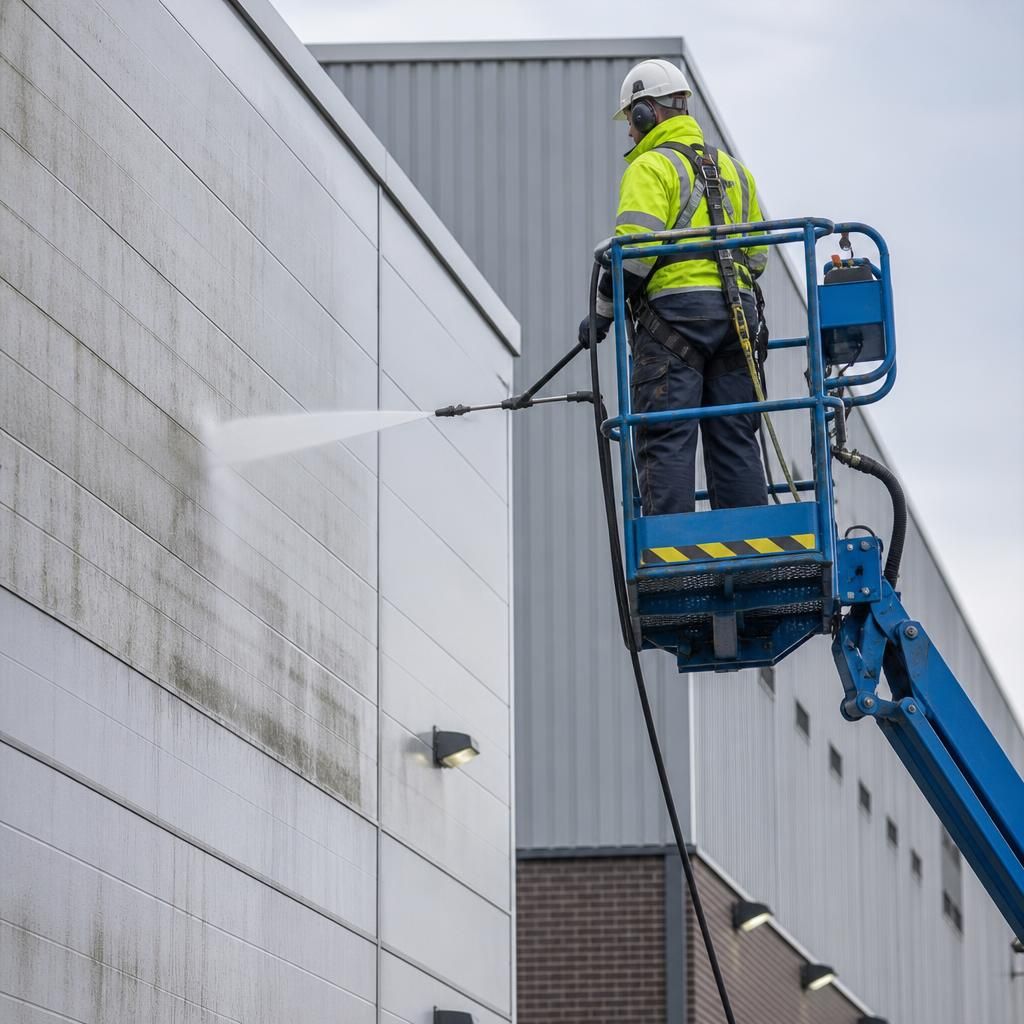
Safe pressure cleaning at height depends on a site-specific plan that controls fall risks, falling objects, equipment movement and high-pressure water. Before work begins, we assess whether the area can be cleaned from ground level using telescopic equipment or another remote method. Where access at height is necessary, the selected platform, tower, scaffold or other system must suit the surface, reach, duration and ground conditions.
Access equipment is checked before use and operated only by trained, authorised personnel. We establish exclusion zones below the work area, secure hoses and tools, protect vulnerable building features and stop work if wind, rain, poor visibility or unstable conditions make the operation unsafe. Where fall-protection equipment is required, it is supported by suitable anchor arrangements and a practical rescue plan; a harness is never treated as a replacement for properly planned access or edge protection.