
How do you assess the appropriate pressure and technique required for different contaminants, such as oil stains or graffiti, on diverse surfaces?
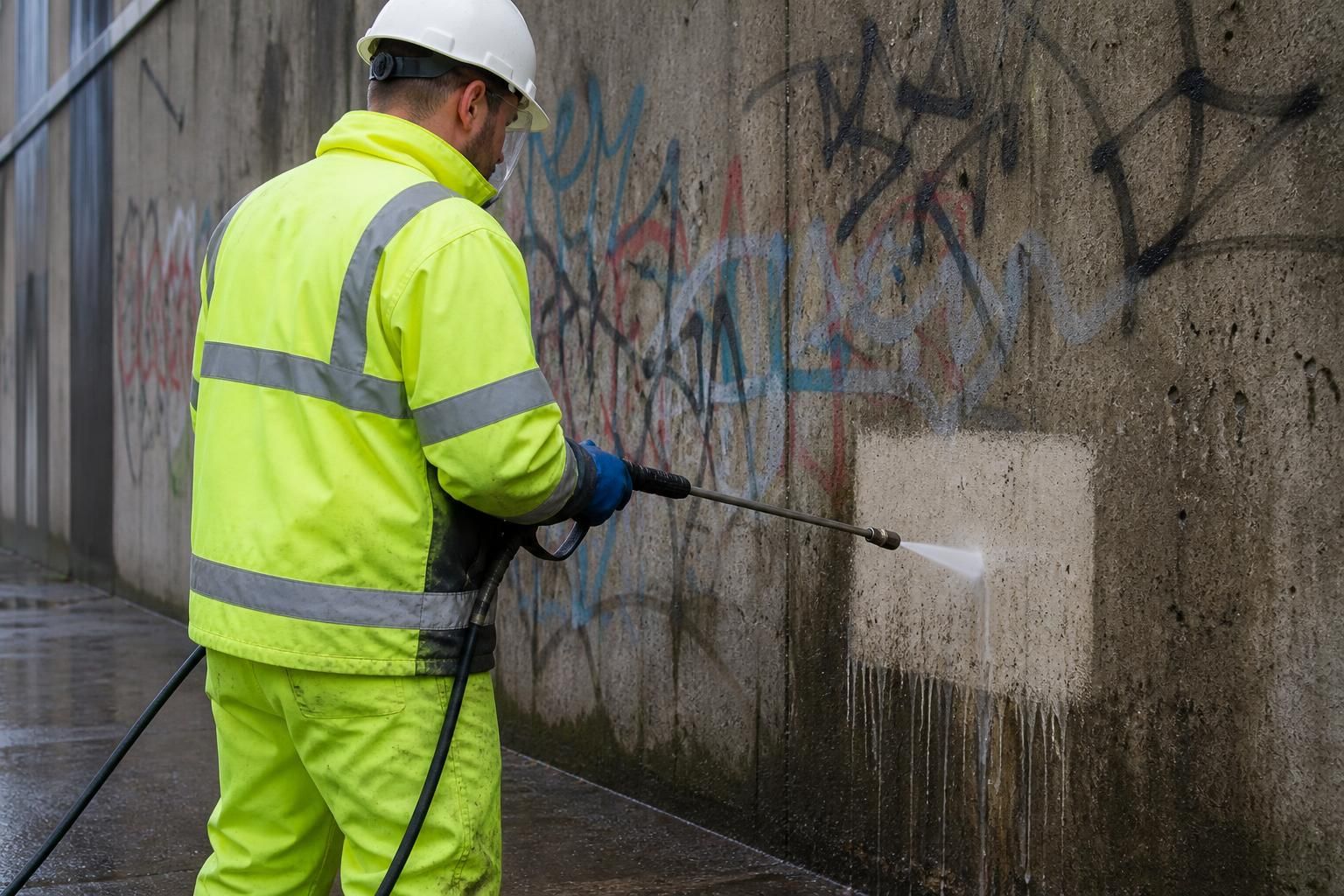
We assess the contaminant, surface material, condition and surrounding risks before selecting the lowest effective pressure, temperature, water flow and cleaning agent. A controlled test patch confirms the technique will remove oil, graffiti or other deposits without damaging the substrate, after which we adjust the method for the wider area.
The appropriate pressure cleaning method is selected by assessing the contaminant, the surface material, the condition of the substrate and the risks around the work area. Pressure is only one control: water temperature, flow rate, nozzle type, distance, dwell time and cleaning chemistry can be adjusted so the contaminant is removed with the lowest effective level of agitation. We confirm the choice with a discreet test patch before treating the full surface.
Our assessment normally considers the following points:
- Contaminant type: oil, grease, algae, cement residue, tyre marks, atmospheric soiling and graffiti each respond to different combinations of pressure, heat and detergent.
- Surface composition: concrete, brick, stone, render, metal cladding, painted finishes, paving and asphalt have different levels of porosity, strength and chemical resistance.
- Surface condition: cracks, open joints, loose coatings, weathered mortar, corrosion and previous repairs can make a surface more vulnerable to water or abrasion.
- Location and access: work at height, restricted areas, nearby pedestrians, vehicles, glazing, electrical equipment and drainage all influence the equipment and controls required.
- Environmental controls: runoff, detergents and contaminated water must be contained or managed in line with the site’s drainage arrangements and applicable requirements.
A surface may look robust but still be vulnerable. Aged brick can lose its face under excessive pressure, soft stone can be etched, painted cladding can be marked, and damaged concrete can shed loose material. For this reason, we do not select a setting solely because it has been used successfully on a different job. The apparent hardness of a surface, its age and its previous treatment all matter.
How the test patch is used
A test patch allows us to compare cleaning methods on the actual substrate rather than relying on assumptions. We begin with a controlled, less visible area and record the response of the surface and contaminant. The test checks whether the method causes colour change, etching, raised fibres, coating loss, mortar damage, water penetration or spreading of the stain. It also shows whether the cleaning result is consistent once the area has dried.
Where practical, we start with the least aggressive approach. This may involve low-pressure rinsing, a suitable detergent and gentle agitation before increasing heat, flow or mechanical action. If a stronger method is needed, it is introduced gradually and kept under close control. The final process may vary across one elevation if different materials, coatings or levels of soiling are present.
Removing oil and grease
Oil stains are generally treated as a combination of surface residue and absorbed contamination. On sealed or relatively non-porous surfaces, the oil may be softened with a suitable degreasing agent and lifted using controlled hot-water cleaning. Heat can improve the breakdown of grease, but it must be matched to the surface and any existing coating. Excessive heat or prolonged dwell time can soften painted finishes, sealants or protective treatments.
Concrete and block paving are porous, so oil can migrate below the visible surface. Pressure alone may remove the surface film while leaving a darker mark behind, or it may drive contamination further into the substrate. We therefore assess the depth and age of the stain, apply chemistry only where appropriate, allow controlled dwell time and recover the residue rather than simply moving it across the pavement. Several measured cleaning passes may be safer and more effective than one aggressive pass.
Asphalt requires particular care because excessive heat, pressure or unsuitable solvents can disturb the bituminous binder and loosen aggregate. On car parks, service yards and loading areas, we also consider traffic management, drainage and the risk of spreading oil into clean areas. Where a stain has penetrated deeply or altered the substrate, complete visual removal may not be achievable through cleaning alone; the condition and likely outcome are explained before work proceeds.
Removing graffiti and spray paint
Graffiti removal depends on the paint formulation, how long it has been present and the porosity of the underlying surface. Solvent-based, water-based and aerosol coatings can behave differently, while older marks may have hardened or weathered into the substrate. The removal agent must therefore be compatible with both the graffiti and the surface beneath it.
On dense materials such as sound concrete or certain metal finishes, a controlled pressure wash may remove softened paint effectively. On brick, stone, render or textured coatings, a chemical poultice, low-pressure rinse or gentle agitation may be more suitable. High pressure can force pigment into porous masonry, enlarge the affected area or remove the face of the brick along with the paint. We select the nozzle, spray angle and working distance to control the impact and avoid concentrating force on joints or edges.
Graffiti on painted walls, powder-coated cladding, signage or delicate façades requires especially cautious testing. The cleaning agent may remove the original coating as well as the graffiti, and a visually even result can be difficult if the surrounding finish has faded. In these situations, preservation of the underlying finish is prioritised, and touch-up painting or specialist restoration may be more appropriate than aggressive washing.
Adapting the method to common surfaces
- Concrete: Sound concrete can usually tolerate controlled pressure, but cracked, spalled or previously repaired areas need reduced impact. Oil, tyre marks and chewing gum may require different combinations of heat, detergent and localised treatment.
- Brick and mortar: Porosity, soft brick faces and weathered joints call for lower-impact cleaning. The spray should not be directed into joints for longer than necessary, and acidic products are avoided unless the material and contamination have been confirmed as suitable.
- Natural stone: Stone type, finish and mineral composition determine whether pressure or chemistry is safe. Calcareous stone can be damaged by acidic cleaners, while polished surfaces can lose their finish through abrasion.
- Render and painted surfaces: These are assessed for adhesion, chalking, cracks and previous repairs. Soft washing or low-pressure rinsing is often preferable to a forceful jet.
- Metal cladding: We check the coating, joints, fixings and signs of corrosion. Cleaning agents must not attack the finish or remain trapped in seams, and the rinse must be thorough.
- Asphalt and paving: The process is adjusted to protect the binder, joints, blocks and any surface seal. Oil recovery and runoff control are important as well as the visible cleaning result.
Weather and site conditions can alter the assessment. Wind can carry spray or detergent onto vehicles and glazing, while cold conditions can affect drying and the performance of some cleaning products. Direct sunlight can shorten dwell time, whereas shaded areas may remain wet for longer. We also account for the possibility of hidden drainage routes, occupied premises and sensitive landscaping before starting.
During the work, the operator monitors the surface continuously rather than treating the initial setting as fixed. The lance is kept moving, the working distance is controlled and clean water is used to check progress. If the surface begins to change or the contaminant responds differently from the test patch, the method is stopped and reassessed. This controlled approach provides a reliable balance between removal and substrate protection, whether the requirement is oil stain treatment, graffiti removal or general commercial and industrial exterior cleaning.
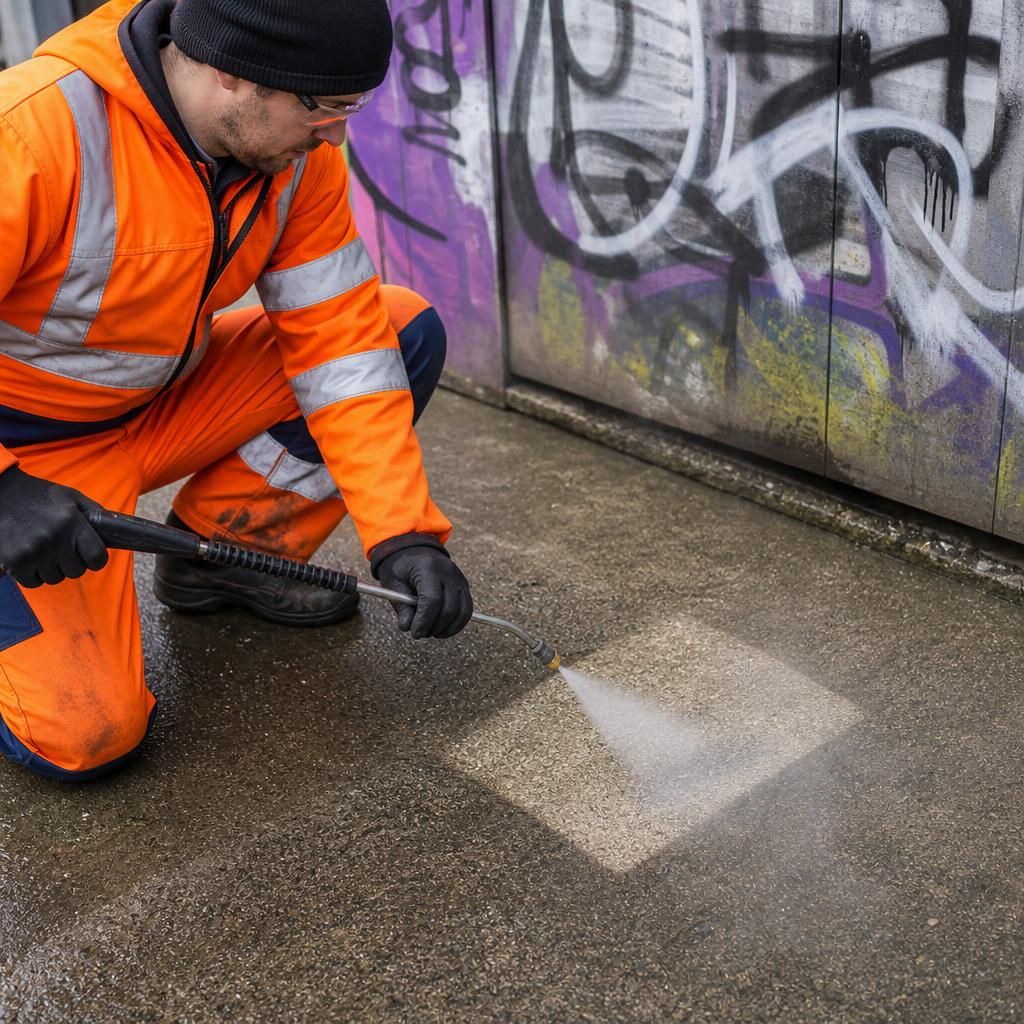
A controlled test patch is the safest way to determine the appropriate pressure cleaning technique for oil, graffiti and other contaminants. It shows how the actual surface responds before the method is applied across a larger area.
We normally begin in a discreet location using the least aggressive practical combination of pressure, temperature, water flow, nozzle selection and cleaning solution. The test checks whether the contaminant lifts without causing etching, colour change, coating loss, mortar damage, pigment spreading or water penetration. The surface is also reviewed after drying, as some marks or changes are not immediately visible while it is wet.
If the initial approach is insufficient, adjustments are made gradually rather than moving straight to maximum pressure. The final method may differ across the same site where concrete, brick, painted cladding, render or asphalt are present. This assessment helps protect the substrate while achieving the most consistent cleaning result possible.