
How do pressure cleaning techniques differ for various surface types?
Pressure cleaning techniques vary according to each surface’s strength, porosity and condition: concrete may tolerate higher pressure, while brick, cladding, roofs and painted finishes usually require lower pressure, controlled water flow and sometimes steam or approved detergents. We assess the material and contaminant first, then select the safest combination of pressure, temperature, nozzle, cleaning solution and recovery method.
Pressure cleaning techniques differ according to a surface’s hardness, porosity, coating, age and condition. Concrete can usually withstand more aggressive cleaning than brick, render, cladding, roofing materials or painted finishes, but the correct method is always determined by inspection and a controlled test area. We adjust the pressure, water flow, temperature, nozzle, distance, cleaning solution and recovery method to remove the contaminant without causing etching, cracking, staining, coating failure or water ingress.
Before cleaning, we identify the surface and assess its condition. This includes checking for loose joints, damaged coatings, failed sealant, cracks, fragile edges, previous repairs and areas where water could enter the building. We also establish what has caused the soiling, such as traffic film, algae, moss, oil, atmospheric dirt, rust, cement residue, chewing gum, graffiti or biological growth. A suitable technique for removing oil from sound concrete may be unsuitable for removing the same stain from porous brick or painted cladding.
Where the surface or coating is uncertain, a discreet test patch is used to confirm the appropriate pressure, nozzle, temperature and detergent. The test also shows whether cleaning will alter the colour, texture or gloss of the material. This assessment is particularly important on older façades, heritage brickwork, composite panels and surfaces that have been repaired or coated at different times.
Concrete and reinforced concrete
Sound concrete is generally one of the more durable surfaces for pressure cleaning. It is commonly cleaned using a controlled high-pressure or hot-water process, depending on the contaminant. Traffic film, general dirt, algae and surface deposits can often be removed with a rotary surface cleaner or a fan-pattern nozzle to produce an even finish across slabs, paths, loading areas and car parks.
Oil and grease require a different approach. Hot water and a suitable biodegradable degreasing product can help break down the contaminant before rinsing and recovering the wash water where necessary. Heavy pressure alone may spread oil across the surface or drive it deeper into porous concrete. We also consider whether the concrete is weathered, cracked, exposed aggregate or previously sealed, as these conditions affect both the cleaning pressure and the risk of marking.
Joints, edges and damaged areas are treated carefully. Excessive pressure can remove weak cement paste, expose aggregate, widen cracks or damage jointing material. Cleaning is therefore controlled rather than applied uniformly at the maximum available pressure.
Brickwork and masonry
Brick is porous and can be more vulnerable than its appearance suggests. Older bricks, soft-fired bricks and weathered mortar may be damaged by aggressive pressure, particularly around joints and corners. Brick façades are normally cleaned with a lower-pressure fan spray, controlled water flow and, where appropriate, a masonry-safe detergent or steam-cleaning process.
The objective is to remove surface contamination while preserving the brick face and mortar profile. A narrow or concentrated jet can leave visible striping, erode mortar and force water into the wall, so the nozzle is kept at a suitable working distance and moved consistently. Paint, cement deposits and biological growth may need separate treatments rather than repeated pressure washing. Care is also taken around vents, windows, seals and areas of defective pointing.
Efflorescence, which appears as a pale salt deposit, should not simply be driven further into the masonry. The cause and condition of the wall need to be considered, and dry or low-impact methods may be more suitable in some cases. On heritage or especially delicate brickwork, a gentler steam or specialist masonry-cleaning method may provide better control than conventional pressure washing.
Stone and paving
Natural stone varies considerably. Dense granite and some hard-wearing paving can tolerate a more robust process, while limestone, sandstone and other softer or more porous materials can be etched, discoloured or damaged by excessive pressure and unsuitable chemicals. We assess the stone’s grain, finish, previous sealing and condition before choosing the method.
Fan-pattern rinsing, low-pressure cleaning, steam and pH-appropriate products may be used instead of a concentrated high-pressure jet. Sanded or polymeric joints also need protection because aggressive cleaning can remove jointing material and destabilise the paved area. Oil, rust and organic staining are treated according to the stone type; a product that is suitable for one material may leave a permanent mark on another.
Metal cladding and composite panels
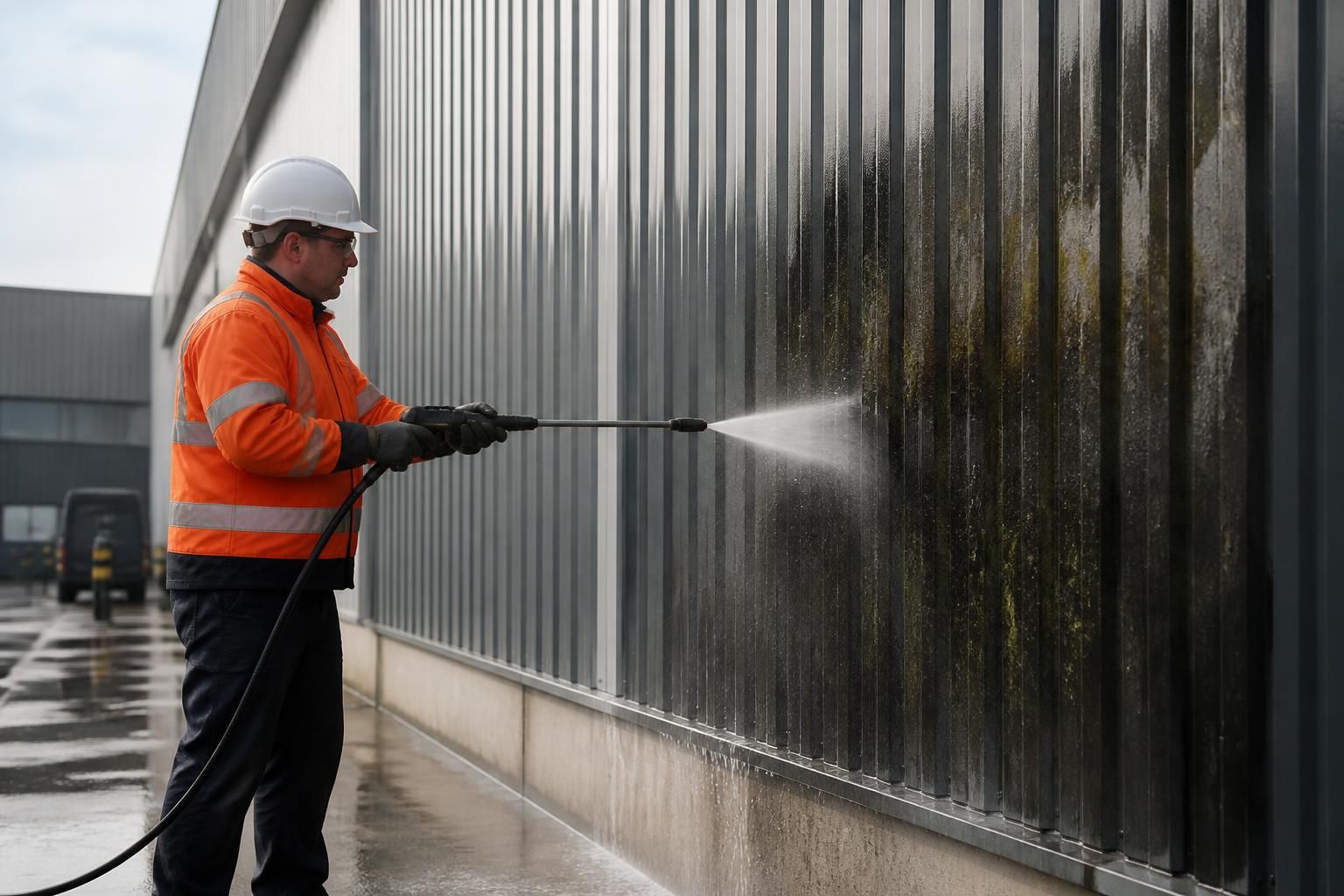
Cladding systems are usually cleaned with low to moderate pressure, broad fan-pattern spray and a compatible detergent. Aluminium, coated steel, insulated panels and composite materials can have painted, powder-coated or laminated finishes that may be scratched, dulled or lifted by excessive pressure or abrasive products.
The cleaning process is designed to loosen dirt and atmospheric film rather than force water behind laps, trims, seals or panel joints. We work with the panel profile and drainage direction, taking particular care around fixings, vents, signage and deteriorated sealant. Strong solvents or aggressive alkaline products are avoided unless their compatibility with the coating has been established. Rinsing must also be controlled so that contaminated water does not enter openings or collect at the base of the building.
Render, painted surfaces and façades
Rendered and painted surfaces need a conservative approach because the finish may be less resistant than the underlying substrate. Low-pressure soft washing, controlled rinsing, steam or a suitable detergent is often preferable to a powerful jet. This helps remove algae, mould, dust and atmospheric soiling without exposing the substrate or creating visible cleaning lines.
We check whether paint is sound, chalking, peeling or already detached. Pressure cleaning cannot correct failed paint, and excessive force may remove sound coating along with the dirt. Loose areas may require remedial work before cleaning, while delicate decorative details, render repairs and façade features are treated separately.
Roofs and roof coverings
Roof cleaning is determined by both the covering and the access conditions. Concrete tiles, clay tiles, slate, metal roofing and coated systems do not respond in the same way. High pressure can dislodge tiles, remove protective finishes, drive water beneath laps or damage fragile surfaces, so low-pressure cleaning, steam or a specialist biocidal treatment may be more appropriate.
Moss and lichen are removed without levering against the roof covering or blocking drainage outlets. We also control runoff, protect gutters and downpipes where required, and use suitable access equipment and work-at-height controls. On coated metal roofs, the priority is to preserve the coating and avoid forcing water into laps, fixings and penetrations.
Asphalt, tarmac and car park surfaces
Sound asphalt and tarmac can be cleaned with a controlled fan spray or surface-cleaning equipment, but excessive pressure may lift loose aggregate, expose the binder or create pale cleaning marks. Oil, fuel and rubber deposits are treated with compatible degreasers and appropriate recovery methods rather than relying on pressure alone. Worn surfaces, patched areas, line markings and edges around drainage channels require reduced pressure and closer monitoring.
Glass, signage and painted details
Glass is usually cleaned with low-pressure rinsing and a suitable glass-cleaning product. A concentrated jet can damage seals, force water into frames or mark the surface if grit is present. Signs, lettering, shutters and painted metalwork are assessed for loose graphics and coating failure before cleaning. Graffiti removal is selected according to both the paint and the underlying surface; a solvent, steam process, poultice or low-pressure detergent may be safer than abrasive or high-pressure treatment.
Across all surface types, the final method balances cleaning effectiveness with preservation of the substrate. We control overspray, protect adjacent materials, manage contaminated runoff and inspect the cleaned area before completing the work. If a surface is too fragile for pressure cleaning, we can recommend a lower-impact alternative rather than risk damage through an unsuitable process.
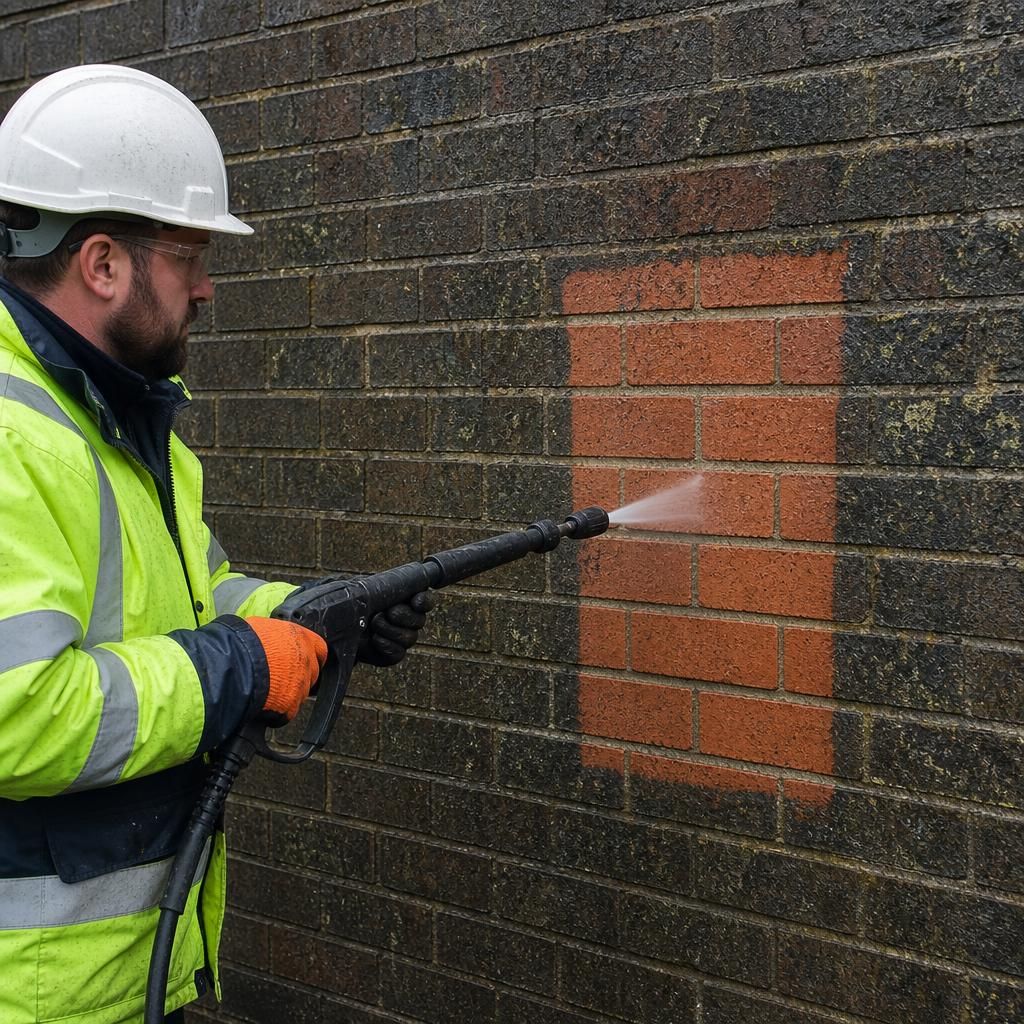
Pressure cleaning must be matched to the surface’s strength, porosity and condition, rather than applied at the highest available setting. A controlled test patch allows us to confirm the safest pressure, nozzle, temperature and cleaning solution before treating the wider area.
This is particularly important for older brickwork, painted façades, coated cladding, natural stone and roof coverings. The test shows whether cleaning could alter the material’s colour, texture or finish, and helps identify loose coatings, weak mortar, damaged sealant or areas vulnerable to water ingress. If pressure cleaning presents a risk, a lower-impact method such as steam cleaning or soft washing can be selected instead.