
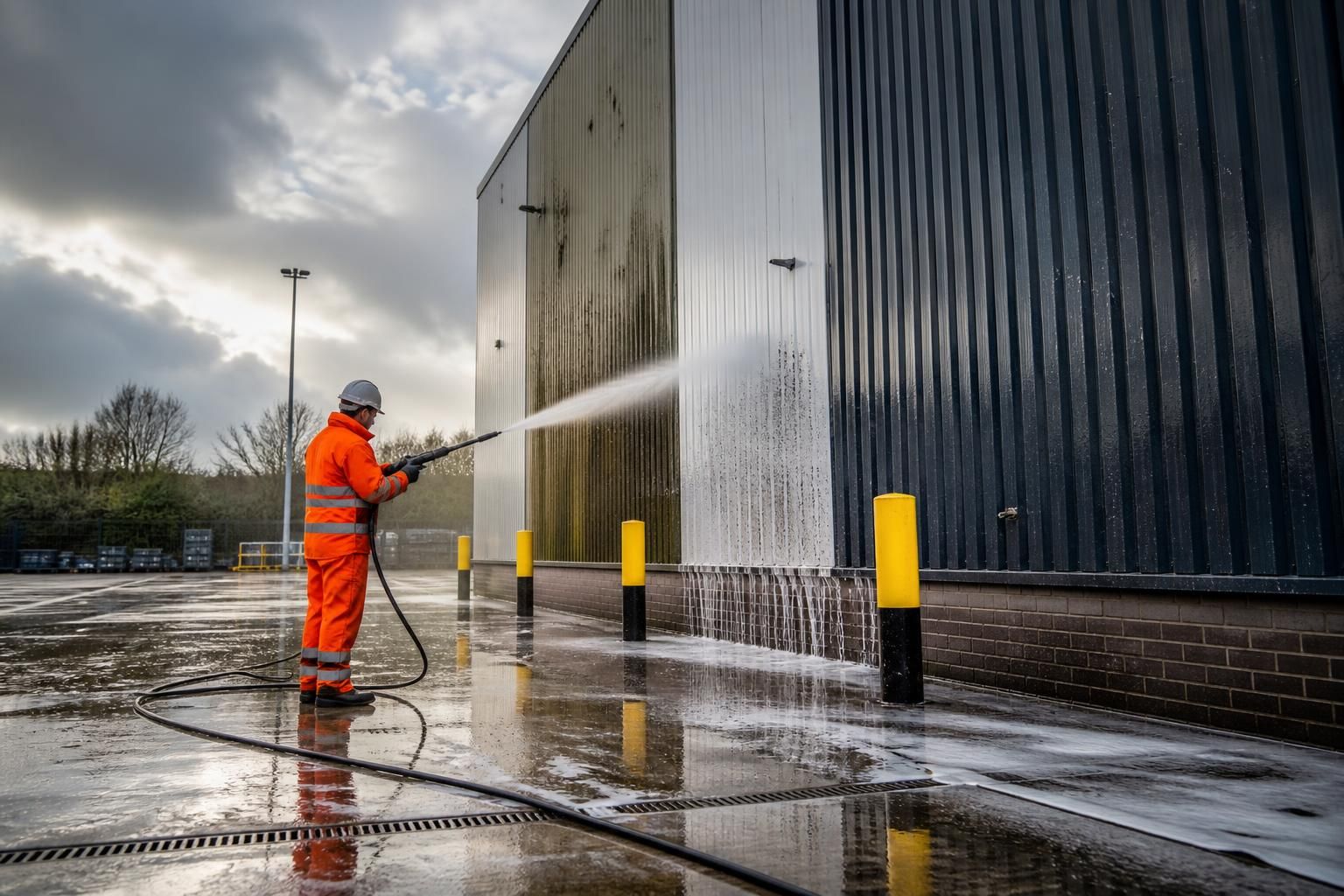
How do environmental factors influence pressure cleaning methods?
Environmental factors such as weather, temperature, surface condition, surrounding vegetation and drainage determine the pressure, water temperature, cleaning method and runoff controls used. Adjusting the approach to these conditions helps achieve effective results while protecting surfaces, people and the wider environment.
Environmental factors influence pressure cleaning by determining the water pressure, flow rate, temperature, cleaning products, equipment and runoff controls that can be used safely. Weather, surface condition, contamination, drainage, nearby habitats and site access all affect the method. Assessing these conditions before work begins helps remove contamination effectively without damaging the building, creating avoidable pollution or leaving the area unsafe.
Weather and site conditions
Weather is particularly important for external cleaning across the UK. Rain can dilute detergents, reduce cleaning performance and carry loosened contaminants towards drains or surrounding land. Wind can create spray drift, affect the stability of access equipment and spread dust, chemical mist or contaminated water beyond the working area. Cleaning is therefore planned around suitable conditions, with temporary controls used where necessary to protect nearby vehicles, entrances, pedestrians and adjacent properties.
Cold conditions can affect both the cleaning process and the surfaces being treated. Water can freeze on paving, steps and other hard surfaces, increasing slip risks and potentially damaging porous materials. Ice may also affect hoses, pumps and equipment. Where low temperatures are expected, the work area and drainage routes are reviewed carefully, and the task may be postponed if safe containment and drying cannot be maintained.
Strong sunlight and warm weather can cause detergents to dry on façades, cladding, concrete or brick before they have had time to work. This can leave marks or make rinsing more difficult. Smaller working areas, shade, controlled application and more frequent rinsing may be needed. Dry conditions can also increase airborne dust, so methods are adjusted to prevent unnecessary dust movement around occupied premises.
Surface condition and construction
The material, age and condition of a surface determine how much pressure it can tolerate. Sound concrete may accept a more direct cleaning method than weathered brick, painted render, natural stone, timber or aged cladding. Porous materials can absorb water and contaminants, while cracked, spalled or delaminated surfaces may be weakened by high pressure. The assessment includes checking for loose joints, damaged coatings, open cracks, failed sealants and areas where water could enter the building.
Pressure is not the only control. The distance between the lance and surface, spray angle, nozzle selection, flow rate, water temperature and operator movement all influence the result. Softer or vulnerable materials may require a lower-pressure rinse, steam cleaning, a wider spray pattern or a longer dwell time with an appropriate detergent. A small test area is used where the surface response is uncertain, particularly on historic masonry, painted finishes and sensitive façades.
Contamination and water temperature
The type of contamination also changes the environmental requirements. Organic growth, atmospheric soiling and general dirt may respond to controlled detergent application and rinsing. Oil, fuel, grease, construction residue and heavy deposits may need additional treatment, mechanical agitation or hot water. Graffiti removal requires a surface-specific approach because paint removers and rinse water can affect coatings, pointing, vegetation and drainage.
Hot water can improve the removal of oils and grease, reducing the need for aggressive pressure or excessive chemical use. It is not suitable for every surface, however. Heat can soften coatings, affect sealants or alter some materials. The cleaning method is selected according to the contaminant and the surface rather than applying the same pressure or temperature to the whole site.
Drainage, runoff and pollution prevention
Runoff is assessed before cleaning starts, especially on industrial sites, car parks, loading areas and locations connected to surface-water drainage. Water carrying oil, silt, paint particles, detergents or other contaminants must not be allowed to enter a surface-water drain or nearby watercourse without appropriate controls. The team identifies drain locations, checks the fall of the ground and determines where recovered water can be collected, treated or disposed of lawfully.
Controls may include drain covers, bunding, temporary barriers, absorbent materials, wet vacuums, recovery systems and staged cleaning. Slurry and heavily contaminated water are collected rather than simply washed across the site. Detergents are selected carefully, used at the necessary concentration and prevented from reaching planted areas or drainage systems. Disposal arrangements depend on the nature of the waste and the requirements of the site and relevant authorities.
Vegetation, wildlife and surrounding land
Plants, soil, ponds, watercourses and landscaped areas are considered during the site assessment. Pressure spray can damage leaves, strip soil or disturb nesting areas, while detergents and contaminated runoff can harm vegetation and aquatic environments. Vulnerable areas are protected with sheeting or barriers where appropriate, and spray direction is controlled to prevent overspray. Work may need to be rescheduled if protected wildlife, nesting activity or particularly sensitive habitats are present.
Vegetation growing on walls or around paved areas is not treated as a simple obstruction. Roots can affect joints and masonry, and removing growth without addressing the underlying condition may leave the surface vulnerable to further deterioration. The cleaning plan therefore distinguishes between removing surface contamination and dealing with vegetation or structural defects that require separate attention.
Occupied and environmentally sensitive sites
Commercial and industrial premises often remain operational during cleaning. Pedestrian routes, vehicle movements, deliveries, ventilation intakes and doorways are reviewed so that spray, noise, water and cleaning products do not create avoidable risks. Work may be divided into manageable zones, with barriers and clear signage used to separate the cleaning area from staff, visitors and the public.
Noise, access restrictions and water availability can also influence the choice of equipment. Electric or lower-noise equipment may be preferable near offices, residential boundaries or sensitive operations. Where mains water is limited, water use is controlled through suitable nozzles, staged rinsing and recovery equipment. Access equipment is selected according to ground conditions, overhead obstructions, wind exposure and the need to prevent damage to the building or surrounding surfaces.
How the method is adapted on site
- Inspect the surface, contamination, drainage, surrounding environment and access conditions.
- Identify risks from weather, runoff, pedestrians, vehicles, overhead services and fragile materials.
- Select the least aggressive method capable of achieving the required standard, including pressure washing, steam cleaning, soft washing or manual treatment where appropriate.
- Test the proposed pressure, temperature, detergent and nozzle on a discreet area when the surface or coating is uncertain.
- Install runoff, overspray and pedestrian controls before applying water or cleaning products.
- Monitor the surface and surrounding area during cleaning, adjusting pressure, flow, dwell time or working direction if conditions change.
- Inspect the completed area, confirm that drains and access routes are clear, and remove or manage recovered waste in accordance with the agreed site arrangements.
Environmental conditions are therefore part of the technical specification, not an afterthought. A method that is suitable for a sound concrete car park may be inappropriate for painted cladding, aged brickwork or a site beside a watercourse. By matching equipment, pressure, temperature, products and containment measures to the conditions, pressure cleaning can be completed more safely, with better control of surface damage, water use and environmental impact.
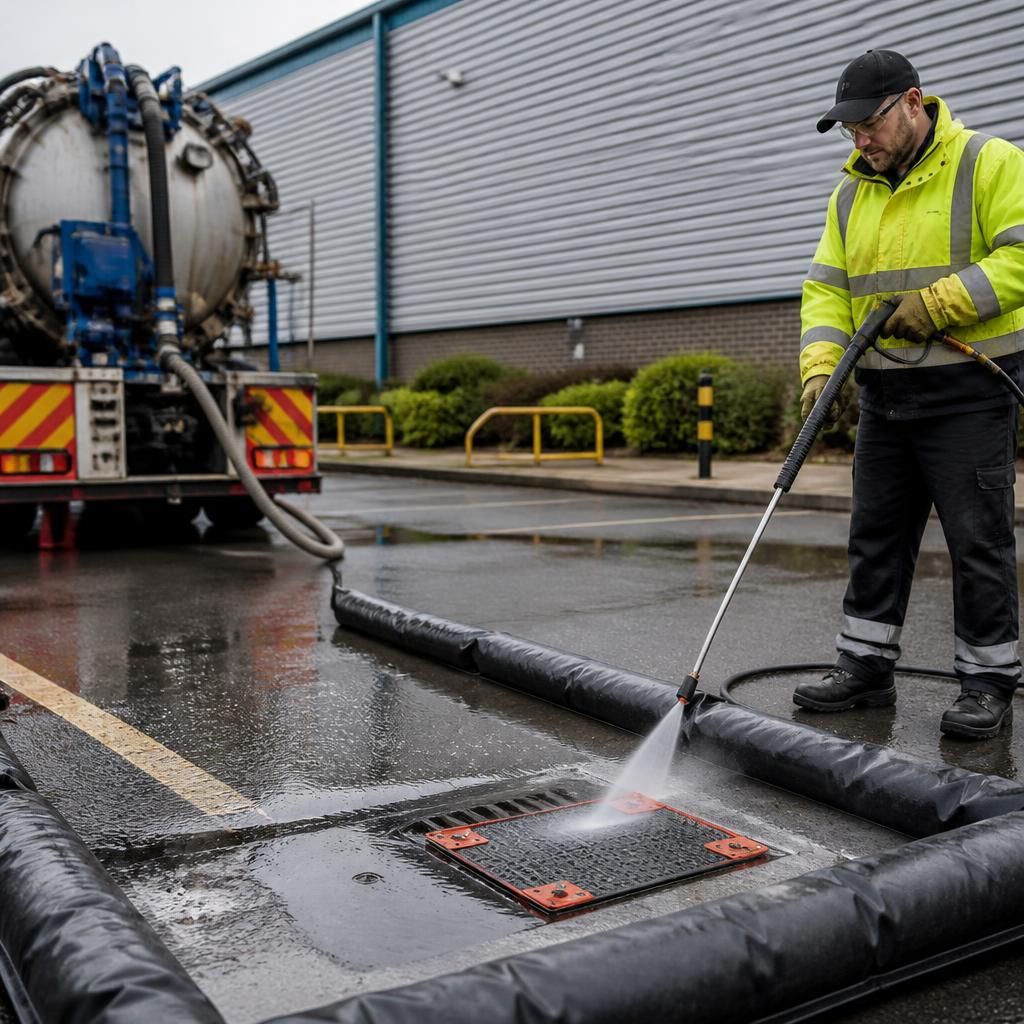
Runoff controls are an essential part of pressure cleaning where water may carry oil, silt, paint residue or detergents into surface-water drains, planted areas or nearby watercourses. Before work starts, the drainage layout, ground falls and contamination present on the surface are assessed so the cleaning water can be controlled, recovered or disposed of appropriately.
Depending on the site, measures may include drain covers, temporary bunds, absorbent materials, staged cleaning and wet vacuum recovery. Heavily contaminated slurry is collected rather than pushed across the site, while detergents are applied only at the required concentration. These controls are particularly important on car parks, loading areas and industrial premises, where runoff can contain more than ordinary dirt.