
What techniques are used to ensure surfaces are not damaged during graffiti removal?
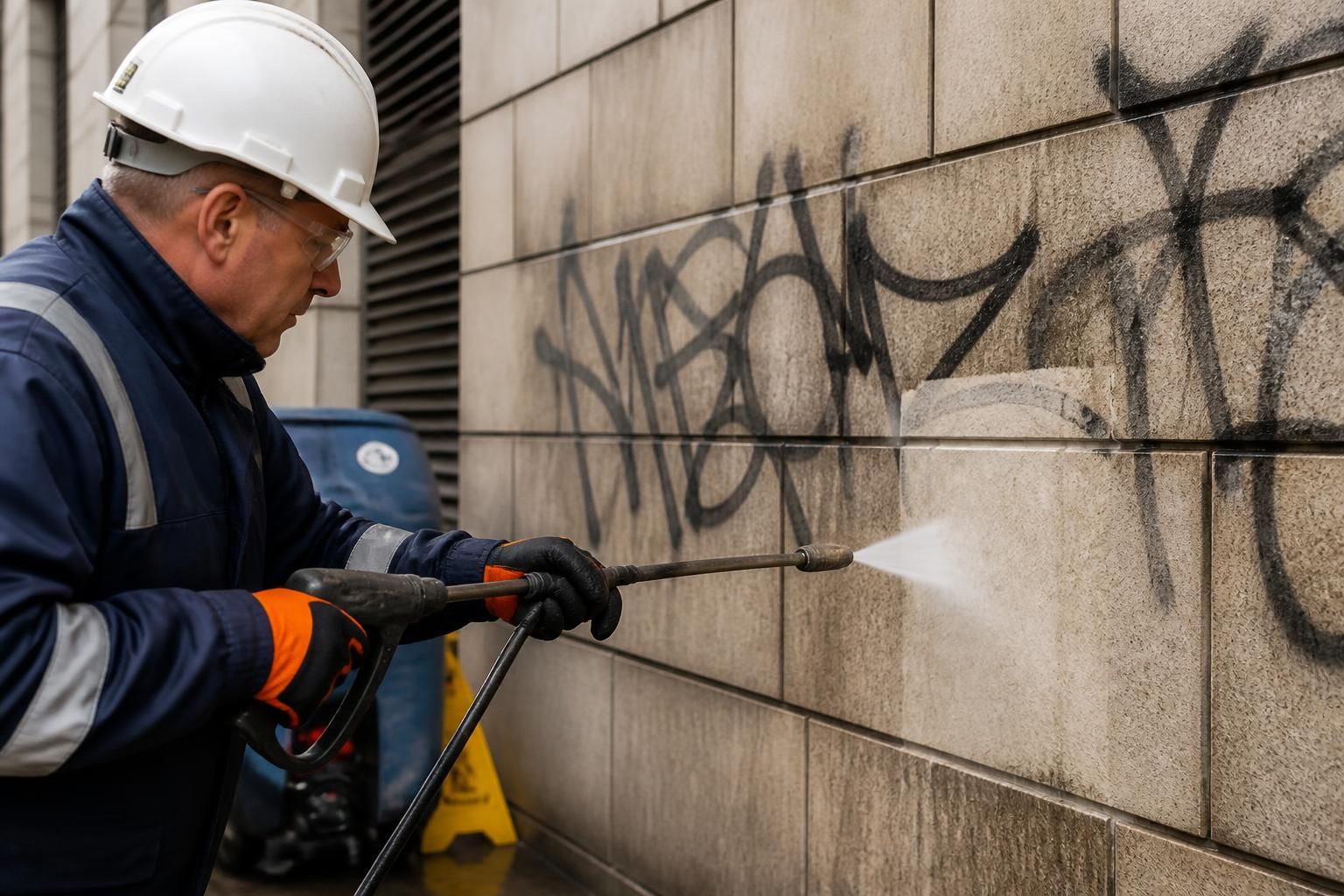
Professional graffiti removal protects surfaces through a site assessment, small test patches and controlled use of pressure, temperature, nozzle distance and suitable cleaning products. The method is then adjusted to the substrate—such as brick, stone, concrete or cladding—to remove paint without etching, discolouring or loosening the underlying material.
Surfaces are protected during graffiti removal by matching the cleaning method to the substrate and controlling every part of the process. A professional assessment, a discreet test patch and careful adjustment of pressure, water temperature, nozzle selection, working distance, cleaning products and dwell time help remove the paint without etching, discolouring or loosening the underlying material.
The process typically includes the following safeguards:
- Identifying the substrate: Brick, natural stone, concrete, render, painted surfaces, glazed finishes, metal and plastic cladding all respond differently to pressure and cleaning products. The condition of the surface is also checked for cracking, weathering, friable areas, failed coatings, open joints and previous repairs.
- Inspecting the graffiti: The type of paint, marker or coating, its age, thickness and location can affect the most suitable removal method. Paint that has penetrated a porous surface may require a gentler chemical treatment followed by controlled rinsing rather than aggressive pressure washing.
- Carrying out a test patch: A small, inconspicuous area is cleaned first. This confirms whether the selected product and equipment remove the graffiti effectively and shows whether the surface changes colour, texture or gloss. The method is adjusted before work continues across the visible area.
- Using controlled pressure: The lowest effective pressure is preferred. Pressure is increased only where the substrate has been shown to tolerate it. Operators keep the lance moving rather than holding the jet in one place, which helps prevent surface erosion, streaking and localised damage.
- Selecting the correct nozzle and spray pattern: A wider spray pattern generally distributes the cleaning force more evenly than a concentrated jet. Nozzle type, angle and working distance are selected for the material being cleaned. A narrow or highly focused spray is avoided on soft brick, aged stone, render and weathered coatings unless testing confirms it is appropriate.
- Managing water temperature: Heated water can improve the removal of some paints and residues, but excessive heat may soften coatings, affect sealants or cause changes to sensitive finishes. Temperature is therefore controlled according to the substrate and the product being removed.
- Applying chemicals selectively: Where a cleaning product is needed, it is chosen for compatibility with the surface and applied only as required. The product is given sufficient contact time to break down the graffiti, but it is not allowed to dry on the surface. This reduces the need for aggressive rinsing and limits chemical exposure to surrounding materials.
- Working in manageable sections: Cleaning is completed in controlled areas so the operator can monitor the result and rinse away loosened paint and cleaning residue thoroughly. This helps prevent runs, tide marks and uneven changes in appearance.
- Protecting adjacent materials: Nearby signs, windows, doors, seals, painted fittings, plants and drainage points are protected or isolated where necessary. Overspray and contaminated water are controlled so that removed paint is not spread onto clean surfaces or allowed to enter unsuitable drainage systems.
- Monitoring the surface throughout: The operator checks the appearance and condition of the substrate as cleaning progresses. Work is paused if mortar begins to loosen, a coating starts to lift, stone becomes visibly altered or the graffiti is not responding as expected. The method can then be changed to a less aggressive approach.
Substrate-specific control is particularly important. Sound concrete and some robust brickwork may tolerate carefully managed pressure washing, while soft brick, historic masonry and porous stone often need lower pressure, a suitable cleaning product and greater working distance. Render, painted walls and coated cladding can be damaged by lifting, abrasion or heat, so testing and gradual cleaning are essential. Metal panels may require attention to protective coatings, while plastic cladding can mark or distort if exposed to unsuitable heat, solvents or excessive pressure.
Operators also avoid treating the removal itself as the only objective. If the graffiti has been applied over a fragile coating or a previously damaged surface, complete removal may not be possible without affecting the finish beneath it. In such cases, the safest outcome may involve partial removal, sympathetic cleaning, repainting or applying a compatible protective coating after the area has been assessed.
After cleaning, the surface is rinsed and inspected for remaining paint, residue, streaking or damage. Any required follow-up treatment is based on the condition of the substrate rather than repeated use of greater pressure. Recording the method used, test results and any areas requiring further attention also provides a useful reference for future incidents and ongoing maintenance.
These controls allow graffiti to be removed effectively while preserving the appearance, strength and existing finish of commercial and industrial surfaces. The safest technique is not necessarily the most powerful one; it is the method that achieves the required result with the least force and the greatest control.
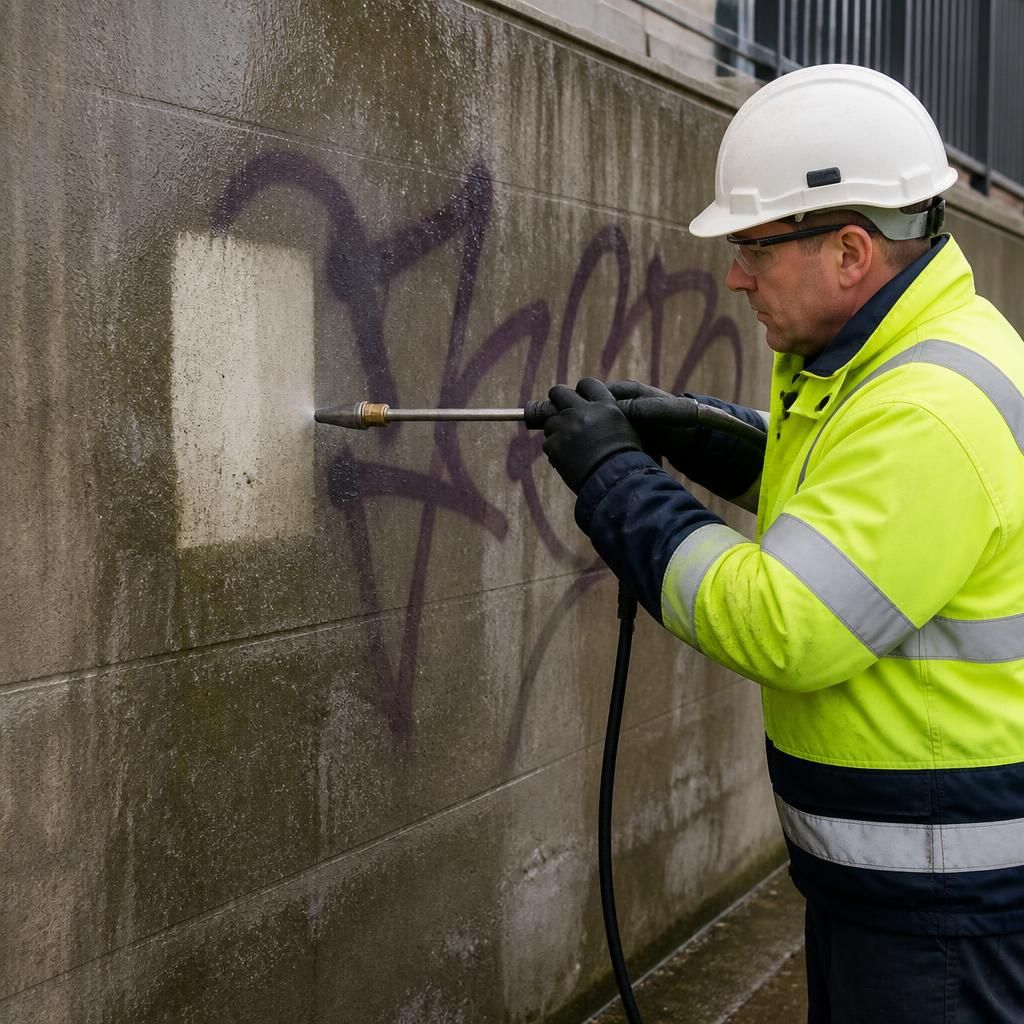
Surface protection during graffiti removal relies on testing the method before full cleaning and using the least aggressive technique that achieves the required result. A discreet test patch shows whether the chosen pressure, nozzle, temperature and cleaning product will affect the substrate’s colour, texture, coating or gloss.
The method is then adjusted to suit the material. Soft brick, aged stone, render and coated cladding usually require lower pressure, a wider spray pattern and greater working distance than sound concrete. Where paint has penetrated a porous surface, a compatible cleaning product can loosen it before controlled rinsing, reducing the need for forceful jetting. Operators keep the lance moving, work in manageable sections and monitor the surface throughout, stopping if mortar loosens, coatings lift or the finish begins to change.