
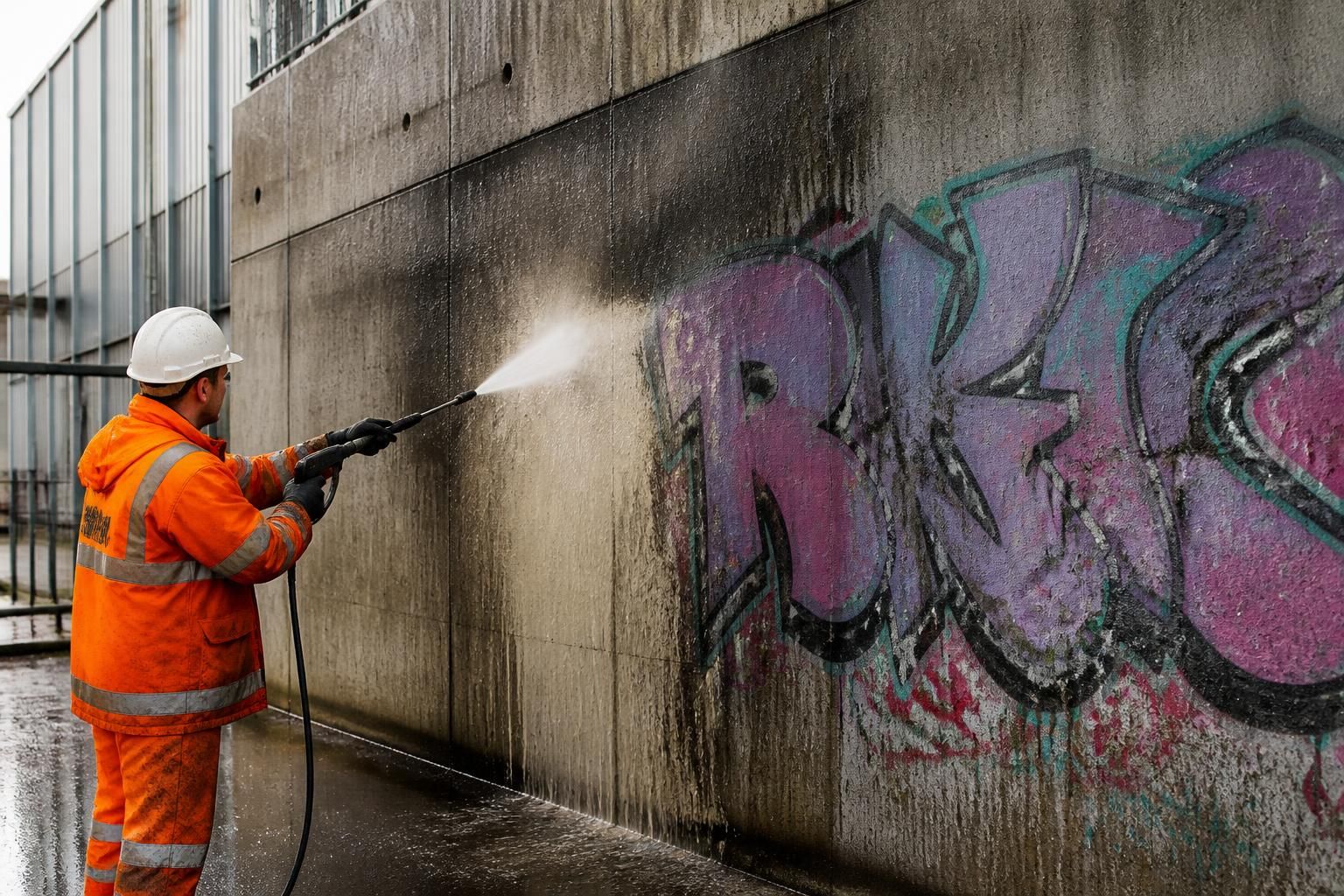
What surfaces are safe for high pressure water cleaning during graffiti removal?
High pressure water cleaning is generally suitable for robust surfaces such as sound concrete, well-maintained brickwork, stone, metal cladding and some painted masonry, provided the pressure and nozzle are adjusted to the substrate and tested first. Delicate, aged, loose, porous or poorly bonded surfaces—including fragile render, soft brick, timber and damaged coatings—may require low-pressure, steam or chemical treatment instead to prevent marking, erosion or water ingress.
High pressure water cleaning is usually safe for sound, non-porous and well-maintained surfaces, including concrete, engineering brick, natural stone, metal cladding and some painted masonry. However, safety depends on the condition of the substrate, the type of coating, the water pressure, nozzle selection, distance and operator technique. A surface that appears robust can still be damaged if it is weathered, loose, cracked or cleaned with excessive force.
Before graffiti removal begins, the cleaning method should be selected for the surface rather than for the paint alone. A controlled test area in an inconspicuous location helps establish whether the graffiti can be removed without lifting the substrate, stripping a sound coating or driving water into the building fabric. The test should also check for colour variation, surface etching and whether the surrounding area responds differently from the marked section.
Surfaces that are commonly suitable include:
- Sound concrete: structurally sound concrete generally tolerates water cleaning well. Care is needed around exposed aggregate, decorative finishes, joints, cracks and previously weakened areas, where an aggressive jet can remove the surface paste or leave a visible pattern.
- Engineering and dense brickwork: hard, well-fired brick can often be cleaned effectively with controlled pressure. Mortar joints may be weaker than the bricks, so the operator should avoid concentrating the jet on joints or eroded pointing.
- Natural stone: dense stone such as granite and some types of sandstone may be suitable after testing. Softer or more porous stone, limestone, historic masonry and carved details require a gentler approach because water pressure can cause pitting, edge damage or accelerated erosion.
- Metal cladding and panels: coated or uncoated metal can usually be cleaned with water, provided the finish is sound and the equipment is not held too close to the panel. Particular care is needed around joints, seals, fasteners and areas where corrosion has already started.
- Sound painted masonry: painted render, concrete and brick may be cleaned if the coating is firmly bonded and compatible with the selected method. Testing is essential because water cleaning can remove poorly adhered paint along with the graffiti.
- Some hard plastic and composite surfaces: these may accept low or moderate pressure, but the finish can be scratched, distorted or marked by heat and concentrated spray. Manufacturer guidance and a small test area should be used where available.
Surfaces requiring additional caution include:
- Soft, porous or friable brick: high pressure can erode the face of the brick, enlarge existing pores and cause spalling, particularly where frost damage or long-term weathering is present.
- Fragile render and aged coatings: cracked, hollow, flaking or powdery render may detach during cleaning. The graffiti may be removable, but the underlying finish may not be stable enough for high pressure water.
- Timber: pressure can raise the grain, force water into joints and damage paint, stain or protective treatments. Low-pressure cleaning or another controlled method is normally more appropriate.
- Historic or listed masonry: older materials and traditional mortars can be more vulnerable than modern construction products. Cleaning should be based on the building’s fabric, conservation requirements and any relevant permission or specification.
- Insulation systems and lightweight panels: render systems, composite panels and sealed façades can be affected by water entering joints, vents or damaged sections. The construction details must be assessed before cleaning.
- Damaged, cracked or leaking surfaces: water can enter the substrate or building through defects. These areas may need repair or sealing before graffiti removal is attempted.
The term “high pressure” does not mean that the maximum available pressure should be used. A professional operator normally starts with the least aggressive setting likely to remove the graffiti and increases it only when the substrate has been shown to tolerate the treatment. Water flow, nozzle type, spray angle, working distance and dwell time all affect the result. A wide fan pattern held at a suitable distance is generally less aggressive than a narrow jet held close to the surface, while a rotary nozzle can be unsuitable for delicate finishes because it may create circular marks.
Painted, coated and sealed surfaces need particular attention. Water may remove loose or failing coatings, expose a colour difference or force moisture behind cladding and paint films. Graffiti on a sound protective coating may be removed with limited impact, but the coating should be checked for adhesion first. If the graffiti has bonded to a porous surface, trying to remove every trace using greater pressure can cause more damage than leaving a faint residual mark for treatment by a different method.
Safe cleaning also depends on controlling the surrounding area. Windows, doors, vents, electrical equipment, signage, joints and vulnerable landscaping should be protected from spray and contaminated runoff. Water collection and disposal may be required where paint residues, detergents or other contaminants could enter surface water drains. The cleaning team should also consider pedestrian segregation, traffic management, slip hazards and safe access equipment when working on façades or elevated surfaces.
Where high pressure water is unsuitable, alternatives can include low-pressure washing, steam cleaning, a carefully selected chemical poultice or another substrate-specific treatment. These methods are not automatically safer; chemicals can affect coatings and plants, steam can damage some finishes, and mechanical methods can abrade the surface. The appropriate option is the one that removes the graffiti while causing the least change to the original substrate and finish.
For each site, the practical assessment should consider the substrate, its age and condition, the graffiti medium, the presence of protective coatings, nearby building details and the required finish. Encanto Exterior Cleaning can use a controlled test area and adjust the cleaning system to the material rather than applying one pressure setting across the whole elevation. This approach helps protect sound surfaces and identifies locations where a lower-pressure or non-water method is needed.
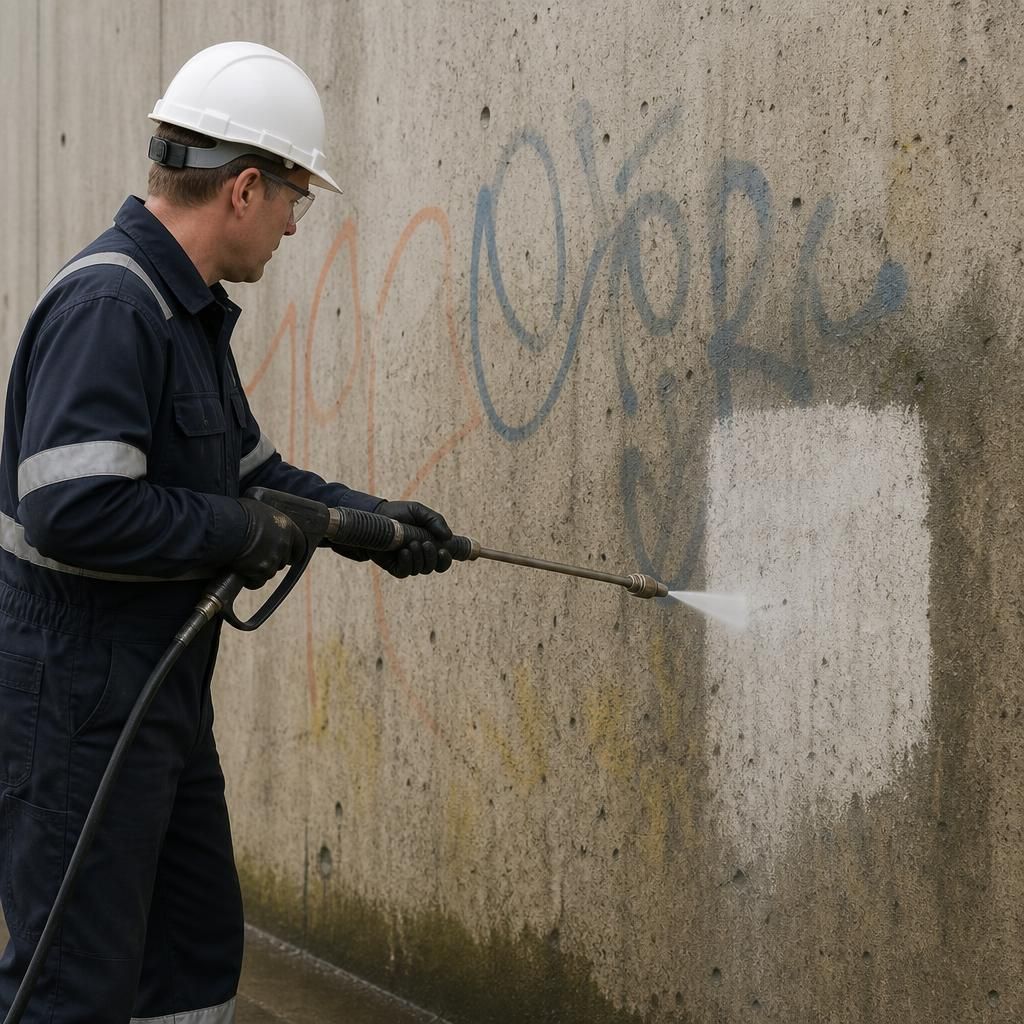
The safest surfaces for high pressure water cleaning are sound, well-bonded materials such as concrete, dense brick, suitable natural stone and stable metal cladding. However, the substrate’s condition is as important as its material. Cracks, loose pointing, flaking paint, weathering and porous areas can be damaged or allow water ingress even when the surrounding surface appears robust.
A controlled test patch should therefore be completed before full graffiti removal. The operator can adjust the pressure, nozzle, spray angle and working distance to find the least aggressive setting that removes the paint without etching the surface, lifting coatings or leaving a visible cleaning pattern. If the test shows that high pressure is unsuitable, low-pressure washing, steam cleaning or another substrate-specific method can be selected instead.
Arrange a Graffiti Removal Surface Assessment
Arrange a graffiti removal surface assessment with Encanto Exterior Cleaning to confirm whether high pressure water cleaning is suitable for the substrate and coating. We can carry out controlled testing and recommend the least aggressive effective method.