
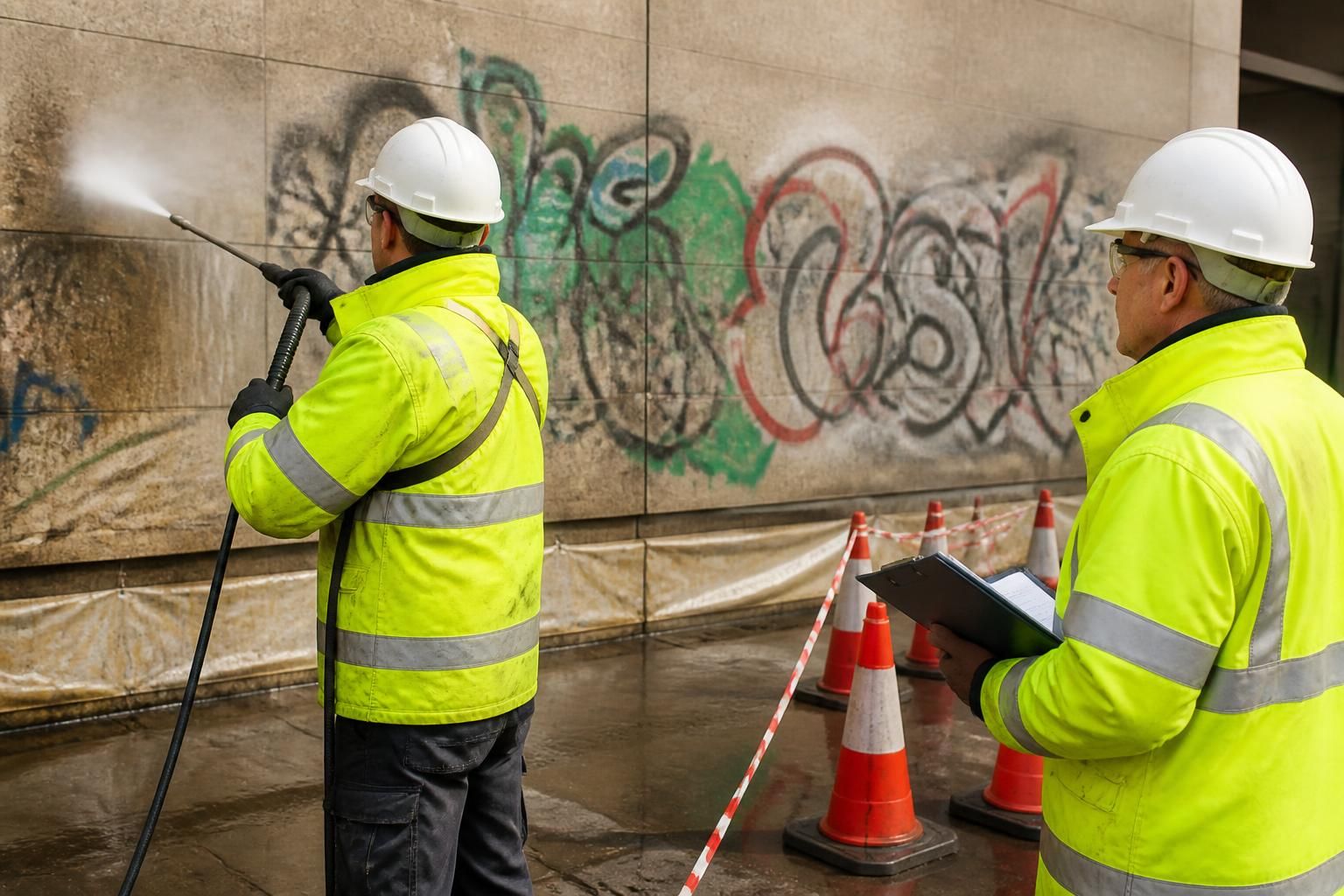
What steps are involved in preparing a site for high pressure water cleaning to remove graffiti?
Preparing a site for high pressure water cleaning involves surveying the graffiti and surrounding surfaces, identifying hazards, protecting nearby property, controlling access, and arranging suitable water, drainage and wastewater collection. The cleaning team then selects the safest pressure and nozzle settings, establishes exclusion zones, and completes any required permits or notifications before work begins.
Preparing a site for high pressure water cleaning involves assessing the graffiti and the surface beneath it, identifying risks, protecting surrounding property, controlling access, and arranging water and wastewater management. The cleaning team should complete these checks before equipment is brought into operation so the work can remove the paint without spreading contamination, damaging the substrate or disrupting people using the premises.
- Survey the graffiti and surrounding area. The team first records the location, extent and accessibility of the graffiti. This includes checking whether the paint is on brick, stone, concrete, render, cladding, glass, paving or another material, and whether the surface is painted, coated, weathered or already damaged. The age and apparent type of the graffiti may also affect the cleaning approach, particularly where paint has penetrated porous masonry or has been covered with previous cleaning products.
- Inspect the condition of the surface. Loose pointing, cracked render, failing paint, damaged sealants and corroded fixings can be made worse by water pressure. Areas that are fragile or unstable are noted and, where necessary, excluded from high pressure cleaning or treated using a lower-impact method. The inspection should also identify joints, vents, electrical fittings, doors, windows and other details that may need additional protection.
- Identify site hazards and access requirements. The survey considers vehicle movements, pedestrians, public rights of way, overhead obstructions, uneven ground, trip hazards and nearby work activities. The team confirms how equipment, hoses and wastewater collection systems will be positioned, and whether access equipment is needed for elevated façades or difficult-to-reach areas. Any work at height, confined access, traffic interface or interaction with other contractors must be included in the site-specific risk assessment and method statement.
- Check for services and vulnerable features. External sockets, lighting, alarms, CCTV, sensors, ventilation openings, communication equipment and other services should be identified before washing starts. Openings and sensitive components are isolated or covered where appropriate. Water must not be directed into buildings, electrical systems or cavities, and the team should confirm how doors and windows will remain secure during the work.
- Protect adjacent property. Sheeting, temporary covers, absorbent materials or other suitable protection may be used around doors, windows, shopfronts, vehicles, signage, plants and finished surfaces. Protection is selected so that it does not trap water against the building or create a hazard in windy conditions. Nearby surfaces are checked for possible run-off staining, overspray or transfer of loosened paint.
- Establish an exclusion zone. Barriers, cones and warning signs are positioned to keep pedestrians, staff and unauthorised visitors away from the cleaning area. The size and layout of the zone depend on the working height, spray direction, equipment, access arrangements and risk of falling debris or slippery surfaces. A safe route should be maintained for building users, emergency access and other contractors, with a nominated person monitoring the work area where public access is difficult to control.
- Plan water supply and wastewater collection. The team confirms the available water source, hose routes and any restrictions on using the premises’ supply. Run-off from graffiti removal can contain paint residues, dirt, detergents or residues from previous treatments, so it should be prevented from entering surface-water drains unless discharge is confirmed to be acceptable. Drain covers, bunding, wet vacuums, collection points or temporary containment may be used, with wastewater disposed of in line with site requirements and applicable environmental controls.
- Arrange permissions and notifications. Depending on the location, the work may require approval from the property manager, landlord, local authority, highway authority or facilities team. The client should be informed about access restrictions, noise, water use, temporary closures and any planned interruption to normal operations. Where the building is occupied or forms part of a managed estate, the cleaning schedule should be coordinated with security, reception, traffic management and other contractors.
- Select the equipment and cleaning settings. Pressure, flow, nozzle type, spray distance and water temperature are selected for the substrate and the graffiti rather than applying a standard setting to every surface. Lower pressure, wider spray patterns and greater working distances are generally considered first on softer or weathered materials. The equipment, hoses and connections are checked before use, and any detergents or additives are assessed under the relevant control procedures.
- Complete a test patch. A small, representative area is cleaned before full production work begins. This confirms whether the selected settings remove the paint effectively and whether they cause etching, colour change, mortar loss, coating failure, staining or excessive water penetration. The result is reviewed with the client where appropriate, and the method is adjusted if the test shows that high pressure water cleaning is unsuitable or needs to be combined with a gentler technique.
- Brief the operatives and confirm the pre-start controls. Before cleaning starts, operatives review the risk assessment, method statement, control measures, emergency arrangements and communication procedure. They use appropriate personal protective equipment, including eye and face protection, waterproof protective clothing, gloves and suitable footwear, with additional controls where contaminated residues, noise or work at height are present. The team then confirms that barriers, surface protection, drainage controls, access equipment and emergency shut-off arrangements are in place.
Only after these preparations are complete should the graffiti be removed across the agreed area. During the work, the condition of the surface, run-off and exclusion zone should be monitored continuously. Once cleaning is finished, collected wastewater and debris are removed, protective materials are taken down safely, the area is rinsed or made safe as required, and the surface is inspected for residual paint or damage before the site is handed back.
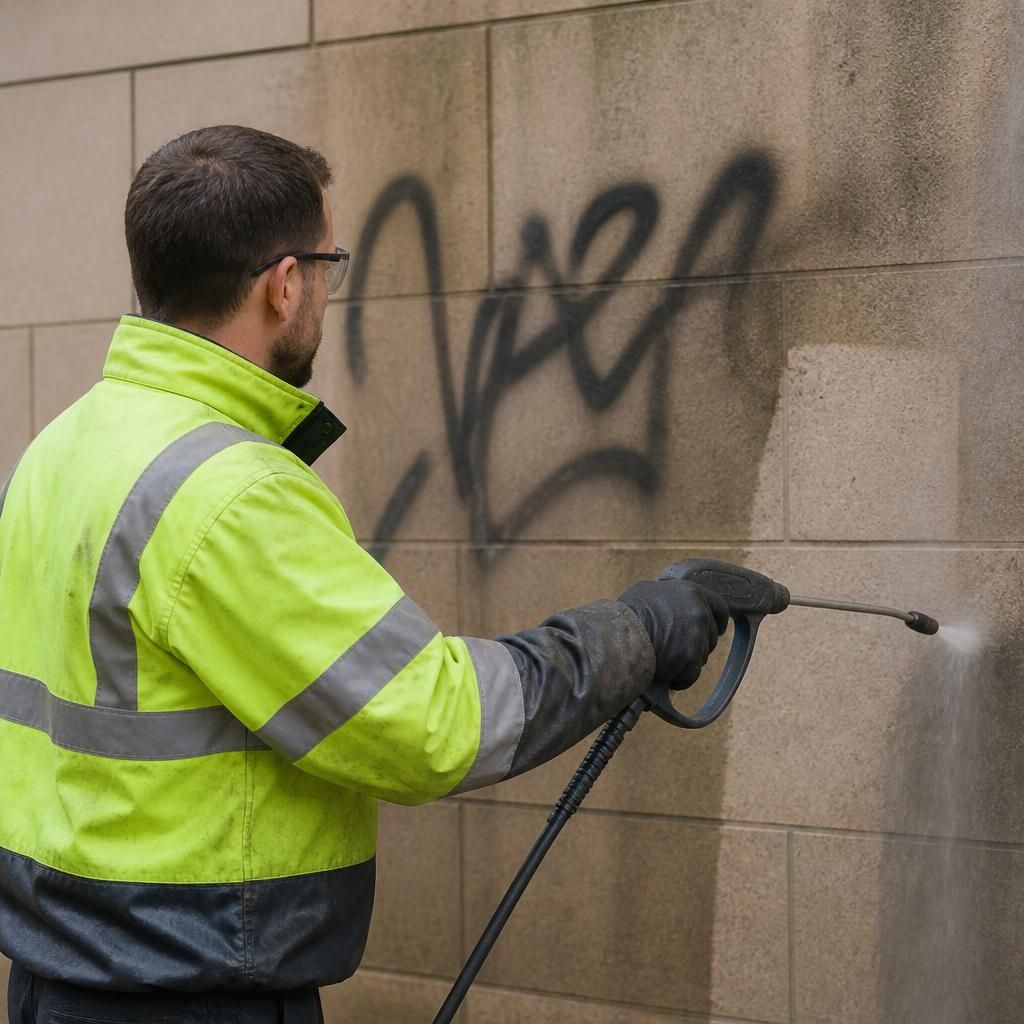
A test patch is a small, representative area cleaned before full graffiti removal begins. It allows the operatives to confirm that the selected pressure, water flow, nozzle, spray distance and temperature will remove the paint without etching the surface, loosening mortar, stripping coatings or causing colour changes.
The test should be carried out where the substrate and graffiti are typical of the wider area, then inspected once the surface has dried sufficiently. If the result is unsatisfactory, the cleaning settings can be reduced or an alternative method selected before work proceeds. This check is particularly important on porous masonry, painted surfaces, render and weathered materials.