
What measures are in place to ensure safety and compliance during the graffiti removal process?
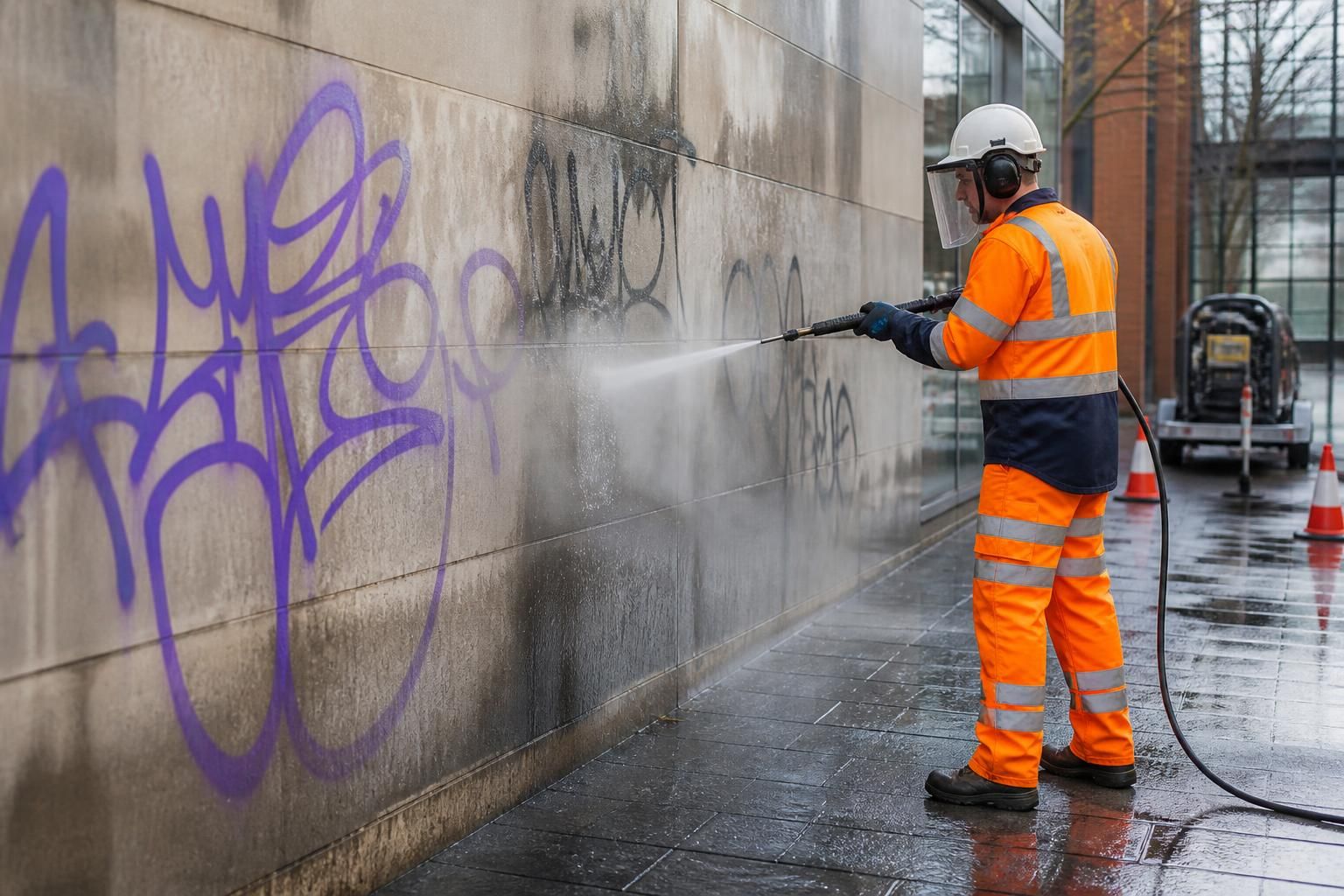
Encanto Exterior Cleaning manages graffiti removal through site-specific risk assessments, trained operatives, appropriate PPE and controlled use of pressure-washing or specialist cleaning equipment. Work is planned to protect people, surrounding surfaces and the environment, with suitable access controls, waste-water management and compliance with relevant health and safety requirements.
Safety and compliance during graffiti removal are managed through a documented, site-specific method of work covering risk assessment, access, equipment, chemicals, water containment, waste handling and protection of the public. Before work starts, Encanto Exterior Cleaning reviews the location, the graffiti, the substrate and the surrounding risks so that the removal method is suitable for the site rather than relying on a standard pressure-washing approach.
The initial assessment considers the condition and construction of the surface, nearby doors and windows, electrical equipment, vehicles, landscaping, drainage channels and pedestrian or vehicle routes. It also identifies risks from working at height, pressurised water, steam, cleaning products, falling debris, slips, trip hazards and restricted access. Findings are used to prepare the method statement and any required control measures, with the work discussed with the client or site representative before operations begin.
- Access and exclusion: barriers, cones, warning signs and controlled work zones are used where spray, run-off, equipment or access operations could affect other people.
- Public and traffic protection: pedestrian routes, entrances, loading areas and vehicle movements are considered in the work plan. Work may be timed or phased to reduce interaction with members of the public and site users.
- Working at height: suitable access equipment is selected for the building and task. Equipment is inspected and used by trained operatives in accordance with the relevant work-at-height requirements, with controls for falling objects and dropped equipment.
- Surface protection: pressure, temperature, nozzle selection and cleaning products are controlled to avoid damage to masonry, coatings, joints, cladding, glass and adjacent finishes. A small test area may be completed before full removal.
- Personal protective equipment: operatives use PPE appropriate to the hazards identified, which may include eye and face protection, gloves, protective clothing, hearing protection, safety footwear and respiratory protection where the assessment requires it.
Pressure washers, steam systems, vacuum equipment and other machinery are selected for the task and checked before use. Operators are trained in safe set-up, hose management, nozzle control, emergency shut-down and the risks associated with high-pressure water. Equipment is maintained and used in line with the applicable requirements for work equipment, while access and lifting equipment is subject to the necessary inspection and control arrangements.
Where chemical graffiti removers, detergents or poultices are required, the product is chosen for compatibility with the substrate and the type of paint. The relevant safety information is reviewed before use, and control measures are applied under the Control of Substances Hazardous to Health requirements. This includes controlling skin and eye contact, vapour or mist exposure, storage, mixing and application. Chemicals are never mixed unless the product instructions specifically permit it, and operatives follow the manufacturer’s instructions for dilution, dwell time and rinsing.
Water management is an important part of compliant graffiti removal. Run-off is controlled so that contaminated water, dissolved paint, cleaning residues and debris do not enter surface-water drains, watercourses, planted areas or neighbouring premises. Depending on the site, controls may include drain covers, temporary bunding, wet-vacuum recovery, absorbent materials and collection of residues. The method is adjusted where the drainage system or local conditions make conventional rinsing unsuitable.
Collected wastewater, paint debris, used absorbents and chemical residues are assessed and handled as part of the site’s waste arrangements. Waste is not left to migrate across the pavement or discharged without control. Where disposal or transfer is required, it is managed through appropriate waste procedures and authorised facilities, with records retained when needed for the project or client’s environmental requirements.
Operatives also take precautions against damage to third parties and the wider site. Windows, vents, signage, access-control equipment, vehicles, lighting, security systems and vulnerable finishes are identified before cleaning and protected where necessary. Electrical installations are kept clear of water, and work is stopped or revised if weather, visibility, surface condition or site activity makes the planned controls ineffective.
During the work, the supervisor monitors the exclusion zone, equipment, surface response, water run-off and changing site conditions. Any unexpected substrate damage, concealed defect, unusual coating or change in access conditions is recorded and escalated before the affected area is treated further. This prevents operatives from increasing pressure or using stronger chemicals simply to compensate for an unsuitable method.
On completion, the area is inspected for remaining paint, surface damage, slips, debris and signs of uncontrolled run-off. Barriers are removed only when the area is safe for normal use, and equipment and waste are cleared from the site. The client can be advised of any pre-existing defects, limitations or follow-up treatment that became apparent during removal. This combination of planning, competent operation, controlled cleaning and documented close-out helps ensure that graffiti is removed without creating avoidable risks to people, property or the environment.
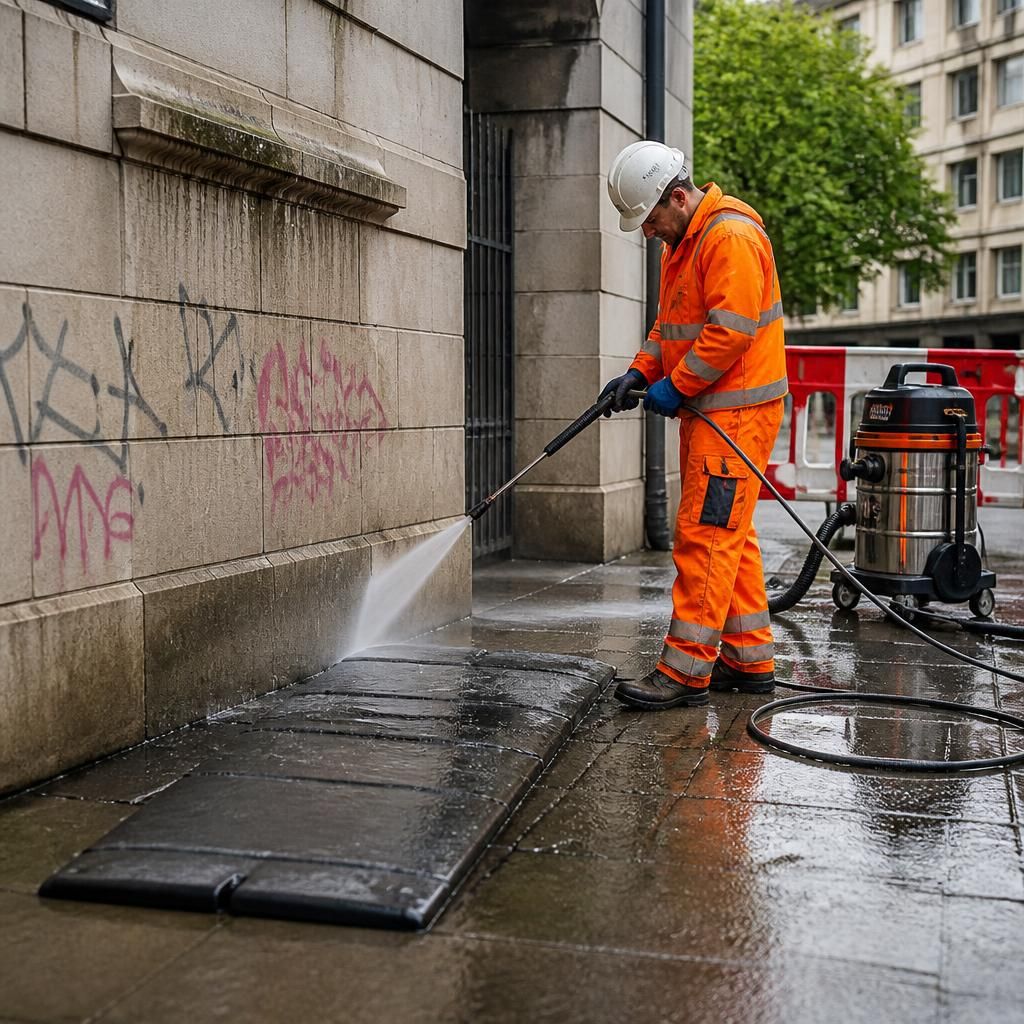
Wastewater control is a key safety and compliance measure during graffiti removal. Pressure washing can carry dissolved paint, cleaning residues and surface debris into drains or adjoining areas, so run-off is contained and managed rather than allowed to spread across public surfaces or enter watercourses.
Before cleaning begins, the team assesses nearby drainage, landscaping, entrances and neighbouring premises. Depending on the site, controls may include drain covers, temporary bunding, absorbent materials and wet-vacuum recovery. Collected water and residues are then handled through suitable waste procedures, while the work area is monitored throughout the process for leaks, overspray and changing conditions.
Arrange a graffiti removal safety assessment
Arrange a site-specific graffiti removal safety assessment with Encanto Exterior Cleaning to review access, surface condition, equipment and wastewater controls before work begins. Contact our team to agree the appropriate method statement and compliance measures for your site.