
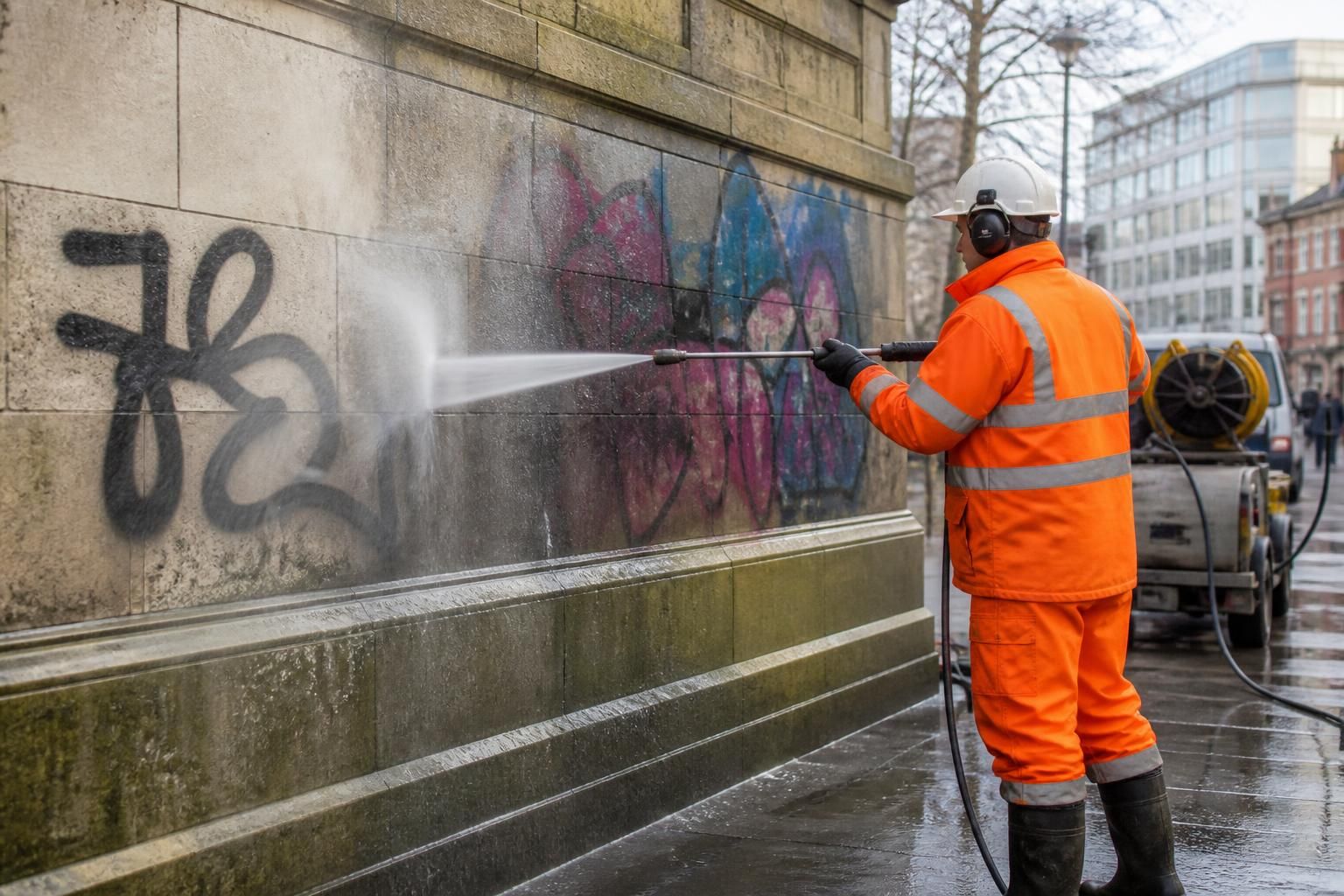
What environmental benefits does high pressure water cleaning offer compared to traditional graffiti removal methods?
High pressure water cleaning can reduce reliance on solvent-based chemicals, limit hazardous residue and avoid the dust and debris associated with abrasive mechanical removal. When runoff is contained and disposed of correctly, it offers a lower-impact way to remove graffiti while preserving the underlying surface.
High pressure water cleaning can reduce the environmental impact of graffiti removal by limiting the need for solvent-based chemicals, reducing airborne dust and preventing unnecessary surface damage. Its environmental performance depends on the equipment, pressure, water volume, cleaning method and how contaminated runoff is controlled. Used correctly, it provides an effective alternative to chemical stripping and abrasive mechanical removal for many external surfaces.
Reduced reliance on chemical products is one of the main benefits. Water pressure can break the bond between spray paint and a suitable substrate without relying on paint strippers, strong solvents or aggressive detergents. This reduces the quantity of hazardous products brought onto site and limits the risk of chemical vapours, spills and residues affecting workers, passers-by, vegetation or nearby drainage systems.
Chemicals are sometimes required for particularly stubborn paint, porous masonry or sensitive finishes, but a controlled water-cleaning approach may reduce the amount needed. Where a cleaning agent is appropriate, the product can be selected for the surface and applied locally rather than being used across the entire area. This helps prevent unnecessary chemical consumption while maintaining a reliable result.
Water cleaning also avoids much of the dust and solid debris created by abrasive techniques. Dry grinding, sanding and blasting can release fine particles of paint, substrate and abrasive media into the air. Some older coatings may contain substances that require additional assessment and control. High pressure water captures much of the removed coating in the wash water, reducing airborne dust and the spread of loose particles across the surrounding site.
Unlike abrasive removal, water cleaning does not normally introduce grit or other blasting media that must later be collected, transported and disposed of. This can reduce solid waste and the number of consumable materials used during the work. It also avoids creating additional wear on the substrate, which may otherwise lead to replacement materials, repair work and the environmental cost of manufacturing and transporting them.
Preserving the underlying surface is an important environmental benefit. The operator can adjust pressure, flow, temperature, nozzle selection and working distance to suit the masonry, concrete, metal, cladding or other substrate. Removing graffiti without unnecessarily etching, scarring or stripping the original finish helps extend the service life of the asset. A façade, wall or street fixture that remains sound for longer is less likely to require intensive repair, recoating or replacement.
High pressure water cleaning can also reduce the risk of transferring contamination from one area to another, provided the work is planned properly. Runoff should be directed away from clean surfaces, landscaped areas and unprotected drains. On commercial and public sites, suitable controls may include drain covers, bunding, collection systems, wet vacuums, temporary barriers and filtration or settlement equipment.
Contaminated wash water must be treated as controlled waste rather than ordinary rainwater. It may contain paint fragments, pigments, oils, detergents or dissolved contaminants. The correct approach depends on the site, the surface, the coating being removed and local drainage requirements. Runoff may need to be collected, filtered, tested or removed from site by an authorised waste contractor. It should never be allowed to enter surface-water drains, watercourses or soil without confirmation that this is permitted.
Water use should also be considered carefully. High pressure equipment can clean effectively with a controlled flow, but water cleaning is not automatically environmentally preferable if excessive water is used or if the wastewater is poorly managed. Good practice includes selecting the lowest practical flow, avoiding unnecessary repeated passes, using the correct nozzle and pressure, and stopping work when runoff controls are no longer effective. Where conditions allow, recovered water may be managed in accordance with the equipment and waste-handling arrangements, but it must not be reused in a way that spreads contamination.
Compared with chemical methods, the environmental advantages generally include:
- less dependence on solvent-based or highly caustic products;
- lower risk of chemical vapours and residues when detergents are not required;
- reduced packaging and chemical waste;
- less likelihood of chemical damage to nearby vegetation or finishes when the work is properly contained; and
- fewer hazardous substances requiring storage, handling and disposal on site.
Compared with abrasive mechanical methods, the main advantages generally include:
- less airborne dust and fewer fine particles;
- no spent abrasive media to collect and dispose of;
- reduced risk of gouging or wearing the substrate;
- less disruption from dust travelling beyond the work area; and
- better preservation of surfaces that may otherwise need repair or replacement.
There are limits to the environmental benefit. Water pressure that is too high can damage pointing, coatings, stone or joints and create additional repair waste. Poorly contained runoff can move contaminants into drainage systems, and excessive water use can increase wastewater volumes. For that reason, an environmentally responsible graffiti removal plan starts with identifying the surface and paint type, selecting the least aggressive effective technique, and establishing runoff controls before cleaning begins.
For each project, the practical objective is to remove the graffiti thoroughly while using the least amount of water, chemical product and abrasive material necessary. A site assessment should consider nearby drains and watercourses, landscaping, pedestrian areas, the condition of the substrate, access constraints and the disposal route for wash water. This ensures that the environmental benefit comes from the complete cleaning process, not simply from choosing water as the cleaning medium.
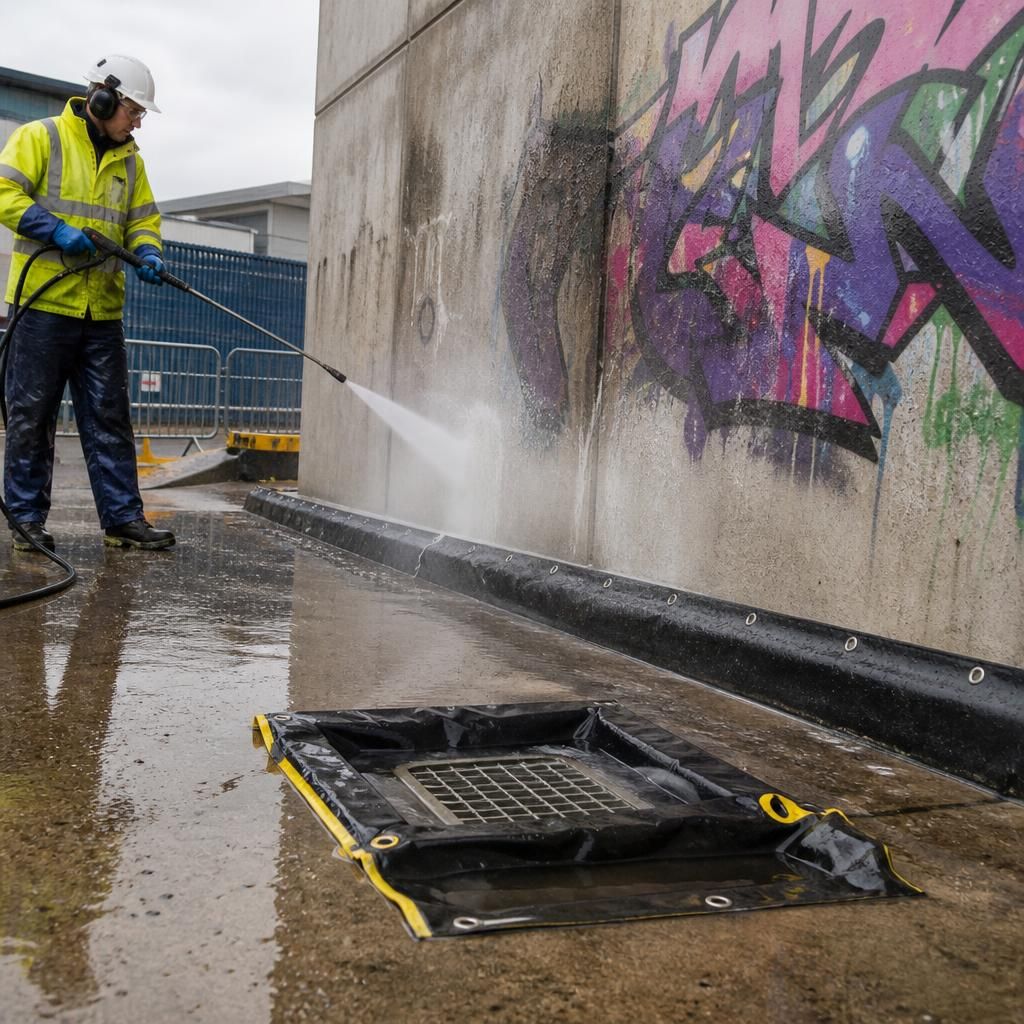
One of the most important environmental benefits of high pressure water cleaning is that removed paint and contaminants can be captured in the wash water rather than dispersed as airborne dust. This helps reduce the spread of paint particles across nearby paths, planting, vehicles and occupied areas.
The runoff must still be controlled responsibly. Drain covers, barriers, wet vacuums and collection or filtration equipment can help prevent contaminated water entering surface-water drains, soil or watercourses. Collected water should be handled according to its contents and disposed of through the appropriate route, so the environmental benefit comes from the complete cleaning process rather than pressure washing alone.