
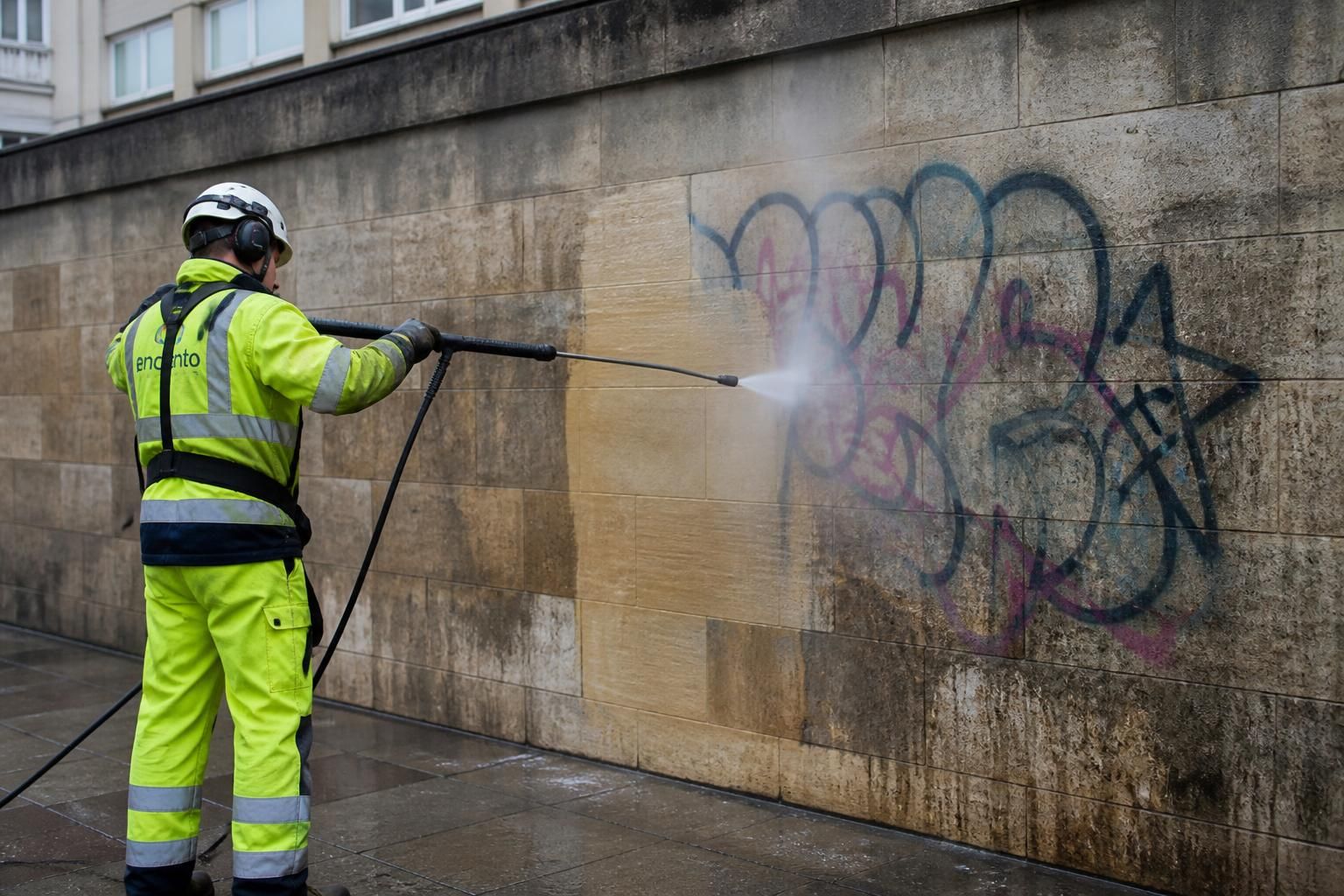
What benefits does high pressure water cleaning offer over mechanical methods in graffiti removal?
High pressure water cleaning removes graffiti quickly and evenly without the scraping, grinding or abrasion associated with mechanical methods. When the pressure, temperature and nozzle are correctly selected, it can reduce surface damage, leave a more consistent finish and clean awkward areas more efficiently.
High pressure water cleaning generally offers a faster, more even and less abrasive way to remove graffiti than mechanical methods such as scraping, sanding, grinding or wire brushing. Instead of physically wearing away the surface, a controlled water jet breaks the bond between the paint and the substrate. This can remove graffiti from larger areas and difficult-to-reach details while reducing the risk of scratches, gouges and visible abrasion.
The main benefits over mechanical removal include:
- Less surface abrasion: Mechanical tools can scratch, score or roughen masonry, metal, render, painted surfaces and other substrates. Correctly controlled water pressure is less likely to alter the underlying texture or profile.
- More consistent results: A water jet can cover broad areas evenly, helping to avoid the patchy finish or distinct scrape marks that may be left by hand tools.
- Faster removal from larger areas: Mechanical cleaning can be slow when graffiti covers extensive façades, walls, shutters, car parks or other commercial surfaces. High pressure water cleaning can treat a wider area efficiently, particularly when suitable access equipment is available.
- Better access to profiles and joints: Water can reach recessed lettering, textured masonry, grooves, corners and other irregular details that may be difficult to clean thoroughly with a scraper or abrasive tool.
- Less dust and dry debris: Sanding and grinding can create airborne dust and leave abrasive residue. Water suppresses dust during cleaning, although the resulting wastewater still needs to be managed appropriately.
- A cleaner final appearance: When the pressure, nozzle distance, flow and temperature are selected for the substrate, water cleaning can remove paint without creating a visibly polished, scratched or heavily abraded patch around the former graffiti.
Mechanical methods work by applying direct force to the paint. They can be useful for lifting thick deposits, removing loose material or treating small areas where water use is unsuitable. However, the tool is also in contact with the surface, so its effectiveness depends heavily on the operator’s pressure, angle and technique. A scraper may catch on soft render, while a wire brush or grinder can change the surface texture and make the cleaned area more noticeable.
High pressure water cleaning separates the graffiti from the substrate through a combination of water pressure, flow and, where appropriate, heat. The equipment is not simply operated at its highest setting. A professional assessment considers the surface material, its condition, the type and age of the paint, the location of the graffiti and the required finish. Lower pressure may be appropriate for delicate masonry or coated surfaces, while a more robust substrate may tolerate a stronger setting. The nozzle type, spray pattern and working distance are adjusted at the same time.
This control is particularly important because high pressure water can still cause damage if it is used incorrectly. Excessive pressure may erode soft stone, remove pointing, lift coatings, force water into joints or spread contamination. Before full cleaning, a suitable test area should be assessed to confirm that the paint can be removed without unacceptable change to the substrate. If water alone is not effective, the cleaning approach may need to be modified rather than increasing pressure indiscriminately.
Water cleaning can also reduce the need for aggressive mechanical preparation before applying a protective anti-graffiti coating. A surface that has been cleaned evenly and left free from loose paint and residue provides a more reliable base for any agreed follow-on treatment. Where ghosting or staining remains after the surface paint has been removed, further treatment may be considered separately; it should not be assumed that increased pressure will remove every mark safely.
There are situations where mechanical removal remains appropriate. Enclosed locations, areas close to sensitive electrical equipment, substrates that must not become wet and small isolated deposits may require an alternative technique. Mechanical tools may also be used carefully alongside water cleaning for stubborn edges or raised paint, provided the method is compatible with the surface. The most suitable approach is therefore determined by a site assessment rather than by choosing one method for every graffiti incident.
For commercial and industrial premises, the practical advantage is a controlled cleaning process that can restore the appearance of the affected area while limiting unnecessary damage to the building fabric. High pressure water cleaning is most effective when carried out with suitable access, drainage and wastewater controls, and when the operator records the surface condition and agrees the expected finish before work begins.
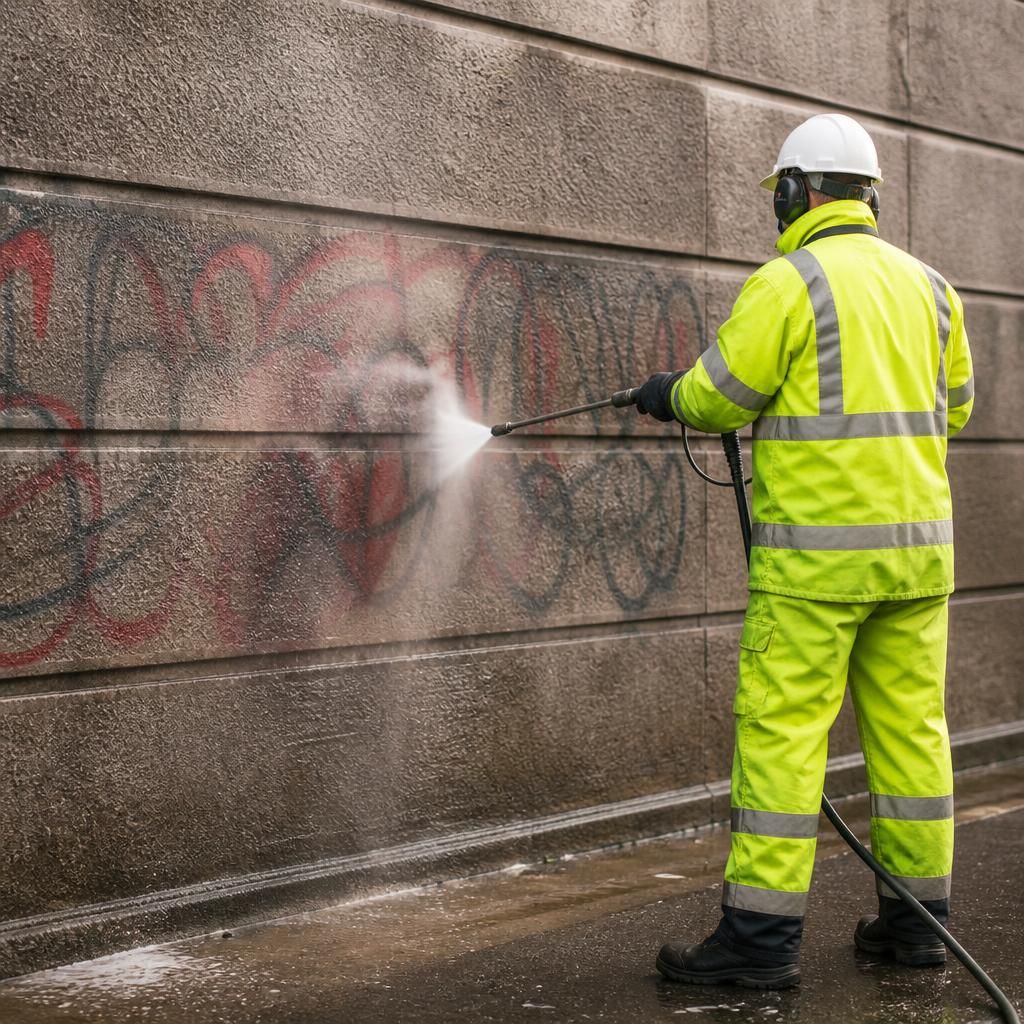
High pressure water cleaning can remove graffiti with less surface abrasion than scraping, grinding or wire brushing. Because the equipment does not need to make direct contact with the substrate, it is less likely to leave scratches, gouges or scrape marks when the pressure, nozzle and working distance are correctly selected.
This is particularly useful on textured masonry, cladding, shutters and other profiled surfaces where mechanical tools may produce an uneven finish. A professional operator will test a discreet area first and adjust the water pressure, flow and temperature to suit the material, rather than using the highest setting. This helps remove the paint while preserving the surrounding surface and creating a more consistent appearance.