
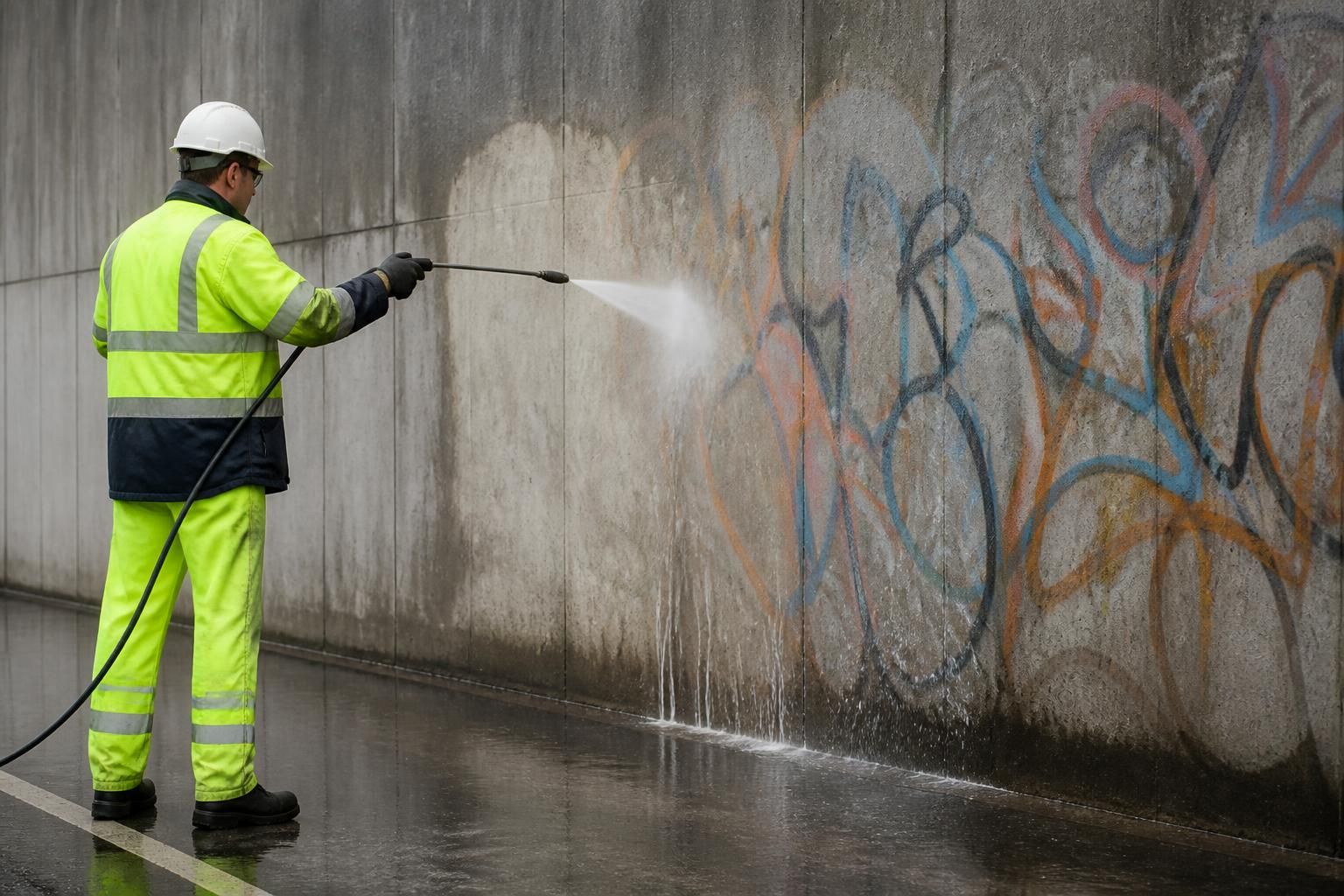
How long does the graffiti removal process typically take with high pressure water cleaning?
High pressure water graffiti removal can often be completed during a single visit for small, accessible areas, while larger surfaces, multiple layers of paint, sensitive materials or restricted access may require considerably longer. The exact timescale depends on the graffiti’s size, age and location, the surface condition, preparation and any rinsing or drying required.
Graffiti removal using high pressure water cleaning can often be completed during a single visit when the affected area is small, accessible and on a durable surface. Larger areas, multiple layers of paint, porous materials, difficult access, extensive preparation or the need to control rinse water can extend the work and may require additional visits.
The time required is assessed on site rather than estimated from the graffiti alone. A professional assessment considers the size and coverage of the markings, the type and age of the paint, the surface beneath it, previous cleaning or protective treatments, access for equipment and the surrounding operating environment. Fresh paint on smooth, sound masonry is generally less complex to remove than old, layered graffiti that has penetrated a porous surface.
The main stages that affect the programme are:
- Site assessment and testing: The surface is inspected for damage, staining, loose coatings and existing deterioration. A discreet test area helps establish the safest effective combination of water pressure, temperature, nozzle selection and working distance.
- Site preparation: The work area may need to be cordoned off, nearby vehicles or equipment protected, access equipment positioned and drainage or runoff controls installed. Busy public areas, shared entrances and operational premises may require additional coordination.
- Graffiti removal: Water is applied in a controlled manner, working progressively across the affected area. The operator may adjust pressure, flow, temperature and technique as the surface changes. High pressure is not automatically the safest or fastest setting; excessive pressure can damage masonry, coatings, pointing and other substrates.
- Rinsing and inspection: Residue and loosened paint are rinsed away, while the surface is checked for remaining pigment, shadows or paint that has entered the substrate. Further treatment may be needed where staining has penetrated deeply.
- Clean-up and drying: Collected wastewater, paint residue and protective materials are managed appropriately. The surface may need time to dry before its final appearance can be judged or a protective coating can be applied.
Small, straightforward areas are usually the quickest to deal with, particularly where the graffiti is on sound brickwork, concrete, metal or another robust, accessible surface. Preparation and clean-up can still be significant if the location is beside a public walkway, road, entrance or drainage system.
Large façades, walls and car parks take longer because the cleaning team must work methodically to maintain an even finish and avoid visible differences between treated and untreated sections. Access equipment, restricted working hours, traffic management and the need to keep part of a site operational can affect the schedule as much as the cleaning itself.
Porous or sensitive surfaces require particular care. Brick, natural stone, painted render, cladding and older masonry can hold paint beneath the visible surface or contain areas that are already weakened. In these cases, lower pressure, heated water, steam-assisted cleaning or a compatible treatment may be more appropriate than simply increasing the pressure. Gentle methods can take longer but reduce the risk of etching, surface loss, spreading the stain or creating a patchy appearance.
The age and composition of the graffiti also influence the result. Fresh aerosol paint may release more readily, whereas weathered paint, marker residue, several paint layers or previous unsuccessful removal attempts can require repeated passes. A faint shadow may remain after the main paint has been removed, particularly on porous materials. Removing that residue without damaging the substrate can require additional treatment and drying time.
Weather and site conditions can also affect completion. Rain, freezing temperatures, poor drainage, limited water supply or insufficient ventilation may make external water cleaning unsuitable at the planned time. On commercial and public sites, the work may need to be scheduled around deliveries, pedestrians, vehicles, tenants or local authority requirements.
Where the graffiti is extensive or likely to recur, it can be more efficient to combine removal with a wider maintenance visit or apply a suitable sacrificial or permanent anti-graffiti coating after the surface has dried. This does not necessarily shorten the initial cleaning, but it can make future removal more controlled and reduce disruption.
For an accurate programme, provide photographs or arrange a site assessment showing the graffiti, surface material, height, access arrangements and any operational restrictions. Encanto Exterior Cleaning can then confirm whether the work is likely to be completed in one visit, what preparation is required and whether any drying, follow-up treatment or access planning should be included.
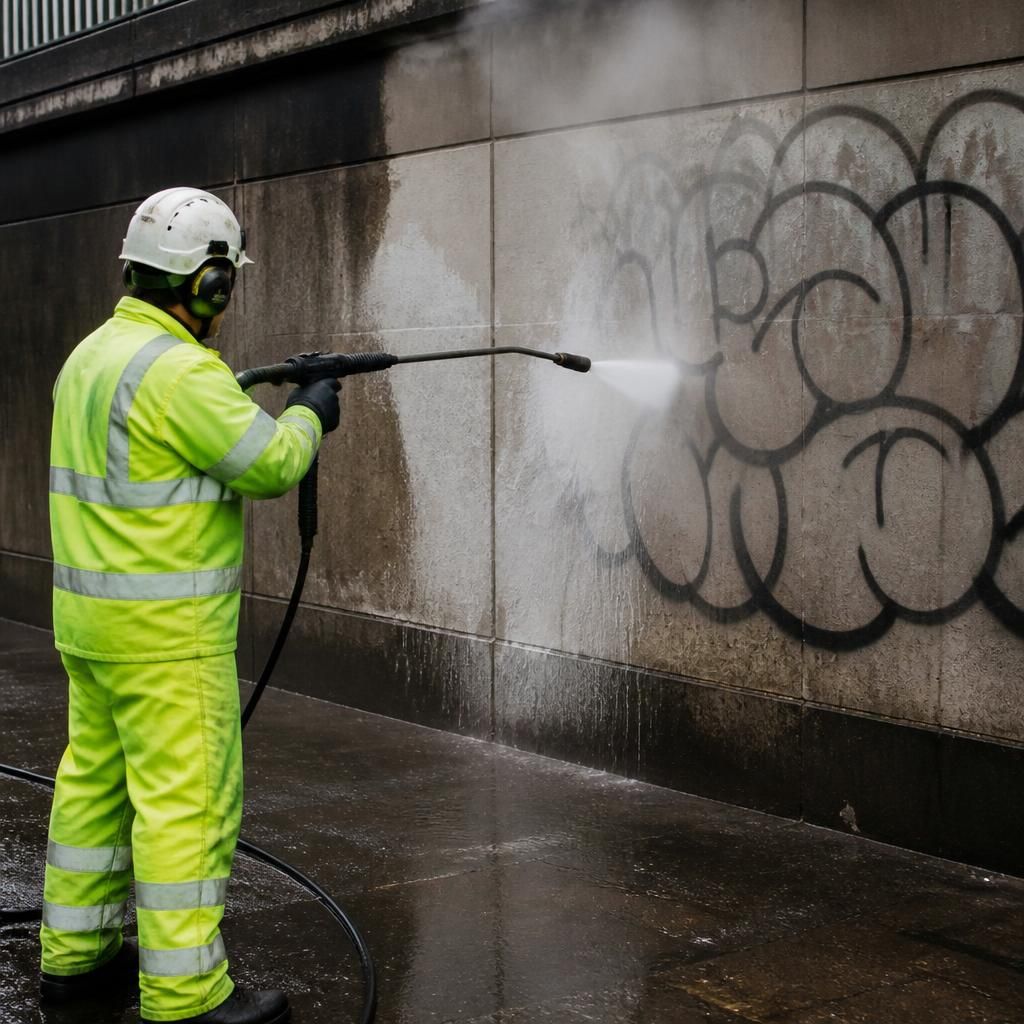
The time required for graffiti removal with high pressure water cleaning depends on the size of the affected area, the surface, paint condition and site access. A small, fresh marking on sound, accessible masonry may be removed during a single visit, while porous surfaces, layered paint, restricted access or extensive preparation can lengthen the programme.
Preparation and safe completion are part of the process, not separate from it. The cleaning team may need to protect nearby property, control wastewater, position access equipment and work around pedestrians, vehicles or business operations. After cleaning, the surface is rinsed and inspected for remaining pigment or staining before the area is cleared and allowed to dry.
A site assessment provides the most reliable timescale. Photographs should show the full affected area, surface material, height and surrounding access conditions so the required cleaning method, equipment and follow-up work can be planned accurately.
Request a graffiti removal time estimate
Send photographs of the graffiti, the affected surface and site access arrangements to request a practical removal time estimate. Encanto Exterior Cleaning can advise whether the work is likely to require one visit, additional preparation or follow-up treatment.