
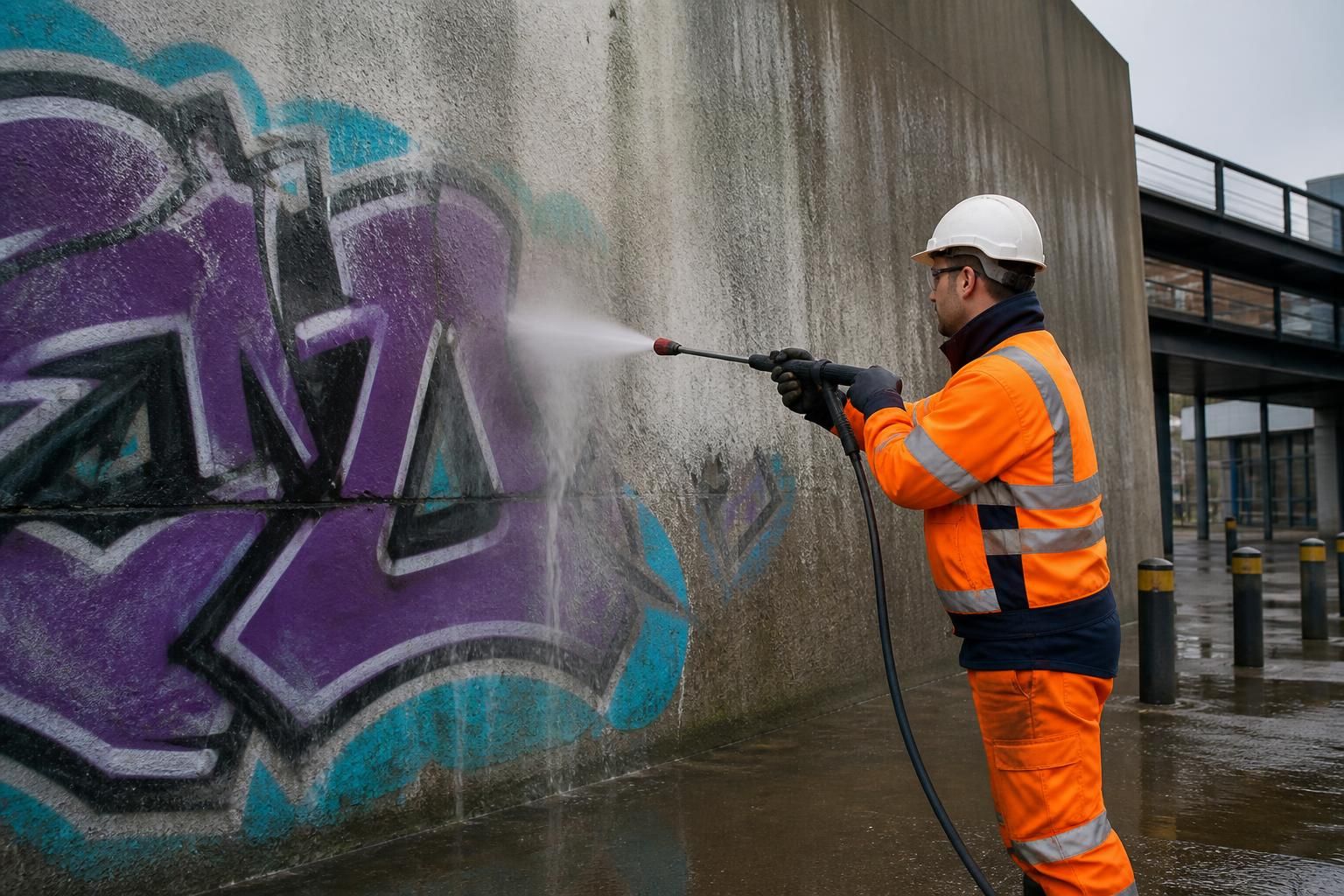
How is high pressure water cleaning different from chemical graffiti removal methods?
High pressure water cleaning removes graffiti by using controlled water pressure to lift paint from the surface, while chemical removal relies on specialist solvents or detergents to break down and soften the coating. Water-based cleaning can reduce chemical residue and waste, whereas chemical treatments may be more suitable for delicate or porous surfaces where high pressure could cause damage.
High pressure water cleaning removes graffiti through the controlled force and, where appropriate, heat of water, while chemical graffiti removal uses specialist solvents, gels or detergents to soften, dissolve or detach the paint before it is rinsed away. The main difference is the way the coating is broken down: water cleaning relies primarily on pressure, temperature and technique; chemical removal relies on a product’s interaction with the paint and the underlying surface. In practice, the most suitable method depends on the substrate, paint type, age of the graffiti and the risk of damage or contamination.
With high pressure water cleaning, the operator selects an appropriate pressure, water flow, nozzle and working distance. Hot water or steam may be used where the coating responds well to heat, although this is not suitable for every surface. The water penetrates the bond between the graffiti and the substrate, lifting the paint so it can be collected and removed. Pressure is adjusted rather than applied at maximum force, since excessive pressure can dislodge pointing, damage coatings, drive paint further into porous materials or mark softer surfaces.
Chemical removal works differently. A suitable remover is applied to the graffiti and allowed to dwell for a controlled period. The product softens the paint, breaks down its binders or helps separate it from the substrate. The softened coating is then agitated where necessary and rinsed from the surface, often using low or moderate pressure. Chemicals can be particularly useful on delicate materials, textured masonry or surfaces where aggressive water pressure could cause damage. They must, however, be selected for the specific substrate and paint, as an unsuitable product can stain, bleach, soften or strip the original finish.
The practical differences can be summarised as follows:
- Primary action: high pressure water uses controlled mechanical force, heat and water flow; chemical treatment uses a solvent or detergent to alter the graffiti coating.
- Surface risk: water pressure can damage fragile, weathered or friable materials if poorly controlled, while chemicals can attack coatings, sealants, plastics, painted finishes and sensitive stone.
- Residue: water cleaning does not leave solvent residue on the surface, although removed paint and contaminated rinse water still need to be contained and managed. Chemical cleaning can leave product residues that require thorough rinsing and appropriate disposal.
- Speed and preparation: water cleaning can be efficient where the graffiti releases readily. Chemical removal normally requires product selection, application and dwell time before rinsing.
- Environmental controls: both methods require containment of wash water and paint debris. Chemical work also requires control of storage, handling, exposure and contaminated runoff.
- Compatibility: neither method is universally suitable. A test patch is needed to confirm that the graffiti can be removed without altering the original surface.
High pressure water cleaning is often preferred on robust, non-porous surfaces such as sound concrete, some brickwork, certain claddings and hard paving, provided the existing finish can tolerate the selected settings. It can remove paint without introducing an additional solvent to the façade or pavement. However, porous masonry may absorb graffiti below the surface, making a simple surface wash ineffective. In those cases, a suitable chemical pre-treatment, hot water, steam or a combination of methods may be needed.
Chemical removal is not automatically a harsher option, and high pressure water is not automatically the safer option. The outcome depends on the equipment settings, product choice, operator experience and condition of the substrate. For example, a low-pressure chemical treatment may be safer for a delicate coated surface than direct high pressure cleaning, whereas a solvent may cause more harm than carefully controlled water on a robust, uncoated surface. Solvent-based products can also create vapours, require personal protective equipment and need controls to prevent damage to nearby vegetation, drainage systems and occupied areas.
A responsible approach begins with identifying the substrate and assessing the graffiti. The operative should check whether the surface is painted, sealed, porous, loose, weathered or previously repaired, and consider the likely paint type and how long it has been present. A small, inconspicuous test area is then cleaned using the least aggressive effective method. The result is checked for colour change, etching, water penetration, coating loss, shadows or ghosting before the method is extended across the full area.
Where appropriate, water cleaning and chemical treatment can be combined rather than treated as competing methods. A compatible remover may be used to loosen stubborn paint, followed by controlled low-pressure or high pressure rinsing to remove the softened coating. Alternatively, hot water may reduce the need for chemicals on suitable surfaces. Combining methods requires careful control because the rinse water may contain both paint particles and chemical residues.
For commercial and industrial sites, the choice should also account for access, nearby occupants, drainage, working hours, traffic, façade materials and the required finish. Wash water and removed graffiti should be prevented from entering surface-water drains unless it has been appropriately managed, and the work area should be segregated where spray, noise or slip hazards could affect the public. The final method should therefore be selected after a site assessment and test patch, not simply by choosing the strongest pressure or the most powerful chemical.
In summary, high pressure water cleaning is a controlled physical removal process with fewer chemical inputs, while chemical graffiti removal is a coating-softening process that can be valuable where pressure alone is unsuitable. The correct choice is the method that removes the graffiti effectively while preserving the original surface, controlling runoff and meeting the site’s safety and environmental requirements.
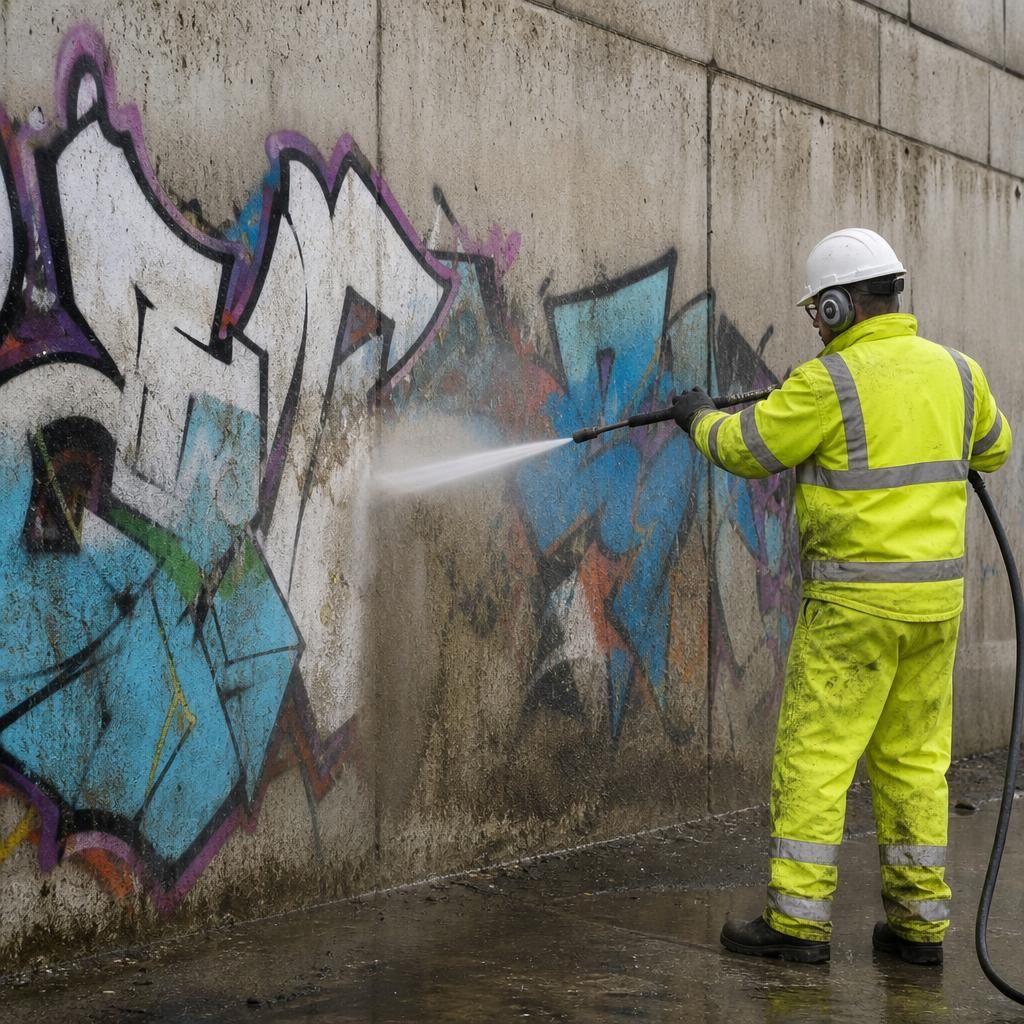
High pressure water cleaning removes graffiti through controlled water force and, where suitable, heat, while chemical removal softens or dissolves the paint before it is rinsed away. The safer option depends on the surface, paint type and condition of the substrate rather than on which method is generally considered stronger.
Water cleaning can be effective on sound concrete, hard paving and suitable cladding without adding solvent to the surface. Chemical treatment may be preferable for delicate, textured or porous materials where pressure could cause marking, erosion or damage to an existing coating. However, chemicals can also affect paint finishes, sealants, plastics and sensitive stone if the product is poorly matched.
A small test patch should be completed before full removal. This confirms whether the graffiti releases cleanly and checks for staining, etching, colour change, coating loss or ghosting. Where appropriate, a compatible chemical pre-treatment can be combined with controlled rinsing, with all paint debris, chemical residue and wash water contained and managed correctly.