
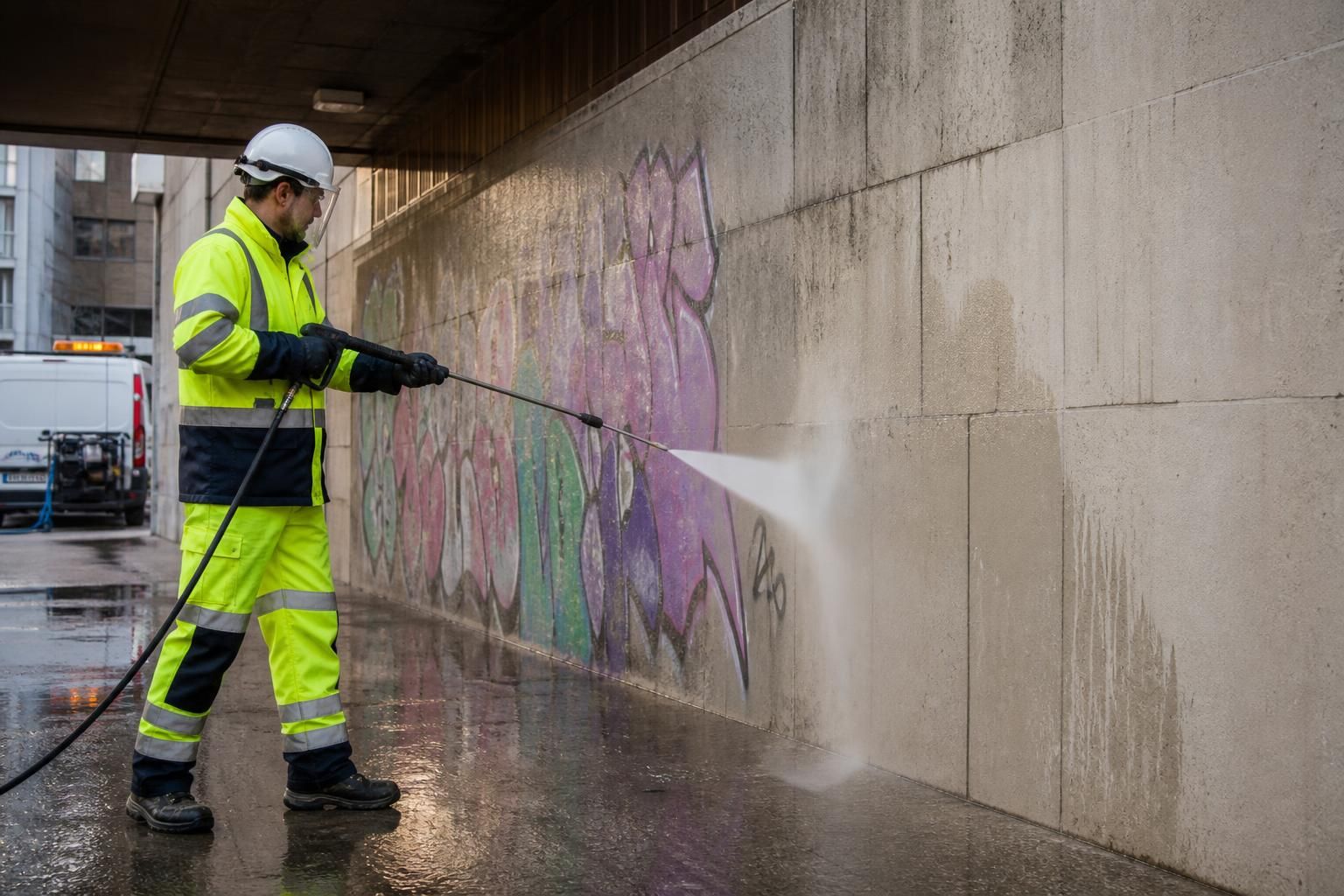
How does high pressure water cleaning compare with other graffiti removal methods in terms of cost-effectiveness and efficiency?
High pressure water cleaning is often the most cost-effective and efficient graffiti removal option for suitable, durable surfaces because it removes paint quickly without the ongoing material and disposal costs associated with some chemical or abrasive methods. The best choice still depends on the surface, paint type, access requirements and the level of damage risk.
High pressure water cleaning is often the most cost-effective and efficient graffiti removal method for suitable, durable surfaces. It can remove paint quickly with water and controlled pressure, avoiding the repeated chemical purchases, abrasive media and extensive manual work that may be required by alternative methods. However, the lowest-cost option depends on the substrate, paint type, access, drainage arrangements and the risk of damaging the surface.
How high pressure water cleaning compares
High pressure cleaning uses a controlled water jet to break the bond between spray paint and the surface. The operator selects an appropriate pressure, nozzle, water temperature and working distance rather than applying maximum pressure indiscriminately. On robust materials such as concrete, paving, engineering brick and some metal surfaces, this can provide rapid coverage and consistent results across large areas.
- Against chemical removal: water cleaning generally has lower ongoing material costs because it does not rely on graffiti remover, dwell time or repeated applications. Chemical methods can be effective where paint has penetrated a delicate or textured surface, but they may require careful product selection, personal protective equipment, surface testing, rinsing and collection of contaminated wash water. These additional controls can increase labour and disposal requirements.
- Against abrasive removal: abrasive blasting can remove stubborn coatings quickly, but it may also remove part of the substrate, alter its texture or create dust and spent media that need to be controlled. High pressure water normally produces less solid waste and is often better suited to restoring a consistent appearance on hard external surfaces, provided the surface can tolerate the water pressure.
- Against manual cleaning: hand tools and low-powered methods can be appropriate for isolated marks or fragile details, but they are usually slower over extensive façades, walls, car parks and street furniture. High pressure equipment can cover larger areas more efficiently while allowing the operator to maintain a controlled process.
- Against steam cleaning: heated water and steam can soften certain paints and reduce the need for aggressive pressure. They may be preferable on sensitive surfaces or where reduced water use is important, although the equipment, heating time and slower working rate can make the method less economical for some large, durable areas.
Why water cleaning can reduce the overall cost
The quoted cleaning price is only one part of the comparison. Overall cost can also include preparation, access equipment, labour, chemicals, abrasive media, waste handling, traffic or pedestrian management, and any repairs needed after unsuitable cleaning. High pressure water cleaning can offer value because the core process is straightforward and scalable. One operative can often clean a sizeable accessible area without transporting or disposing of large quantities of chemical or abrasive residue.
Fast removal can also reduce disruption to a commercial site. Shorter working periods may mean less interference with deliveries, customers, tenants, staff or public routes. For property managers and local authorities, prompt removal can be particularly important where repeated tagging is affecting the appearance or perceived security of a location. A suitable protective coating may also make subsequent marks easier to remove, reducing future labour and cleaning time, although its suitability must be assessed for the specific surface.
Efficiency depends on the paint and substrate
High pressure water is not automatically the quickest method for every graffiti incident. Fresh paint on a smooth, sound surface may be removed efficiently, while old, layered or deeply embedded paint can require pre-treatment, hot water, a suitable detergent or several passes. Porous masonry may retain pigment after the surface coating has been removed, and weathered brick, soft stone, render, timber and painted finishes can be marked or eroded by excessive pressure.
For these reasons, the cleaning method should be selected after assessing the surface rather than judging efficiency by equipment power alone. A lower-pressure approach, hot water, a compatible chemical pre-treatment or a combination of methods may produce a better result with less risk and less reworking. Testing an inconspicuous area helps establish the effective pressure and confirms whether the substrate can withstand the process.
Environmental and operational considerations
Water cleaning avoids many of the vapours, chemical residues and airborne dust associated with some alternative methods. This can simplify work around occupied premises, although high pressure cleaning still requires proper controls. Run-off must not be allowed to enter surface-water drains where it could carry paint particles, detergents or other pollutants. Depending on the site and local requirements, wash water may need to be contained, filtered, collected or disposed of appropriately.
There is also a balance between water consumption and working speed. The most efficient approach is not necessarily the one using the highest flow or pressure; it is the one that removes the coating effectively while limiting unnecessary passes, overspray and run-off. Professional planning, suitable access equipment and trained operators help maintain that balance and protect nearby people, vehicles, glazing, seals, electrical equipment and landscaping.
Choosing the most cost-effective method
For a sound, non-sensitive surface with accessible graffiti, controlled high pressure water cleaning will often provide the best combination of speed, finish and overall cost. Chemical treatment may be more appropriate for delicate or highly porous materials, while abrasive methods may be reserved for particularly resistant coatings or surfaces where controlled substrate removal is acceptable. Steam, manual work or a combined treatment can be preferable where pressure and water use must be restricted.
A reliable assessment should consider the substrate, paint age and composition, the size and location of the affected area, access and protection requirements, drainage, environmental controls and the desired finish. Comparing these factors gives a more accurate indication of cost-effectiveness than comparing the hourly rate or equipment type alone. Where the correct method is used and the surface is protected throughout, high pressure water cleaning can deliver rapid graffiti removal without unnecessary chemical, abrasive or remedial costs.
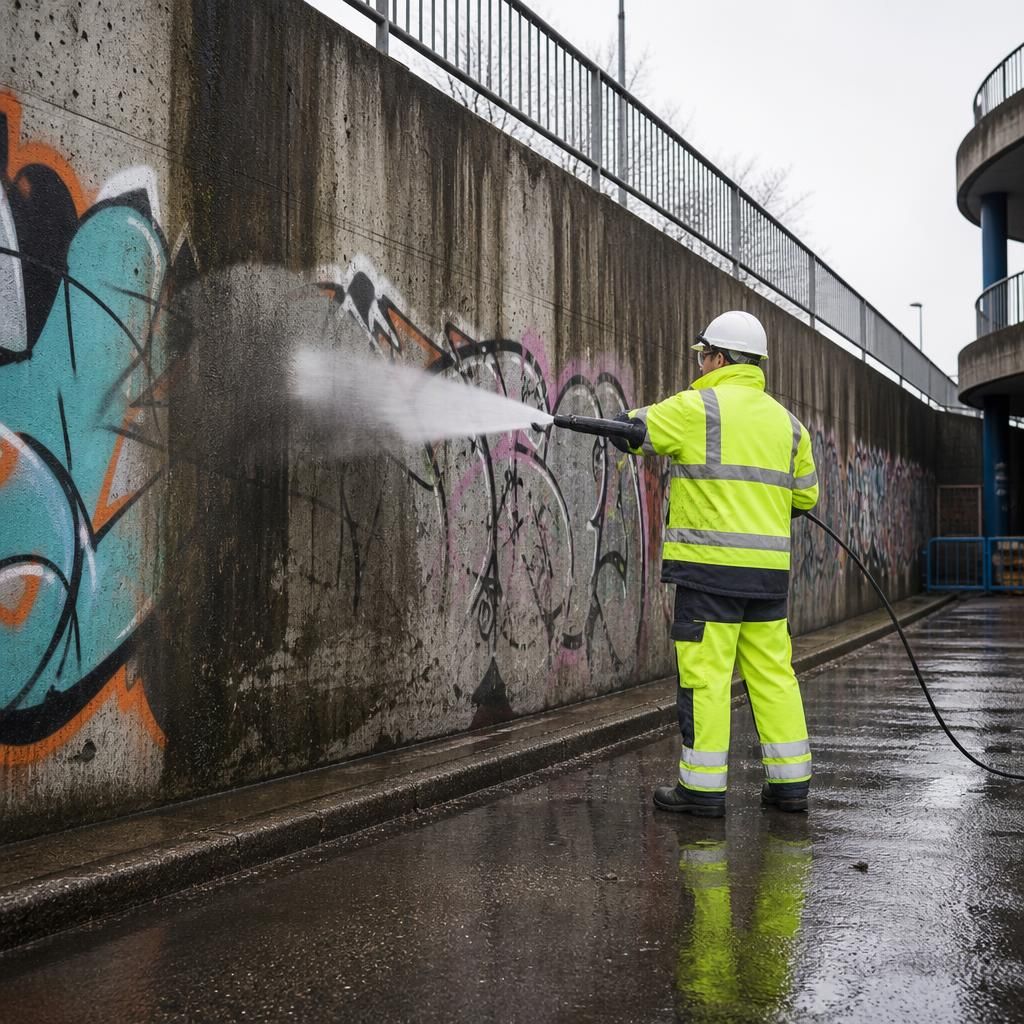
High pressure water cleaning is most cost-effective when it removes graffiti quickly without damaging the underlying surface or creating substantial waste. The true comparison should include labour, chemicals or abrasive media, access, run-off control, disposal and any repairs required after cleaning.
On sound concrete, paving, engineering brick and other durable surfaces, controlled water pressure can cover extensive areas efficiently and leave little solid residue to handle. Chemical removal may involve product selection, dwell time, rinsing and contaminated-water controls, while abrasive methods can generate spent media and alter the surface texture. These additional requirements may increase the overall cost, even where the initial cleaning rate appears competitive.
Efficiency still depends on the paint, substrate and site conditions. Testing a discreet area allows the operator to establish the lowest effective pressure and determine whether hot water, a compatible pre-treatment or a combined approach is needed. This reduces repeat work and helps achieve a consistent finish while protecting the surface.