
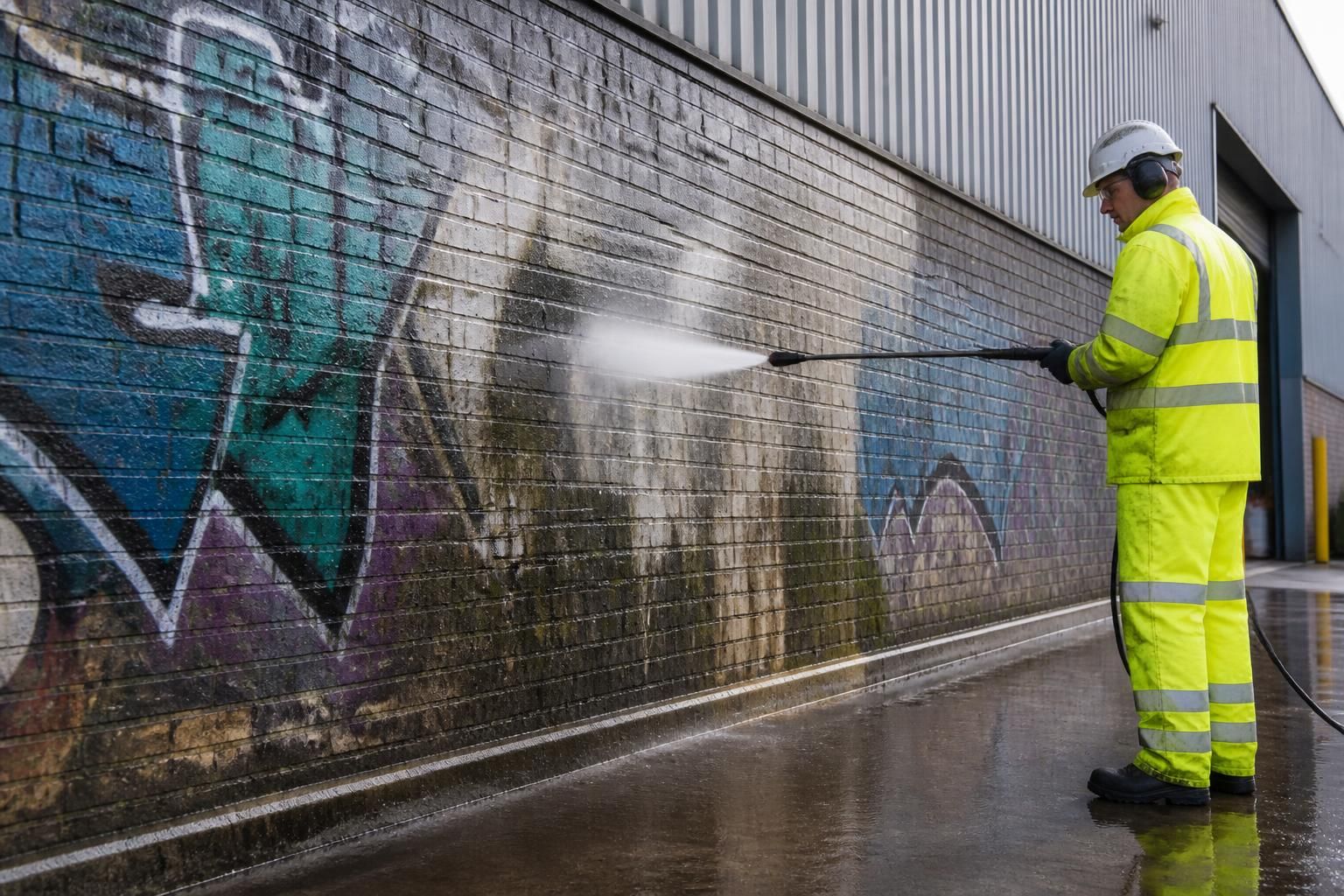
Does high pressure water cleaning for graffiti removal work on all types of spray paint?
High pressure water cleaning can remove many types of spray paint, but it does not work equally well on every paint or surface. Results depend on the paint’s age and composition, the substrate, and the pressure and temperature selected, so a controlled test is needed before full removal to prevent surface damage.
High pressure water cleaning can remove many types of spray paint, but it does not work equally well on every coating or surface. The result depends on the paint’s formulation, how long it has bonded to the substrate, whether it has weathered, and the pressure, temperature and water flow selected. A controlled test area is therefore essential before full removal.
Fresh aerosol paint is often easier to remove than older graffiti because it has had less time to cure and penetrate porous materials. Acrylic, alkyd and other common aerosol coatings may respond well to a carefully controlled combination of pressure and heated water. However, several layers of paint, heavily weathered graffiti and coatings that have chemically bonded with the surface may require additional treatment.
Water cleaning is less likely to remove every trace when the graffiti consists of:
- Fully cured or aged spray paint that has penetrated deeply into brick, concrete, render or unsealed stone.
- Multiple overlapping layers of paint.
- Hard-wearing enamel, lacquer or two-part coatings.
- Paint applied over an existing protective coating that has deteriorated or been damaged.
- Paint that has been absorbed into a soft, friable or highly textured substrate.
In these situations, high pressure water cleaning may still remove the surface layer and significantly reduce the appearance of the graffiti, but a chemical graffiti remover, steam cleaning, low-pressure treatment or another controlled method may be needed for complete removal. Combining methods is often more appropriate than increasing the pressure, as excessive pressure can damage the substrate without removing paint that is resistant to water alone.
The surface is as important as the spray paint. Sound, sealed concrete and some robust masonry can generally tolerate a more forceful treatment than soft brick, aged render, natural stone, timber, painted façades or coated cladding. High pressure water can strip sound coatings, erode mortar joints, roughen stone, force water into building fabric or leave a visible cleaning pattern if the equipment is set incorrectly.
Before starting, the cleaning team should identify the substrate and inspect for cracks, loose material, failed pointing, existing coatings, electrical equipment and areas vulnerable to water ingress. A discreet test patch helps establish whether the paint releases cleanly, whether a shadow or stain remains, and whether the surrounding surface changes in colour or texture. The full treatment can then be adjusted to use the lowest effective pressure, suitable nozzle distance, controlled water flow and an appropriate water temperature.
Where the paint is particularly stubborn, the operator may pre-treat it with a compatible graffiti-removal product before rinsing with controlled water pressure. This can soften the coating and reduce the mechanical force required. On sensitive surfaces, steam or lower-pressure cleaning may provide better control than conventional high pressure washing. Any chemical used must be suitable for the substrate, handled in accordance with its safety information and prevented from entering drains or nearby watercourses.
Complete removal is not always possible without some change to the surrounding surface, particularly where graffiti has remained in place for a long period or has penetrated porous masonry. The objective is to remove the paint while preserving the substrate and achieving a consistent finish. If a residual shadow remains, further treatment, poulticing, repainting or a suitable anti-graffiti coating may be considered after the surface has been assessed.
In practical terms, high pressure water cleaning is effective for many spray paints, but it is not a universal solution. The safest approach is to assess the paint and substrate together, test a small area, and select the least aggressive method that achieves the required result. This avoids treating every type of graffiti as though it will respond to the same pressure or water temperature.
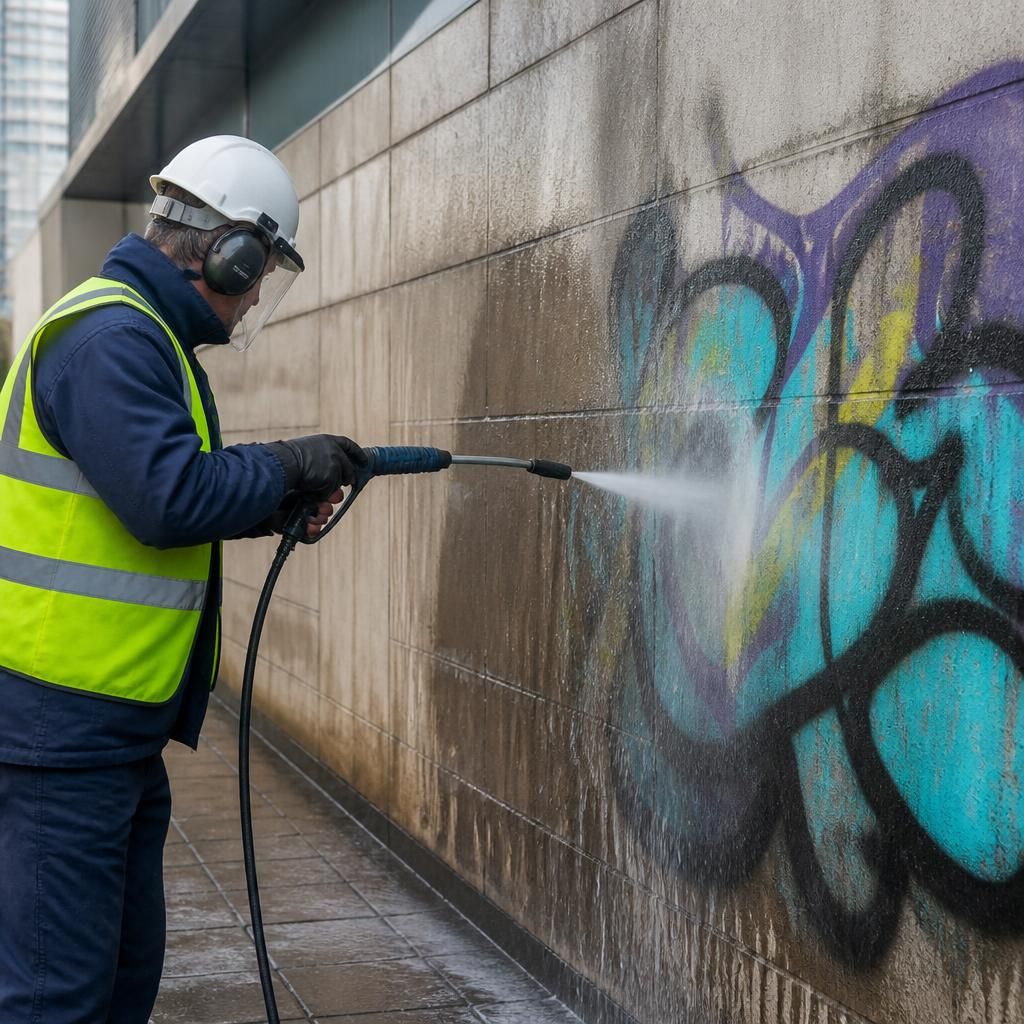
High pressure water cleaning does not remove every type of spray paint in the same way. A controlled test patch is essential because the result depends on the paint’s formulation, how long it has cured, and the porosity and condition of the underlying surface.
Fresh aerosol paint on sound, sealed concrete or robust masonry may release with carefully controlled pressure and heated water. Older, layered or enamel-based coatings can remain bonded to porous brick, render or stone, leaving staining or a graffiti shadow after the surface paint has been removed. Increasing the pressure is not always the answer, as it may erode the substrate, damage mortar joints or strip an existing coating.
The safest approach is to test the least aggressive suitable setting first, then adjust the nozzle distance, water flow and temperature according to the result. If water alone is not sufficient, a compatible pre-treatment, steam cleaning or lower-pressure method may be used to soften the paint while limiting the risk of surface damage.